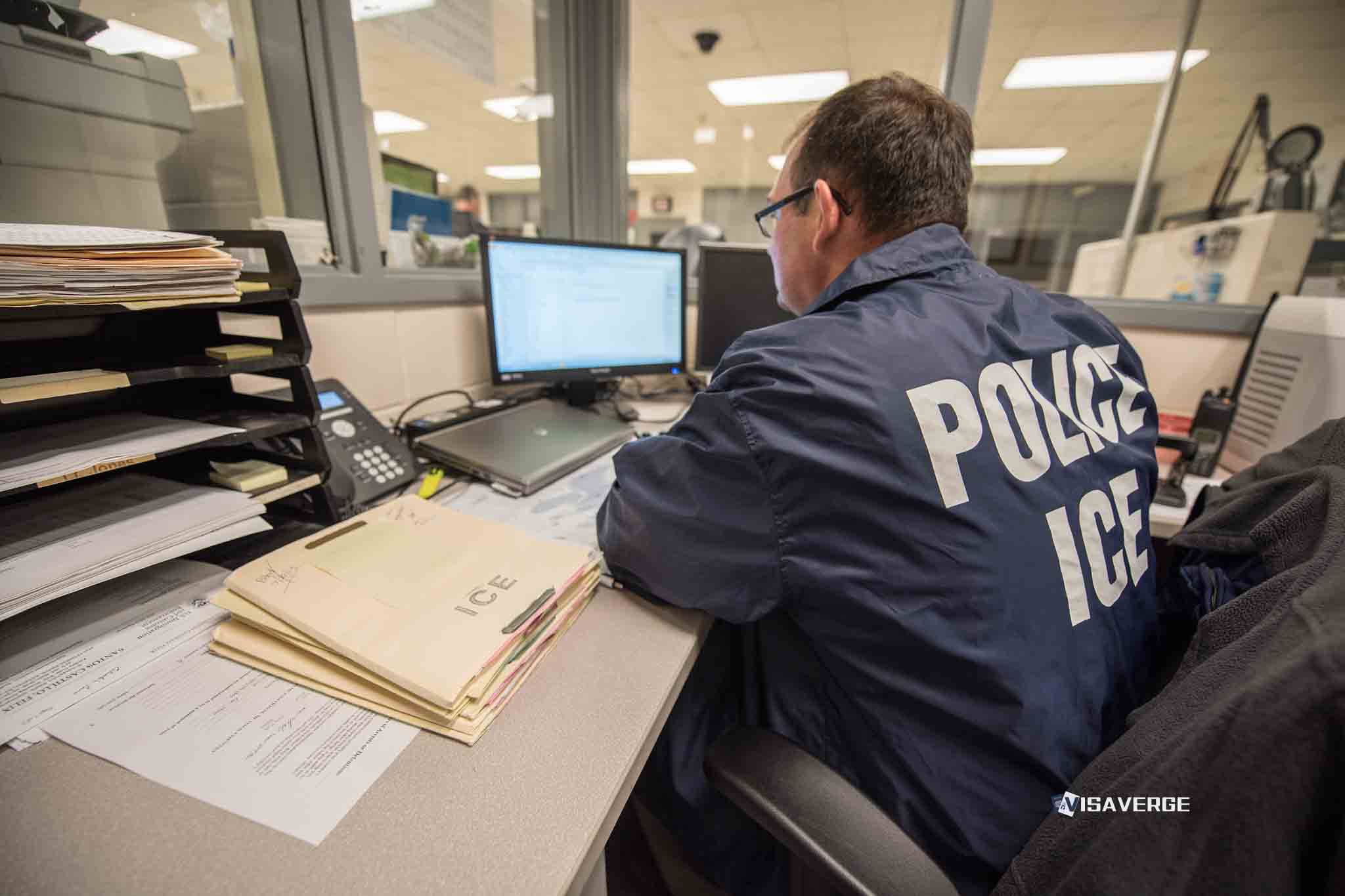
(OKLAHOMA) — A sharp rise in “no-bond” immigration detentions in Oklahoma since mid-2025 is pushing detained immigrants and their lawyers away from immigration court bond motions and toward federal habeas corpus petitions. DHS is applying a broad theory of mandatory detention under INA § 235(b) (8 U.S.C. § 1225(b)), and that shift has immediate practical consequences.
If a person is placed in proceedings as an “applicant for admission” and detained under INA § 235(b), immigration judges generally lack authority to set bond. That leaves federal court litigation—often on an emergency timeline—as the primary path to challenge prolonged custody, the government’s legal classification, or the feasibility of removal.
What the government is doing — and why Oklahoma is a focal point
Since July 2025, DHS has treated many people who entered without inspection as categorically subject to mandatory detention under INA § 235(b)(2)(A). DHS frames these efforts as a public-safety initiative focused on serious criminals.
Free toolUSCIS Receipt Number Decoder
- DHS spokesperson Tricia McLaughlin said on December 28, 2025 that enforcement is aimed at “the worst of the worst,” criticizing media accounts that suggest otherwise.
- Acting DHS Secretary Benjamin Huffman emphasized enforcement discretion in a January 21, 2025 DHS press release.
- ICE Deputy Director Madison Sheahan highlighted expanded cooperation through 287(g) partnerships in an October 6, 2025 ICE statement tied to Oklahoma operations.
Oklahoma has become a detention hub because of facility capacity and state–federal cooperation. Reported detention sites include:
- Cimarron Correctional Facility (Cushing)
- Kay County Detention Center (Newkirk)
- David L. Moss Criminal Justice Center (Tulsa)
The Diamondback Correctional Facility (Watonga) is expected to reopen in early 2026 for ICE detainees under a major contract, further concentrating cases in the region.
Those operational changes matter legally because detention location often determines the federal district court for a habeas filing, and the federal circuit law that may control key due process questions.
Warning (Bond authority is limited): People detained under INA § 235(b) are typically treated as ineligible for immigration judge bond. Many attorneys instead pursue custody challenges through federal habeas corpus petitions in the district of detention.
The legal framework: “mandatory detention” under INA § 235(b)
Two detention statutes drive most custody fights in removal cases:
| Statute | Citation | Governs |
|---|---|---|
| INA § 236 | 8 U.S.C. § 1226 | Arrest and detention pending a decision in removal proceedings |
| INA § 235(b) | 8 U.S.C. § 1225(b) | Detention of “applicants for admission,” including many people encountered after entry without inspection or at the border |
When DHS charges a person as an “arriving alien” or otherwise treats them as an applicant for admission, the government often argues INA § 235(b) requires detention and forecloses bond.
Key administrative precedent:
- Matter of M-S-, 27 I&N Dec. 509 (A.G. 2019). The Attorney General concluded that certain asylum seekers placed in removal proceedings after a positive credible-fear finding could be detained under INA § 235(b) without immigration judge bond, absent parole. Matter of M-S- is frequently cited to support the proposition that immigration courts have limited custody jurisdiction when DHS proceeds under § 235(b).
-
Matter of Guerra, 24 I&N Dec. 37 (BIA 2006). Describes discretionary bond factors—such as flight risk and danger—but those factors generally apply only if the immigration judge has bond authority (typically under INA § 236(a)).
Key facts emerging from Oklahoma filings
Recent unsealed filings and reporting describe detainees held for weeks or months without a bond hearing in Oklahoma:
- A Chinese asylum seeker—reported to have lived in the U.S. for two decades—was detained at Cimarron after a routine ICE check-in. A federal judge ordered release in early December 2025 after concluding the government had not shown removal was likely in the reasonably foreseeable future.
- A father of six U.S. citizen children detained at Kay County alleged prolonged no-bond detention violated due process.
- In Leonardo G.Z. v. DHS (filed Dec. 29, 2025), a Mexican national and Oklahoma resident argued DHS unlawfully treated him as an “applicant for admission” to trigger INA § 235(b) mandatory detention.
These claims cluster around three recurring issues:
- Whether DHS selected the correct detention statute.
- Whether prolonged detention requires added process (e.g., an individualized hearing).
- Whether removal is realistically foreseeable.
Deadline note (move fast on evidence): Habeas cases often turn on the custody record: detainer paperwork, NTA allegations, I-213, custody reviews, and travel document efforts. Delays in obtaining records can harm emergency motions.
Why “applicant for admission” is the battleground
Many Oklahoma petitions argue DHS is reclassifying long-term residents as applicants for admission to avoid immigration court bond. That dispute is intensely fact-specific.
Legal triggers affecting classification can include:
- Whether the person made an entry without inspection.
- Whether they later obtained status.
- Whether any travel or parole history changes their posture.
- Whether DHS invokes inadmissibility grounds instead of deportability grounds, which shapes which detention statute it says applies.
Because immigration judges generally cannot override DHS’s charging choices through a bond hearing if DHS claims § 235(b) custody, litigants ask federal courts to look behind the label and test whether detention authority is being applied correctly.
Federal court review: what habeas petitions can and cannot do
A habeas petition under 28 U.S.C. § 2241 is commonly used to challenge unlawful executive detention. In immigration cases, habeas typically targets custody rather than the merits of the removal order.
Typical habeas theories include:
- Statutory authority challenges: DHS lacks authority to detain under § 235(b) on the facts, so the person should be in § 236(a) bond-eligible custody.
- Due process challenges: Even if detention began lawfully, continued detention without an individualized hearing becomes unconstitutional after an extended period.
- Zadvydas-type claims: Once a final order exists, post-order detention under INA § 241(a) (8 U.S.C. § 1231) may become unlawful if removal is not reasonably foreseeable. Courts draw from Zadvydas v. Davis, 533 U.S. 678 (2001).
Outcomes vary by jurisdiction. Some circuits are more receptive to requiring bond hearings after prolonged detention, while others read Supreme Court precedent more narrowly.
Forum note (location matters): A person detained in Oklahoma typically files habeas in the U.S. District Court where they are held—often the Western District of Oklahoma. Tenth Circuit precedent may shape due process arguments.
How this affects future Oklahoma cases
Three forward-looking effects to watch:
1) More litigation over the correct detention statute.
– Expect increased challenges testing whether individuals truly fall within § 235(b).
– Lawyers will focus heavily on NTA allegations and government custody paperwork.
2) Pressure on federal dockets and emergency practice.
– Federal courts become the primary venue for custody disputes when immigration judges cannot offer bond hearings.
– This increases requests for temporary restraining orders, expedited briefing, and evidentiary declarations from family members and employers.
3) Increased importance of parole and custody review pathways.
– When bond is unavailable, parole under INA § 212(d)(5) (8 U.S.C. § 1182(d)(5)) and DHS custody review procedures may be among the few administrative options.
– Parole is discretionary and requires careful presentation of humanitarian factors and public benefit arguments.
Are there circuit splits or conflicting decisions?
Yes. Key points:
- The Supreme Court curtailed some statutory “read-in” bond-hearing requirements in Jennings v. Rodriguez, 583 U.S. 281 (2018), but constitutional claims continue, and circuits differ on standards and timelines for when due process requires an individualized hearing.
- Disputes about whether someone fits within § 235(b) or § 236 often depend on local precedent and how courts treat DHS classification decisions.
- As Oklahoma filings grow, observers will watch for Tenth Circuit decisions that either align with or diverge from other circuits’ approaches.
Dissenting opinions?
The most prominent administrative decision shaping these disputes, Matter of M-S-, 27 I&N Dec. 509 (A.G. 2019), is an Attorney General decision, not a BIA panel opinion with dissents. The controversy instead plays out through competing district court rulings and appellate decisions on due process limits.
Practical takeaways for detained immigrants and families
- Identify the asserted detention statute quickly.
– Ask whether DHS claims custody under INA § 235(b), § 236(a), § 236(c), or § 241(a). That determination often dictates whether an immigration judge can set bond.
- Build the custody record early.
– Gather proof of residence, family ties, medical needs, and any evidence reducing flight risk or danger.
– These facts may matter in parole requests and constitutional litigation.
- Track the “removal foreseeability” facts.
– If the case is post-order, document consulate delays, lack of travel documents, and government steps taken. These details are common in successful release orders.
- Do not assume a bond hearing will happen.
– In many Oklahoma cases framed as § 235(b) mandatory detention, the path to release may run through DHS parole or federal habeas.
Given the speed and jurisdiction-specific nature of these cases, people held in Oklahoma ICE custody should consult a qualified immigration attorney and, when appropriate, federal habeas counsel as soon as possible.
Official government resources
- EOIR Immigration Court information: https://www.justice.gov/eoir
- USCIS forms and policies (including parole information): https://www.uscis.gov
⚖️ Legal Disclaimer: This article provides general information about immigration law and is not legal advice. Immigration cases are highly fact-specific, and laws vary by jurisdiction. Consult a qualified immigration attorney for advice about your specific situation.
Resources:
– https://www.aila.org/find-a-lawyer
Oklahoma’s immigration landscape is shifting as DHS expands ‘no-bond’ detentions under INA § 235(b). By classifying detainees as applicants for admission, the government removes bond jurisdiction from immigration judges. Consequently, federal habeas corpus petitions have become the primary legal tool to challenge custody. Key issues include the accuracy of DHS classifications, the foreseeability of removal, and constitutional due process rights during prolonged detention without hearings.