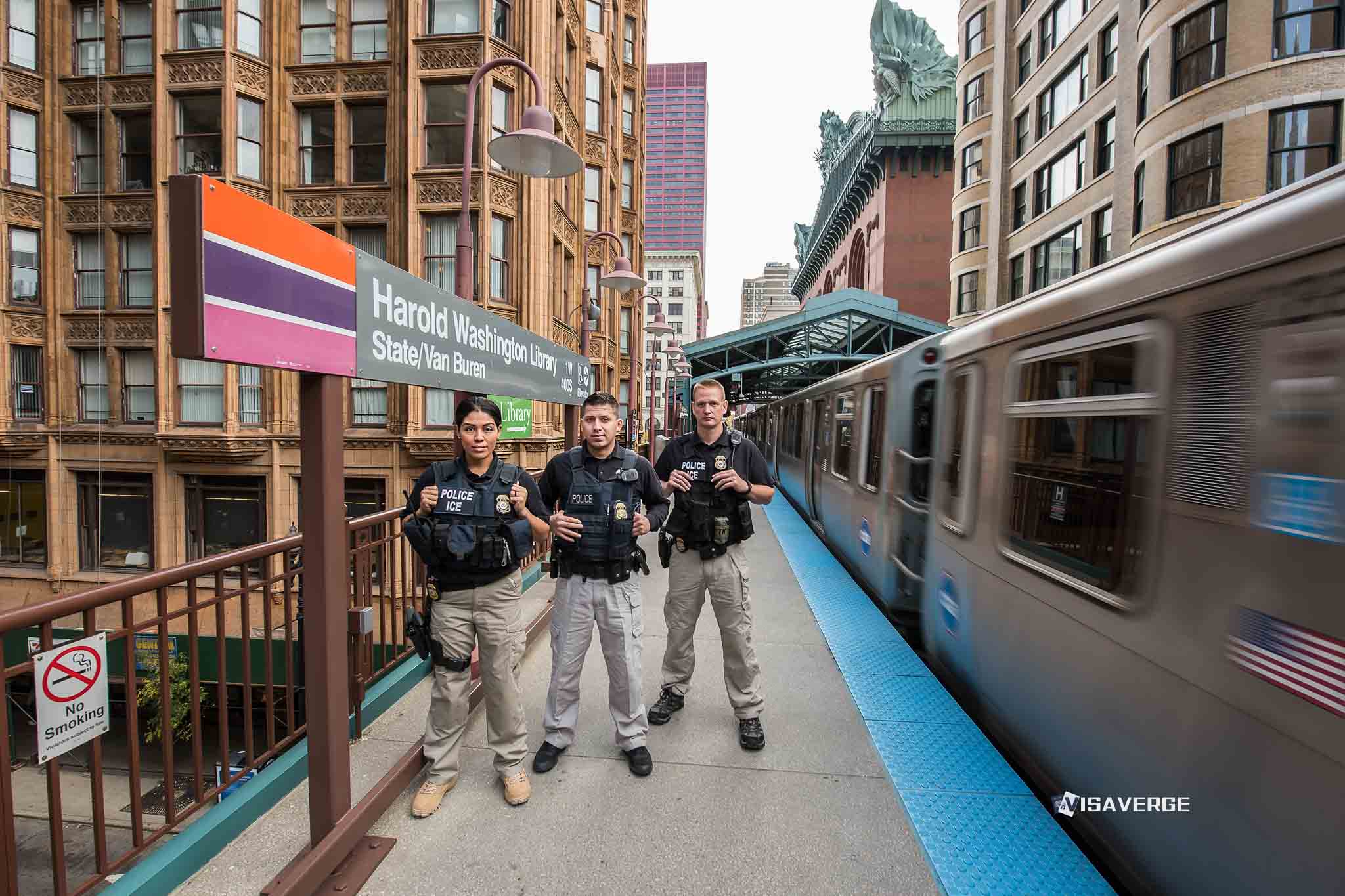
- ICE is launching a $38.3 billion plan to expand detention capacity through 16 processing centers and 8 mega hubs.
- The strategy aims to speed up removals to an average of 60 days using centralized, high-capacity facilities.
- Critics warn of reduced oversight and human rights risks as the agency shifts away from local jail contracts.
(HAGERSTOWN, MARYLAND) — U.S. Immigration and Customs Enforcement is moving ahead with a $38.3 billion plan to convert 16 regional warehouses into deportation processing centers and build 8 mega detention hubs designed to speed removals and cut reliance on local jail contracts.
The network, which ICE aims to have operational by late 2026, calls for hubs that can hold up to 10,000 people each and is designed to double current detention capacity while enabling deportations within 60 days on average.

ICE’s model begins with short stays in the warehouse-style processing centers, where people taken into custody would undergo medical exams, biometrics collection and initial asylum screenings.
After 3-7 days, ICE plans to transfer detainees to the larger hubs for longer-term confinement and case handling, using video courtrooms and other remote adjudication tools intended to move cases faster.
At the hubs, ICE envisions dedicated video courtrooms, remote interpretation suites and space for over 60 consular officers, a setup intended to speed identity verification and travel document processing for deportations.
The agency frames the plan as a way to reduce transport costs and end county jail contracts that have drawn human rights criticism, shifting detainees away from scattered local facilities and into larger, standardized sites.
Detention already stands at a record 70,000 people daily, a level that puts pressure on transfer systems, court dockets and medical care inside facilities as ICE holds more people at any given time.
That total is up from under 40,000 at the start of the Trump administration, a comparison ICE critics use to argue that detention has grown into a central feature of immigration enforcement rather than a limited tool used in narrower cases.
ICE plans to add over 100,000 beds by November 30, 2026, an expansion that would require rapid construction, conversions and staffing while the agency continues to arrest and detain at historically high levels.
The build-out includes purchases and conversions of large facilities that resemble the warehouses ICE wants to turn into processing centers, including one in Hagerstown, Maryland, that cost $100+ million.
The plan also points to acquisitions described as “others for 8,500 each,” alongside sites at Joint Base McGuire-Dix-Lakehurst in New Jersey, Camp Atterbury in Indiana and expansions at Guantánamo Bay.
Supporters of large, centralized detention sites argue that consolidating operations can improve coordination and throughput, while critics warn that the sheer scale increases the risk of mistakes, hurried transfers and deteriorating conditions.
Under the blueprint ICE outlined, a person arrested in an interior operation could move from a brief intake period at a processing center to a mega hub where hearings take place by video and attorneys, family members and advocates have to track frequent transfers across state lines.
ICE’s enforcement posture has also shifted in ways designed to reduce what one description called “prevent public contact,” as communities and service providers adjust to the likelihood of more arrests outside traditional border settings.
The Trump administration ended Biden-era “sensitive locations” memos that barred enforcement near schools, churches and courthouses without warrants, a change that allows ICE actions in those areas if probable cause exists for removability.
For people confronted in public, common rights language repeated by advocates includes the right to remain silent, refuse searches without consent, ask “Am I free to go?”, and not sign documents, while carrying “Know Your Rights” cards and invoking counsel.
Community organizations and service providers have responded by reducing public-facing contact with clients, including minimizing public waiting areas by moving them behind closed doors, marking spaces as private and ensuring client data is not visible in public zones.
At homes, advocates have warned that ICE may misrepresent itself as local police, urging residents not to open doors without warrants, to record interactions and to verify judicial warrants before allowing entry into private areas.
The detention build-out also represents a shift in how ICE expects to finance and procure new capacity, with a large multi-year funding infusion and a detention-specific allocation that would support construction, conversion and operations through the end of the decade.
The funding described in the plan totals $75 billion through 2029, including $45 billion for detention, providing the fiscal backbone for what ICE presents as a standardized system of processing centers feeding large hubs.
Contracting is a flashpoint, with the plan relying on no-bid contracts to private firms including CoreCivic and GEO Group, a procurement approach that critics say reduces competition and makes oversight harder at a time of fast expansion.
Those contracts operate under a January 2025 border emergency declaration that the plan describes as enabling an accelerated build-out and a reported shift toward government-owned facilities, a change that still leaves private operators central to day-to-day detention functions.
The ownership structure has become a core point of controversy, because government ownership can concentrate responsibility for conditions and transparency even as private contracting can diffuse accountability across multiple entities.
Congressional oversight has collided with the expansion’s operational demands, with ICE requiring 72-96 hours notice for visits and denying access while citing safety or protests.
One example cited involved Rep. Norma Torres, who was exposed to chemical agents June 7, 2025, as disputes over access and security escalated during efforts to inspect detention sites.
Experts have called such limits illegal for oversight of facilities holding migrants and citizens, arguing that detention on this scale requires more immediate inspection power and less gatekeeping by the agency being scrutinized.
Criticism of the build-out also extends to the policy consequences of a “detention-first” model that opponents say prioritizes confinement and rapid removal over community-based case management and alternatives to detention.
Economists and other critics warn the approach could harm GDP by $9 billion through workforce removals, especially as employers seek visas, linking detention policy to labor availability in industries that rely on immigrant workers.
Reports cited in the plan also describe allegations of violations and deaths, including 3 in one camp since August 2025, details that have fueled demands for more transparent medical reporting and faster independent investigations.
Some opponents have compared the broader approach to WWII-scale imprisonment, framing the expanding detention footprint as part of a wider transformation in how the government manages immigration enforcement away from the border.
Legal controversies have also emerged from arrests that advocates say sweep too broadly, including the case of Mahmoud Khalil, a lawful permanent resident whose arrest was described as unlawful and tied to a 1950s law.
That law was cited in connection with “adverse foreign policy consequences,” a phrase that critics say illustrates how older statutes can be used in modern immigration enforcement fights.
Inside the system ICE proposes, speed depends on quick intake, rapid transfers and remote case handling, but those same mechanics can make it harder for families to locate detained relatives and for attorneys to establish contact before hearings move forward.
Even basic questions after an arrest can take time to answer, particularly when people are transferred from processing centers to mega hubs in different jurisdictions with different access rules and varying availability of legal visitation space.
Free and low-cost legal aid is available post-arrest in some cases, but immigration proceedings generally do not provide government-provided counsel, a gap that can leave detainees representing themselves in high-stakes hearings.
Advocates argue that early representation can affect bond considerations and the preservation of documents needed to support an asylum claim or other defenses, especially when detention and deportation timelines accelerate.
Families often begin with phone calls and a search across facilities as transfers unfold, trying to learn where a person is being held and what deadlines apply before the detention network moves a case past the point where outside help can catch up.