- ICE agents detained three restaurant workers in Willmar after earlier eating lunch at the same establishment.
- The arrests took place near a middle school and church, sparking immediate community backlash and documentation.
- Operation Metro Surge has deployed 3,000 federal officers across Minnesota, causing widespread business disruptions and fear.
WILLMAR, MINNESOTA — ICE agents detained three workers connected to El Tapatio, a Mexican restaurant in Willmar, Minnesota, on Wednesday evening, January 14, 2026, hours after four agents had eaten lunch there around 3 p.m.
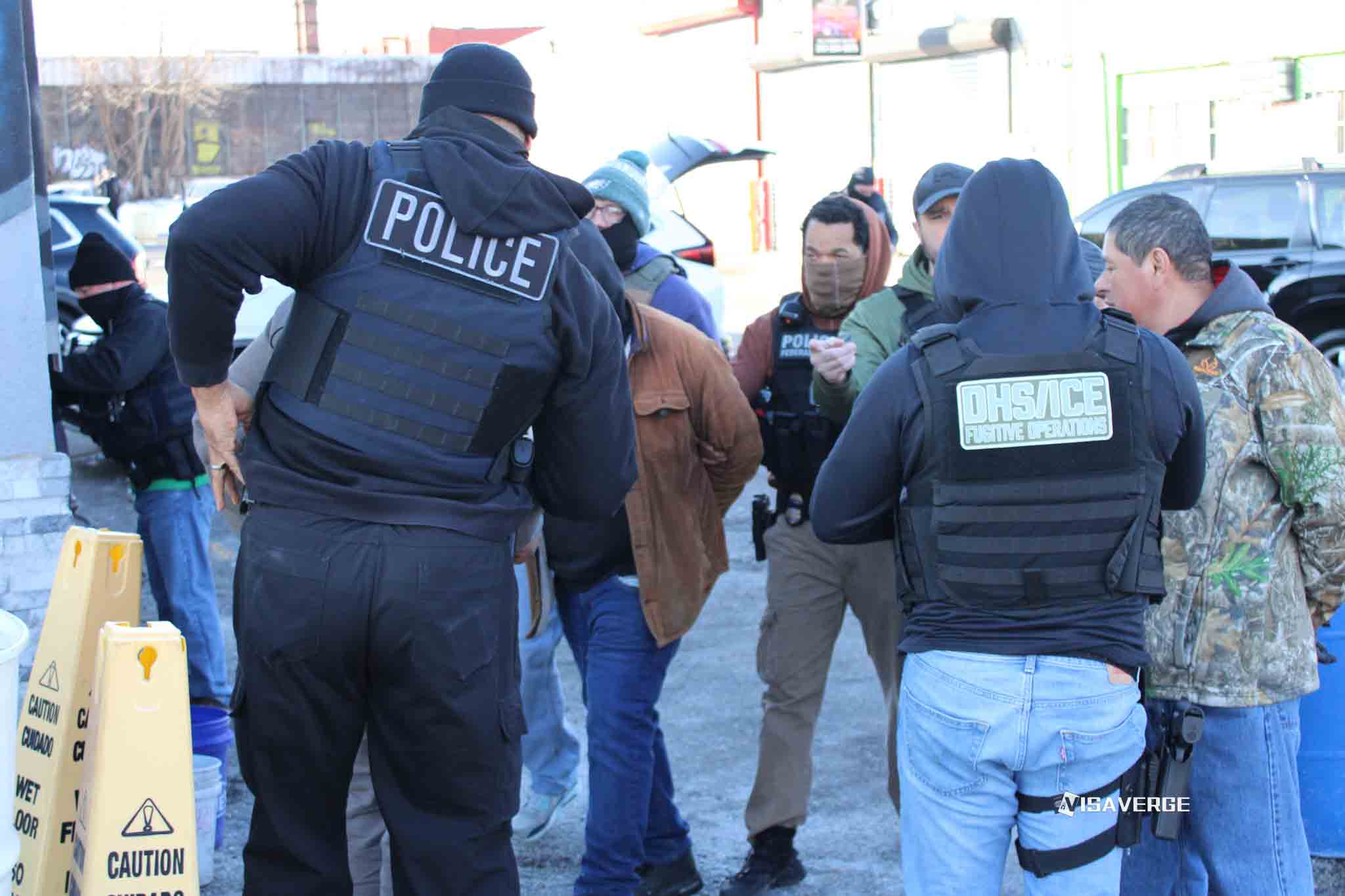
Witnesses said the detentions followed a day of agents being present earlier and then tracking the workers after the restaurant closed. The stops unfolded near Willmar Middle School and a Lutheran church at about 8:30 p.m., with bystanders blowing whistles, taking photos and videos, and shouting at the agents.
“Would your mama be proud of you right now?”
Witnesses recalled someone yelling that as the workers were arrested. Witnesses also described the staff as frightened as the scene drew onlookers and recording phones.
The Department of Homeland Security did not respond to questions about the identities of the detained workers, their roles at the restaurant, or the reasons for arrest. Details on their immigration status also remained unclear.
Accounts from people who said they saw the agents described a sequence that began inside the restaurant hours earlier. Four agents ate lunch at El Tapatio at around 3 p.m., witnesses said, before the later detention of three workers that night.
After the restaurant closed, witnesses said agents followed the workers’ vehicles, then carried out arrests in areas near a school and a church. The scene, they said, played out in public view, with a mix of confrontation and documenting from bystanders.
The Willmar incident unfolded as residents across Minnesota track immigration enforcement with limited visibility into arrest patterns and outcomes. Public information remains uneven, a gap that has fueled questions similar to those raised in tracking ICE arrests across the state.
While Willmar sits outside the Minneapolis–St. Paul core, the detentions came amid a broader enforcement environment that has been centered in the Twin Cities and has heightened attention far beyond the metro.
Operation Metro Surge launched in December 2025, deploying around 3,000 ICE and federal officers to the Minneapolis-St. Paul area. Officials have described it as the agency’s largest-ever immigration enforcement operation, targeting alleged fraud and overuse of social services.
Community leaders and residents have described a different reality, with fear spreading through workplaces and neighborhoods as enforcement encounters become more visible. The political and civic pushback has intensified alongside public debate, including statements by state and city leaders about the presence and tactics of federal enforcement in the Twin Cities, as reflected in leaders addressing ICE operations.
Tensions escalated after ICE agent Jonathan Ross, 43, fatally shot Renee Nicole Good, 37, during an anti-ICE protest in Minneapolis on January 7, 2026. Good was described as a mother.
The shooting touched off protests, business closures, and lawsuits by Minnesota, Minneapolis, and St. Paul against the Trump administration. The suits allege unlawful retaliation and terrorizing of families, schools, and workplaces.
Against that backdrop, the detentions tied to El Tapatio added to the sense among some residents that enforcement actions can surface in everyday routines. Witnesses in Willmar described agents blending into the afternoon lunch crowd and returning later in a way that made the later arrests feel, to them, targeted and planned.
Restaurants and other migrant-owned businesses have been frequent flashpoints in the heightened enforcement climate, with owners reporting ICE agents circling in unmarked vehicles. Some proprietors said the presence of masked officers and vehicles near their businesses has affected staffing and customer traffic, and in some cases forced operational changes.
Milissa Silva-Diaz, the 47-year-old CEO of El Burrito Mercado in St. Paul, described what she called repeated ICE activity around her business.
“ICE is using my business as a hunting ground,” Silva-Diaz said, calling it an “ICE hunting ground” and saying masked officers scared off staff and customers and forced reduced hours.
Miguel Lopez of Homi in St. Paul said he shut his dining room for pickup-only.
“I don’t feel safe either in my house or my business,” Lopez said, adding he would not endanger employees.
Other restaurants have also adjusted or closed after ICE appeared, witnesses and owners said. El Rodeo in the Twin Cities closed after ICE showed up and spooked staff, according to accounts cited in reports of the incidents.
In Circle Pines, a legal worker at Pancho’s Taqueria and Mexican Cafe was detained after ICE waited in the parking lot, an incident that led to closure, according to the same accounts.
The disruption has not been limited to Minnesota. Some owners and workers have pointed to similar fear and business shifts elsewhere, including the way enforcement pressure can reshape staffing and customer habits. The dynamic echoes what has been reported about small-business impacts in other parts of the United States.
Alongside business changes, backlash has included refusals of service and confrontations that play out at storefront doors and in parking lots. A sandwich shop in Muskegon, Michigan, posted a message aimed at ICE: “You are NOT welcome. You will be denied service. You will be laughed at and escorted out,” citing disregard for due process.
In south Minneapolis, staff and neighbors at Wrecktangle Pizza chased away ICE agents who were attempting entry, according to accounts of the incident. Agents deployed chemical spray that blew back, the accounts said.
At Cancun Mexican Grill & Cantina in St. Paul, diners confronted agents and demanded warrants, yelling “Take off your mask.” The confrontations reflect a moment in which enforcement actions, once largely out of sight, increasingly draw immediate public reaction.
Faith communities have also emerged as focal points for resistance and support efforts around enforcement activity, including in and around the Twin Cities. Those efforts have been described in accounts of faith communities resisting, as religious institutions weigh how to respond when enforcement touches their congregants and neighbors.
In Willmar on January 14, the setting of the arrests—near a middle school and a Lutheran church—underscored for some residents how quickly enforcement can intersect with spaces associated with daily life. Witnesses described the arrests as unfolding within view of the community, rather than behind closed doors.
Even with the eyewitness timeline, critical pieces remain unconfirmed publicly. DHS did not respond to questions about why the workers were detained, whether they were owners or employees, or what legal process or allegations, if any, were tied to the arrest decision.
That lack of clarity has left business operators and workers trying to plan without knowing what might trigger an enforcement visit or what documentation agents might present. In that uncertainty, some Minnesota residents have also pointed to how temporary or unclear immigration situations can destabilize daily life, a concern reflected in reporting on status uncertainty.
Legal and workplace advocates have urged employers and employees to understand how ICE can legally enter certain areas of a business and what limits apply, especially in restaurants where public and private spaces sit feet apart. Guidance summarized from the Native American Rights Fund draws a distinction between public areas, such as dining rooms, and private spaces reserved for employees.
Under that guidance, ICE can enter public workplace areas like restaurant dining rooms without warrants. For private employee-only areas, the guidance says agents need employer permission or a judicial warrant signed by a judge that names persons and areas.
The distinction matters because the Native American Rights Fund guidance says administrative warrants signed by ICE officers do not suffice for entry into private employee spaces. For restaurants, that can mean the difference between agents standing in a public dining room and attempting to move behind a counter, into a kitchen, or into offices and storage rooms marked for employees only.
The same guidance emphasizes individual rights during encounters, including the right to remain silent and request a lawyer. It also says individuals can refuse consent to searches, record safely, and contact family.
The Native American Rights Fund guidance notes that Tribal IDs prove U.S. citizenship, though agents may need supervisor clarification. It also says nonprofits and businesses can designate private areas with signs and policies denying entry without judicial warrants.
For owners and managers, the guidance suggests practical steps meant to reduce confusion in the moment. Those steps include clarifying which spaces are public and which are private, training managers on who can grant consent to entry, documenting incidents, and seeking legal help when needed.
The guidance also includes a contact point for rights violations: Native American Rights Fund at 303-447-8760.
In Willmar, the public nature of the arrest scene added urgency to those questions, with bystanders taking photos and videos and challenging agents as the detentions occurred. Witnesses said whistles and shouted remarks turned the area near Willmar Middle School and the Lutheran church into an impromptu stage for a national debate over enforcement and community response.
For El Tapatio’s customers and workers, the sequence described by witnesses—agents eating lunch, then later detaining three workers after closing—compressed those wider tensions into a single day, ending with arrests carried out in view of a community that, by the witnesses’ accounts, did not stay silent.