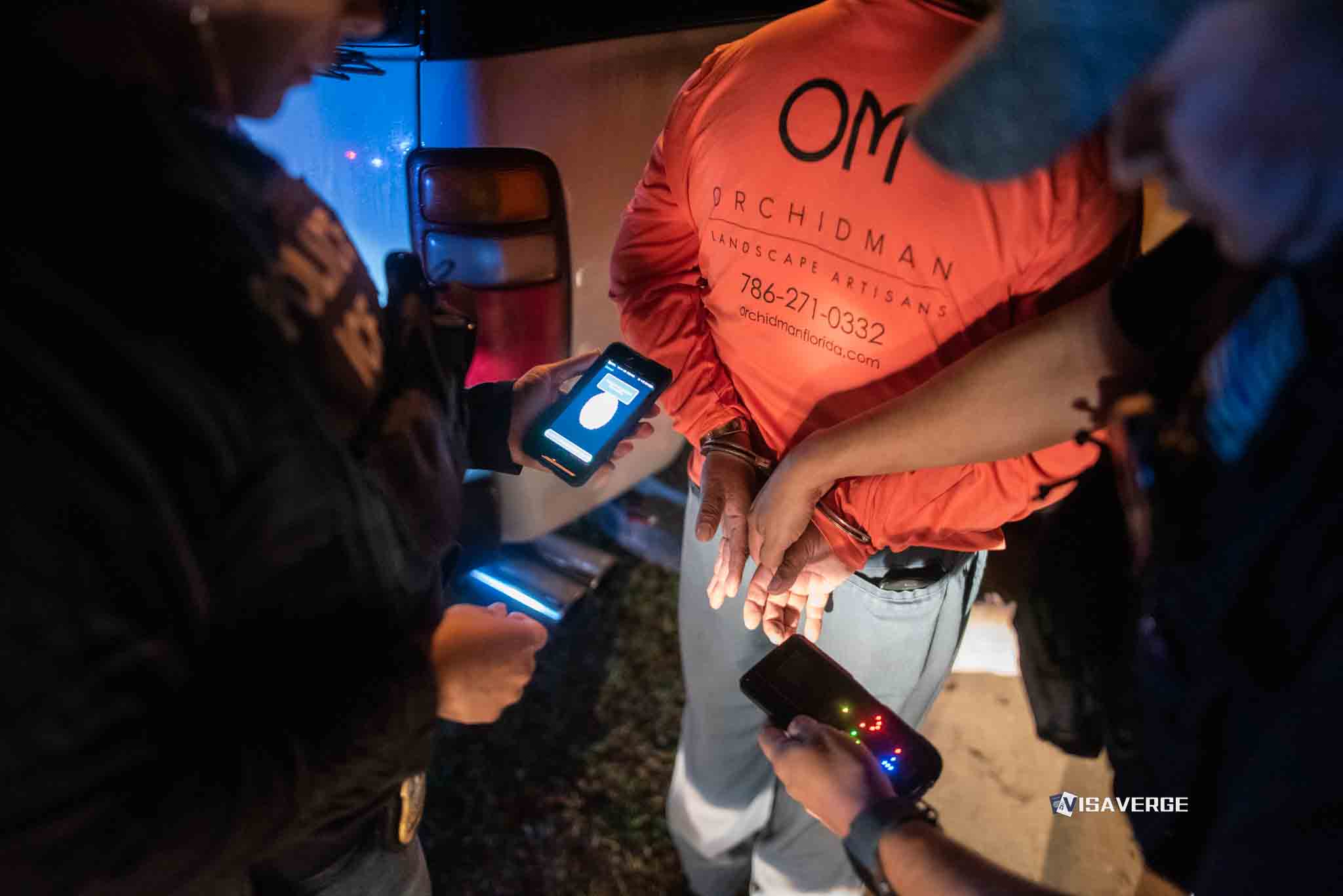
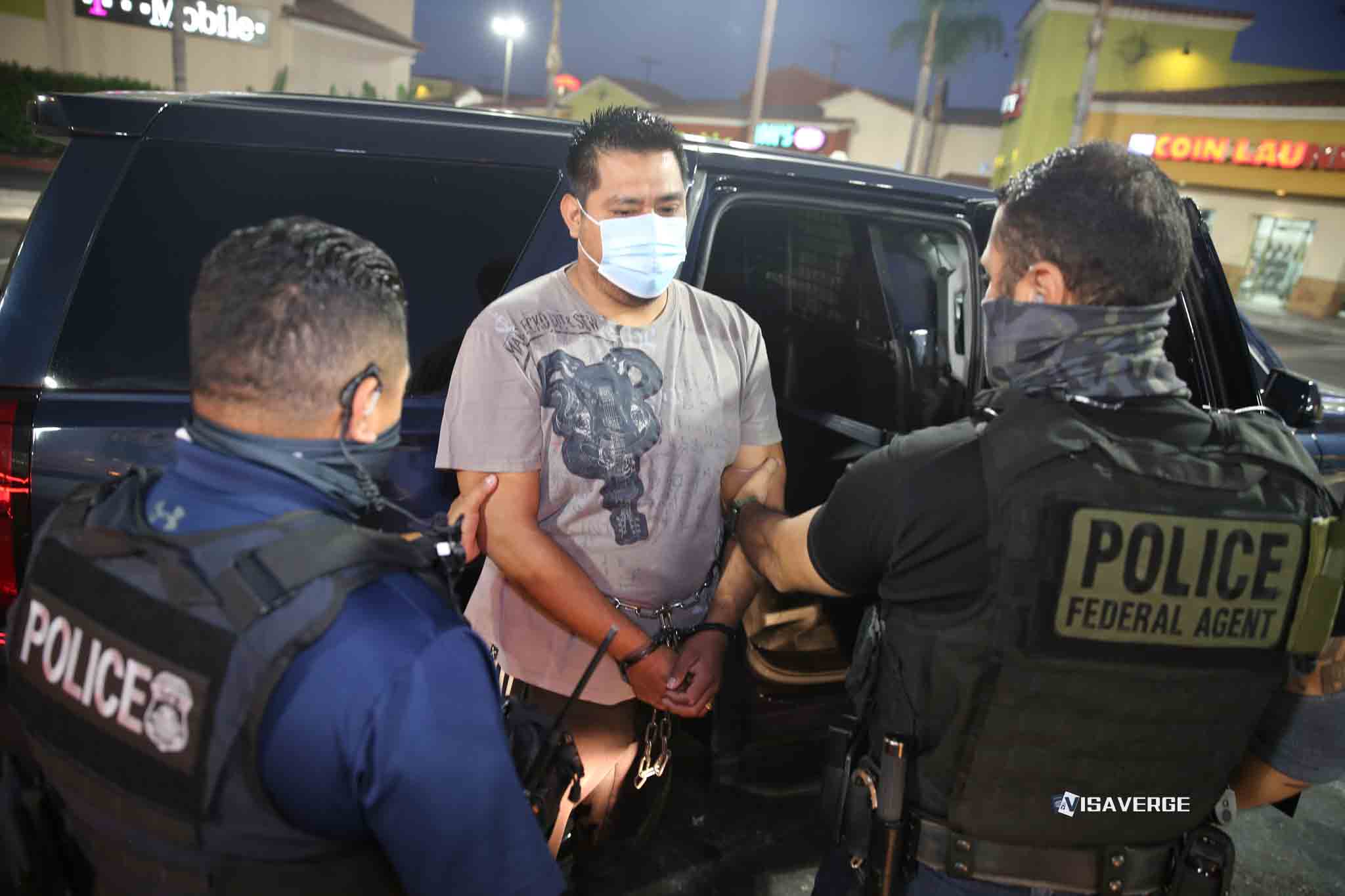
- ICE arrests reached 821 per day in early 2026, marking a 170% increase since the previous administration.
- Routine immigration appointments have become primary enforcement sites where non-criminal immigrants face detention.
- Over 73% of detainees in February 2026 had no criminal convictions on their records.
(UNITED STATES) — Immigration and Customs Enforcement officers are arresting more immigrants at USCIS interviews and other immigration appointments in 2026 as the Trump administration pushes for higher arrest numbers nationwide.

ICE arrests averaged 821 a day in the first ten months of Trump’s second term, a 170% increase from President Biden’s final year in office. By February 2026, ICE was holding 68,289 individuals in detention, and 73.6% had no criminal conviction on record.
That rise has changed the risk attached to appointments that many immigrants once viewed as routine. Marriage-based green card applicants have been arrested inside USCIS interviews, and immigrants attending adjustment-of-status interviews, marriage interviews, asylum interviews and biometrics appointments now face a higher chance of detention.
Free toolUSCIS Receipt Number DecoderThe administration has paired that expansion with a daily arrest goal. Homeland Security advisor Stephen Miller told Fox News that the administration had a goal of “a minimum of 3,000 arrests for ICE every day, and President Trump is going to keep pushing to get that number up higher each and every single day.”
ICE has denied formal quotas exist, but the pressure to increase volume appears across the system. In January 2026 alone, ICE booked 39,694 people into detention facilities, with 36,099 arrested directly by ICE and an additional 3,595 arrested by Customs and Border Protection.
Shifting Arrest Profiles
The profile of those arrests has also shifted. Just 37% of ICE arrests during Trump’s first 10 months in office in 2025 involved individuals with criminal convictions, down from 52% in previous years.
Early 2026 data points in the same direction. In fiscal year 2026, 92% of ICE detention growth came from immigrants with no criminal convictions.
Between September 2025 and January 2026, the detained population grew by 11,296 people. Non-criminal detainees accounted for 72% of that growth, while immigrants with criminal convictions accounted for 8%.
Even among detainees with criminal records, the offenses often were not violent. In September 2025, ICE detained more individuals whose most serious crime was improper entry or reentry, 1,776, than those guilty of violent crimes.
Regional Enforcement Increases
Regional numbers show how sharply enforcement has climbed. Daily arrests jumped about 30% in the ICE regions that include Houston and Dallas.
Some metro areas saw larger increases. Atlanta posted a 228% rise, Boston 224%, Denver 211%, El Paso 283%, San Diego 530%, and Washington, D.C. 312%.
Researchers from CU Boulder said the increase in volume has cut against the agency’s stated focus on criminal offenders. They said there is an inverse relationship between the number of arrests that ICE makes and ICE’s ability to target people with a criminal conviction, and that pattern has been much more dramatic following Trump’s second inauguration.
Appointments as Enforcement Sites
That tension is especially visible at immigration appointments. People appearing for USCIS interviews or ICE check-ins often are trying to comply with the legal process, yet those same appearances can now expose them to arrest.
Advocates say that has made immigrants more hesitant to attend interviews and other required appointments. Missed deadlines can damage asylum cases, green card applications and family-based petitions, leaving people caught between compliance and fear of detention.
The risk is highest for some groups. Undocumented individuals with criminal history remain at high risk, though the definition of who falls into that category has widened to include minor offenses.
Undocumented individuals with existing removal or deportation orders also face a high risk of fast deportation even if they file appeals or habeas corpus petitions. Individuals with pending criminal charges have also become a larger focus of ICE enforcement.
In 2024, ICE apprehended 45 people with only a pending criminal charge. In 2025, through October, the agency apprehended 319 people with only a pending criminal charge, a 600% increase.
Other Triggers for Detention
Other factors can raise the risk of detention. They include missing immigration court hearings, failing to update an address with the court or USCIS, driving without a license in certain states, traveling internationally without proper advanced parole, and ignoring notices from court or USCIS.
Policy changes from 2025 continue to shape those outcomes in 2026. DHS expanded expedited removal nationwide on January 21, 2025, targeting individuals unable to prove two years of continuous U.S. presence.
That process can move people toward deportation without a full hearing or detailed case review. Immigrants attending an appointment may face that risk if they cannot quickly document continuous presence in the United States.
Another driver is the Laken Riley Act, enacted January 29, 2025. The law mandates detention for individuals suspected of minor offenses, regardless of criminal conviction, leaving ICE officers with little discretion once the law applies.
Oversight and Warrant Authority
Oversight concerns have deepened as arrests have expanded. Current DHS regulations permit ICE agents to issue arrest warrants under 8 U.S.C. § 1226, and every immigration officer in ICE and CBP who has completed basic training can exercise this power while carrying a firearm, but the authority does not require additional oversight.
The agency’s “Warrant for Arrest of Alien,” known as Form I-200, is not specified in regulation or statute. The form allows agents to determine on their own whether probable cause exists for removal.
Critics say that leaves broad discretion with lower-level officers. They argue the absence of independent review creates contradictions in a system meant to protect the rights of U.S. citizens and immigrants who are not legally subject to arrest.
Former Justice Department official Chris Hardee has proposed moving warrant authority to an immigration judge or senior official who would review requests before warrants are issued to lower-level agents. Critics also argue that DHS arrest practices create risks of prolonged detention, mistakes and harm caused by inadequately trained officers.
Those concerns extend beyond ICE personnel. The deputization of DOJ personnel, including members of the U.S. Marshals, Bureau of Prisons, and Drug Enforcement Administration, has raised questions about whether those officials have enough immigration law expertise to navigate protections such as the credible fear hearing process.
Electronic Monitoring and Detention Growth
Detention growth has also pushed ICE to rely more heavily on electronic monitoring. As of February 7, 2026, ICE’s Alternatives to Detention programs were monitoring 179,991 families and individuals, more than 2.6 times the number of people held in physical detention.
The form of monitoring has changed, too. ICE has been moving people off the smartphone tracking app SmartLINK and increasing the use of GPS ankle monitors, with GPS ankle monitor usage now at record highs for the agency.
San Francisco’s area office had 20,504 monitored individuals, the highest total in the country. Los Angeles followed with 18,692, then Chicago with 18,602, Miami with 17,979, and New York with 10,698.
Taken together, the physical detention and monitoring systems now reach far more people than in earlier years. As of early 2026, the total number of individuals either detained or monitored through ICE programs stood at approximately 248,280.
That footprint has grown while some state protections remain limited. New York’s Protect Our Courts Act, reaffirmed on February 6, 2025, applies to state court properties, but it does not protect people attending ICE appointments or other federal proceedings.
Legal Challenges and Remaining Protections
Legal challenges continue but have not stopped enforcement. The ACLU’s case, MRNY v. Huffman, argues that the expedited removal policy violates the 5th Amendment’s Due Process Clause, the Immigration and Nationality Act, and the Administrative Procedure Act.
For immigrants who are detained, several protections remain in place. They can learn the reason for their arrest, contact an attorney or accredited representative, request a credible fear interview if they express fear of persecution or torture, seek review by an immigration judge, and appeal detention decisions.
Legal advisers say those protections still apply even under expedited removal policies or conditions set by the Laken Riley Act. Reaching them, however, has become harder as the system moves cases more quickly.
How Immigration Appointments Have Changed
That speed has altered the role of the immigration appointment itself. A USCIS interview, an asylum appearance or a biometrics appointment can still serve its original administrative purpose, but it can also become the point where enforcement takes over.
For immigrants, that has changed preparation from a paperwork exercise into a legal calculation. Lawyers and accredited representatives urge clients to understand their case status, carry notices from USCIS, ICE or immigration courts, keep address information current, and avoid signing documents without legal review.
Families are also planning for the possibility of arrest. Emergency arrangements for children, legal contacts and access to records have become part of preparing for an appointment that once appeared routine.
The broader effect is a system that may discourage participation in the very processes it requires. Immigrants who fear arrest at mandatory check-ins or interviews may delay applications or avoid appearances, raising the prospect of more missed hearings and more exposure to enforcement.
Compared with 2023 policies that focused more on convicted criminals, 2026 policies have expanded enforcement criteria, resulting in 30% more arrests of individuals without criminal records in 2026 alone. That expansion has come as ICE and USCIS appointments, once treated by many immigrants as places to resolve status issues, carry a level of risk that now shapes decisions long before anyone walks through the door.
As of early 2026, the total number of individuals either detained or monitored through ICE programs stands at approximately 248,280, a measure of how far enforcement now reaches into daily immigration compliance across the United States.