- ICE agents testified to facing daily targets of eight arrests despite official government denials of quotas.
- A federal judge halted warrantless arrests in Oregon after ruling the government failed to show probable cause.
- Advanced surveillance apps like ELITE and Mobile Fortify use mapping and biometrics to identify targets.
(OREGON) — ICE agents testified under oath in a federal class-action case that they faced verbal pressure to hit a daily target of eight arrests and used a surveillance app that mapped “target-rich” areas and generated dossiers on people, court records in the Oregon litigation show.
The testimony emerged in M-J-M-A v. Wamsley, a lawsuit challenging ICE arrest practices in Oregon, and became public in March 2026 after sealed transcripts from December 2025 circulated more widely in the court fight. The disclosures offered an unusually detailed view of how agents described internal expectations and technology-assisted enforcement.
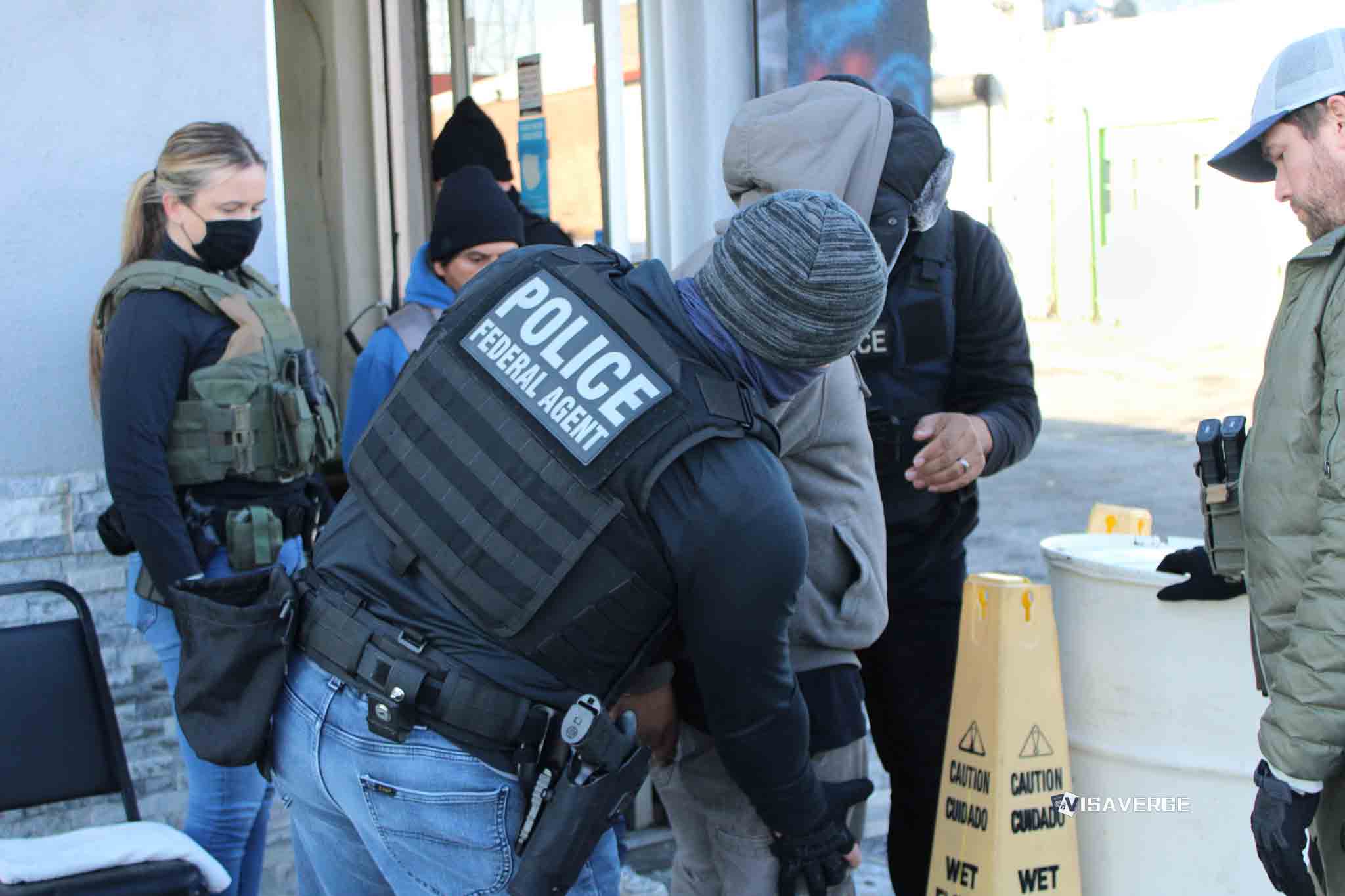
An ICE agent identified in court as “JB” testified that his team received verbal instructions to reach a target of eight arrests per day. The account landed in court amid a dispute over whether enforcement pressure leads officers to detain people without adequate individualized cause.
Senior Department of Homeland Security officials publicly rejected the term “quotas” in congressional testimony and statements, while defending the pace and scale of enforcement operations. The clash between sworn testimony and official messaging now sits near the center of the Oregon case.
At a Senate Judiciary Committee hearing on March 3, 2026, Secretary Kristi Noem said, “We don’t have any quotas on our law enforcement officers. The department is focused only on ‘targeted’ law enforcement operations.” Noem also said agents face a “8,000% increase in death threats” and a “1,300% increase in assaults.”
The Oregon case focuses on how ICE agents make arrest decisions in the field and what legal standard applies when officers detain someone without first getting a warrant. A warrant is a judge-authorized order; the plaintiffs argue that bypassing that step can invite broad stops that sweep in people who were not targets.
On February 4, 2026, a federal judge in Oregon issued a preliminary injunction halting warrantless arrests in the state. The judge ruled the government failed to show probable cause that those arrested were likely to escape, a legal requirement cited for warrantless immigration detentions.
Technology featured prominently in testimony and related records, including tools described as shaping who gets stopped and how quickly officers move from suspicion to detention. The disclosures describe an enforcement model that relies on location data, aggregated records, and rapid identity checks on the street.
One system discussed in testimony was the Enhanced Leads Identification & Targeting for Enforcement, or ELITE, developed by Palantir Technologies. Agents described ELITE as functioning “like Google Maps,” using a geospatial interface to highlight areas the system considered “target-rich.”
ELITE, as described in court accounts, generates dossiers on individuals and assigns an “address confidence score.” The score draws on data from sources including the Department of Health and Human Services, tying together personal identifiers, addresses, and other records into a single profile view used to support field operations.
The testimony and descriptions in records portray ELITE as more than a list of names. The app’s map-based presentation can push teams toward neighborhoods or buildings flagged by the system, and the dossier-style aggregation can encourage officers to treat proximity, patterns, or probabilities as reasons to initiate contact.
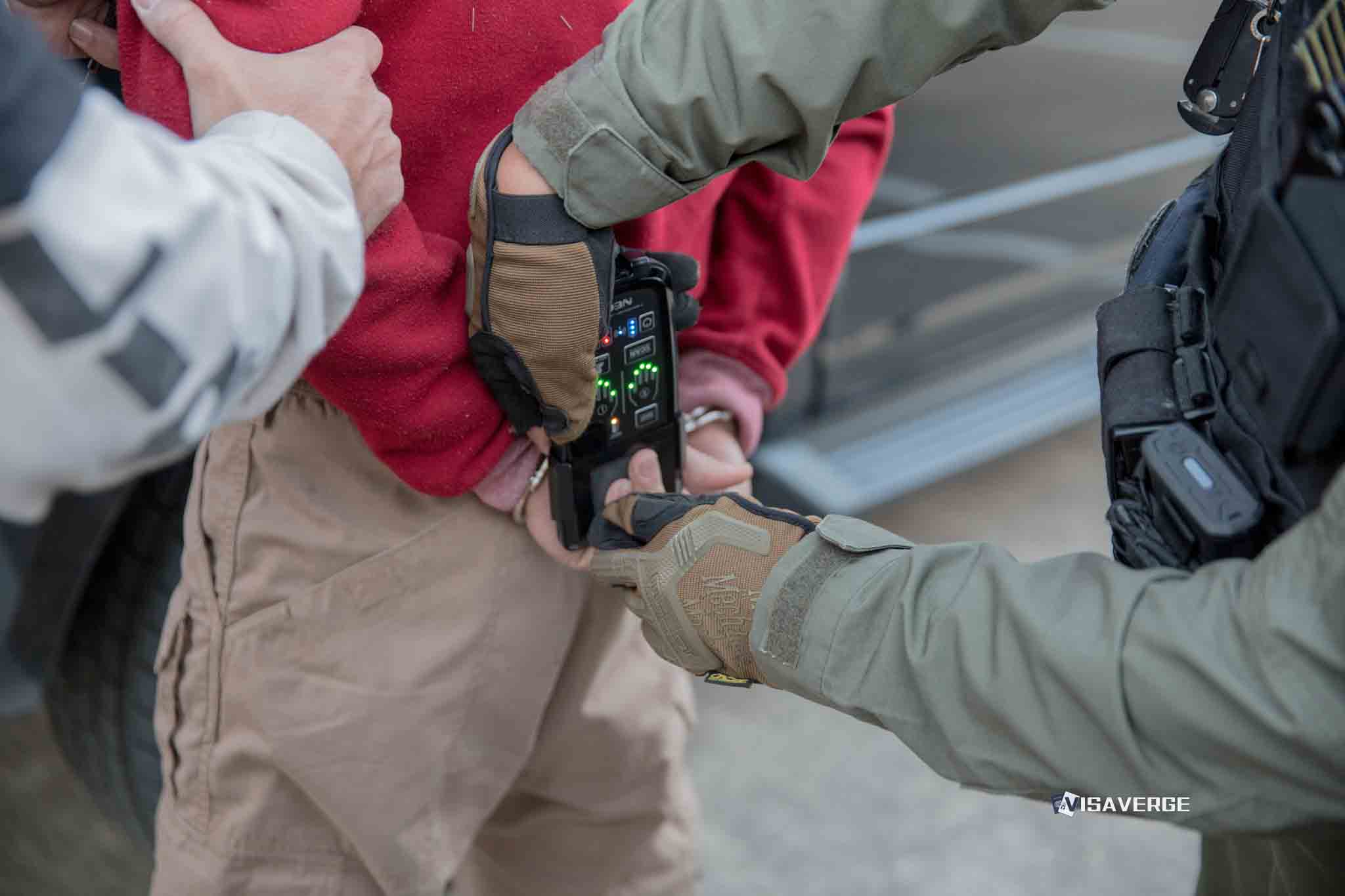
A second app described in the Oregon case, Mobile Fortify, adds on-the-spot biometric capture. Powered by NEC, the tool allows agents to collect contactless fingerprints and faceprints in the field and check identities quickly during stops.
Internal documents cited in the case state that individuals cannot decline these scans. The same records say data, including that of U.S. citizens, may be retained for 15 years, raising concerns in the litigation over the scope of collection and the long tail of data storage.
Records and testimony describe how license plate lookups, location-based targeting, and dossiers can expand enforcement encounters beyond an intended target. In practice, the system can pull bystanders and passengers into an identification net when an officer runs a plate, stops a vehicle, or checks people near a flagged address.
The Oregon case also put a name to the regional enforcement effort tied to these tools: Operation Black Rose. DHS described it as a large-scale initiative in the Pacific Northwest, and court narratives and statements linked it to “live targeting,” where agents run license plates in real time to identify what DHS materials described as “immigration nexuses.”
In a year-end DHS press release on December 19, 2025, Noem celebrated Operation Black Rose in Portland, Oregon, saying it resulted in the arrest of over “1,240 illegal aliens to date” as part of a mission to “restore the rule of law.” DHS posted the year-end review in its newsroom at “Under President Trump and Secretary Noem DHS Has Historic Year”.
The legal dispute in Oregon turns in part on incentives and accountability. Plaintiffs argue that daily arrest quotas, or expectations that function like quotas, can pressure officers to make fast decisions that are hard to justify later under the Constitution’s protections against unreasonable seizures.
The injunction barring warrantless arrests in Oregon amplified the stakes. Warrantless, in this context, refers to detaining someone without first obtaining a warrant, and the judge’s order focused on the government’s showing of probable cause related to flight risk.
Testimony about daily arrest targets and app-driven “target-rich” mapping can also become evidence in a pattern-and-practice case, where plaintiffs try to show systemic conduct rather than isolated errors. The government’s public position that it does not use quotas adds another layer to credibility fights already underway in court.
DHS officials, in public comments, also defended enforcement posture and officer conduct. Assistant Secretary Tricia McLaughlin said on January 14, 2026, that federal agents have “followed their training to use the least amount of force necessary” and that “Officers act heroically to enforce the law and protect American communities.”
A senior DHS official, responding to inquiries about deportation flights on March 12, 2026, framed the administration’s plans more broadly: “The Trump Administration is utilizing all lawful options to carry out the largest deportation operation in history, just as President Trump promised.”
The Oregon record includes descriptions of real-world enforcement actions that plaintiffs say illustrate how technology-assisted targeting can spill into dragnet-style detentions. One example described in testimony centered on Woodburn, Oregon, and an operation that took place on October 30, 2025.
In that operation, agents used ELITE to surveil an apartment complex, testimony said. The action ended with a stop of a van of farmworkers and the detention of seven people by smashing car windows, according to the account presented in the litigation materials.
The case also described a misidentification episode involving “MJMA,” an asylum seeker with a valid visa. Plaintiffs said the Mobile Fortify app misidentified MJMA twice and falsely recorded the person as having entered the U.S. unlawfully.
The lawsuit and related public criticism argue such errors do not stay confined to the person ICE originally intended to arrest. When officers rely on proximity-based stops, rapid biometrics, and aggregated dossiers, mistaken identity can cascade into detention, paperwork errors, and difficult efforts to correct the record.
Spillover to U.S. citizens also surfaced as a central concern in the public debate around the Oregon case. Advocacy groups and lawmakers reported that hundreds of U.S. citizens have been caught in “surveillance webs,” a phrase used in the public discussion tied to technology-driven enforcement.
That concern fed into congressional attention and legislation referenced alongside the Oregon dispute. Rep. Chellie Pingree introduced the Stop ICE Intimidation Act in February 2026, linking the bill to concerns about intimidation and surveillance in immigration enforcement operations.
Public records also point to formal government disclosures about the tools named in the Oregon case. DHS posted an AI use case inventory that references Mobile Fortify and ELITE at “DHS AI Use Case Inventory (Mobile Fortify/ELITE)”.
Congress also saw messaging around standards and oversight. Rep. Josh Gottheimer posted a release online at “Gottheimer announces ICE Standards Act”, adding to the list of public documents cited in the broader debate over how ICE conducts operations and how much the public can learn about its tools.
The Senate Judiciary Committee hearing where Noem testified is publicly listed at “Oversight of the Department of Homeland Security”. Her denial of quotas at that hearing now sits alongside the Oregon testimony describing a daily eight-arrest expectation.
The Oregon chronology that brought these issues into sharper view began with the Woodburn operation on October 30, 2025. Agent testimony followed in December 2025, and those transcripts became public in March 2026 as litigation and public interest grew.
The federal judge’s preliminary injunction arrived on February 4, 2026, halting warrantless arrests in Oregon and forcing immediate changes to how agents conduct detentions covered by the order. Public release of testimony and congressional hearings followed in March 2026, adding political and oversight pressure alongside the courtroom fight.
The injunction did not end the litigation. It created a compliance obligation for the government while the underlying claims continue, and it set up disputes over what officers can do in the field, what evidence supports detention decisions, and how technology shapes those choices.
The Oregon case also highlights a broader tension likely to recur: agencies that describe enforcement as “targeted” while field accounts describe tools and expectations that can widen the circle of stops. The court fight now puts those claims under oath, document production, and judicial scrutiny.
For communities, the conflict has immediate effects that can change quickly as court orders and agency directives shift. For DHS, it raises questions about how it describes internal performance expectations and how it governs tools that collect biometrics and build dossiers.
For lawmakers, it sets up oversight fights about transparency, retention rules, and the boundaries of technology-assisted enforcement. The debate now spans courtroom testimony, public disclosures, and competing statements from the same department.
In her Senate testimony, Noem drew a bright line between quotas and targeting, saying, “We don’t have any quotas on our law enforcement officers. The department is focused only on ‘targeted’ law enforcement operations.”