- New DHS policy allows for the arrest of legal refugees who fail to adjust their status after one year.
- Operation PARRIS targets thousands of refugees for re-vetting and potential indefinite detention without a set time limit.
- The policy creates a bureaucratic trap for nationals from 39 countries whose green card applications remain frozen.
(MINNESOTA) — The Department of Homeland Security has instructed officers to treat some refugees who have not secured a green card after one year in the United States as subject to arrest and detention, recasting a long-standing administrative step as an enforcement trigger.
The shift emerged in federal litigation in U.H.A. v. Bondi (No. 0:26-cv-00417, D. Minn.), a case that includes a joint DHS memorandum asserting authority to locate refugees, take them into custody and hold them without a stated time limit during government “inspection” and review.
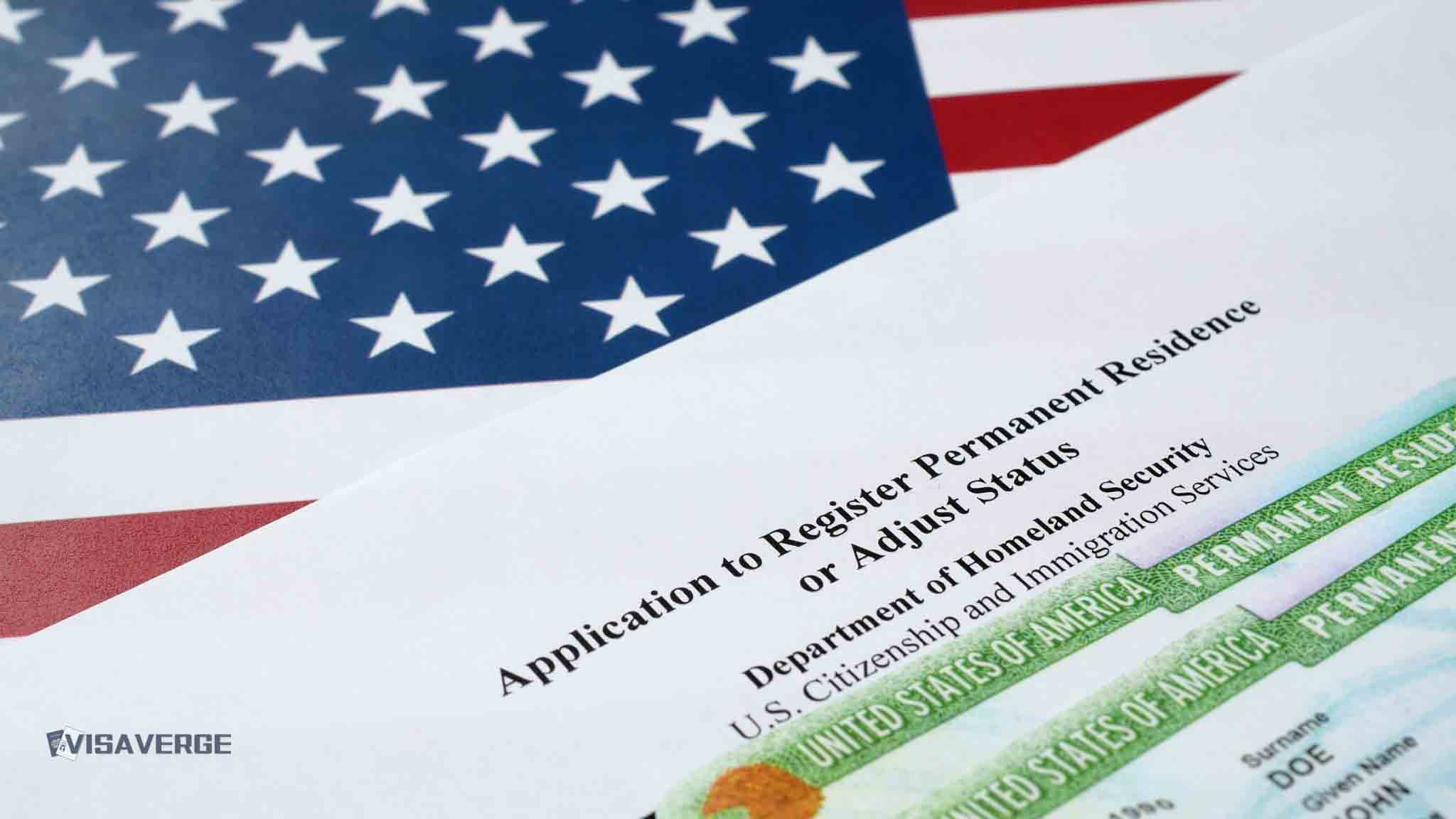
Refugees admitted to the United States generally use Form I-485 to adjust to lawful permanent resident status. Under the new interpretation, failing to complete that adjustment after one year can prompt detention even when the person entered as a legal refugee.
The memorandum frames the one-year point as more than a filing expectation. It treats it as a compliance marker tied to DHS custody authority, tightening the connection between the adjustment process and enforcement operations.
DHS grounded the approach in INA § 209(a)(1). The memorandum says refugee admission is “expressly conditional and time-limited,” and it reads statutory language about returning a refugee “to the custody of [DHS]” as a directive for physical arrest after the one-year mark.
“This requires DHS to take the affirmative actions of locating, arresting, and taking the alien into custody. DHS may maintain custody for the duration of the inspection and examination process.” (February 18, 2026)
A USCIS spokesperson defended the interpretation in a statement to the press, portraying it as mandatory rather than optional. “The one-year inspection is not discretionary; it is a clear requirement in law. The alternative would be to allow fugitive aliens to run rampant through our country with zero oversight. We refuse to let that happen.”
Operationally, DHS tied the interpretation to an enforcement initiative called Operation PARRIS, short for Post-Admission Refugee Reverification and Integrity Strengthening. Officials described it as a nationwide framework that began with targeting 5,600 refugees in Minnesota.
DHS also described the policy’s potential reach as far broader than Minnesota. It estimated approximately 100,000 to 200,000 refugees admitted between January 20, 2021, and February 20, 2025, fall within the population subject to “re-vetting” and potential detention tied to the adjustment timeline.
A central feature of the new approach is the absence of a detention clock during the government’s review. Unlike prior rules that limited detention to 48 hours for processing, the policy sets no time limit on how long a refugee can be held while the government conducts “inspections” or “merit reviews.”
The policy also intertwines with a separate USCIS action that froze immigration benefit adjudications for nationals of 39 specific countries, including Afghanistan, Somalia, Haiti, and Syria. The result, described as a “bureaucratic trap,” leaves some legal refugees required to adjust while facing an indefinite hold on applications, including green cards.
For decades, refugee status functioned as a form of durable protection upon entry, with adjustment commonly viewed as a procedural transition to permanent residency rather than a condition of continued liberty. The new memo’s “conditional” framing marks a departure from that understanding by making non-adjustment after one year an arrestable compliance failure.
The memorandum also rescinds a May 2010 directive from James Chaparro that previously barred ICE from arresting refugees solely for failing to apply for a green card. Removing that restraint changes the enforcement baseline by allowing detention to flow directly from the adjustment timeline, rather than from individualized allegations unrelated to the filing step.
DHS has used public-facing materials to frame Operation PARRIS as an integrity and fraud-focused effort. USCIS posted an announcement about the initiative in its USCIS newsroom announcement, and it also outlines refugee adjustment procedures in its USCIS Policy Manual.
Reports tied to the Minnesota rollout describe tactics that draw refugees into custody. They include “call-in” letters that direct refugees to appear for interviews, followed by arrests at those appointments.
Other accounts from the Minnesota operation allege warrantless arrests and home entries by ICE agents. The same reports say some refugees detained in the Midwest were transferred to detention centers in Texas, a move that can separate detainees from local counsel and community support networks.
Transfers can also complicate access to the documents and witnesses needed for immigration proceedings, while detention itself can make it harder to respond to government requests connected to re-vetting. The interaction is sharper for refugees from the 39-country group, who face an adjudication pause while the new interpretation treats non-adjustment as a compliance problem.
The federal court case in Minnesota challenges the government’s asserted detention authority and its reading of the refugee adjustment statute, placing due process and statutory interpretation at the center of the dispute. The litigation record includes the joint DHS memorandum, and the case points to how agency manuals and public announcements are used both to justify and to contest the policy.
The court fight is likely to turn on what INA § 209(a)(1) requires DHS to do at the one-year point, and whether custody can extend without a time limit during an “inspection and examination process” for people admitted as legal refugees. In the government’s framing, the one-year review is compulsory; in the challengers’ framing, turning a green card step into indefinite detention exceeds lawful authority.
For refugees who built lives around the expectation that adjustment is an administrative pathway rather than an enforcement tripwire, the memo’s plain language is now the governing warning: “This requires DHS to take the affirmative actions of locating, arresting, and taking the alien into custody. DHS may maintain custody for the duration of the inspection and examination process.” (February 18, 2026)