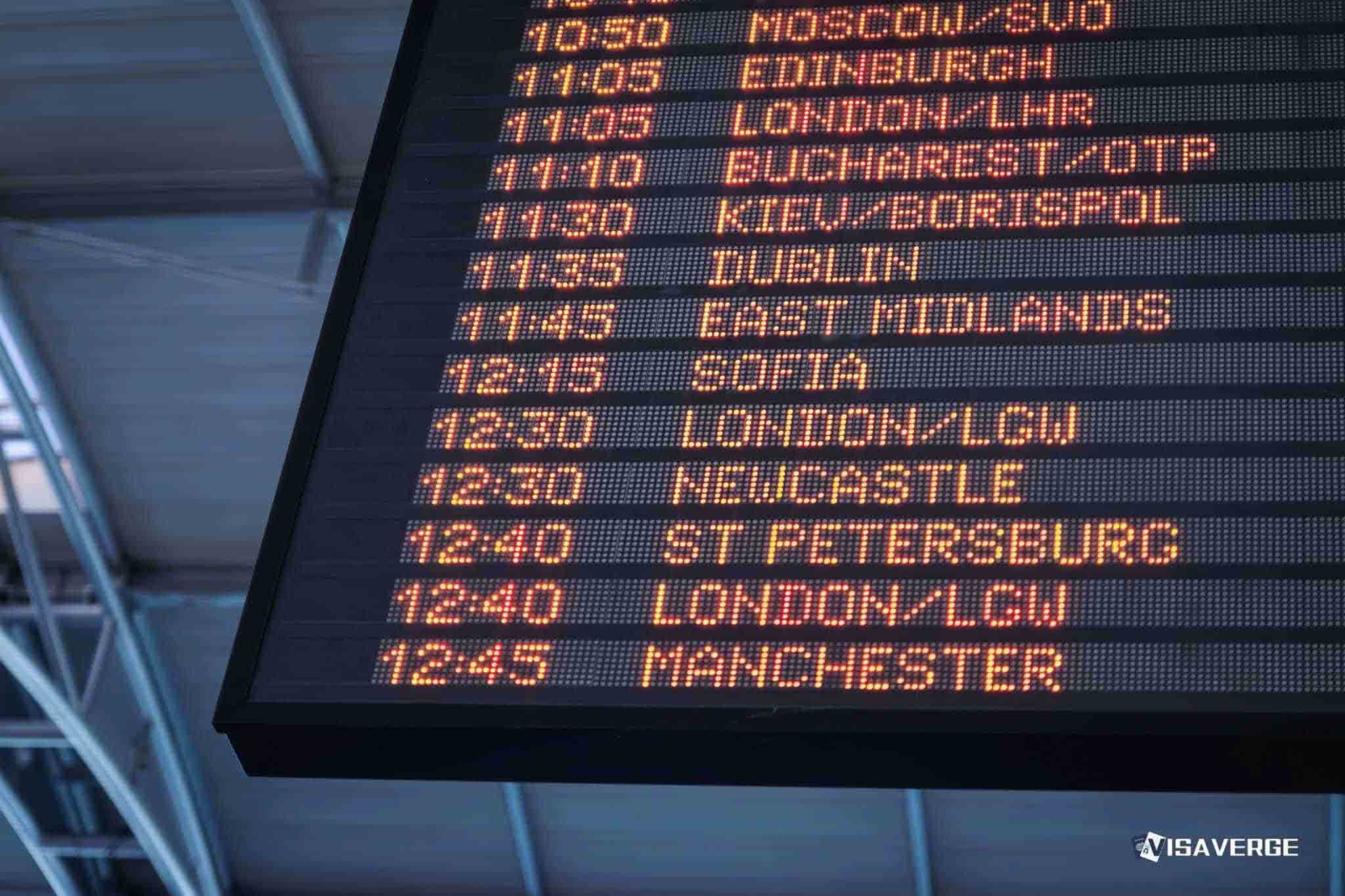
(HERAKLION) Flights at Heraklion Airport on the Greek island of Crete were suspended on Monday, December 8, 2025, after hundreds of farmers pushed through police lines and walked onto the tarmac. The incursion forced officials to close the runway and halt departures and arrivals for several hours. The protests, aimed at drawing attention to high production costs and what farmers describe as inadequate state subsidies, quickly spilled from nearby roads into the secure area of Nikos Kazantzakis Airport, one of Greece’s busiest gateways during the tourist season.
What happened at the airport
Police at Heraklion Airport had erected barriers to keep protesters away from the runway, but witnesses said the lines were overwhelmed as the crowd swelled. Some protesters began throwing stones, prompting officers to fire tear gas in an effort to regain control.
Authorities reported at least one police officer injured during the clashes. There were no immediate confirmations of injuries among the farmers or airport staff.
A formal Notice to Airmen (NOTAM) was issued to announce the closure of Heraklion Airport, informing airlines and pilots that flight operations were temporarily suspended because of the protests on Crete and the security breach on the runway.
Immediate impact on passengers and operations
While the airport is a key entry point for foreign tourists and Greeks returning from abroad, officials said the immediate impact on holidaymakers was limited because December sees far fewer charter flights than the summer peak.
Nevertheless, the sudden shutdown left many passengers stranded:
– People remained inside the terminal and on grounded planes.
– Airport staff tried to reroute flights to other destinations on Crete or to mainland Greece.
– Affected travelers included families returning from abroad, migrant workers with residence permits, and those on tight Schengen visa schedules who faced the risk of missing visa-linked departure dates.
Wider context: nationwide farmer actions
The Heraklion airport protests were part of a wider wave of farmer actions across Greece:
– Tractors and trucks blocking roads, including some border crossings with North Macedonia and Bulgaria.
– Long delays for freight and passenger traffic.
– On Crete, demonstrations also reached Chania airport, producing similar confrontations and raising concerns about aircraft safety and airport security during large public gatherings.
Farmers say they are protesting against:
– High production costs (fuel, animal feed, etc.)
– Insufficient state subsidies to keep their businesses viable amid rising prices and competition
Their march on Heraklion Airport reflected a belief that disrupting a major transport hub would force a quicker government response than road blockades alone.
Risks for visa holders and cross‑border travelers
The events highlighted how domestic protests can suddenly affect cross‑border travel and immigration plans, especially for people relying on tightly chained flights to comply with Schengen visa rules.
Key risks:
– Missing onward connections and potentially overstaying a visa
– Facing extra checks when arriving late in another Schengen country
According to analysis by VisaVerge.com, travelers holding short‑stay Schengen visas are often advised to keep proof of cancellations or airport closures—such as a copy of the NOTAM or airline notices—in case border officers later question the reasons for an overstay or altered arrival time.
For official guidance:
– The European Commission explains passenger rights during disruption on its portal for EU passenger rights.
– Those applying for future trips can consult the standard Schengen visa application form to check how to list planned entry and exit dates.
Important: Keep printed or digital proof of flight cancellations, airline notices, and the NOTAM. These documents can help demonstrate that delays were caused by events outside your control.
Practical advice for affected travelers
Airlines and consular staff are likely to advise the following steps for people planning travel to or from Crete in the coming days:
- Check flight status frequently and allow extra time at the airport.
- Keep boarding passes, delay records, and any airline communications.
- Save or print the NOTAM and any official announcements or press coverage related to the closure.
- If you hold a Schengen visa, retain documentation proving the disruption in case you must explain an altered travel itinerary.
Below is a compact checklist you can use immediately:
| Document / Action | Why it helps |
|---|---|
| Copy of the NOTAM | Official evidence of airport closure |
| Airline cancellation/notification emails | Proof of rerouting or delay |
| Boarding passes / receipts | Records of attempted travel |
| Photos/screenshots of airport announcements | Supplemental evidence for authorities |
| Contact details for embassy/consulate | Assistance if visa complications arise |
Legal and administrative implications
Lawyers who assist foreign nationals with residence permits and visa extensions warn that:
– Official systems sometimes do not record the precise reason for a missed departure.
– Travelers may later need to explain the Heraklion shutdown at border checks or during future applications.
They often recommend keeping:
– Printed/digital proof from airlines and official announcements (including references to the NOTAM)
– Any media coverage of the protests on Crete
This documentation helps future caseworkers or police quickly verify that delays were caused by events beyond the traveler’s control.
What to expect next
At Heraklion Airport, farmers said they would remain at or near the site until at least late afternoon to decide next steps. This raised the possibility of further disruption if talks with authorities do not progress or if more groups join protests on Crete later in the week.
Authorities have not specified when full operations will resume, though the NOTAM indicates a temporary suspension rather than a long‑term closure. Airlines continue to monitor the situation hour by hour.
The suspension at Heraklion came amid similar rallies elsewhere in Greece, increasing pressure on the government to address demands while keeping vital transport routes open for residents, tourists, and foreign workers.
For now, officials stressed that the timing outside the main holiday season limited the number of stranded tourists. Still, Heraklion remains the largest airport on Crete, and any closure raises concerns among local businesses reliant on steady passenger movement—hotels, rental companies, and language schools among them.
As farmers waited near the runway and police maintained a visible presence around fences and access roads, the scene at Heraklion Airport on Monday underlined how disputes over subsidies and production costs in rural Greece can quickly affect planes, passports, and people on the move. Further updates were expected later that day.
On Dec. 8, 2025, hundreds of farmers entered Heraklion Airport’s runway in Crete to protest high production costs and inadequate subsidies, prompting a temporary suspension of flights and issuance of a NOTAM. Police deployed tear gas amid clashes that left one officer injured. The disruption stranded some passengers and forced rerouting, though December’s low charter schedule limited wider tourist impact. Travelers with Schengen visas were advised to keep official notices and boarding records as proof of disruption.
Live Government Data
State Dept • CBPBusiest Border Crossings
- Otay Mesa 60 min
- San Ysidro 35 min
- Nogales 30 min