- Gulf Air has suspended all flight operations due to the ongoing closure of Bahrain’s airspace.
- Regional instability following military strikes led to widespread airspace restrictions across the Middle East.
- Airlines are repositioning empty aircraft to ensure fleet safety and operational readiness for future reopening.
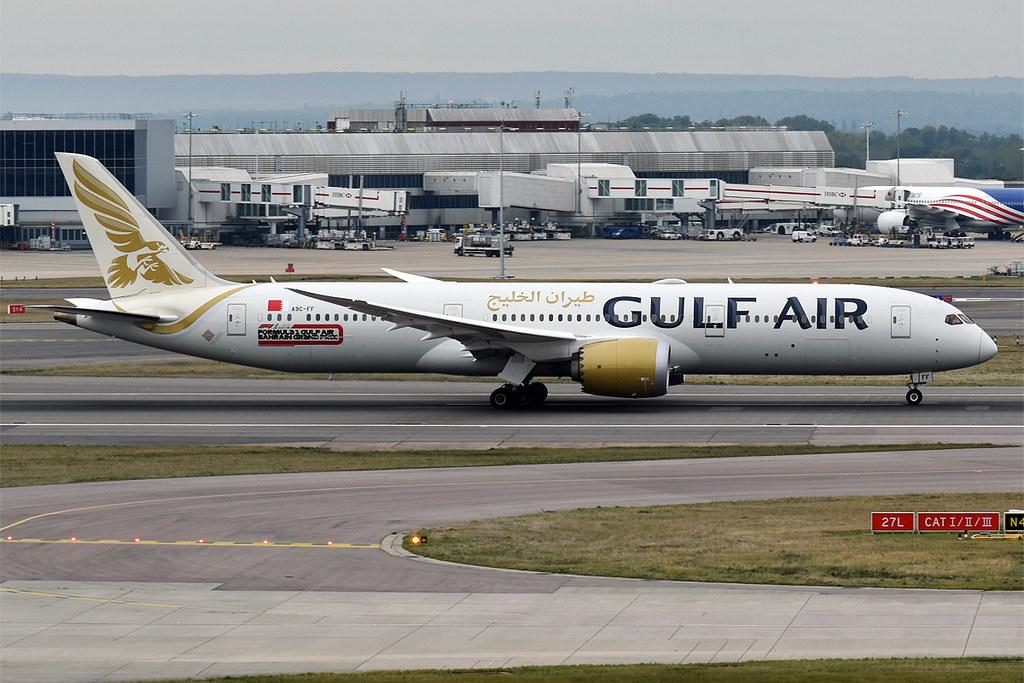
(BAHRAIN) — Gulf Air suspended all inbound, outbound, and overflight operations as Bahrain’s airspace closure continued on Thursday, halting traffic through the carrier’s hub at Bahrain International Airport and forcing passengers to wait for clearance from regulators before flights can restart.
Gulf Air linked any return to service to confirmation from Bahrain’s Civil Aviation Affairs that conditions allow a safe reopening, leaving schedules subject to change as long as the closure remains in place.
In an update posted via X on March 10, 2026, the airline set its next announcement for 11:00 BHT (08:00 UTC) on March 11, and urged passengers to check its website or mobile app for flight status.
The shutdown hit Gulf Air’s hub-and-connection model, which relies on banked arrivals and departures at Bahrain International Airport to feed onward flights across its network. With inbound, outbound and overflight operations suspended, connections that normally transit Bahrain cannot move as planned, and disruptions can cascade as aircraft and crews fall out of rotation.
Bahrain’s OBBB Flight Information Region (FIR) remained fully closed as of March 12, 2026, after U.S. and Israeli strikes on Iranian military targets starting February 28, 2026, followed by Iranian missile and drone retaliation targeting Gulf states including Bahrain.
Civil Aviation Affairs took steps aimed at operational continuity during the closure, including moving Gulf Air aircraft out of Bahrain International Airport as a precautionary measure. The repositioning involved empty aircraft rather than passenger movements, a distinction that regulators and airlines use to preserve fleet availability while keeping commercial services suspended.
Airspace closures can force immediate reroutes around restricted zones, but they also create secondary problems that surface over days as schedules unravel. Airlines must account for crew duty limits, disrupted maintenance plans, and mismatched aircraft positioning, while passengers face rolling cancellations when there is no firm timeline for reopening.
Even after an airspace is deemed safe, airlines generally need time to ramp up. Aircraft may sit at outstations, crews may be out of place, and carriers must secure takeoff and landing slots and rebuild connection banks, so the first wave of flights does not necessarily restore normal connectivity.
Bahrain’s airspace closure also constrained overflight options, affecting routings that would otherwise pass through the Bahrain FIR. That can lengthen flight times and reduce the number of workable rotations an aircraft can fly in a day, raising the odds of downstream cancellations across the network.
The disruption widened beyond Bahrain as regional airspace restrictions limited alternatives and narrowed the set of available flight paths. Iran maintained a total closure with limited exceptions, extended multiple times through at least March 11, while Iraq kept a total closure in place until 0900 UTC March 13.
Partial restrictions in Kuwait and Qatar added further friction to planning, including limited emergency operations. Qatar allowed limited emergency departures on March 10, underscoring how even where flights operate, they may do so under constrained rules that do not resemble normal schedules.
Saudi Arabia maintained partial closures near Iraq and Persian Gulf borders, shaping routing choices for carriers that would otherwise transit those areas. The United Arab Emirates relied on restricted emergency corridors, and reduced throughput limited the ability of airlines to recover quickly; one operational reference point cited for those corridors was up to 48 movements/hour.
Against that backdrop, Gulf Air operated one special flight from Dammam to Karachi on March 10 for stranded passengers with bookings. The flight did not signal a broader resumption of services.
Repositioning flights, meanwhile, can look like progress to passengers tracking aircraft movements, but they serve a different purpose. Regulators and airlines use them to protect equipment, stage aircraft for maintenance, and keep options open for a restart when conditions allow.
For Gulf Air and Bahrain’s Civil Aviation Affairs, moving empty aircraft also reduces pressure on constrained airport operations and preserves readiness without reopening passenger services. The measure can support continuity of air services once regulators authorize a return, but it does not change the immediate reality for travelers awaiting confirmed flights.
Travelers most affected include connecting passengers whose itineraries rely on Bahrain as a transfer point, as well as Gulf-based workers and students whose plans often tie to fixed dates. Bahrain’s hub role means disruptions can spread across itineraries linking South Asia, Southeast Asia, Europe, and North America, where travelers may have counted on a short connection rather than an extended detour.
Bahrain’s role as Gulf Air’s sole hub disrupts connecting flights to India, Pakistan, Southeast Asia, Europe, and North America, potentially delaying visa re-entries, work returns, academic deadlines, and family reunions. With seats limited on alternative routes during regional restrictions, rebooking can take days, and added connections can introduce overnight stops and missed onward flights.
For some travelers, the pressure points extend beyond airfare. Workers can face employer reporting requirements tied to return dates, and students can face term start dates that do not move with flight disruptions, while travelers managing immigration status may watch visa validity or re-entry timing as delays mount.
Airlines and travel agents also face bottlenecks when an indefinite suspension turns into a series of rolling cancellations. Each new day without a reopening forces re-accommodation of passengers from prior days, while new cancellations add to the queue, tightening seat availability and complicating misconnect protection when travelers piece together separate tickets.
Other airlines’ responses across the region highlighted how “emergency-only” flying can move some passengers while leaving the wider network impaired. Qatar Airways limited its operations to repatriation flights on select routes, including from Doha to London, Istanbul, Mumbai, Delhi, and Manila, with flights described as emergency only.
British Airways arranged repatriation from Muscat to London Heathrow on March 11-12, then paused, and directed passengers to dedicated support channels. The arrangements reflected a focus on getting some travelers out while broader conditions constrained normal schedules.
Turkish Airlines issued widespread cancellations affecting multiple Middle East destinations, including Bahrain, Dammam, Riyadh, Iran, Iraq, Jordan, Kuwait, Lebanon, Oman, Qatar, Syria, and the UAE. Saudia extended suspensions to Amman, Kuwait, Abu Dhabi, Doha, and Bahrain, limiting options for travelers who would otherwise reroute around disrupted hubs.
The network effect of those actions is fewer alternate seats, longer itineraries, and more complex recovery when disruptions span multiple countries at once. Even travelers who never planned to fly through Bahrain can face knock-on delays when aircraft and crews are tied up, or when airlines consolidate flights to protect limited operating windows.
Official advisories and NOTAMs reflected the risk environment that airlines and regulators use to set rules for flight operations. A French NOTAM, F0382/26, issued March 3 and valid until March 7, 2026, advised operators against entering Bahrain airspace, with the risk level set at “Caution” due to missile and drone threats.
No confirmed reopening timeline emerged beyond the requirement for approval from Bahrain’s Civil Aviation Affairs, leaving passengers and airlines watching for the next update while accepting that frequent schedule changes can persist until the airspace reopens.