- The FAA is cutting planned summer flights at Chicago O’Hare to manage ongoing construction and congestion.
- Airlines scheduled 3,080 daily operations, exceeding the manageable limit of 2,800 set by federal officials.
- Major carriers United and American dispute how flight reductions should be distributed across their summer schedules.
(CHICAGO, ILLINOIS) — The Federal Aviation Administration started a formal process to cut planned Summer 2026 flights at O’Hare International Airport after airlines scheduled more peak-day operations than the agency considers manageable during ongoing construction.
The FAA set the Summer 2026 season at March 29–October 25 and moved to limit congestion at one of the country’s busiest hubs, aiming to prevent delays that can spread through the national air-travel system.
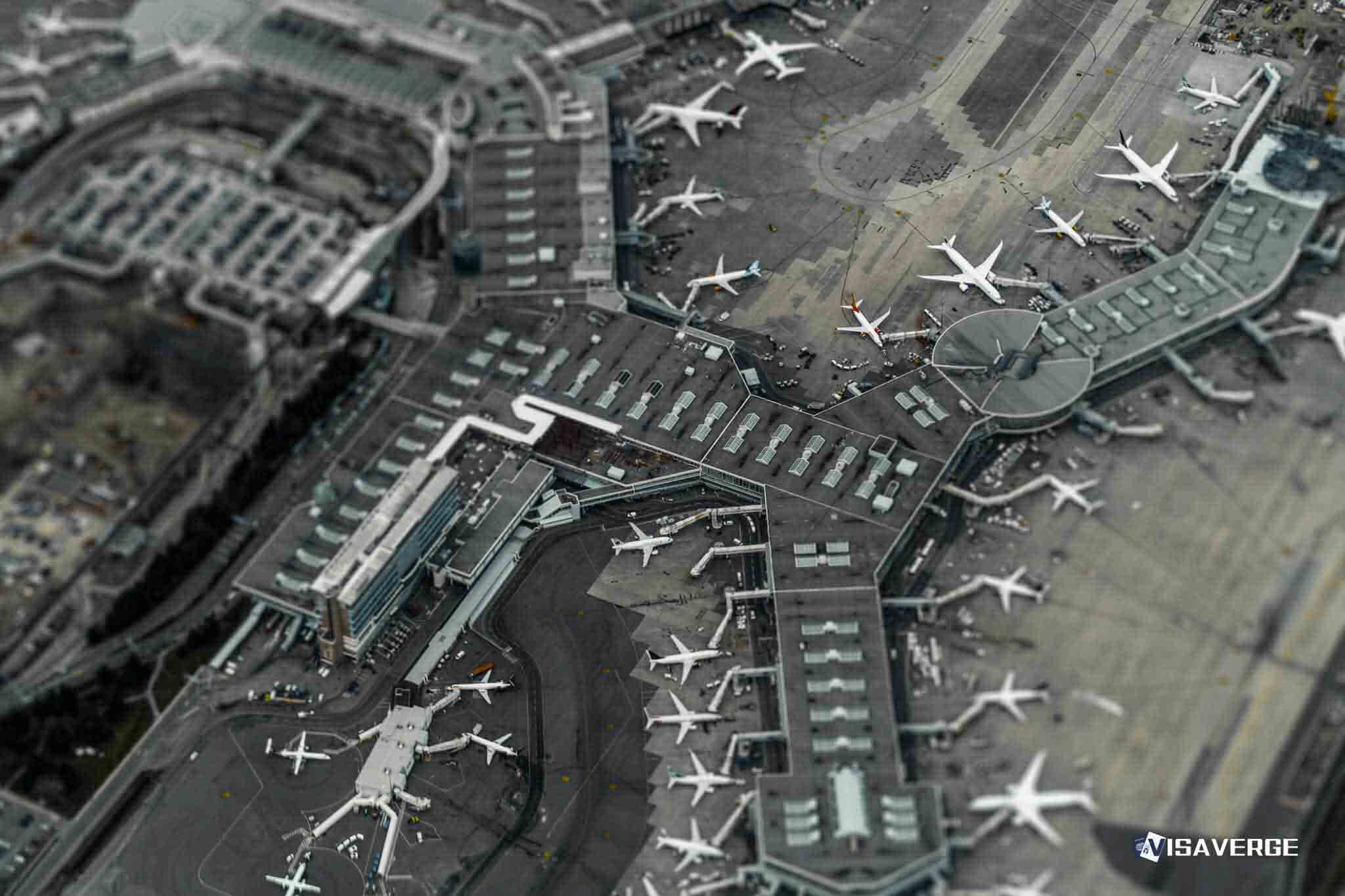
Chicago officials signaled support for a temporary adjustment while pressing for coordination with the city, airlines and federal officials on how any cap accounts for gates, staffing and construction constraints.
“Experiencing overcapacity at an airport inevitably leads to delays,” said Omar Idris, vice president at O’Hare.
Airlines planned peak summer schedules of 3,080 daily operations, including arrivals and departures, setting up a conflict with what the FAA described as an operational environment that can handle about 2,800 per day.
Chicago Department of Aviation officials said the city looks forward to working with federal officials and airline partners.
The FAA’s move targets the weeks when demand rises and airlines add frequencies, a period when a hub’s schedule can become tightly banked and disruptions can cascade quickly.
At O’Hare, the agency tied its intervention to the combination of airline growth and construction that limits how much traffic the airfield and terminals can absorb without compounding delays.
The FAA’s formal steps began with an initial notice on February 27, 2026, as the agency flagged what it viewed as overscheduling for the coming summer.
On March 3, 2026, the FAA published a Federal Register notice and set opening remarks by the Administrator for 3:00 p.m. ET, laying out the case for a scheduling reduction process.
A scheduling reduction meeting followed on March 4, 2026, convening at 9:00 a.m. ET and continuing as needed.
The agency’s approach focuses on how demand stacks up against capacity across the day, using monitoring in 30-minute periods to identify where scheduled arrivals and departures exceed what the airport can reliably process.
For O’Hare, the FAA set the monitoring window from 6:00 a.m. to 9:59 p.m. local time, capturing the core hours when airlines concentrate departures and arrivals.
Within that framework, a cap means more than a single daily total. It can force airlines to adjust peak banks, rebalance across the day, or trim frequencies in the periods when the operation becomes most brittle.
The FAA framed the process as a way to bring schedules in line with the airport’s current operating environment, rather than as a long-term constraint on growth.
The agency also pointed to last summer’s 2,680 daily operations as a reference level, contrasting it with the higher peak schedules carriers filed for the upcoming summer.
While the FAA’s official cap proposal centered on 2,800 daily operations, discussions around the process included talk of deeper reductions to about 2,500, a level that would require more substantial schedule changes.
United Airlines and American Airlines, the two dominant carriers at O’Hare, agreed on the need to avoid a summer of heavy disruptions but clashed over how any required cuts should be allocated.
Dan Lynch, vice president for state and government affairs at United Airlines, said the meetings aim for “equitable and proportionate” reductions.
Lynch accused American of adding flights to “secure gate availability” after cutting O’Hare operations in recent years.
United planned about 780 daily flights, a scale that makes the carrier highly sensitive to how reductions are distributed and how the FAA measures baseline schedules.
American continued to expand its summer schedule at O’Hare and warned employees internally about operational risks from overscheduling, including long taxi times and missed connections, while publicly supporting the FAA’s push for safe operations.
Even with broad alignment on the goal of preventing gridlock, the airlines’ dispute highlights the stakes of a cap at an airport where gates, ramp space and runway access become competitive resources at the peak.
For carriers, a scheduling reduction order can also shape network reliability well beyond Chicago, because changes at a major hub can alter inbound aircraft rotations and onward connections.
The debate at O’Hare unfolds as the city advances a longer-term expansion plan that includes new gates and concourses by 2032, while runway and terminal construction in the near term can constrain throughput.
That mismatch between long-term growth plans and short-term constraints is central to the FAA’s rationale: airlines add flights to meet demand and defend market position, but the operating environment can tighten quickly when construction limits flexibility.
When schedules exceed workable capacity, delays can build on the ground through gate holds and long taxi times, then spill into the airspace and ripple outward as aircraft and crews miss their next assignments.
The FAA has used similar tools elsewhere. At Newark Liberty, the agency imposed limits in the 2025–2026 period after facing comparable capacity and operational constraints.
At O’Hare, the formal process creates a calendar for negotiations and decisions, beginning with the agency’s notices and culminating in a potential final order that could require carriers to reduce frequencies.
Airlines must model scenarios and prepare offers for confidential FAA sessions, working through which flights to keep, which to retime, and which to remove during peak periods.
Those choices can be especially fraught at a hub airport. Cutting a flight can protect on-time performance, but it can also break a connection bank, reduce customer choices, and shift revenue across competing carriers.
Carriers can also respond without simply dropping routes. They can shift flying to less constrained times, substitute larger aircraft for smaller ones, or redeploy capacity to nearby airports, depending on fleet and gate availability.
For travelers, the first visible sign of the process can be schedule change notices as airlines adjust summer timetables, particularly on the peak days and peak banks where the cap binds most tightly.
Passengers may see fewer departure choices at the busiest times of day, with airlines pushing demand into adjacent hours or consolidating flights, changes that can reshape connection options through Chicago.
The FAA’s scheduling reduction process leaves room for negotiation over how the cap applies and how reductions are distributed across carriers, while keeping the focus on preventing overscheduling at a construction-constrained hub.
Idris, who supports a temporary adjustment conditioned on collaboration, framed the city’s concern in operational terms rather than market-share terms. “Experiencing overcapacity at an airport inevitably leads to delays,” he said.
Live Government Data
State Dept • CBPBusiest Border Crossings
- Tecate 60 min
- Hidalgo/Pharr 45 min
- Hidalgo/Pharr 45 min