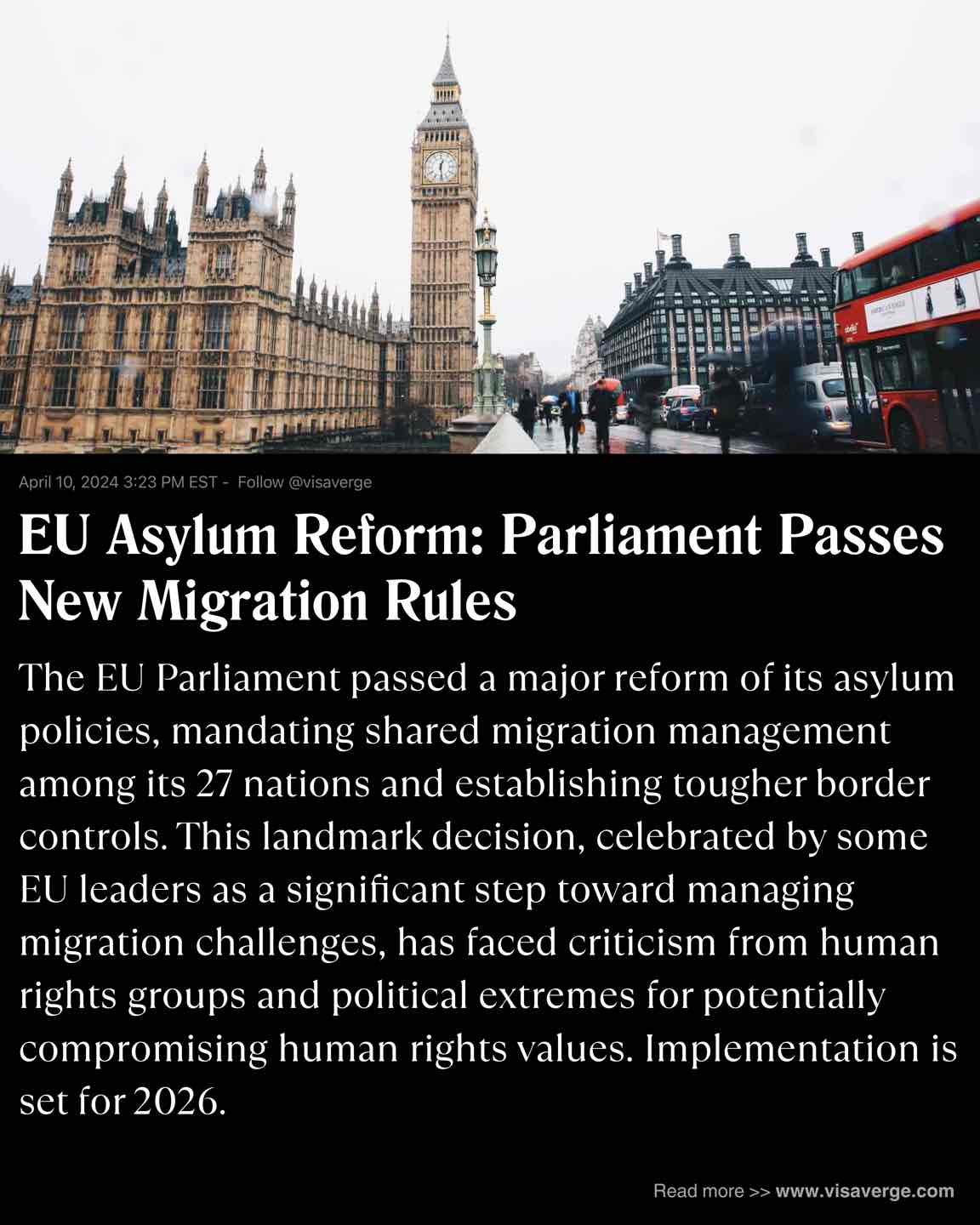
In a landmark decision that has been nearly a decade in the making, the EU parliament recently adopted a contentious reform of Europe’s asylum policies. This sweeping reform not only aims to harden border procedures but also mandates all the bloc’s 27 nations to share the responsibility of managing migration. This momentous shift in policy has elicited diverse reactions across the political spectrum, from commendation by leading EU figures to vehement opposition from various human rights groups and far-right and far-left parties.
What Are the New EU Asylum Reform Measures?

At the heart of the reform are ten pieces of legislation designed to overhaul the current system, collectively referred to as the EU asylum reform. German Chancellor Olaf Scholz hailed these new rules as a “historic, indispensable step” for the European Union, highlighting their significance in managing the migration challenges that have increasingly affected the EU. Similarly, Greece’s Migration Minister Dimitris Kairidis lauded the reform as a “major breakthrough,” emphasizing its role in fostering a common and more effective approach to migration management.
EU chief Ursula von der Leyen and EU home affairs commissioner Ylva Johansson have both praised the adoption of the reform. Von der Leyen called it a “huge achievement for Europe,” while Johansson detailed that the EU would now be able to “better protect our external borders, the vulnerable and refugees, swiftly return those not eligible to stay” and implement “mandatory solidarity” among member states.
How Will the New Policies Affect External EU Borders and Migration Management?
One of the reform’s key features is the establishment of new border centers to hold irregular migrants while their asylum applications are processed. This move aims to expedite the vetting of asylum-seekers and the deportation of those deemed inadmissible under the new guidelines. Moreover, the reform requires that EU countries either take in thousands of asylum-seekers from “frontline” states, such as Italy and Greece, or provide monetary support or other resources to these nations, thereby embodying the principle of shared responsibility among EU members.
Opposition and Criticisms
Despite the widespread acclaim from several EU officials, the reform has faced its share of criticism. Outside the Brussels parliament building, protestors voiced their disapproval, reflecting the sentiments of over 160 migrant charities and non-governmental organizations that have criticized the reform as a betrayal of EU values. This outcry underscores a significant division, with detractors arguing that the reform compromises Europe’s commitment to upholding human rights.
Political opposition has also been articulated, with far-left lawmakers condemning the move to build border centers and deport some asylum-seekers to outside “safe” countries as “a pact with the devil.” Meanwhile, far-right lawmakers have expressed dissatisfaction with the reform, arguing that it doesn’t go far enough in blocking access to irregular migrants.
Looking Ahead
Despite the mixed responses, the EU asylum reform is set to be implemented in 2026, promising significant changes to how the EU manages its external borders and migration policies. Until then, the European Commission is tasked with detailing the implementation process, reflecting a complex balance between protecting borders, respecting human rights, and ensuring solidarity among EU nations.
This reform comes against the backdrop of the EU’s efforts to manage migration more effectively, following the significant influx of migrants in 2015. It signals a shift towards a more unified approach to asylum and migration, with the pact representing a challenging yet potentially transformative step for the EU.
For those seeking more information on EU migration policies and the recent asylum reform, the official page of the European Union on asylum and migration provides in-depth insights and updates.
A New Chapter for EU Migration?
The adoption of the EU asylum reform marks a pivotal moment in the Union’s history, embodying a collective move towards more stringent border policies and enhanced solidarity among member states. While the reform strives to address the challenges posed by irregular migration and uphold the EU’s values, it also sheds light on the complexities and divisive opinions surrounding migration policy. As the EU prepares for the implementation phase, the world watches closely to see how these changes will unfold and impact both EU member states and the lives of thousands of migrants seeking asylum within its borders. Only time will tell whether this historic reform will achieve its intended goals, fostering a more organized and humanitarian approach to migration in Europe.
This Article In A Nutshell:
The EU has adopted a new asylum reform, stirring mixed reactions. The reform aims to manage migration more effectively, with new border centers and shared responsibilities among member states. Despite praise from some EU leaders, criticisms abound. The impact of this historic decision will unfold as the EU steps into a new migration era.
— By VisaVerge.com
Read More:
- New Visa Rules: Impact on Indian Students Exploring Alternatives to UK, Canada, Australia
- EU Passport Checks Update: UK Unprepared for New Biometric System
- Spain Grants Rights to Undocumented Migrants: A Model for the UK?
- Latest UK Visa Rules for Family and Work Migration