- Emirates flight EK501 performed a rare double reverse maneuver over the Gulf of Oman due to missile threats.
- UAE air defenses intercepted multiple drone threats near Dubai and Abu Dhabi during the escalating regional conflict.
- Emirates suspended all scheduled Dubai flights until late March 4 to prioritize safety and repatriation efforts.
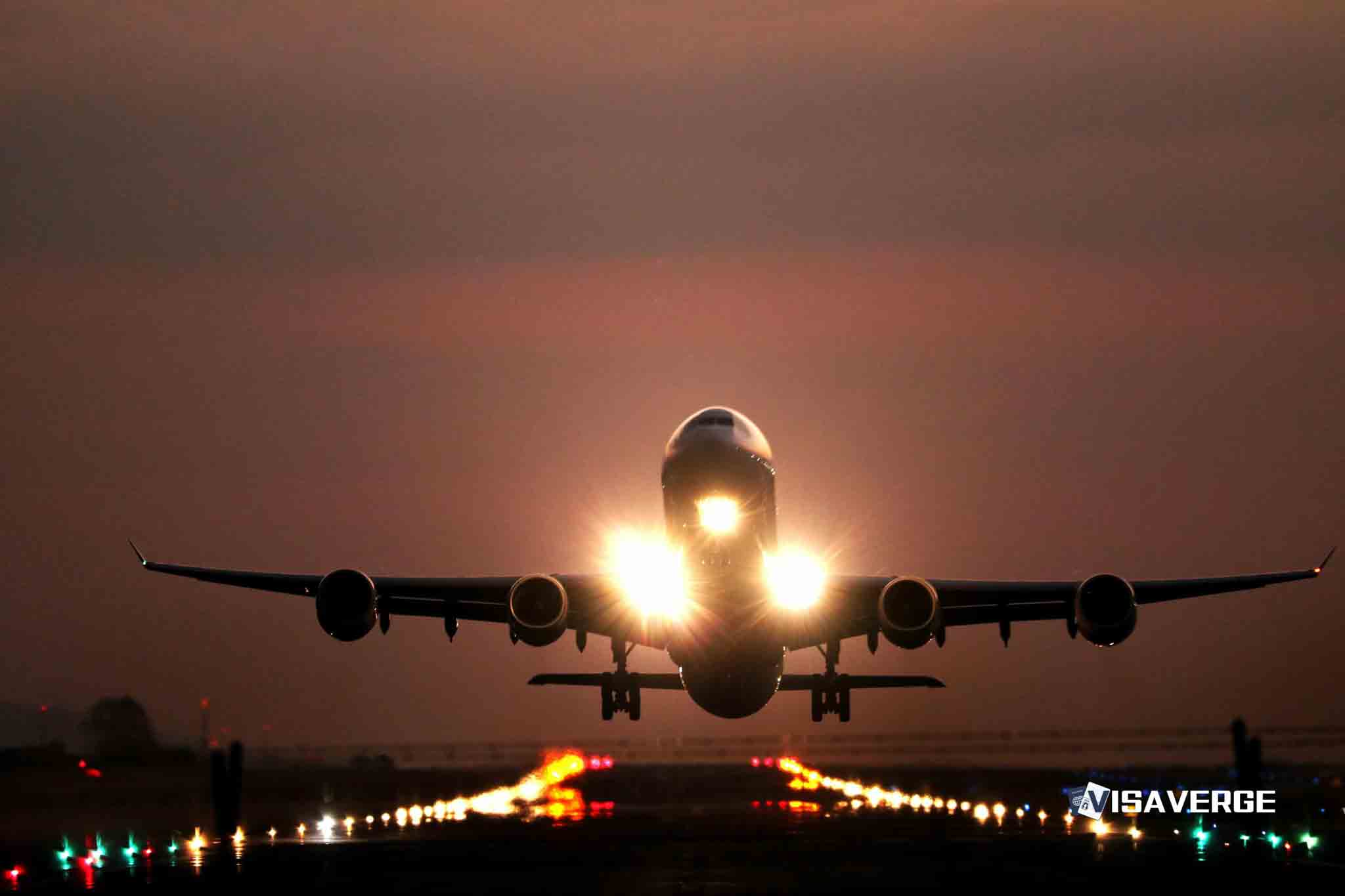
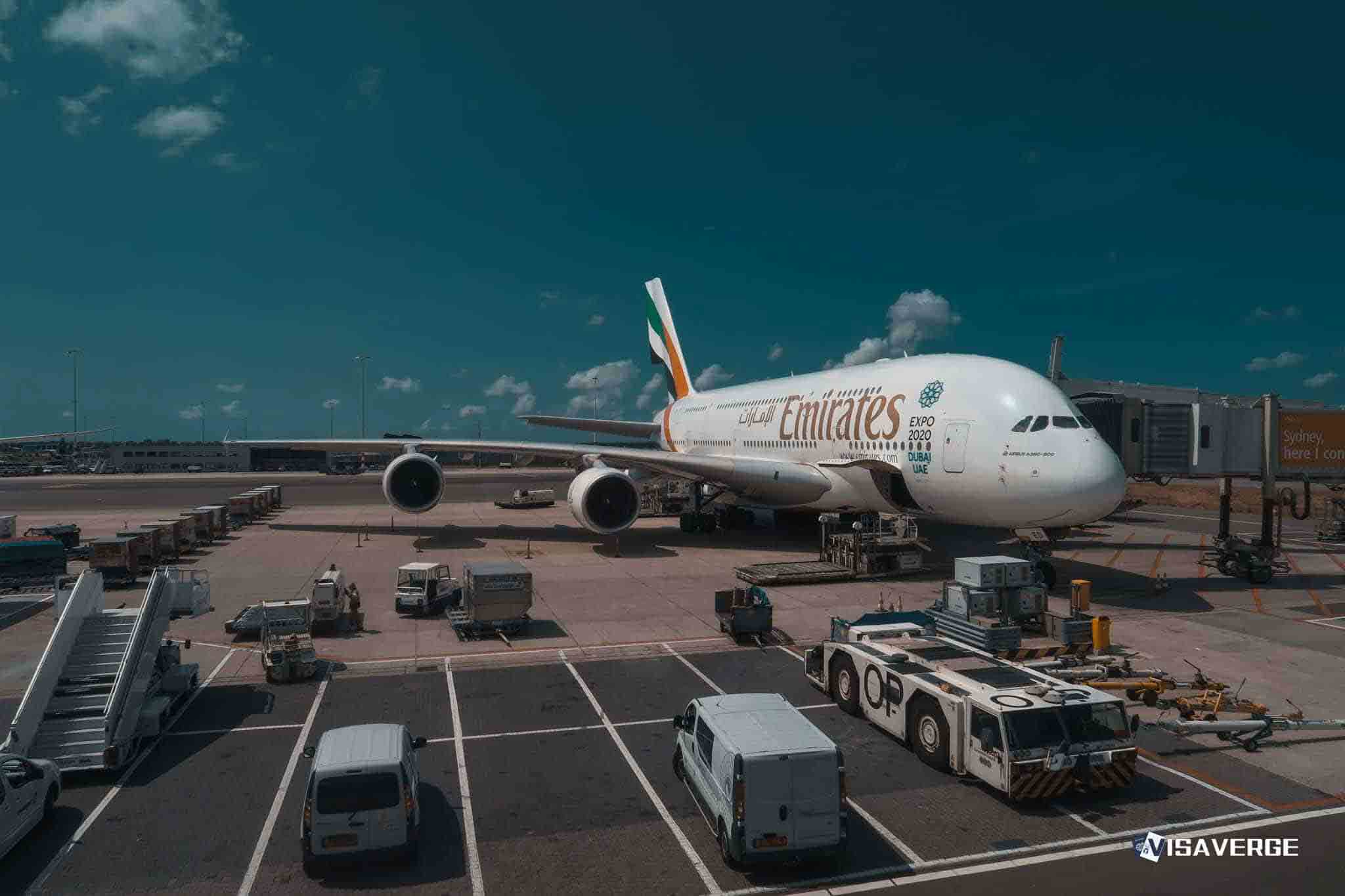
(MUMBAI, INDIA) — Emirates flight EK501 executed a rare “double reverse” maneuver over the Gulf of Oman on March 3, 2026, after threat alerts tied to Iranian missile and drone threats targeting the UAE, before landing safely at Dubai International Airport (DXB).
The Mumbai-to-Dubai Airbus A380 completed the trip with no injuries reported, but passengers faced delays as regional airspace conditions shifted quickly.
Flightradar24 data showed the aircraft entering a holding pattern off the UAE coast, then making an initial U-turn toward India before reversing again to approach DXB safely after airspace conditions stabilized.
UAE air defenses intercepted threats around 3:00 AM UAE time, as the escalating Iran-US conflict entered its fourth day and air operators adjusted routes and schedules in real time.
Emirates said the flight left Mumbai normally before urgent threat-related alerts affected UAE airspace, with the UAE Ministry of Defence issuing alerts as ballistic missiles headed toward Abu Dhabi and Dubai.
The aircraft’s sequence in the air reflected standard crisis-era operating choices, with airlines and air traffic authorities able to shift plans minute-to-minute during missile and drone threat periods.
Passengers on EK501 ultimately arrived in Dubai, but the unusual reversal pattern highlighted how quickly a routine overnight route can become uncertain when airspace risk levels change.
Emirates confirmed all scheduled Dubai flights suspended until 11:59 PM UAE time on March 4, 2026, while the airline prioritizes repatriation on limited flights and urged travelers not to head to airports without direct confirmation.
The suspension window also set up wider disruption for travelers far beyond EK501, as aircraft rotations, airport slot constraints, and crew duty limits can trigger rolling cancellations and late rebooking waves.
Even when an individual flight lands safely, a sudden holding pattern and turnback can leave inbound aircraft and crews out of position for later departures, tightening capacity for hubs that rely on dense banked schedules.
For EK501 passengers, the disruption played out in phases, beginning with normal departure from Mumbai and continuing with urgent alerts as the flight neared the UAE.
After the holding pattern off the coast, the aircraft turned away from the UAE and tracked back toward India before the second reversal brought it back toward DXB, according to the Flightradar24 track description in the incident account.
The sequence occurred as UAE air defenses intercepted threats around 3:00 AM UAE time, and the flight’s final approach followed what the account described as airspace stabilization.
Emirates accommodated EK501 passengers on arrival, the account said, as travelers worked through the effects of a delay caused by volatile airspace rather than a mechanical issue.
The same pressures shaping EK501’s path also shaped Dubai operations more broadly, as airlines balanced safety, airspace advisories, and the constraints of maintaining a global schedule.
Emirates’ temporary suspension of scheduled Dubai flights within the stated window came as carriers prioritized limited repatriation movements and sought to manage aircraft and crew availability during rapidly changing conditions.
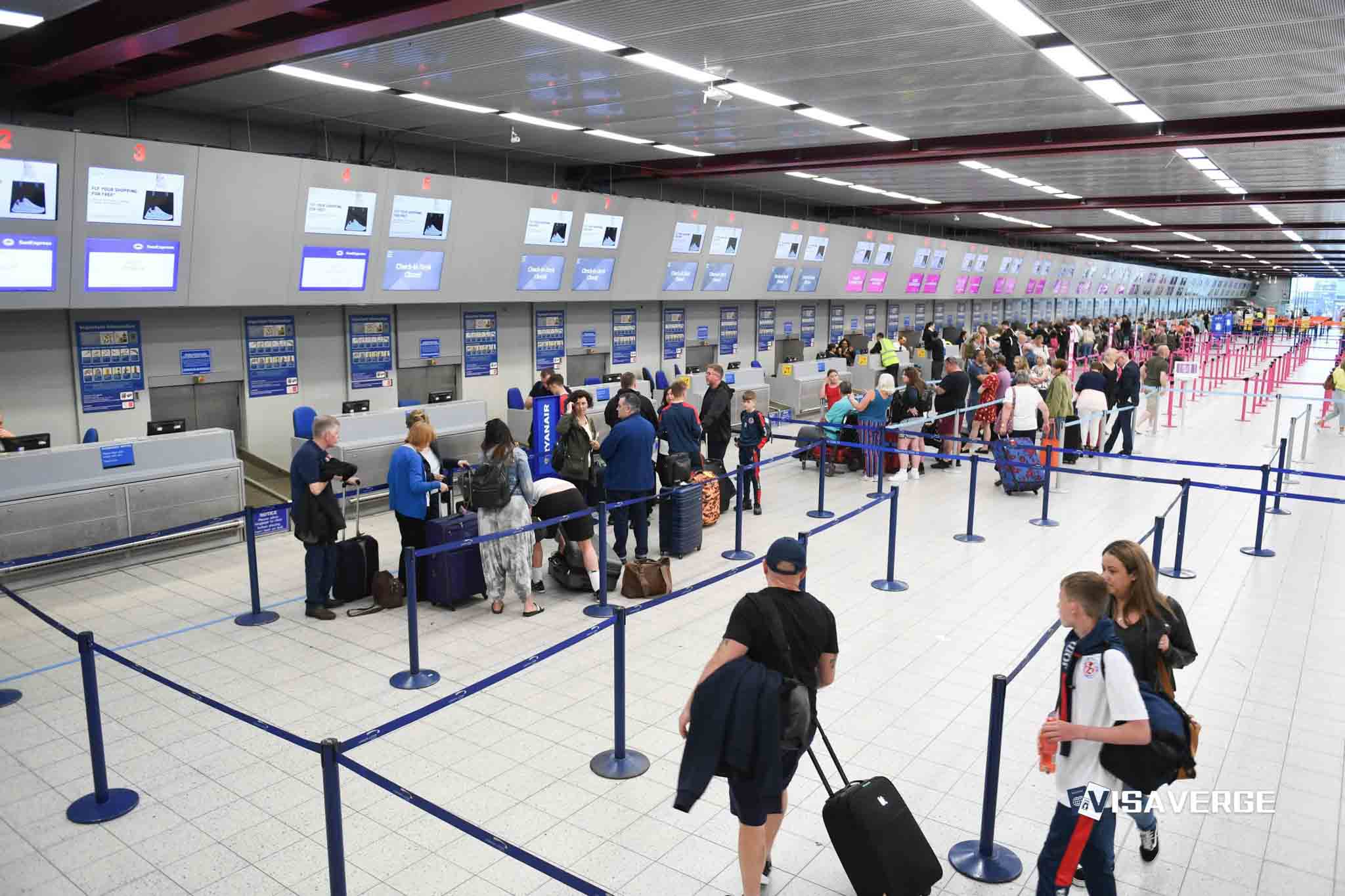
When airlines restrict operations and then resume them in phases, travelers often see rolling cancellations, shifting departure times, and long queues at call centers and airport desks.
With limited repatriation capacity, passengers can also face triage decisions that prioritize those already stranded in transit, while others are pushed to later flights or offered refunds.
Passenger rights after diversions often turn on jurisdiction and cause, and the crisis conditions described around EK501 include security threats that can limit cash compensation even when care obligations remain.
The account said airlines must provide immediate care and rebooking, and described how EU and UK regimes can offer up to €600 compensation for delays over 3 hours if the cause is not “extraordinary circumstances” like wars.
For Gulf carriers such as Emirates, the account said UAE GCAA rules limit payouts for security events, placing greater emphasis on care, rebooking, and refunds rather than automatic compensation.
Immediate assistance commonly includes meals, refreshments, hotel accommodation if an overnight stay becomes necessary, and communication options such as free calls or emails during extended waits, depending on route length.
The account framed those wait thresholds as 2-4 hours depending on route length, while noting that Emirates accommodated EK501 passengers on arrival.
Rebooking and refund pathways typically include a free switch to the next available flight or a full refund, with the account citing a refund within 7 days in one description of rebooking and refunds.
A separate table in the account described a full refund within 14 days if canceling, illustrating how time windows can vary by rule set or scenario even during the same disruption period.
On compensation, the account described an EU range of €250-600 and said compensation can reach up to €600 for delays over 3 hours in EU and UK-style regimes, while security-related events can fall under “extraordinary circumstances” exclusions.
The incident description also said mid-air reversals from missile alerts qualify as extraordinary, exempting payouts under the Montreal Convention and referencing a limit of up to ~₹3.5 lakh for delays and damages.
Even when automatic compensation does not apply, the account emphasized documentation for any claims for damages or expenses, and it described keeping items such as boarding passes and delay proof.
The same account cited filing within 21 days for EU rights or per airline terms, reflecting the time pressure passengers may face when submitting claims across different rule sets.
For Indian passengers, the account said the DGCA mandates similar care and advised contacting airlines for vouchers, placing India’s consumer protections alongside carrier policies used during mass disruption.
As schedules shifted, the account described passengers checking status through Emirates channels and airport desks, with the Emirates app and website mentioned alongside Flightradar24 as tools travelers used to verify changes.
The practical reality during mass disruptions is that contact centers can become congested, pushing passengers to try multiple channels while airlines reopen schedules in batches.
The account also mentioned an Indian government WhatsApp helpline for Maharashtra residents as +97150 365 4357 with the label (#MahaHelpline), as some travelers sought consular or government coordination during the crisis.
Alongside Emirates’ limited operations, the account described alternate carrier activity at a high level, including IndiGo and Akasa Air running Jeddah relief flights to Mumbai, Hyderabad, and Ahmedabad on March 3-4.
IndiGo’s schedule description in the account said 10 Jeddah-India flights March 3, with 4 cleared for Mumbai, Hyderabad, and Ahmedabad, as airlines sought to move stranded travelers through available corridors.
Akasa Air’s listing included Mumbai-Jeddah-Mumbai March 3-4, and Ahmedabad-Jeddah March 4, as well as suspensions to Abu Dhabi, Doha, and Riyadh until March 4.
The account also described evacuation aid discussions, saying the Indian Centre was coordinating with consulates, and that SpiceJet’s Ajay Singh pledged extra flights for citizens.
Beyond Dubai, the disruption widened across the region, with the account describing “Airspace chaos” and saying 13,000+ GCC flights canceled since weekend.
The same account said DXB and Abu Dhabi were damaged by drone debris, and it reported 1 death in Abu Dhabi.
Other diversions listed in the account included Etihad flights from Dhaka, Hong Kong, and Jeddah to Muscat, as airlines rerouted aircraft away from affected corridors.
The account also described Riyadh flights turned back after a drone strike on the US embassy, underscoring how airport-area incidents can tighten risk posture and disrupt approaches, departures, and overflight permissions.
In the conflict timeline offered in the account, the crisis intensified after Iran Supreme Leader Ayatollah Ali Khamenei’s killing on Saturday, and it said US President Donald Trump warned of retaliation.
The operational picture remained day-by-day, with the account saying the UAE GCAA approved limited flights March 3, while volatility persisted and travelers were urged to monitor official airline and government updates.
For Dubai-bound passengers, the near-term expectation described in the account was phased resumption, starting with limited flights and widening as airspace advisories stabilize.
During recoveries from large-scale disruptions, repeated re-timings and last-minute gate or terminal changes can appear as airlines rebuild aircraft rotations and manage crew legality under duty limits.
Emirates’ suspension of scheduled Dubai flights until 11:59 PM UAE time on March 4, 2026 left travelers facing uncertainty over whether their trips would proceed as booked or shift to later departures.
As the EK501 incident showed, even after a safe landing at DXB, travelers can experience a journey defined by holding patterns, reversals, and sudden changes driven by threat alerts rather than weather or technical faults.
Passengers weighing whether to travel in the coming days faced a familiar tradeoff during rolling disruptions: wait for direct confirmation from airlines and airports, or risk arriving at terminals during a moving schedule environment.
For those still trying to reach Dubai, the immediate advice embedded in the airline’s operational stance was simple, even as circumstances remained fluid: do not head to airports without direct confirmation.