- South Korea’s audit board blames budget-driven designs for increasing the severity of the Jeju Air crash.
- The report alleges years of safety concealment regarding non-compliant, rigid localizer structures at multiple airports.
- A government simulation suggests all passengers could have survived if the runway obstacles were properly frangible.
(SOUTH KOREA) — The Board of Audit and Inspection released a report on March 10, 2026, faulting budget-driven decisions and unsafe airport design at Muan International Airport in the crash of Jeju Air Flight 2216, a finding that adds pressure on authorities as the final accident investigation remains unfinished.
The audit tied the December 2024 disaster to infrastructure and oversight failures around the runway environment, while stopping short of the kind of probable-cause conclusions expected from an accident investigation report.
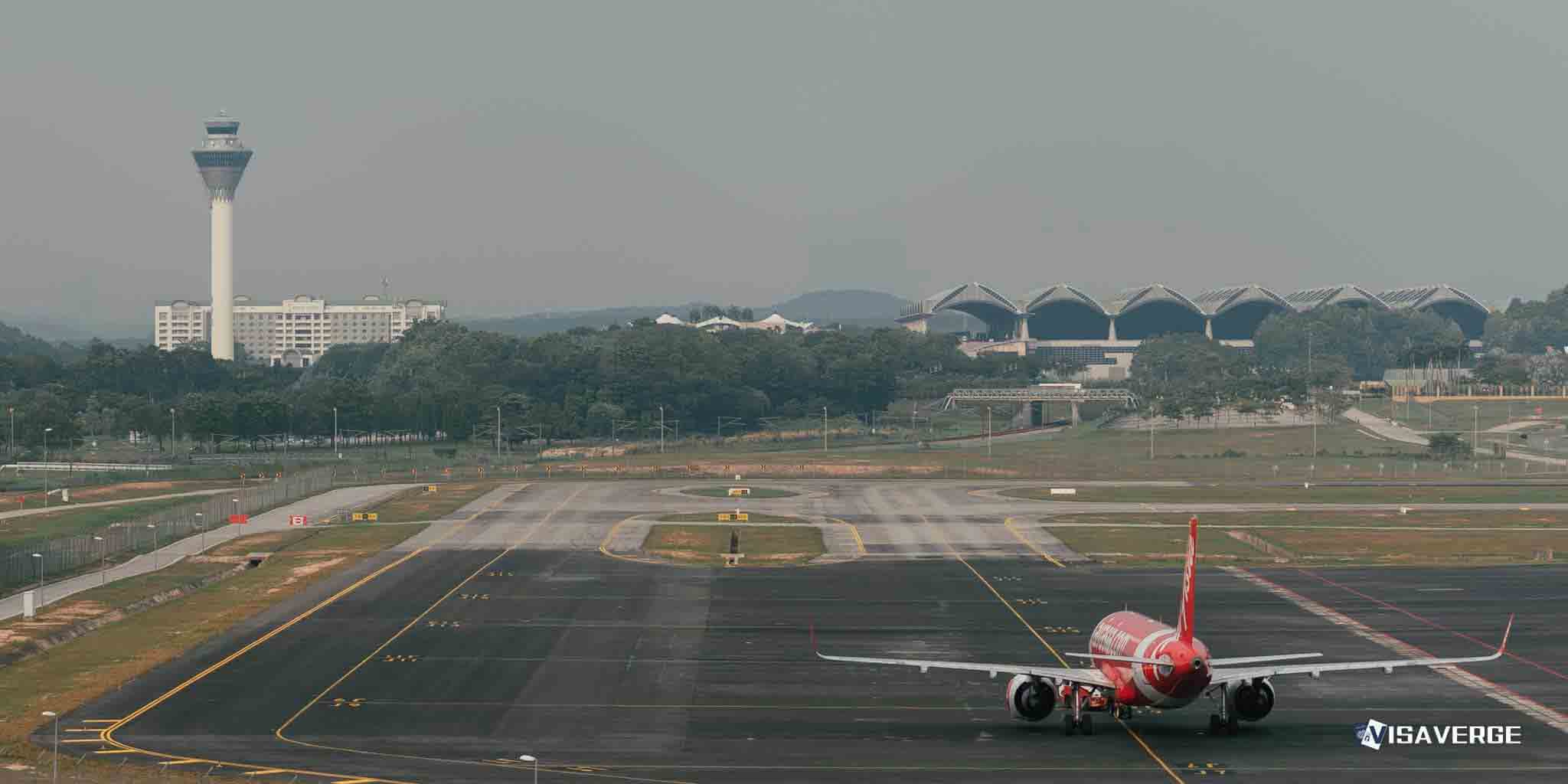
Jeju Air Flight 2216, a Boeing 737-800 flying from Thailand, suffered a bird strike and made a belly landing before overrunning the runway and striking a localizer structure at the runway’s end, the audit said.
Tuesday’s release matters because it directly assigns responsibility for construction and permitting choices that the Board of Audit and Inspection said increased the consequences of an overrun, and because it alleges long-running concealment and repeated certification failures.
The report also widened the focus beyond a single airport, saying the same non-compliant approach to localizer installations appeared across multiple airports and persisted for years through approvals, inspections and upgrades.
Muan’s crash site has remained preserved for investigation, the audit said, underscoring that the infrastructure questions now raised sit alongside a still-separate process intended to determine what happened in the cockpit and across the flight’s final moments.
At the center of the audit’s criticism were construction-era decisions by the Ministry of Land, Infrastructure and Transport, which the report said prioritized savings over safety during Muan’s buildout around 2003-2007.
Auditors said officials skipped ground leveling on sloping terrain and chose not to use frangible, or breakaway, materials for the localizer structure, opting instead for a rigid design to minimize earthworks.
International standards require localizer-related structures to break apart on aircraft impact, the audit said, a design principle intended to reduce the severity of a crash when an aircraft leaves the runway environment.
The audit argued that terrain choices and the decision not to adopt a collapsible approach combined to create a more dangerous end-of-runway geometry in an overrun scenario, turning a guidance-system installation into a hardened obstacle.
Board of Audit and Inspection findings went beyond design choice alone, alleging years of concealment and inaction that carried governance implications for regulators and operators tasked with approving and monitoring safety compliance.
Auditors said operating permits and inspections falsely claimed compliance, allowing non-compliant installations to stand and creating what it described as a systemic problem rather than a one-off error.
The report also criticized steps taken during a 2019-2024 modernization period, saying Korea Airports Corporation reinforced the mound at Muan and similar structures at other airports, worsening risk rather than reducing it.
That detail placed the focus not just on the original build period, but also on later decisions made after safety expectations for frangible structures were already established, according to the audit’s account.
Opposition lawmaker Kim Eun-hye disclosed a separate government-commissioned simulation in December 2025 and January 2026 that concluded all passengers likely would have survived without the concrete structure or if it had been frangible.
The audit echoed that broader implication without presenting the simulation as a substitute for the final accident report, which typically addresses cause and contributing factors through evidence from the aircraft, flight data and operations.
Beyond infrastructure, the report described what it called multiple wrongdoing or procedural-failure cases by the transport ministry, with particular attention to bird-strike prevention and operational preparedness.
Auditors cited inadequate bird-strike prevention and said authorities ignored risks tied to migratory birds, including the Baikal teal referenced in the crash context.
The report also raised concerns about pilot training for bird strikes and belly landings, describing those topics as relevant to preparedness without assigning blame to specific crew actions in the absence of the final investigation’s findings.
By highlighting training and procedures alongside design, the Board of Audit and Inspection framed the crash as a failure chain that extended from construction and certification to operating environment controls and safety-management decisions.
Auditors also faulted what it called unreasonable risk assessments, a criticism that goes to the heart of how aviation operators and regulators identify hazards, implement mitigations and verify that safety controls work as intended.
Such risk assessments typically map hazards and their consequences, then test whether mitigations reduce risk to acceptable levels, but the audit said the assessments in this case fell short.
MOLIT responded by saying it “humbly accepted” the findings, and pledged strict measures that included localizer upgrades and enhanced bird-strike prevention.
The ministry’s pledged measures included work to address localizer structures that the audit described as non-compliant, and steps to strengthen bird-strike prevention at airports exposed to migratory bird patterns.
As of March 2026, localizer upgrades remained unfinished at three airports, the audit said, indicating that remediation had begun but had not yet reached full completion across the sites identified.
Korea Airports Corporation, the state-run operator involved in airport construction and upgrades, is implementing recommended improvements, according to the audit’s summary of the response.
The audit’s account left open how quickly remediation will be completed across all affected airports, while making clear that the alleged compliance failures involved not only construction but also permitting and inspection regimes.
Jeju Air, which faced criticism over high aircraft utilization after the crash, reduced flights for inspections during a January-March 2025 period, the audit-related summary said.
The carrier’s response formed part of the wider post-crash push to demonstrate operational caution, even as the audit concentrated on infrastructure and oversight, rather than airline scheduling or maintenance practices.
Authorities also cited post-crash measures announced in April 2025 that included penalties for fatal crashes, frangibility rules, longer runways, arrestor systems, bird monitoring and steps related to pilot fatigue.
Those measures, presented as sector-wide changes, underscored a shift toward tightening standards for runway-end safety and wildlife risk management after the Muan crash.
Even so, the audit stressed that its findings address oversight, procurement and compliance, and do not replace the final crash investigation report that would normally provide definitive conclusions about causes and contributing factors.
Muan International Airport has remained closed since December 2024 and authorities have not given a reopening date, leaving the region without service from the airport while investigations and remedial planning continue.
The full crash investigation report missed its one-year progress deadline and remains unpublished, the audit summary said, extending uncertainty for families and the aviation industry seeking a complete account of what happened.
The audit’s release created a parallel track of accountability focused on decisions made on the ground, while the accident investigation continues to cover flight operations, crew actions and the chain of events from bird strike to impact.
For readers tracking the most-cited figures, the audit said the crash killed 179 of 181 people aboard and that only two rear cabin crew members survived.
The Boeing 737-800 struck a 2.4-meter-high concrete embankment supporting a localizer antenna, the landing guidance system at the runway’s end, according to the report’s description of the impact sequence.
Auditors said the issues persisted for 16-22 years, and that MOLIT approved 14 non-compliant localizer installations at eight airports, including Muan, Gimhae, and Jeju.
The report said Korea Airports Corporation reinforced the Muan mound and similar structures at four other airports during a 2019-2024 modernization period.
Jeju Air cut flights by 10-15% for inspections, amounting to 1,900 flights January-March 2025, the summary said, as scrutiny over aviation safety and oversight continued after the Muan International Airport crash.