- ICE released a South Texas family involved in a champion high school mariachi program after bipartisan pressure.
- The Gámez-Cuéllar family fled violence in Mexico and had pending asylum claims during their detention.
- Lawmakers Joaquin Castro and Monica De La Cruz joined community efforts to secure the family’s release.
(MCALLEN, TEXAS) — U.S. Immigration and Customs Enforcement released a South Texas family tied to a champion high school mariachi program on March 9, 2026, after detaining the parents and three brothers on February 25 and drawing bipartisan pressure from Texas lawmakers.
Antonio Gámez-Cuéllar, 18, left the El Valle Detention Center in Raymondville, Texas, after ICE granted a parole request filed on his behalf, with representation by Efrén C. Olivares of the National Immigration Law Center. The release did not require a judge’s order.
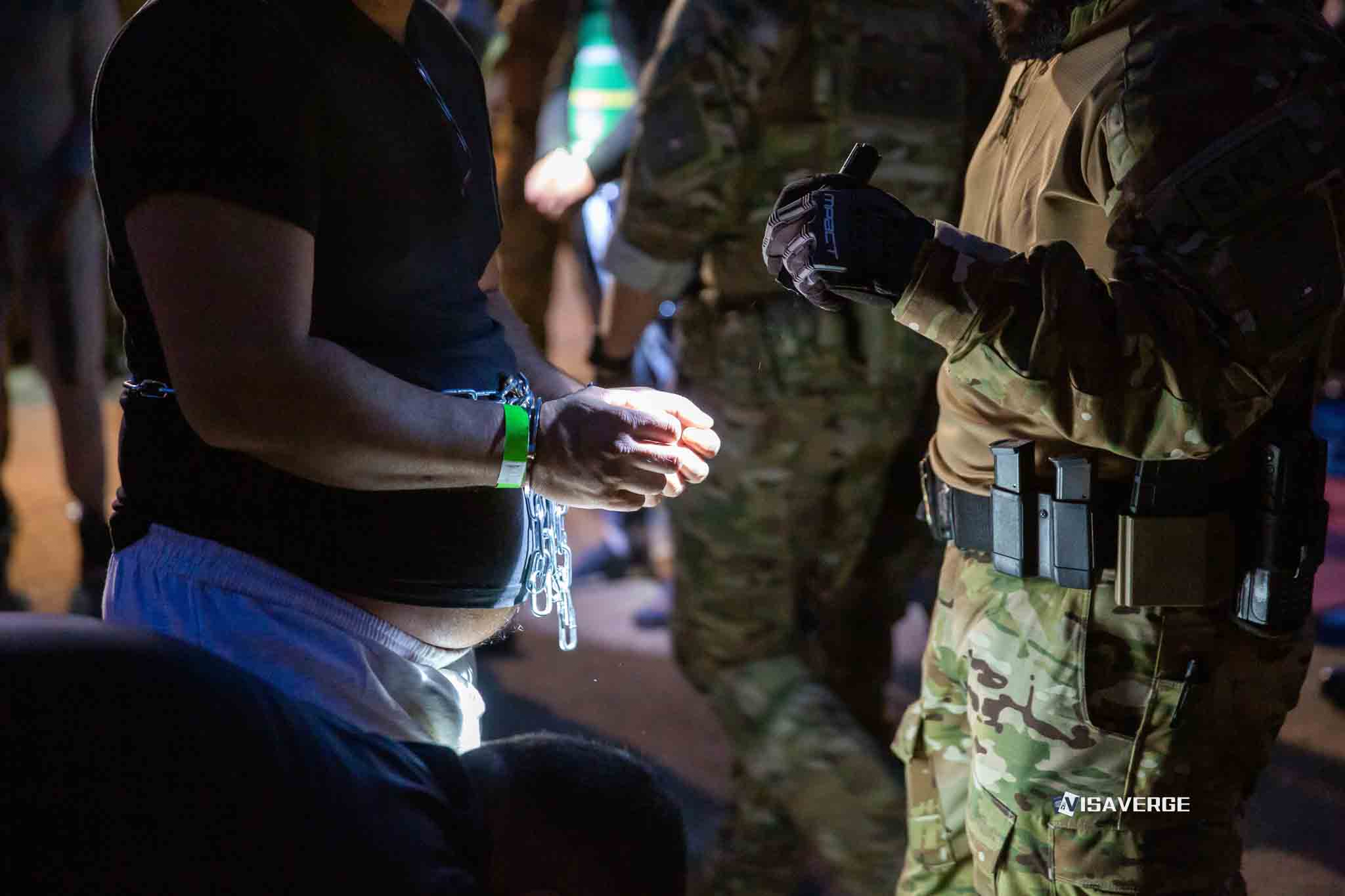
Emma Guadalupe Cuellar Lopez and Luis Antonio Gamez Martinez, along with their sons Joshua Gámez-Cuéllar, 14, and Caleb Gámez-Cuéllar, 12, were released from the Dilley family detention facility the same day. Rep. Joaquin Castro confirmed their release after visiting Dilley, and the family reunited after leaving federal custody while their immigration proceedings remained active.
Antonio, Joshua and Caleb are members of McAllen High School’s Mariachi Oro band, a public profile that helped push their ICE detention beyond routine enforcement and into national political debate. Mariachi Oro has won eight state championships, performed at Carnegie Hall and visited the White House, achievements that classmates and supporters highlighted as the brothers sat in detention without their instruments.
Band directors Alex Treviño and Neri Fuentes raised concerns about how detention could affect the students’ ability to perform, including the brothers’ worry about losing finger dexterity without instruments. Support for the family built quickly in the Rio Grande Valley, where the band’s competitions and appearances have made it a prominent cultural program.
The detention began on February 25, when ICE took the brothers and their parents into custody. The family had checked in regularly with ICE as required before they were detained, and their asylum claims remained pending at the time of both the detention and their release.
Denise Robles, a relative, said the family fled violence in San Luis Potosí, Mexico, and entered the United States illegally near Brownsville, Texas, in 2023 after migrating via the CBP One program, which later shut down in January 2025. The family’s route and timing placed them inside a shifting border system that has combined appointment-based entry policies with later enforcement actions.
The Department of Homeland Security framed the detention as a matter of custody during immigration proceedings, saying the parents “chose” to bring the children and that law mandates custody during asylum proceedings. DHS also emphasized the Trump administration’s enforcement of the rule of law, even as public attention centered on the impact of ICE detention on school-age children and a teenager involved in a celebrated arts program.
Parole served as the mechanism for Antonio’s release from El Valle, changing his custody status without ending his underlying case. In this context, the parole decision allowed him to leave detention while immigration proceedings continued, a distinction that supporters stressed as they pushed for the family’s release and for the brothers to return to school and music.
DHS separated Antonio from the Dilley placement because he is an adult male, citing child safety considerations for keeping younger children in a family facility. The result placed the oldest brother in El Valle in Raymondville while his parents and younger siblings remained at Dilley, separating the family across different detention settings as their case moved forward.
That split across facilities also carried practical consequences for daily contact and continuity with the family’s life in McAllen, including communication and the disruption of school routines, even though the family’s legal posture did not change simply because they were held in different places. The brothers’ supporters focused on the immediacy of separation and the interruption to school and performances, while DHS pointed to the detention system’s custody rules and placement decisions.
Castro, a Democrat, became one of the most visible elected officials pressing the agency, visiting the Dilley family detention facility and advocating for the family’s release. He also referenced a prior case involving 5-year-old Liam Conejo Ramos as he intervened, tying the Gámez-Cuéllar brothers’ detention to earlier concerns about how families and children are held during immigration proceedings.
Rep. Monica De La Cruz, a Republican, also criticized the family’s detention while distinguishing her position from broader opposition to immigration enforcement. De La Cruz said immigration crackdowns “shouldn’t target families like Antonio’s,” and she said her concern did not contradict enforcement, a statement that added to the unusual bipartisan attention around a single family’s custody status.
Public reaction in the Rio Grande Valley included protests in Raymondville, the same community where El Valle holds detainees, reflecting how quickly the family’s case spread across the region. Supporters also held a rally at McAllen High School honoring the family that evening, turning a local school event into a focal point for advocacy tied to the band’s standing in the community.
The sustained attention reflected both the family’s specific identity and the broader resonance of youth detention and separation during active asylum cases, especially when minors and students are involved. Media coverage and community organizing emphasized Mariachi Oro’s achievements and the role of the program in representing McAllen on statewide stages, while DHS emphasized custody requirements during pending proceedings.
As the case continues, the main figures remain the five family members—Emma Guadalupe Cuellar Lopez, Luis Antonio Gamez Martinez, and their sons Antonio, Joshua and Caleb—along with Olivares, the band directors Treviño and Fuentes, and the two lawmakers who intervened, Castro and De La Cruz. The family’s release altered their day-to-day conditions but did not resolve their pending asylum claims, leaving the legal outcome undecided even as supporters celebrated their return to each other and to their South Texas community.