- FAA halted airport traffic after a chemical smell was reported at Potomac TRACON control facility.
- Over 7,000 flight delays occurred nationwide due to combined facility issues and severe weather.
- Disruptions cascaded through the network affecting major hubs in Washington, Austin, and the Midwest.
(WASHINGTON, D.C. AREA) — The Federal Aviation Administration halted traffic Friday at three major Washington-area airports after controllers reported a strong chemical smell at the Potomac TRACON air traffic control facility, triggering a disruption that rippled across the U.S. flight network into the evening.
By Friday afternoon, U.S. flights logged close to 7, 000 delays and 647 cancellations, according to FlightAware. Those totals can change quickly as airlines and airports adjust schedules through the day and into the night.
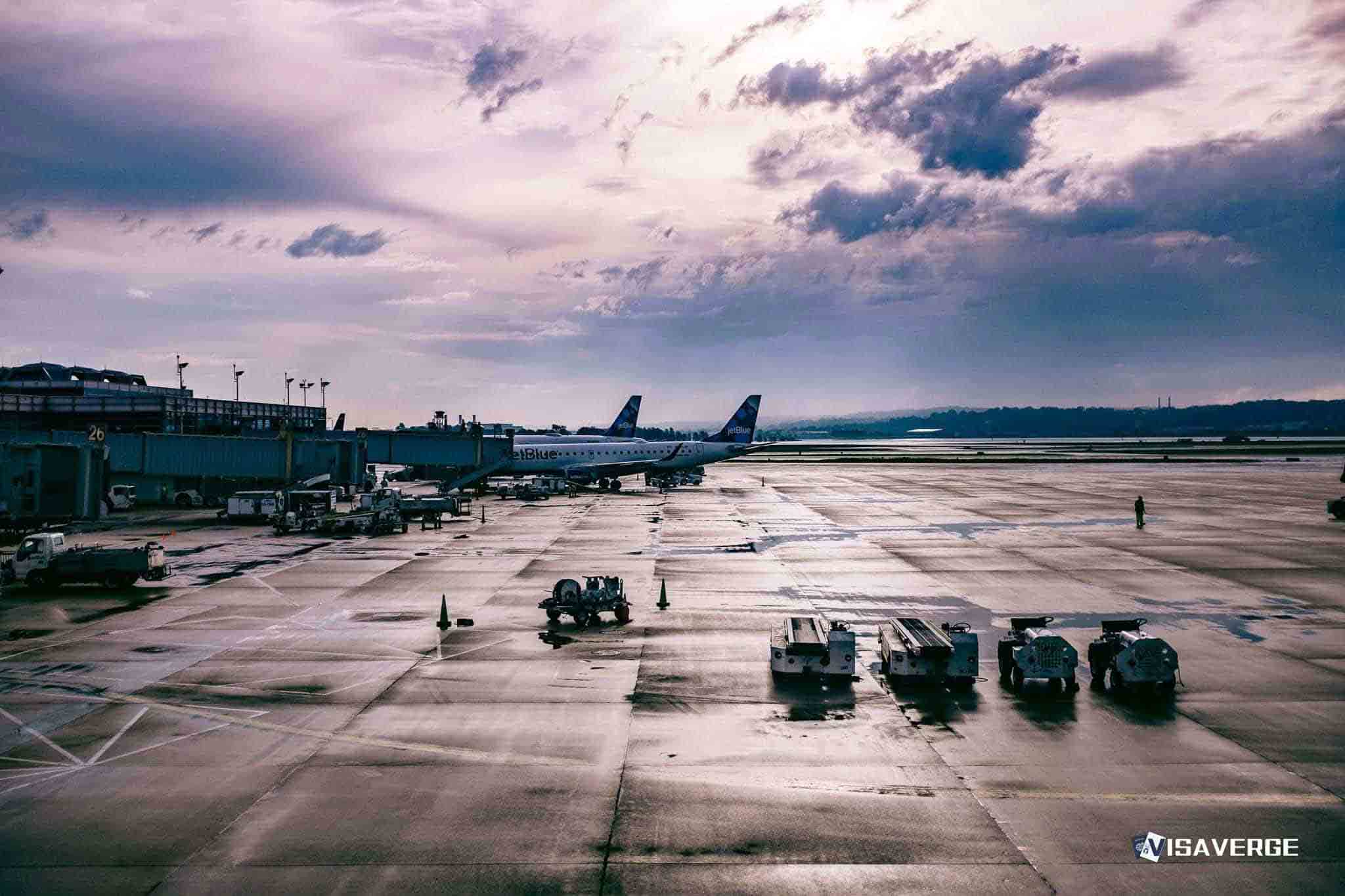
The Washington-area interruption hit Ronald Reagan Washington National Airport (DCA), Washington Dulles International Airport (IAD), and Baltimore-Washington International Airport (BWI), the FAA’s main commercial gateways for the capital region. Even after the FAA lifted the restrictions, delays continued as the system worked through aircraft and crew knock-on effects.
Potomac TRACON manages air traffic flows in and out of busy airspace around the nation’s capital, where multiple airports share the same corridors and arrival streams. When traffic stops at the facility, airlines can face departure holds on the ground, metered arrivals in the air, and gate crowding that limits how quickly flights can turn around.
Ground stops began shortly after 5:30 p.m. Eastern Time on Friday and were lifted approximately two hours later. Airlines and airports often continue to feel the impact long after a ground stop ends, because planes and crews remain out of position and scheduled aircraft rotations break.
A ground stop can immediately slow or freeze departures bound for an affected airport while also spacing arrivals to reduce congestion. That can leave jets waiting at gates for longer than planned, keep incoming flights circling or delayed at their origin, and create gate constraints that complicate a return to normal operations.
The Potomac TRACON incident added pressure to the air travel system on a day when other disruptions also emerged. A separate ground stop took effect at Austin-Bergstrom International Airport due to staffing issues, and arriving flights at Seattle-Tacoma International Airport were briefly stopped earlier that day because of snowy and icy conditions.
Multiple independent disruptions can amplify delays, because the national network relies on aircraft and crews moving from city to city on tight schedules. When one airport slows down, it can disrupt the next flight in a plane’s sequence, and then the next, spreading delays beyond the original location.
The Washington-area disruption also arrived as a powerful mid-March winter storm was expected to disrupt air travel across the United States, with potential for significant additional flight cancelations and delays affecting Washington DC airports as the system moved eastward from the Midwest. Airlines often reduce schedules ahead of major storms, but conditions at key hubs can still cause widespread disruption.
Weather-driven disruptions at large hubs can cascade quickly, particularly when heavy snowfall and strong winds affect airport arrival rates and runway operations. Aircraft rotations can break when a plane cannot reach its next city on time, and crews can end up in the wrong place for later flights, compounding schedule problems across the day.
Major airline hubs in Chicago, Minneapolis, and Detroit were experiencing heavy snowfall and strong winds. Because many Washington DC flights originate in or connect through those cities, cancellations in the Midwest can quickly translate into fewer aircraft arriving in the Washington area, fewer departures leaving it, and longer gaps between available flights as airlines reshuffle equipment.
The effects can also intensify as the system tries to recover. Airlines may face a backlog of aircraft waiting to depart, passengers rebooked onto later flights, and packed gates that slow down the ability to unload and load planes on time.
In the Washington area, DCA, IAD and BWI serve different mixes of short-haul and long-haul flights, but disruptions at the region’s shared airspace can affect all three at once. When flights cannot depart or arrive as planned, the delays can persist for hours afterward as airlines work to move aircraft to where they are scheduled to be next.
The longer delays last, the harder it becomes to return to schedule in the same operating day. A single stop in arrivals can push departures into later time windows, while missed connections can shift passenger loads and change how airlines prioritize which flights to operate when capacity returns.
Friday’s combination of an air traffic control facility disruption, weather trouble elsewhere, and separate airport restrictions highlighted how quickly strain can spread across the network. Even brief pauses, like the arrival stop in Seattle tied to snowy and icy conditions, can contribute to wider delays when aircraft and crews are already running behind.
Austin-Bergstrom’s ground stop tied to staffing issues added another constraint in a different region, further tightening the system. When airlines must hold flights for one airport while also working around weather at major hubs, dispatchers and airport operations centers often face limited options to catch up.
The storm risk in the Midwest also raised the prospect of additional disruptions as conditions pushed eastward. Weather at hub airports can reduce the number of landings per hour, lengthen taxi times, and create spacing requirements between aircraft, which can all translate into cancellations when airlines decide they cannot realistically operate full schedules.
Airlines build schedules around predictable flows, including aircraft that arrive, turn, and depart again within narrow windows. When heavy snowfall and strong winds slow those flows, the delays can reverberate through the rest of the day, affecting flights that never touch the worst weather but rely on the same aircraft and crews.
Washington-area airports can also see effects worsen later, even if conditions locally improve, because inbound aircraft may still be stuck at origin airports or delayed en route. That can thin out departure lineups, leave gates occupied longer than expected, and produce uneven traffic patterns as arrivals resume in bursts.
The national delay picture often evolves hour by hour as airlines cancel flights, re-route aircraft, and adjust gate assignments. Flight counts and cancellation totals can rise when weather persists, and they can also shift when airlines consolidate schedules and prioritize certain routes as capacity becomes available.
For travelers, the Washington region remained a focal point because DCA, IAD and BWI all depend on the same tightly managed airspace overseen by Potomac TRACON. Disruptions there can affect both short regional hops and longer routes that feed into the East Coast network.
Outside the Washington area, conditions at major hubs such as Chicago, Minneapolis, and Detroit can continue to drive wide impacts. When those hubs slow down, the effect can quickly reach other airports through missed connections and aircraft that fail to arrive on time for later departures.
By late Friday, airlines and airports were still working through the aftereffects of the chemical smell incident at Potomac TRACON while also watching the storm risk and other localized constraints. With multiple pressure points hitting the system at once, flight schedules remained variable into the evening as carriers tried to reset aircraft and crews for the next wave of departures.
Live Government Data
State Dept • CBPBusiest Border Crossings
- San Ysidro 175 min
- Calexico 150 min
- Calexico 120 min