- Arizona and Massachusetts lawmakers demand a federal investigation into the death of Haitian asylum seeker Emmanuel Damas.
- Damas died from suspected sepsis after allegedly receiving only ibuprofen for a severe tooth infection in custody.
- The 56-year-old’s death at a CoreCivic facility marks at least the tenth ICE custody death in 2026.
(FLORENCE, ARIZONA) — Arizona U.S. Representatives Yassamin Ansari, Greg Stanton, and Adelita Grijalva demanded a federal investigation into the death of Emmanuel Damas, a 56-year-old Haitian asylum seeker who died on March 2, 2026, while in ICE custody at the Florence Correctional Center.
The three Democrats, whose districts include parts of the Phoenix area, sent a letter on or around March 11, 2026, to DHS Secretary Kristjen Nielsen and ICE Acting Director Tae D. Johnson seeking records and answers about Damas’ medical care and the events leading to his death.
“His death is unacceptable and raises grave concerns over treatment and quality of healthcare that individuals in ICE custody receive,” the letter stated.
Damas’ case drew attention beyond Arizona because he was from Dorchester, Massachusetts, and because lawmakers in both states pressed federal officials for explanations about his detention and medical treatment.
Damas entered the U.S. in February 2024 through a Biden administration humanitarian parole program for Haitians, then later came into ICE custody after a criminal arrest, according to the account provided by the lawmakers and family members.
Boston Police arrested Damas in September 2025 for assault and battery, leading to his detention by ICE.
ICE transferred him to the CoreCivic-operated Florence facility on September 26, 2025, placing him in a private prison complex that holds immigration detainees in southern Arizona.
An immigration judge ordered his removal on January 6, 2026, and Damas appealed to the Board of Immigration Appeals on January 27, 2026, according to the information cited by the Arizona representatives.
That appeal formed the legal backdrop for his continued detention, with Damas remaining held under mandatory detention provisions of the Laken Riley Act.
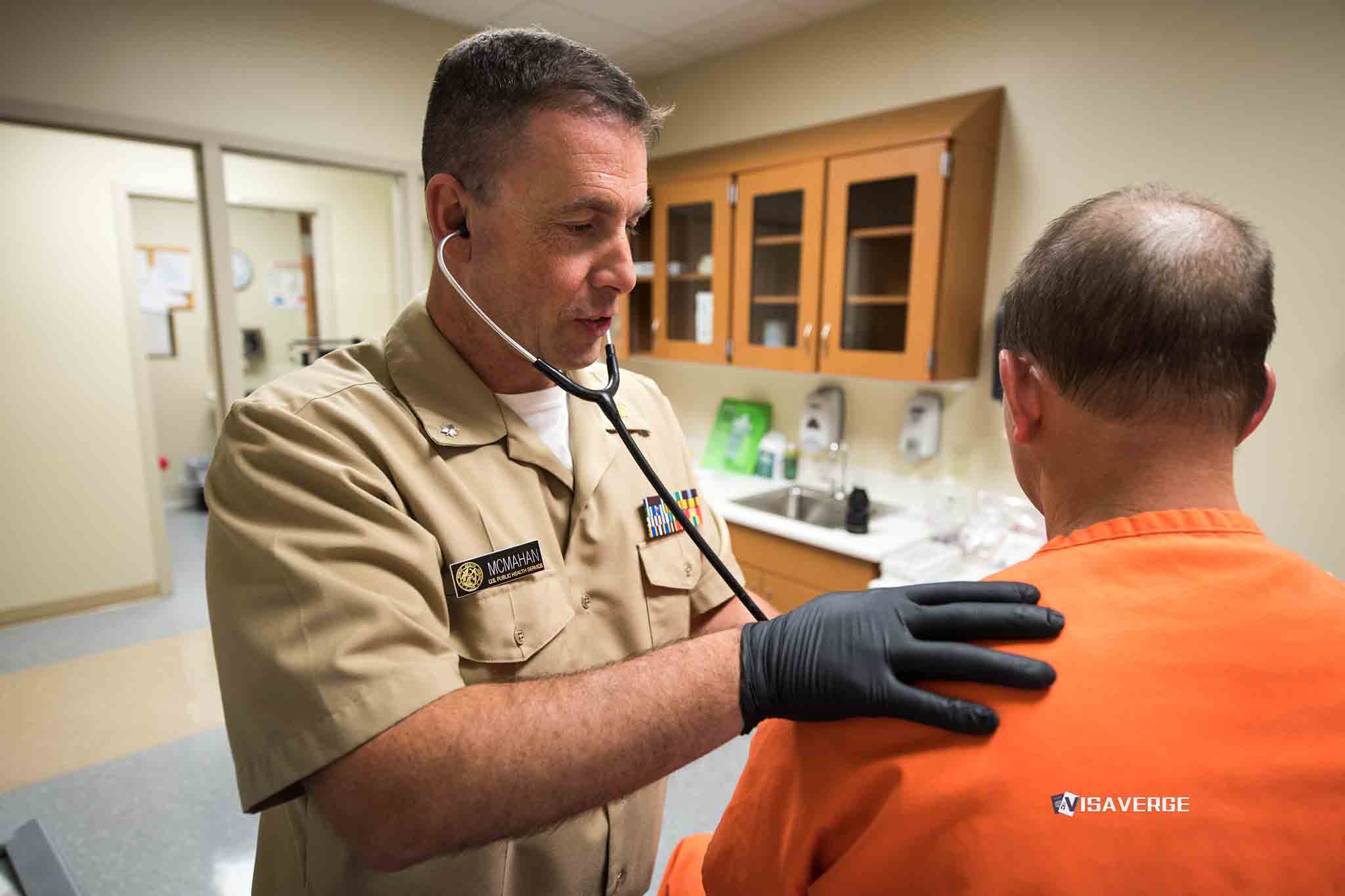
Family members said Damas began describing medical problems weeks before his death, starting with tooth pain that they said did not receive adequate treatment inside the detention facility.
His brother, Presly Nelson, also reported as Presner Nelson, said Damas reported a toothache around February 13, 2026, but facility staff provided only ibuprofen.
ICE records later showed Damas reported shortness of breath on February 19, 2026, prompting an immediate transfer to Florence Anthem Hospital as his condition worsened.
From there, he was sent to Phoenix’s John C. Lincoln Medical Center ICU and then to HonorHealth Scottsdale Osborn Medical Center, where he died at 1:12 p.m. on March 2, 2026, after becoming unresponsive despite lifesaving efforts.
Relatives said hospital staff described his death as the result of sepsis from a tooth infection that spread to his neck and lungs, an account that fueled demands for investigators to reconstruct each step in his care.
ICE, in a March 6 statement cited in the material provided, described the cause of death as undetermined at the time, while also noting hospital reporting of preliminary septic shock due to pneumonia.
That statement also said Damas had no initial serious issues beyond preexisting prescriptions, according to the description included in the same account.
An autopsy remains pending, with the medical examiner’s findings expected to determine the official cause of death.
Ansari, Stanton, and Grijalva asked for the complete medical examiner’s report, details on the events leading to hospitalization, and communications with Damas’ family.
Their request also sought a broader review of ICE healthcare training, standards, and guidelines, framing the case as a test of whether detainees receive appropriate medical attention while held by federal immigration authorities.
The lawmakers argued the circumstances raised wider concerns, writing that at least five other 2026 ICE custody deaths were linked to untreated or undertreated medical conditions.
Christine Ellis, a Chandler City Councilmember, also called for an investigation and contacted Stanton and Rep. Andy Biggs, a Republican who represents AZ-05, urging a review of on-site medical staff licenses.
Stanton responded with a public pledge to keep pressing federal officials, saying: “His family deserves answers and accountability, and I will not stop pushing until ICE provides it.”
Pressure also came from Massachusetts, where Damas had lived before his detention, adding a cross-state element to the push for oversight.
Massachusetts Sens. Elizabeth Warren and Ed Markey, along with Rep. Ayanna Pressley, demanded answers in a separate letter to DHS and ICE heads, alleging ICE failed to provide timely care for Damas’ toothache.
That Massachusetts letter called his death “highly preventable” and described it as at least the tenth in ICE custody in 2026, according to the account provided.
ICE took steps required after an in-custody death, notifying the DHS Office of Inspector General, the ICE Office of Professional Responsibility, and the Haitian consulate, according to the same material.
Those notifications reflect the formal review channels that typically follow such deaths, but lawmakers and relatives have pressed for more detailed disclosures, including medical timelines and decision-making around hospital transfers.
Nelson, speaking about what he said could have prevented the outcome, emphasized the family’s belief that basic access to dental care could have changed the course of events.
“All you have to do is get a driver and a security guard or two security guards to actually take him to a dentist,” Nelson said.
The dispute over medical care has centered on when Damas first reported symptoms, what treatment he received at the Florence facility, and how quickly he was moved to outside hospitals as his condition deteriorated.
Family members pointed to the toothache complaint around February 13, 2026, and the report that he received ibuprofen, while ICE records cited shortness of breath on February 19, 2026, followed by an immediate transfer to Florence Anthem Hospital.
The competing accounts of what drove his decline have also shaped the debate over responsibility, with relatives describing sepsis linked to a tooth infection and ICE citing an undetermined cause alongside preliminary septic shock due to pneumonia.
The pending autopsy is expected to provide the authoritative medical determination, while lawmakers have demanded the records needed to assess whether detention medical staff and ICE leadership complied with expected standards of care.
Damas’ death at HonorHealth Scottsdale Osborn Medical Center at 1:12 p.m. on March 2, 2026, and the reported sequence of transfers from Florence to Phoenix and then Scottsdale, have become central to questions about how quickly his illness progressed and how it was handled.
By targeting both DHS leadership and the top of ICE, the Arizona representatives aimed their request at the agencies responsible for detention operations and health care oversight, seeking documents that could clarify what decisions were made inside the Florence Correctional Center and during the hospitalization.
The scrutiny also extends to the facility’s operator, CoreCivic, because ICE transferred Damas to the company-run Florence site on September 26, 2025, and he remained there through the period when his family says he repeatedly raised medical concerns.
Lawmakers have not limited their demands to the cause of death, instead asking for a record of communications with Damas’ family, a point that reflects concerns about how quickly relatives were informed and what information they received while he was hospitalized.
The questions surrounding Damas’ time in ICE custody have also unfolded against the backdrop of his immigration proceedings, including the removal order issued on January 6, 2026, and his appeal filed on January 27, 2026.
Those court actions, combined with mandatory detention provisions of the Laken Riley Act, meant Damas remained in detention as his family said he grew sicker, culminating in the February 19, 2026 report of shortness of breath and the chain of transfers that ended with his death.
For Ellis, the Chandler councilmember, the response included a call to examine whether medical staff working on site held appropriate licenses, a demand she directed to both Stanton and Biggs.
Stanton’s response highlighted the political stakes for officials representing communities where detention centers operate, as well as the expectations families have when a relative dies after being moved through the federal detention system.
As congressional offices await the medical examiner’s findings, the letters from Arizona and Massachusetts lawmakers set up a new round of federal responses, with requests for records that could produce a clearer timeline of symptoms, treatment decisions, and communications in Damas’ final weeks.
At the center of the case is a single unresolved question that multiple elected officials have now elevated: how a Haitian asylum seeker who entered the U.S. in February 2024 ended up dying in ICE custody after a reported toothache and a rapid decline that led from a detention unit in Florence to intensive care and, ultimately, a death the family says should not have happened.