- ICE is expanding its air fleet with eight Boeing 737s and two Gulfstream G650s for deportations.
- A budget of $464.5 million was allocated to double monthly deportation targets to 30,000 people.
- Governor Kathy Hochul proposed barring local resources from assisting federal immigration enforcement in New York.
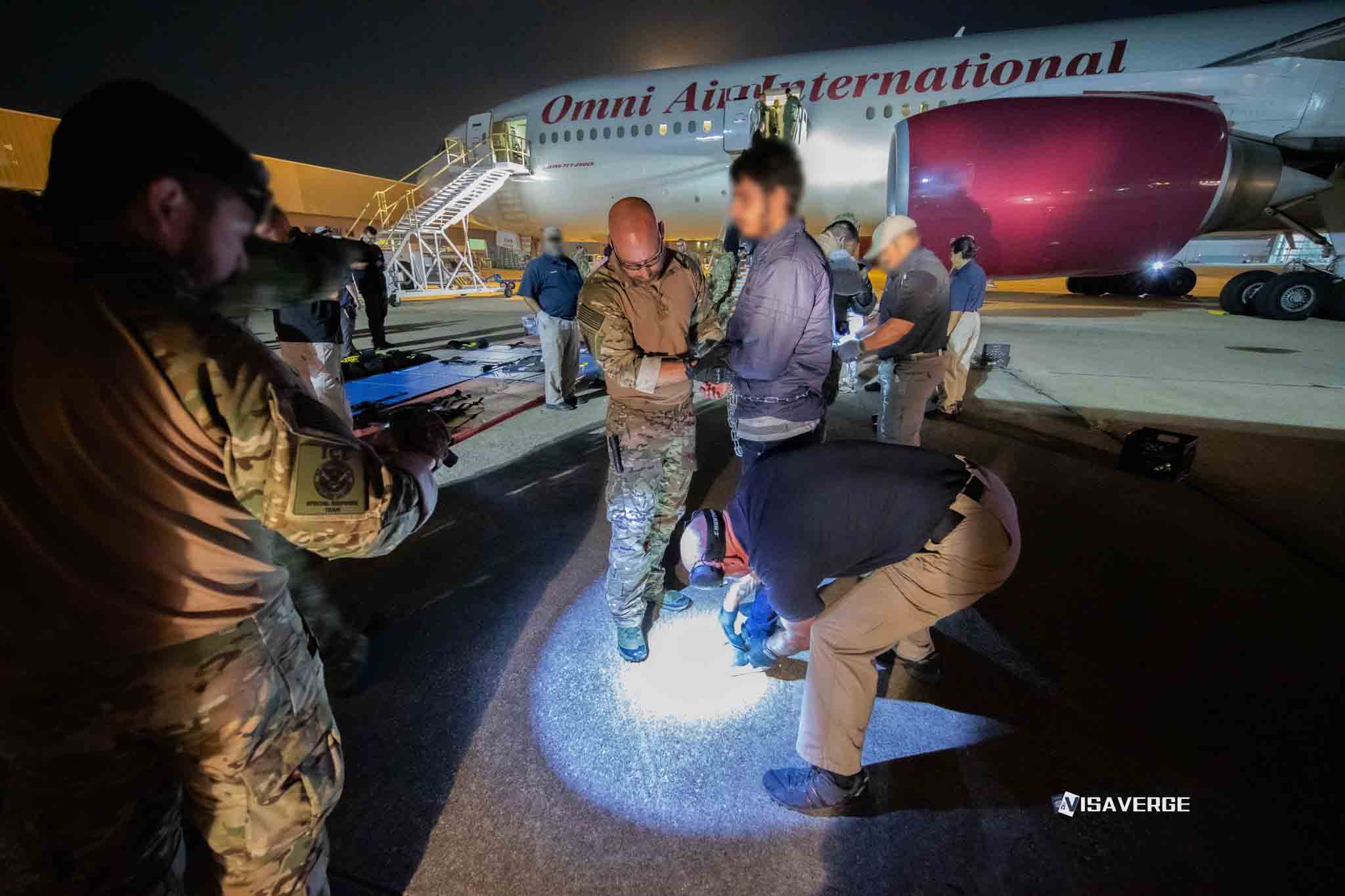
(NEW YORK CITY, NEW YORK) – ICE is expanding its air deportation fleet with eight Boeing 737s and two Gulfstream G650s. No confirmed reports as of April 21, 2026 show the agency seeking parking in New York City for a 150-vehicle deportation fleet.
Office of Management and Budget documents from late March 2026 allocated $464.5 million for the aircraft. That money came from a $29.9 billion immigration pool in the July reconciliation bill.
The aircraft purchase fits a broader deportation push inside the Department of Homeland Security. Homeland Security Secretary Kristi Noem has pushed a goal of deporting 30,000 people monthly, up from 15,000.
Enforcement activity already climbed sharply in March. ICE logged a record 1,794 enforcement flights in March 2026, a 122% increase from March 2025.
Those figures point to an air operation growing faster than any publicly confirmed ground fleet in New York City. The expansion is tied to aircraft, flight volume and detention space, not to parking needs in the city for 150 vehicles.
New York officials moved in the opposite direction last week. Governor Kathy Hochul proposed on April 16, 2026 to bar local resources for immigration enforcement, prohibit 287(g) agreements, and block zoning changes for detention centers without public input.
That proposal landed as New York City faced expanded ICE operations announced by Border Czar Tom Homan. The city has also kept sanctuary policies under Mayor-elect Zoran Mamdani.
The state and city response followed a chaotic Manhattan street vendor sweep that sharpened attention on immigration enforcement in the five boroughs. Even with that pressure, by Tuesday there was no confirmation of any ICE request for New York City parking tied to a 150-vehicle deportation fleet.
ICE’s expansion plans stretch beyond aircraft. The agency is scouting detention sites nationwide, including warehouses in Maryland, Pennsylvania and Arizona.
Maryland carries a price tag of $102 million. Pennsylvania carries $84 million, and Arizona $70 million.
Those searches come as the detention population stood at about 75,000 as of mid-January 2026. Local pushback has followed the site scouting.
The spending pattern shows where federal resources are going. Airlift and detention capacity are receiving identified funding, while the reported New York parking question remains unsupported by confirmed information.
That distinction matters in practical terms for how the deportation system is being built. The air deportation fleet would move people between detention centers, staging points and removal destinations; the new aircraft are not tied to any New York City vehicle depot.
Eight Boeing 737s would give ICE a much larger fixed-wing operation than a small charter-dependent model. Two Gulfstream G650s add another layer to that fleet buildout, backed by the same $464.5 million allocation cited in the late March budget documents.
The policy target attached to that spending is explicit. Noem’s push for 30,000 deportations a month would double the earlier level of 15,000, and the jump to 1,794 enforcement flights in March suggests the flight network is already scaling up.
New York’s political response has centered on limiting local involvement. Hochul’s proposal would bar local resources from immigration enforcement, stop 287(g) agreements, and require public input before detention-center zoning changes move ahead.
That puts state policy on a collision course with expanded federal enforcement activity in and around the city. Mamdani’s sanctuary stance points in the same direction, even as Homan has signaled a larger ICE footprint.
No confirmed account by April 21, 2026 links that federal push to a plan for parking 150 deportation vehicles in New York City. The public details instead describe aircraft purchases, monthly deportation targets, record flight counts and detention-site scouting in other states.
Maryland, Pennsylvania and Arizona appear in those detention plans with clear dollar figures attached. New York appears in the political fight over enforcement boundaries, not in any confirmed request for a large ICE parking operation.
The split between those two tracks, fleet expansion in the air and resistance on the ground, defines the current picture. ICE is building more removal capacity, and New York officials are proposing more limits on how much local government can assist it.
By Tuesday, the confirmed numbers stayed fixed: eight Boeing 737s, two Gulfstream G650s, $464.5 million in funding, a $29.9 billion immigration pool, a target of 30,000 deportations each month, a previous benchmark of 15,000, and 1,794 enforcement flights in March. The claimed 150-vehicle New York City parking need remained unconfirmed.