- Florida authorities and federal agencies launched Operation Tidal Wave to conduct targeted immigration enforcement across the state.
- The initiative utilizes 287(g) agreements to allow local law enforcement to exercise federal immigration authority.
- Officials describe the effort as the largest joint immigration operation in the history of ICE.
(FLORIDA) — Florida law enforcement agencies and federal partners carried out Operation Tidal Wave, a targeted immigration enforcement initiative that state officials have tied to expanded cooperation under 287(g) agreements.
The operation has drawn attention in Florida because it links state and local policing to federal immigration enforcement authority traditionally reserved for Immigration and Customs Enforcement, putting intergovernmental coordination at the center of day-to-day enforcement activity.
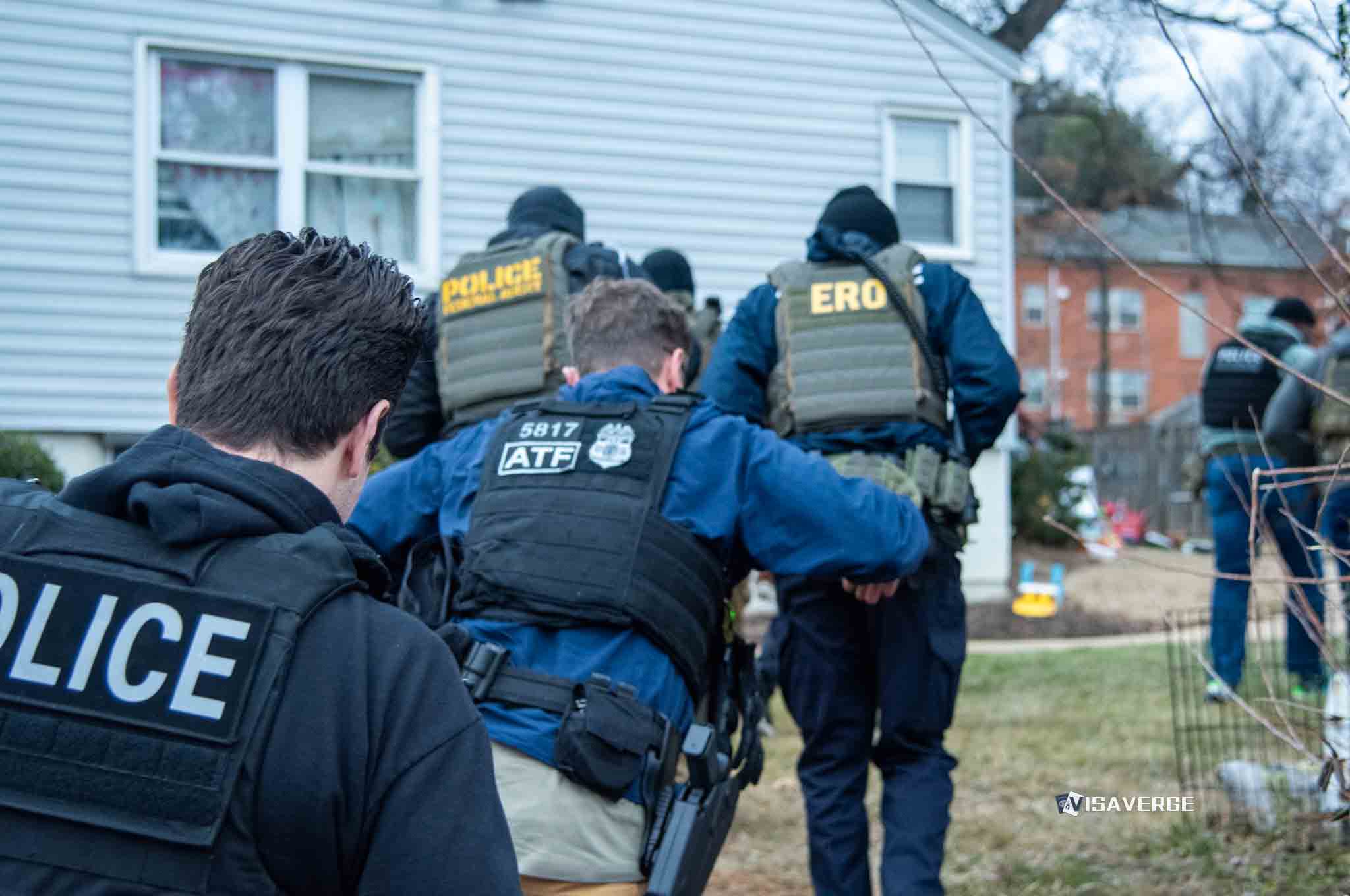
Governor Ron DeSantis announced milestones for Operation Tidal Wave and framed the initiative as a statewide effort that pairs Florida agencies with multiple federal partners.
Operation Tidal Wave began last April and continued as an ongoing initiative rather than a single sweep, with authorities describing results that far exceed any one-off enforcement action.
Early activity set the tone for a sustained posture, with authorities describing the first week of enforcement as the largest number in a single state in one week in ICE’s history.
Beyond the arrest figures themselves, the operation’s reported tempo matters because it reflects how often local agencies and federal partners can coordinate on immigration enforcement when the legal and operational framework is already in place.
At the center of that framework are 287(g) agreements, which allow Florida state and local law enforcement officers to exercise federal immigration enforcement authority traditionally reserved for ICE.
Officials have pointed to those agreements as the mechanism that enables Operation Tidal Wave to function as a multi-agency effort, connecting local law enforcement activity in Florida to federal immigration enforcement objectives.
State officials have described the initiative as targeting individuals with final deportation orders and serious criminal records.
Participants cited for the operation include the Florida Department of Law Enforcement, Florida Highway Patrol, and county sheriff’s offices across the state, operating with federal partners that include ICE, U.S. Customs and Border Protection, the FBI, DEA, ATF, and U.S. Marshals Service.
DeSantis characterized the effort as “the largest joint immigration enforcement operation in ICE’s history.”
Those arrested came from more than a dozen countries, with the largest numbers reported from Guatemala, Mexico, and Honduras.
Separate from the broader initiative, public summaries of Operation Tidal Wave have not identified a discrete episode that resulted in exactly 15 arrested, even as the phrase “15 arrested” has circulated in connection with the operation’s name.
To match a claim of exactly 15 arrested to a specific Operation Tidal Wave event, identifiers would need to include the date, the county or location in Florida, the agency that carried it out, and a reference to an official announcement that ties those arrests to Operation Tidal Wave.