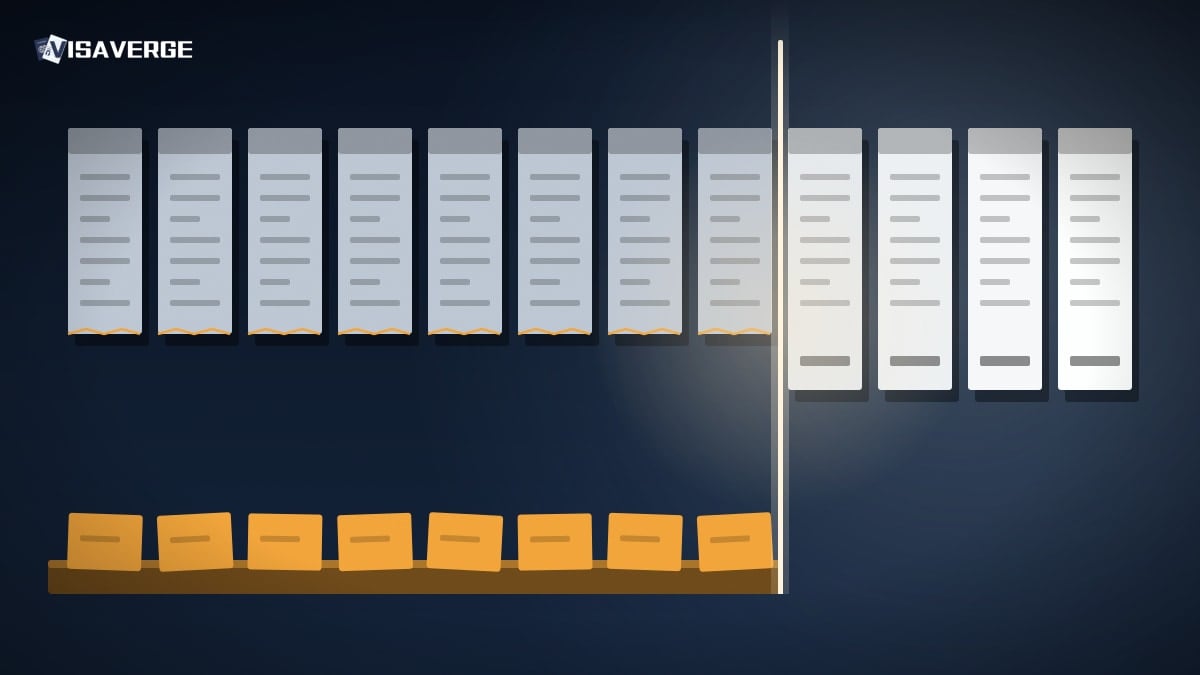
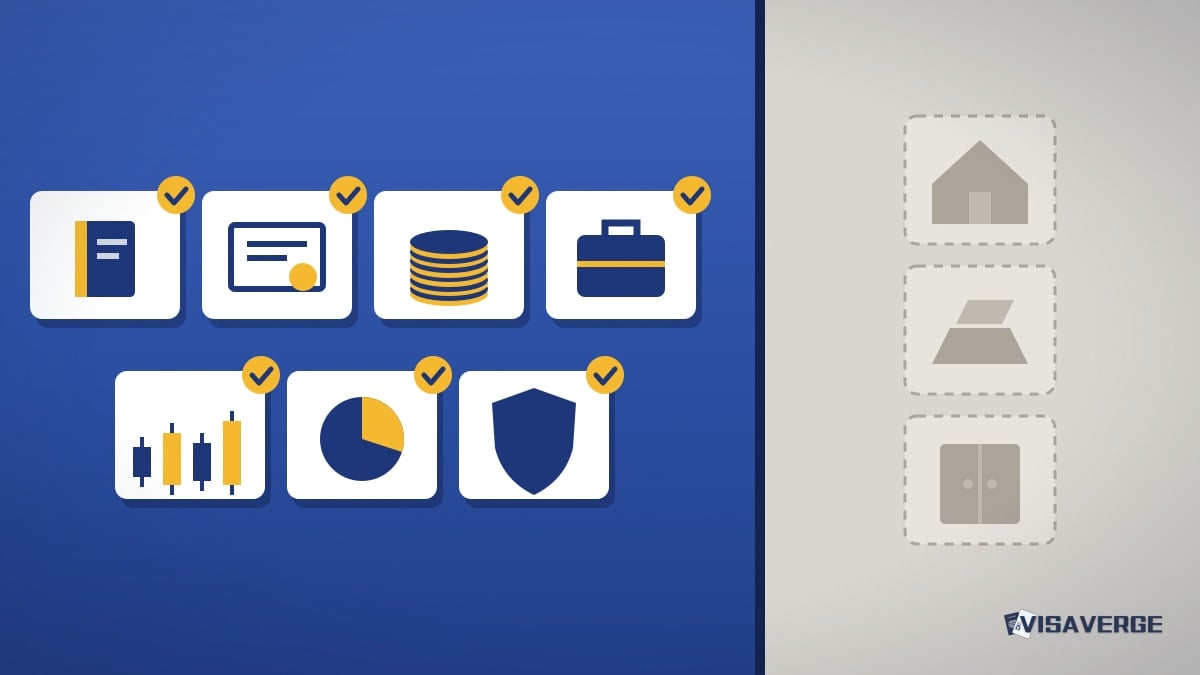
- Firms and LLPs must deduct 10% TDS on covered partner payments once annual amounts exceed ₹20,000.
- Section 87A rebate may cut final tax to nil, but it does not отменить withholding under Section 194T.
- Partner remuneration, commission, bonus, salary and interest fall under business income rules, not salary treatment.
(INDIA) — Indian partnership firms and LLPs must deduct tax at source on specified payments to partners from 01-04-2025, even when a partner’s taxable income may later fall within the ₹12 lakh limit for rebate under Section 87A.
The new Section 194T creates a TDS obligation on partner remuneration, salary, commission, bonus and interest, with deduction at 10% once the aggregate covered payment to a partner exceeds ₹20,000 in a financial year. The ₹12 Lakh Rebate under Section 87A applies at the final tax computation stage, not when the firm decides whether to deduct tax.

That distinction has become an immediate issue for small firms as they prepare partner accounts for FY 2025-26. A partner may end the year with little or no final tax after rebate, but the firm still has to deduct TDS if the payment falls within Section 194T and crosses the statutory threshold.
Section 194T covers payments made by a firm to a partner in the nature of remuneration, salary, commission, bonus and interest. It does not apply to a partner’s share of profit, and it does not apply to capital withdrawal or repayment of capital if the payment is only a withdrawal of capital.
The threshold under the provision is narrow and specific. No deduction is required where the aggregate sum paid or payable does not exceed ₹20,000 during the financial year, but once that level is crossed, the rate is 10%.
Confusion has grown because the new tax regime for AY 2026-27 allows a Section 87A rebate of up to ₹60,000 where taxable income does not exceed ₹12 lakh. That relief belongs to the return-filing stage, after total income and tax liability are computed. It does not rewrite the deduction rule that applies when the firm credits or pays the amount.
A simple example shows the difference. If a firm credits ₹10 lakh as remuneration to a partner during FY 2025-26, Section 194T requires TDS at 10% because the amount exceeds ₹20,000. The firm cannot skip deduction on the ground that the partner may later claim rebate under Section 87A.
The tax treatment of partner remuneration also differs from ordinary employment income. Section 15, which deals with salary income, contains an Explanation stating that any salary, bonus, commission or remuneration due to or received by a partner from the firm shall not be regarded as salary for the purposes of that section.
Instead, Section 28(v) brings that receipt to tax under the head “Profits and gains of business or profession.” Employee salary from an employer falls under “Salaries,” but partner remuneration from a firm and partner interest from a firm fall under business or professional income under Section 28(v). A partner’s share of profit remains exempt under Section 10(2A), subject to conditions.
That classification affects deductions. Section 16(ia), which grants the standard deduction for salary income and pension taxed under the head “Salaries,” does not apply to partner remuneration taxed as business income. For AY 2026-27, the standard deduction is up to ₹50,000 under the old regime and up to ₹75,000 under the new regime under Section 115BAC, but those figures do not help a partner trying to reduce taxable remuneration from a firm.
A salaried taxpayer under the new regime may have gross salary of ₹12.75 lakh, reduce it by ₹75,000, and reach taxable income of ₹12 lakh for Section 87A rebate purposes. A partner receiving remuneration from a firm cannot do the same merely because the books describe the payment as “salary.” For tax purposes, the income remains business income under Section 28(v).
Refunds are still possible. If the firm deducts tax under Section 194T and the partner’s final tax liability turns out to be lower, the excess can be claimed back in the income-tax return.
The mechanics are straightforward. Refund depends on the comparison between TDS, advance tax and self-assessment tax paid, and the final tax liability as per the return. If the tax paid is higher than the tax payable, the excess is refundable.
One example in the law’s practical application captures the point. A partner with remuneration under Section 28(v) of ₹10,00,000 would face TDS deducted by the firm under Section 194T of ₹1,00,000 at 10%. If tax before rebate under the new regime is ₹40,000 and the Section 87A rebate, if eligible, is ₹40,000, the final tax payable becomes nil and the refund claimable becomes ₹1,00,000.
That result does not turn partner remuneration into salary income. It reflects the fact that Section 87A rebate can reduce final tax for an eligible resident individual, while the TDS obligation still operates at the time of withholding. Final refund will still depend on the partner’s full income profile, including other income, capital gains, special-rate income, foreign income, or total income above the rebate threshold.
Profit share stands on a different footing from remuneration and interest. A partner’s share in the profit of a firm is generally exempt because the firm is separately assessed under the Income-tax Act, and that exempt profit share does not attract Section 194T.
Bookkeeping therefore matters. A payment shown as “drawings” may still attract TDS if, in substance, it is remuneration or interest. A genuine withdrawal from an existing capital balance should not be treated as partner remuneration merely because money moved from the firm to the partner.
Timing matters too, because Section 194T triggers deduction at the earlier of credit or payment. Many firms credit partner remuneration or interest to the partner’s capital account at year-end, and that entry can itself trigger the withholding requirement.
Cash payment is not the test. Once the firm credits the amount to the partner’s account, including the capital account, the TDS event may arise. Firms therefore need partner-wise tracking before books are closed, not months later when returns are filed.
Compliance under the provision follows the usual withholding sequence. Firms should identify covered payments, deduct tax at 10%, deposit the amount within the applicable time, file the quarterly TDS statement and issue `Form 16A`, the TDS certificate for income other than salary that captures the TDS amount, nature of payment and TDS deposited.
Section 40(b) operates alongside Section 194T, but it addresses a different question. Section 40(b) governs whether partner remuneration and interest are deductible in the hands of the firm for its own tax computation, while Section 194T governs withholding on specified payments made to partners.
That means the two obligations can coexist. Broadly, remuneration is deductible in the firm’s computation if the partnership deed authorises it, it is paid to working partners, it relates to the period covered by the deed and it stays within the limits prescribed under Section 40(b). Interest to partners is also subject to deed authorisation and the statutory ceiling, commonly understood as 12% simple interest per annum for deduction purposes.
Even if a deduction issue later arises under Section 40(b), the firm’s TDS obligation under Section 194T may still arise at the time of credit or payment if the amount is of the covered nature and exceeds ₹20,000. Section 28(v) adds an adjustment principle, under which partner interest, salary, bonus, commission or remuneration that has not been allowed as deduction under Section 40(b) gets adjusted to that extent in the partner’s taxable income.
Another question has surfaced quickly in practice: whether a partner can seek lower or nil deduction under Section 197 for payments covered by Section 194T in FY 2025-26. The safer view under the Income-tax Act, 1961 is no, because Section 194T does not appear in the list of sections mentioned in Section 197.
Section 197 covers specified provisions including Sections 192, 193, 194, 194A, 194C, 194D, 194G, 194H, 194-I, 194J, 194K, 194LA, 194LBB, 194LBC and 195. Section 194T is not part of that list. In practice, that leaves refund through the income-tax return as the route for a partner whose final tax is nil or lower than the tax withheld.
`Form 15G` and `Form 15H` do not solve the problem either. Those declarations apply to specified types of income, typically interest and other specified receipts, and they are not a general device to stop TDS on partner remuneration under Section 194T.
The framework shifts again from 1 April 2026, when the Income-tax Act, 2025 begins to operate for tax years starting on or after that date. Under that transition, the corresponding lower or nil withholding certificate provision becomes Section 395(1), and `Form 128` is used to apply for a certificate authorising the payer to deduct tax at a lower or nil rate.
That future route may become relevant for payments or credits on or after 1 April 2026, subject to the statutory framework, portal process and the Assessing Officer’s satisfaction. It does not change the position for FY 2025-26, when firms deducting under Section 194T must work within the 1961 Act.
The examples are blunt. No TDS is required on partner remuneration of ₹18,000 because the aggregate covered payment does not exceed ₹20,000 during the year. TDS applies at 10% on partner remuneration of ₹1,00,000, producing deduction of ₹10,000.
A partner who receives ₹8,00,000 as remuneration and ₹2,00,000 as exempt profit share faces TDS only on the remuneration component, not on the exempt share of profit. A partner who receives ₹6,00,000 as interest on capital also faces TDS at 10% if the amount exceeds ₹20,000, while the firm separately examines whether the interest is authorised by the deed and allowable within Section 40(b) limits.
Account classification will decide many disputes before they start. Firms and LLPs that keep partner capital accounts clearly split between remuneration, interest, profit share and capital withdrawals will find it easier to apply Section 194T correctly and to defend the character of each entry if questioned later.
The rule that emerges is narrow but firm. Section 194T creates a withholding duty from 1 April 2025, and that duty turns on the nature and amount of the payment, not on whether the partner may later end up with no final tax after rebate. The ₹12 lakh figure belongs to rebate computation; the TDS threshold remains ₹20,000.