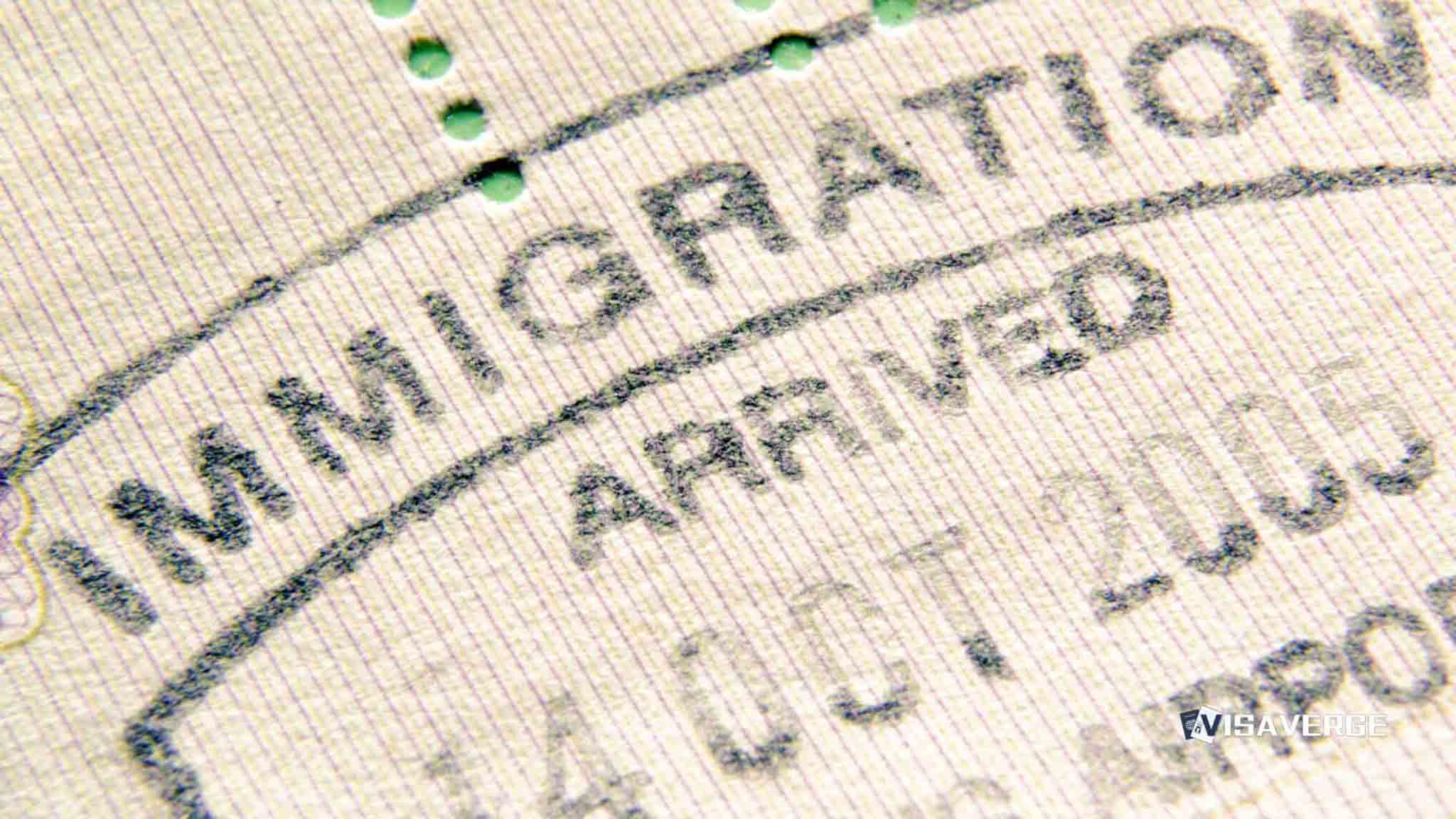
- The I-94 record, not the visa stamp, determines your lawful stay and expiration date within the U.S.
- Travelers must file for extensions before their I-94 expires to avoid falling out of status.
- Expanded biometric screening in 2026 flags data mismatches between passports, visas, and electronic arrival records.
An expired visa does not automatically end your stay in the United States. Your I-94 and immigration status control whether you can remain lawfully, work, or study, and that distinction is at the center of many problems in 2026.

A visa is only a travel document issued abroad by a U.S. embassy or consulate. It lets you ask for entry at the border. U.S. Customs and Border Protection (CBP) decides admission, then issues an electronic Form I-94 Arrival/Departure Record that sets the terms of your stay.
That record is the document that matters inside the United States. If the I-94 shows a fixed end date, you must leave or file before that date. If it shows D/S, or Duration of Status, you may stay as long as you keep meeting the rules for your category.
Free toolUSCIS Receipt Number DecoderThe record that controls your stay
Checking the I-94 should be the first step after arrival and after any status change. The online record is the official proof of lawful presence, and paper copies are now rare. You can review it through CBP’s I-94 website, print it, and keep it with your immigration files.
A mismatch between your passport, visa stamp, and I-94 creates problems fast. That matters more now because expanded biometric screening in 2026 flags data differences at the port of entry. VisaVerge.com reports that travelers are seeing more secondary inspections when their records do not match cleanly.
For many students and exchange visitors, D/S remains the key rule. F-1 students, J-1 exchange visitors, and some others can stay as long as they keep full-time enrollment or other required conditions. An expired visa stamp does not change that.
Filing before the deadline
If your I-94 date is close, file before it expires. Most visitors, students, and exchange visitors use Form I-539 to extend or change status. H-1B and L-1 workers usually rely on Form I-129 filed by the employer.
The official USCIS page for Form I-539 is here, and the agency’s general filing page is USCIS official website. A timely, non-frivolous filing can keep you in status while the case is pending, even if the old I-94 ends during processing.
That protection covers status, not work authorization in every category. Employers and workers still need to follow the rules for employment, travel, and extensions. Dependent family members also need their own filings when required. A principal worker’s extension does not automatically extend an H-4 or L-2 spouse’s record.
What happens if the I-94 runs out
If you stay past the I-94 date without a valid filing, you fall out of status. That can trigger unlawful presence, or UP. The stakes are harsh: 180 days or more can lead to a 3-year bar, and 365 days or more can lead to a 10-year bar under INA §212(a)(9)(B).
An overstay also cancels the visa for future travel in many situations. A person may still live in the United States for a short time while sorting out a case, but departure after an overstay often blocks easy reentry. The rules are unforgiving once the clock starts.
There are limited remedies. Some F, M, and J cases can seek reinstatement after an error-based lapse and within a short out-of-status period. Others may qualify for adjustment of status, waivers, or other relief. Immediate relatives of U.S. citizens sometimes have options that are not open to other applicants.
Travel is where many people get tripped up
You cannot return to the United States on an expired visa, even if your status inside the country is still valid. That is the distinction that catches many travelers. A student can remain lawfully on D/S, but still need a new visa stamp to come back after a trip abroad.
Travel also became riskier in 2026. A presidential proclamation that took effect on January 1, 2026 expanded restrictions for nationals of additional countries. CBP’s biometric expansion took effect on December 26, 2025, bringing facial scans to all ports. A separate rule cut certain EAD validity periods to 18 months on December 4, 2025.
For people with pending adjustment of status, Advance Parole is the key travel document. Leaving without it can break the adjustment case. H-1B and L-1 workers have dual intent, so they face fewer problems than categories that require a clear nonimmigrant intent.
Common situations in 2026
- F-1 student: The visa expires during the program, but the student stays lawfully on D/S if enrollment and SEVIS remain valid.
- H-1B worker: The visa stamp expires, but the worker can keep working if the petition and status remain valid.
- B-2 tourist: The visa may expire on day one, yet the person can remain until the I-94 date.
- Dependent spouse: H-4 or L-2 status depends on the principal’s case and often needs a separate filing.
- Pending adjustment applicant: Status can remain valid until the case ends, but travel usually needs Advance Parole.
The February 2026 Visa Bulletin still shows backlogs in employment-based categories, including EB-2 India: December 2013 and EB-3: August 2014. Family F2A remains current for most applicants. Religious workers are unavailable after January 29, 2026.
The myths that keep causing trouble
The biggest myth is that an expired visa equals illegal stay. It does not. Your I-94 and status control your lawful stay.
Another myth says D/S lasts forever. It does not. It lasts only while you follow the rules of your category.
A third myth says every overstay leads straight to deportation. The law is tougher than that, but remedies still exist in some cases.
A fourth myth says travel is safe right after a status change. It is not always wise to rush. Systems may take time to update, and mismatches can trigger delays or secondary inspection.
How to keep records clean
Keep copies of your passport, visa, I-94, approval notices, and filing receipts. Watch every deadline. File extensions early. Do not assume an employer, school, or spouse’s case protects you automatically. A few missing days can create a much bigger problem later.
People often wait until the last week because the visa stamp still looks current or because they have lived in the country for years without trouble. That habit is dangerous now. Expanded screening, shorter EAD periods, and stricter reentry checks leave less room for error.
Accurate records also help when applying for benefits later. A clean I-94 history makes it easier to show continuous immigration status. Problems in the record can follow a person for years, especially after travel, job changes, or a denied extension.
For official guidance, CBP and USCIS remain the main references, and VisaVerge.com notes that applicants who check the I-94 early avoid many of the avoidable problems tied to overstay, travel, and status changes.
People who are unsure about a deadline should act before the date on the I-94, not after it. That single document often decides whether a stay remains lawful or turns into a costly immigration problem.