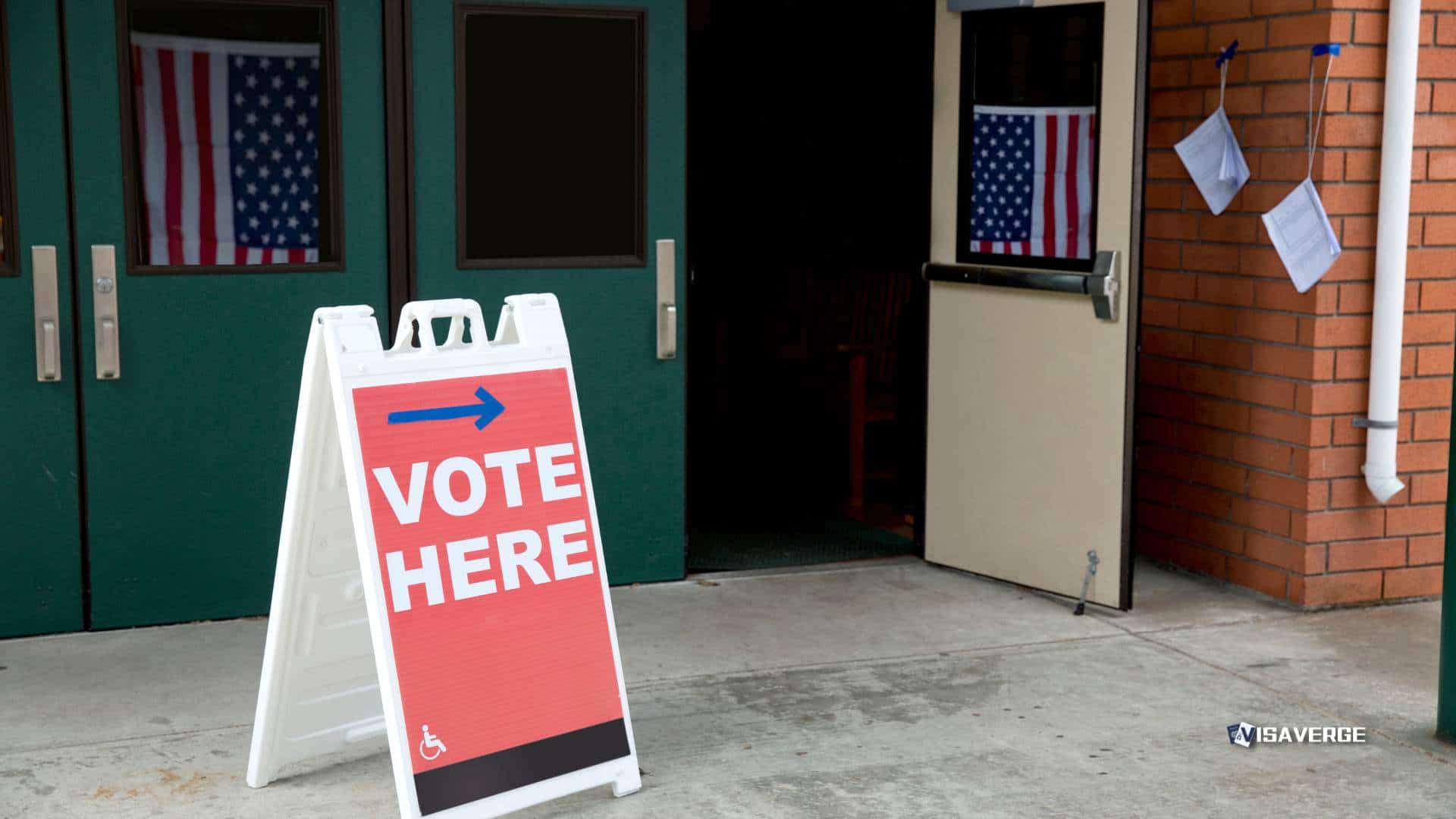
- A federal judge temporarily blocked a ban on nonpartisan organizations registering voters at USCIS naturalization ceremonies.
- The ruling restores 2017 guidance allowing qualified nonprofit organizations to assist new citizens with registration.
- Judge Abelson found the restriction likely violated constitutional protections and reflected potential discriminatory intent.
A federal judge has temporarily blocked a USCIS rule that barred civic organizations from registering voters at administrative naturalization ceremonies, allowing those groups to return while the case proceeds.
U.S. District Judge Adam B. Abelson issued a preliminary injunction and stay on August 3, 2026. The order prevents the agency from enforcing its ban on voter registration and education services by qualified nonprofit organizations at ceremonies held through USCIS.
Free toolSubstantial Presence Test Calculator
The ruling effectively restores guidance adopted in 2017. Under that policy, eligible nonpartisan nonprofits can assist with registration when state or local election officials are unavailable.
New citizens can register after taking the Oath of Allegiance and receiving a Certificate of Naturalization. The assistance costs nothing.
Abelson said the policy likely violated constitutional protections in a 76-page opinion. He wrote that newly naturalized citizens have the same voting rights as citizens born in the United States.
"When people become naturalized as United States citizens, they are entitled, like any other U.S. citizen whether naturalized or U.S.-born, to exercise the right to vote."
The decision follows a challenge to a restriction USCIS issued last year. The agency adopted Policy Alert PA-2025-21 on August 29, 2025, updating Volume 12, Part J, Chapter 5 of its Policy Manual.
That update said, "only state and local election officials will be permitted to offer voter registration services at the end of administrative naturalization ceremonies." USCIS said the change would "enforce more uniformity" and "reduce the burden on the agency."
The court rejected those explanations as lacking a factual basis. Abelson also found that removing one registration channel likely reflected discriminatory intent and breached the Fifth Amendment.
"Removing one of the avenues for [voter registration]. likely had a discriminatory intent that breaches Fifth Amendment protections."
The ruling also addressed the First Amendment claims brought by civic organizations. The groups argued that the restriction prevented them from carrying out voter education and registration work at a government-hosted event.
The ruling reopens a registration channel at USCIS ceremonies
The League of Women Voters said the restriction forced it to cancel hundreds of planned registration events between August 2025 and August 2026. The organization reported that it registered more than 15% of all new American citizens at naturalization ceremonies in 2024.
Celina Stewart, CEO of the League of Women Voters, said the August 3 ruling preserved the organization’s ability to reach eligible voters.
“Today’s ruling protects that fundamental democratic principle, and we will continue fighting to ensure every eligible voter can participate freely and fully in our democracy.”
The dispute centered partly on which organizations could provide assistance. State and local election offices remained eligible under the 2025 rule, while groups such as the League of Women Voters operated under strict nonpartisan mandates.
The League argued that some official election offices are led by partisan elected officials. Its position was that excluding nonpartisan civic groups did not advance a neutral registration process.
The ban covered administrative ceremonies, including events held at USCIS offices. It did not cover judicial ceremonies in federal courthouses, where civic groups continued their registration work.
Attendees may see free registration help after the oath
At an upcoming ceremony, volunteers from organizations such as the League of Women Voters or the National Council of Jewish Women may offer registration forms and assistance. Their services are free and nonpartisan.
The restored arrangement applies when state or local election officials cannot attend. It does not remove those officials from ceremonies or prevent them from offering registration services.
A newly naturalized citizen becomes eligible to register once the ceremony is complete. The relevant milestones are the Oath of Allegiance and the Certificate of Naturalization.
USCIS’s online Policy Manual page describes the 2025 restriction, while the injunction prevents the agency from enforcing it. The agency’s Newsroom and Policy Manual Updates pages are the official locations identified for policy information.
The court order is preliminary. Its immediate effect is to suspend the restriction and return the registration process at administrative ceremonies to the framework used under the 2017 guidance while the litigation continues.