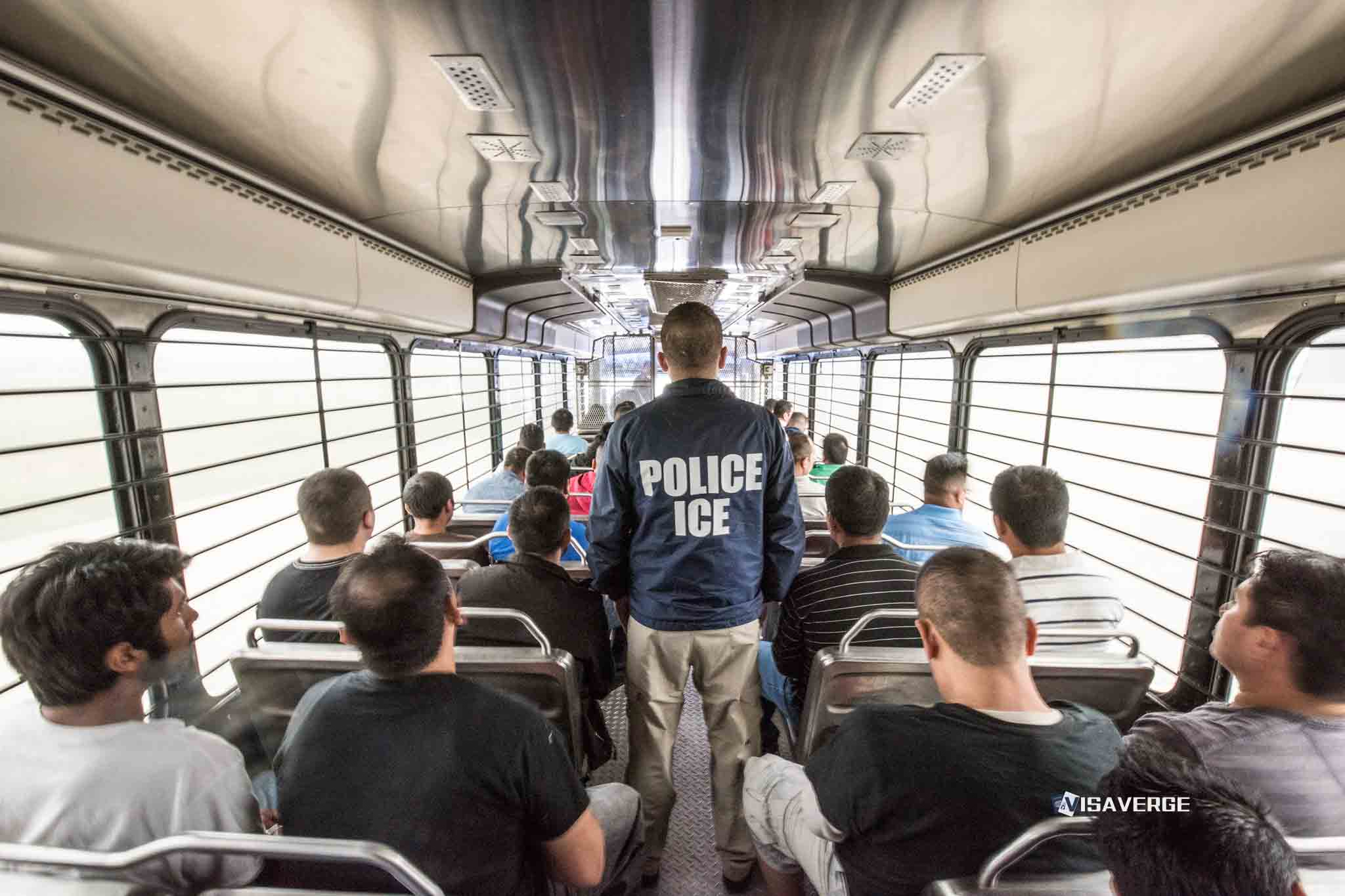
- The First Circuit halted third-country deportations while further review proceeds.
- The court said people need advance notice and a chance to challenge their proposed destination.
- Rabbiatu Kuyateh was sent to Ghana and then transferred onward to Sierra Leone after a routine check-in.
The First Circuit Court of Appeals ruled on September 18, 2026, that the government could not carry out third-country deportations without advance notice and a meaningful chance to challenge the destination. The decision, in D.V.D. v. Department of Homeland Security, has put the removals on hold while further review proceeds.
The ruling came as immigration authorities sent people to countries where they had no citizenship or family ties. One of them was Rabbiatu Kuyateh, a Sierra Leonean nurse who had lived in the United States for nearly 30 years.
Free toolUSCIS Receipt Number Decoder
“Ghana? I’m not from Ghana; what am I going to do there?” she said after learning where she would be sent. She was transferred onward to Sierra Leone after arriving in the West African country.
The court focused on notice and the chance to contest a destination. The dispute reaches people who have already won protection against return to their home countries, but are then sent elsewhere.
Kuyateh learned her destination during a routine check-in
Kuyateh was detained during a routine ICE check-in in July 2025. She was put on a plane with 18 other people, despite having lived in the United States for decades.
She had raised her U.S.-born son, Mohamed, and cared for her parents. The transfer took her away from those family responsibilities and into a country she said she knew only from a map.
Her onward transfer to Sierra Leone sharpened the legal and safety concerns. Oliver Barker-Vormawor, a Ghanaian lawyer, described the movement from one country to another as “chain refoulement,” a term advocates use for onward removal that could expose someone to persecution or torture.
The case offers a human example of the destination-notice dispute before the First Circuit. People may be able to challenge removal to a country where they fear harm, but that opportunity depends on knowing where the government plans to send them.
Flights sent more than 100 people to a country they did not call home
Kuyateh’s flight was one of at least nine flights since September 2025 that sent over 100 non-Ghanaians to the destination. It has become the African country receiving the largest number of these third-country deportees, according to accounts of the transfers.
One account said the country had accepted at least 71 migrants under a U.S. arrangement. Those figures describe different snapshots of the program, rather than a single cumulative count.
The broader campaign has sent more than 25,000 people to countries other than their own since January 2025, according to reporting on the policy. James Percival, the Department of Homeland Security’s general counsel, separately said DHS had deported 25,000 people to third countries.
Those transfers have reached countries across Africa, Latin America, the Caribbean and Central Asia. Some people sent there had no citizenship or family ties to the destination, and some had already secured protection in U.S. immigration proceedings.
Withholding and torture protections leave the destination disputed
The legal dispute involves people protected from return to a country where they face persecution or torture. Withholding of removal and protection under the Convention Against Torture generally bar sending a person back to the country where that risk was established.
That protection does not end the dispute over a third-country transfer. The government’s ability to send someone to another country depends on the circumstances and required safety protocols; advocates argue that inadequate notice can prevent a person from challenging the proposed destination in time.
The First Circuit found the way the policy was being carried out unlawful because affected people did not receive sufficient advance notice and a meaningful opportunity to contest removal. Its order has stopped the flights for now as further review proceeds.
The administration’s practice is described as lawful only in limited circumstances and when safety protocols are followed. Whether a person’s existing protection should also prevent transfer to a third country remains contested in these cases.
The administration says the transfers target people whose home countries refuse them
Lauren Bis, a White House spokeswoman, defended the policy by saying:
“the only illegal aliens going to third countries are those whose home countries won’t accept them including dangerous criminals or illegal aliens with orders of removal who have asked to not be removed to their home country.”
Percival called the removals “an essential public safety tool” in a post on X. He also put DHS’s total at 25,000 people, a figure that sits alongside broader reporting that places the number sent to countries other than their own above 25,000 since January 2025.
The administration’s stated rationale centers on people whose home countries will not accept them, including people with removal orders who have asked not to be returned. The cases under challenge involve the notice given before a transfer and whether a person can raise a safety objection to the third country.
Diplomatic arrangements expanded across regions and countries
The United States has pursued arrangements with countries across several regions to receive people who are not their nationals. The reported counts differ by account and date: one described agreements with 38 countries and at least $410 million pledged to secure them, while another put the number of completed agreements at 35.
A September 2026 diplomatic note said the receiving country would not deport anyone onward to a place where they could face torture or persecution. That assurance sits alongside the concern raised by Kuyateh’s transfer to Sierra Leone after her arrival.
The figures show a widening set of destinations, but the court’s ruling turns on what happens before an individual is put on a plane. A person must receive enough notice to challenge the proposed destination, the First Circuit held.
The court’s decision leaves the removals on hold while further review proceeds. Kuyateh’s route, from a check-in in July 2025 to a transfer through a country she did not know and then onward to Sierra Leone, remains a concrete example of the stakes.
This article provides general information and is not legal advice. Consult a qualified immigration attorney about your specific case.