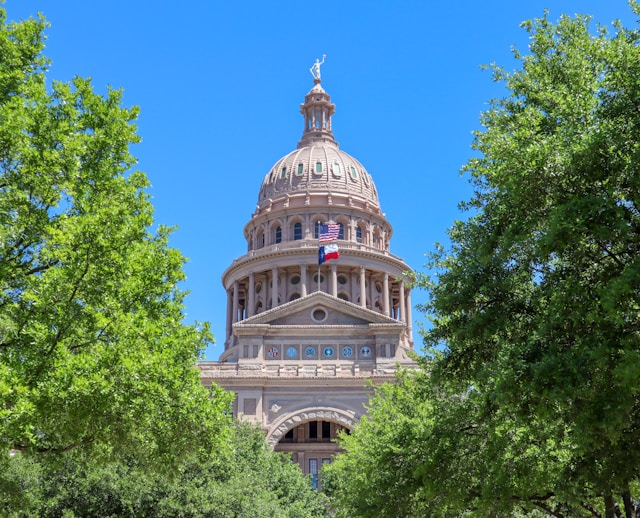
- Congressman Chip Roy demanded a hiring explanation from Texas State University regarding a recent H-1B contract renewal.
- Texas State defends the renewal, citing Governor Abbott’s freeze on new petitions while allowing existing employee extensions.
- Federal filings show university H-1B approvals dropped to fourteen in fiscal year twenty twenty-six, down from forty-four.
Chip Roy sent Texas State University a letter Friday demanding an explanation for the renewal of an H-1B holder’s contract, opening a new front in an H-1B hiring row over whether the school sought American graduates for the job.
The congressman’s August 21, 2026, letter concerns a foreign worker who recently graduated from the university. Roy questioned whether the school made a “good-faith effort” to recruit American graduates before renewing the employee’s contract.
Free toolH-1B Cost Calculator Online
The university says it followed Texas law. Its defense rests on the wording of Governor Greg Abbott’s directive, which freezes new H-1B petitions but does not bar renewals for current employees.
The distinction is now being tested publicly. The dispute pits a state hiring restriction against federal authority over H-1B renewals.
Abbott issued the order on January 27, 2026. It directs all state agencies and public universities to freeze “new” H-1B petitions until May 31, 2027.
The university is processing a renewal. That is its position.
Texas State’s federal filing record shows a sharp decline from the prior fiscal year. Its approved Labor Condition Applications, or LCAs, totaled 14 through mid-August 2026, compared with 44 approvals in FY 2025. The FY 2026 approval rate stood at 100%.
The university’s approved filings have fallen from last year
| Fiscal period | Approved LCAs | Approval rate |
|---|---|---|
| FY 2026, through mid-August 2026 | 14 | 100% |
| FY 2025 | 44 | Not specified |
LCAs are part of the H-1B filing process. The figures place the renewal dispute against a much smaller volume of approved filings at the university this fiscal year.
Roy has also pursued a broader legislative response. On June 4, 2026, he introduced H.R. 9157, the American White-Collar Worker Jobs Act of 2026.
The bill would replace the H-1B lottery with a wage-based selection system. It would also require labor market tests to show that no American worker had been displaced, and would abolish the Optional Practical Training program.
Supporters of the approach say it would protect American graduates from wage suppression and displacement by “cheap foreign labor.” The proposal has not changed the university’s immediate dispute over whether a renewal falls within the Texas freeze.
Roy’s bill would replace the lottery with wage-based selection
The legislation targets three parts of the current employment pipeline:
- Selection: Replace the H-1B lottery with wage-based selection.
- Hiring review: Require labor market tests proving that no American worker was displaced.
- Student work authorization: Abolish Optional Practical Training, known as OPT.
Federal agencies have separately moved toward tighter scrutiny of H-1B employment and related immigration benefits.
On December 23, 2025, USCIS spokesman Matthew Tragesser criticized the existing registration system while discussing the FY 2027 cap season. He said:
“The existing random selection process of H-1B registrations was exploited and abused by U.S. employers who were primarily seeking to import foreign workers at lower wages than they would pay American workers. The new weighted selection will better serve Congress' intent. by incentivizing American employers to petition for higher-paid, higher-skilled foreign workers.”
USCIS later addressed a separate fee dispute. On July 28, 2026, the agency said it would comply with a court order in State of California v. Mullin that vacated a $100,000 supplemental fee for certain H-1B petitions.
DHS said it disagreed with the ruling but would follow it while considering its next steps. The department also said it still planned to collect the payment if the order were later lifted.
Another DHS proposal could affect workers who lose their jobs. On August 11, 2026, the department proposed eliminating the 60-day grace period for H-1B, L-1, and TN visa holders after employment termination.
USCIS updated its Policy Manual on August 18, 2026, concerning the “public charge” ground of inadmissibility. That change takes effect September 18, 2026.
The dispute reaches beyond one university contract
Higher education advocates warn that Texas’ restrictions could disrupt specialized faculty and research hiring, as well as medical services. Texas universities report a chilling effect, with some candidates choosing jobs in the 49 states without comparable freezes.
UT Southwestern Medical Center and MD Anderson Cancer Center each employ hundreds of H-1B workers, with those employees representing about ~1% of each institution’s workforce. Similar scrutiny could reach those employers under the state policy.
The conflict leaves institutions weighing state directives against federal visa rules. H-1B holders face the employment consequences if a sponsoring institution ends a job or declines to renew it.
The Texas order remains in effect through May 31, 2027. Roy’s letter now asks the university to account for the recruitment process behind one renewal before that deadline arrives.