SEVP Issues STEM OPT Fraud Red Flags in Broadcast Message 2603-02
The March advisory flags possible fraud in staffing and consulting arrangements, but says it is not a rule or final agency action.
At a glance
- Investigators cited empty worksites, contradictory employer statements and students who never appeared for work.
- The warning identifies WeChat; a DSO quick-reference guide also lists WhatsApp.
- The SEVP Response Center operates Monday through Friday, 8 a.m.–6 p.m. EDT, except federal holidays.
Reviewed November 10, 2026
The Student and Exchange Visitor Program (SEVP) sent Broadcast Message 2603-02 on March 23, 2026, warning about possible employer fraud involving F-1 students on STEM OPT. It singled out IT recruitment, consulting firms and staffing agencies. The message went to all SEVIS users.
The agency urged designated school officials (DSOs) to watch for signs of fraud and said it is working with Department of Homeland Security partners to investigate activity in those sectors. It described the arrangements as a fraud concern and generally not an apt fit for the program.
A separate third-party guide dated October 16, 2026, discusses staffing and consulting placements under existing requirements. It is not a new agency announcement.
The warning is advisory. It does not make every staffing arrangement, remote job or listed warning sign proof of fraud.
The broadcast warns but does not create a new rule
The agency’s message says it does not replace applicable legal requirements and does not establish a rule or final action. It also says the broadcast creates no enforceable right or benefit.
“The Broadcast Message is not a substitute for applicable legal requirements, nor is it itself a rule or a final action by SEVP.”
The warning separates screening clues from site-visit findings
The agency listed screening signs for school officials and students. Separately, it described conditions investigators encountered during site visits. A warning sign alone is not a finding of fraud.
Screening signs include:
- A vague company website without examples of client work, contact details or social media accounts.
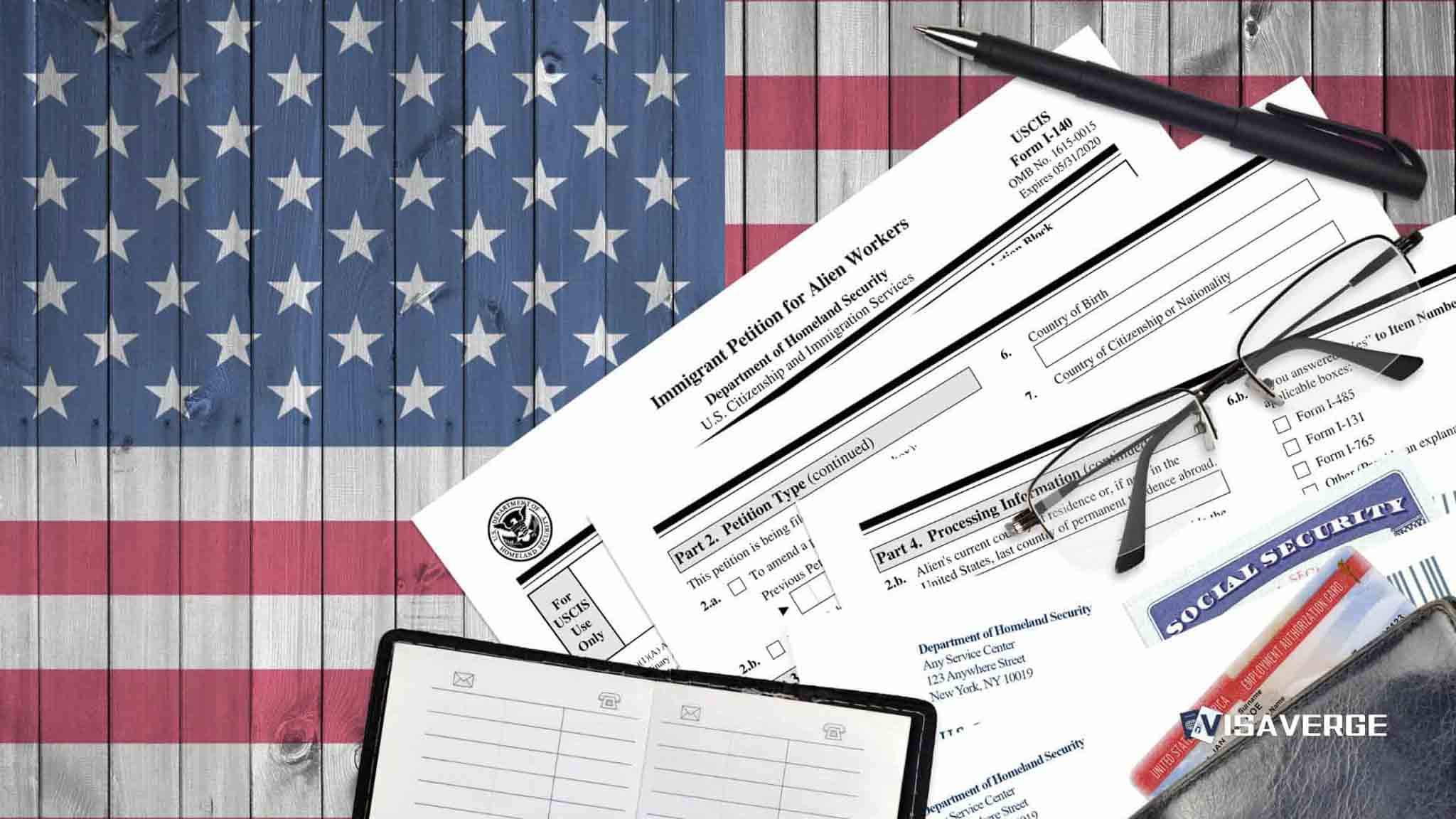
- Job duties that differ from the description provided to the school, or a worksite that appears unsuitable or differs from the address on Form I-983, the STEM OPT training plan.
- An unfamiliar employer hiring a large group of F or M students from one school.
- Remote work or work arranged through apps such as WeChat. A DSO quick-reference guide also names WhatsApp.
Site-visit findings included:
- Unoccupied business premises, including residences listed as worksites where no employees were present.
- Businesses with human-resources or payroll staff based offshore, and officials with little knowledge of the companies they represented.
- Contradictory statements about the business or its student workers, students who said they had STEM OPT jobs but never appeared for work, and inoperative phone numbers.
The agency’s broadcast lists these as potential indicators, not automatic grounds for a penalty.
A staffing agency can sign only as the qualifying employer
A staffing or placement agency may help a student find a training opportunity. To sign Form I-983, however, the company must be the student’s E-Verified employer and must provide and oversee the training. The employer signing the plan must employ the student; it cannot hand its training responsibilities to a client or another third party.
A third-party guide advises students to be wary of placement fees, employment that exists only on paper, and unpaid bench time between assignments. Those cautions are guidance from the guide, not additional terms announced in the March broadcast. The DSO quick-reference guide also provides examples of potential warning signs.
Suspected cases may be referred for investigation
The agency says suspected fraud can lead to referrals to Homeland Security Investigations (HSI) and the U.S. Department of Justice for administrative or criminal investigations. A referral is a possibility, not an automatic sanction.
Students who have questions about guidance from a recruiter should contact their DSO. Students and school officials can report suspected noncompliance through the ICE tip line, the SEVP Response Center or a local Project Campus Sentinel agent. The Department of Labor handles concerns about wages and employment conditions.
The Response Center can be reached at 703-603-3400 or 1-800-892-4829, or by email at SEVP@ice.dhs.gov. It operates Monday through Friday, 8 a.m.–6 p.m. EDT, except federal holidays.
Keep reading
All USCIS updates → F1Visa · Nov 9
State Department Updates J-1 Skills List Tied to Two-Year Foreign Residence Requirement
See how the 2024 J-1 Skills List changes affect the two-year rule, which countries were removed, and what to check before seeking a waiver.
 Australia Immigration · Nov 9
Australia Tightens Student Visa Switching Rules for Current Visa Holders
 F1Visa · Nov 7
Undergraduate Enrollment Rises as Visa Delays and Cancellations Weigh on Graduate Programs
F1Visa · Nov 5
ICE Custody Fight Over Habeas Corpus for Student Fleeing Gender-Based Violence
What to do now
- Contact your DSO with questions about recruiter guidance.
- Report suspected employer noncompliance through the ICE tip line, SEVP Response Center or local Project Campus Sentinel agent.
- Contact the Department of Labor about wage or employment-condition concerns.
Who this affects