- International student enrollment at BGSU plunged by 34.2% despite overall university growth of 3.5%.
- New federal policies introduced adjudicative holds on benefits like post-graduation work permits and STEM OPT.
- National declines could cost the U.S. economy approximately $7 billion and 60,000 jobs.
(BOWLING GREEN, OHIO) — Bowling Green State University reported a sharp drop in international student enrollment this academic year even as its overall student body grew, a split administrators and federal officials have linked to tightened immigration policies and new costs around post-graduation work.
BGSU’s international student enrollment fell 34.2%, dropping from 896 in Fall 2024 to 590 in Fall 2025. Total university enrollment rose 3.5%, increasing from 19,703 to 20,383 students.
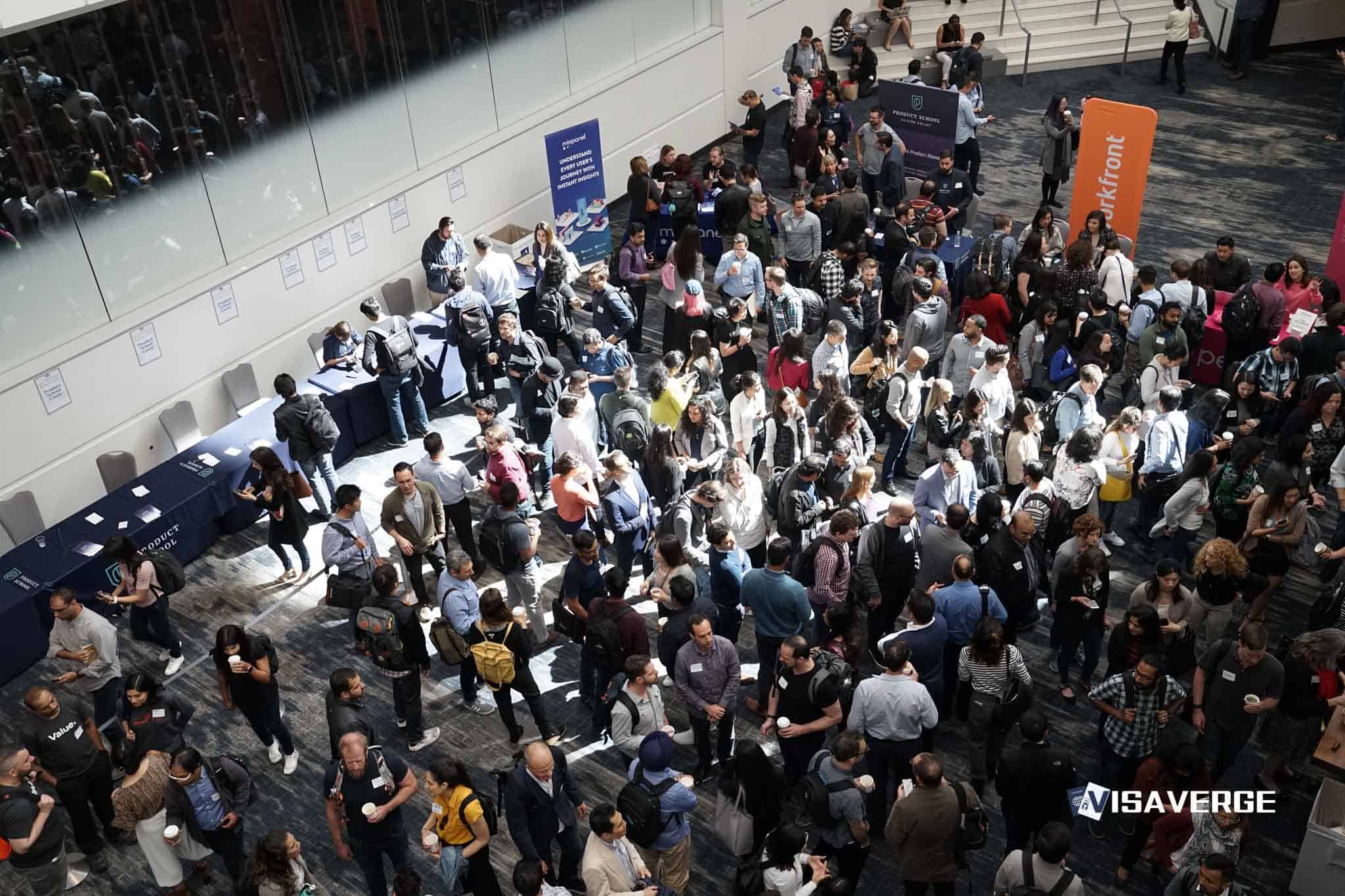
The decline at the northwest Ohio campus tracks a national pattern. National data shows a 17% drop in new international enrollments across the U.S. this year, as students perceive a U.S. degree as a “riskier bet” due to policy volatility.
Universities depend on international students for tuition revenue and to sustain academic programs, research labs and local spending in college towns. Schools also compete globally for graduate students in technical fields, even as some of the sharpest recent volatility has hit new arrivals who need visas and travel clearance.
At BGSU, the divergence between overall growth and the international decline suggests a change concentrated in the foreign student pipeline rather than a broad campus contraction. Universities commonly track admits, deposits, visa approvals and arrival rates to gauge whether admitted students can actually get to campus.
Federal policy changes and adjudicative holds
Federal immigration actions in 2025 and early 2026 have increased uncertainty for some students and their families, particularly those from countries covered by new restrictions. Those measures have also created risks for students trying to move from study to work authorization or to a different status after graduation.
USCIS issued a policy memorandum on January 1, 2026 creating what it called an adjudicative hold. In Policy Memorandum PM-602-0194, the agency directed personnel to: “Place a hold on all pending benefit applications for [nationals of countries listed in Presidential Proclamation 10998]. to fully assess all national security and public safety threats. The hold may delay some seeking USCIS benefits, including OPT/STEM OPT and change-of-status applications.”
In practice, an adjudicative hold does not deny an application by itself, but it can stop adjudication while officers review national security and public safety concerns. For students, the most visible pressure points can be Optional Practical Training and STEM OPT employment authorization, along with change-of-status cases that students may rely on after completing a program.
Students often build job offers and start dates around the timing of an employment authorization document. A hold can disrupt that timeline and leave graduates unable to begin work as planned, even if they otherwise remain eligible.
Holds can also complicate travel. Students with pending immigration benefits commonly weigh the risks of leaving the U.S. while a case remains undecided, because travel can add uncertainty around inspection and admission at the border.
The USCIS memo also raises the likelihood that some students could face more requests for evidence or notices of intent to deny, extending timelines further. Students and schools typically emphasize maintaining underlying status and compliance while cases remain pending, because work authorization or a status change often depends on staying in status.
State Department action and immigrant visa pause
The Department of State took a separate step focused on immigrant visas. The agency announced on January 14, 2026 that it would pause immigrant visa issuance for nationals of over 70 countries, with the pause effective January 21, 2026.
“President Trump has made clear that immigrants must be financially self-sufficient. the Department of State is pausing all visa issuances to immigrant visa applicants [from specified countries],” the Department of State said.
For most international students, the immediate route to begin a U.S. program involves a nonimmigrant visa rather than an immigrant visa. That distinction matters because the State Department action described a pause on immigrant visa issuance, not a halt to student visas.
Even so, immigrant visa pauses can carry indirect effects for students in mixed-status families and for students thinking about longer-term plans. Family-based cases can shape whether relatives can join a student later, and broader pauses can contribute to consular backlogs and added scrutiny that students factor into decisions about whether to start, defer, or remain in the U.S. if eligible.
Federal signals about post-graduation work
Federal signals about post-graduation work have also intensified. Joseph Edlow, an official at U.S. Citizenship and Immigration Services, said on January 8, 2026 that the agency intended to overhaul or end the post-study work program and that Optional Practical Training is under rigorous review to protect American workers.
Financial signals have compounded the uncertainty. A new $100,000 supplemental government fee for H-1B workers took effect in September 2025, and USCIS announced a significant increase in premium processing fees on January 9, 2026.
Even when international students do not pay H-1B costs themselves, many evaluate the U.S. through the lens of return on investment and the viability of employment pathways after graduation. Higher costs and tighter adjudication can alter those calculations for students and their families.
Ohio policy changes and campus climate
Ohio’s own policy environment has also shifted. Ohio Senate Bill 1 took effect in June 2025 and limits diversity, equity, and inclusion initiatives at public universities, a change some administrators believe has made the campus environment feel less welcoming to foreign nationals.
At the federal level, Presidential Proclamations 10949 in June 2025 and 10998 in January 2026 restricted entry from dozens of countries, including major student-sending regions like Nigeria and parts of Asia. For prospective students, entry restrictions can turn a months-long planning process into a gamble, especially when flights, housing and tuition deposits depend on a predictable ability to travel.
Local and institutional impacts
In Ohio, the BGSU drop ranks among the largest decreases at public universities in the state. The decline surpassed declines at Cleveland State (34%) and Miami University (22%).
Michael Bratton, BGSU Manager of Media Relations, said international students typically account for 3% to 5% of overall enrollment, but recent legislative and federal shifts have created significant variability.
Those percentages can look small on paper, but they often translate into concentrated impacts in specific departments and cohorts. International enrollments can support graduate teaching assistants, upper-level course offerings, lab staffing, and the viability of specialized programs.
The effects also show up beyond campus. Students rent apartments, buy groceries, and spend on transportation and local services, creating ripple effects in communities that surround public universities.
Impact on individuals and economic implications
For individuals caught in the new policy environment, the most immediate harm often comes from administrative delays. Students from “high-risk” countries face indefinite holds on their OPT and STEM OPT applications, preventing them from accepting job offers.
Employers feel the friction as well. Companies planning to onboard graduates on fixed timelines must adjust start dates, redesign compliance plans, or shift work to other candidates when an employment authorization document does not arrive.
Universities and employers also must plan around the possibility that students cannot travel and return smoothly. A student who leaves the U.S. during a pending status-related filing can face a different set of risks than a student who remains in the country while waiting.
Nationally, the 17% drop in new international enrollments suggests a pipeline problem at a time when many schools have relied on steady foreign student interest. Declines in new arrivals can reduce cohorts for several years, affecting class composition, teaching capacity and revenue.
Groups such as NAFSA have also raised macroeconomic alarms. NAFSA warned that a continued 30-40% decline in new enrollments could cost the U.S. economy $7 billion and 60,000 jobs.
For BGSU and other schools that recruit abroad, the current environment puts greater weight on variables campuses cannot control. A student may win admission, arrange funding and secure housing, yet still lose time to adjudicative holds, entry restrictions, and shifting costs that change whether the U.S. remains a viable choice.
Administrative guidance and resources
Government agencies and universities point students to official channels to track changes and manage cases as policies shift. USCIS posts immigration announcements in its newsroom and issues alerts such as its H-1B material, including the “USCIS H-1B Selection Rule (Dec 23, 2025)” at FY-2026 H-1B cap registration analysis.
USCIS also posts information tied to premium processing and related filings on pages such as USCIS `Form I-539`, which the agency linked to its January 9, 2026 announcement of a significant premium processing fee increase.
The State Department provides updates on consular actions, including its January 2026 immigrant visa move, on pages like State Department visa suspensions. Students and families commonly check those updates when planning interviews, travel, and longer-term immigration options.
DHS also maintains student-focused resources for compliance and program updates, including the SEVP portal and SEVIS information at DHS Study in the States, a reference point for students and designated school officials monitoring requirements.
Conclusion
The Department of State framed its immigrant visa pause as a question of self-sufficiency. “President Trump has made clear that immigrants must be financially self-sufficient. the Department of State is pausing all visa issuances to immigrant visa applicants [from specified countries],” it said.