- The U.S. Treasury sanctioned 27 Iranian airlines and nine other aviation-linked service providers on September 8, 2026.
- The package also suspended three Iran-related aviation authorizations, including overflight payments and foreign aircraft permissions.
- Treasury warned firms dealing with Iran’s airlines risk being cut off from the global financial system.
The U.S. Treasury sanctioned 27 Iranian airlines and nine additional service providers and sales agents on September 8, 2026, while suspending three Iran-related aviation authorizations. The action puts Iran’s remaining carriers and aviation support network at risk of exclusion from the global financial system.
The department’s package covered 36 targets. It also reached foreign companies, intermediaries and an individual tied to Iran’s aviation supply chains.

Treasury Secretary Scott Bessent said the administration had followed through on its promise to punish companies supporting Iran’s aviation sector.
“Under Operation Economic Outcast, we promised severe consequences for those providing financial lifelines to the Iranian regime.”
Bessent also warned companies that continue dealing with Iran’s remaining airlines.
“Today, we followed through on that promise with sanctions on companies that continue to support Mahan Air. Let this be a warning to anyone doing business with Iran’s remaining airlines, all of which we sanctioned today: You are at risk of being cut off from the global financial system.”
Treasury said Iran uses aviation to “move weapons, personnel, and illicit cargo.” The department said the package also targeted covert front companies, foreign intermediaries and deceptive transshipment routes used to obtain U.S.-origin aircraft and sensitive technology.
The sanctions rely on Executive Order 13224, as amended, and Executive Order 13902. Treasury issued the aviation-sector determination under the latter order, which allows sanctions against entities operating in Iran’s aviation sector.
Treasury’s list covers the remaining Iranian carriers named in the package
Treasury identified the following 27 airlines and aviation companies:
| Designated carrier or company | Designated carrier or company |
|---|---|
| Air Shiraz | Asa Jet Airline |
| Ata Airlines Company | Atlas Aviation Group |
| Ava Airlines | Chabahar Airlines Company |
| Erwan Airline Company | Fly Kish Airlines |
| Fly Persia Airlines | Iran Air Tour |
| Iran Aseman Airlines | Jsky Airlines |
| Kish Airlines | Karun Airlines Company |
| Lad Airways | Mehr Airways |
| Nasim Air | Pars Oghyanous Kish Company |
| Qeshm Air | Raimon Airways |
| Saha Airlines | Sepehran Airlines |
| Soroush Air | Taban Airlines |
| Toos Airlines | Varesh Airlines |
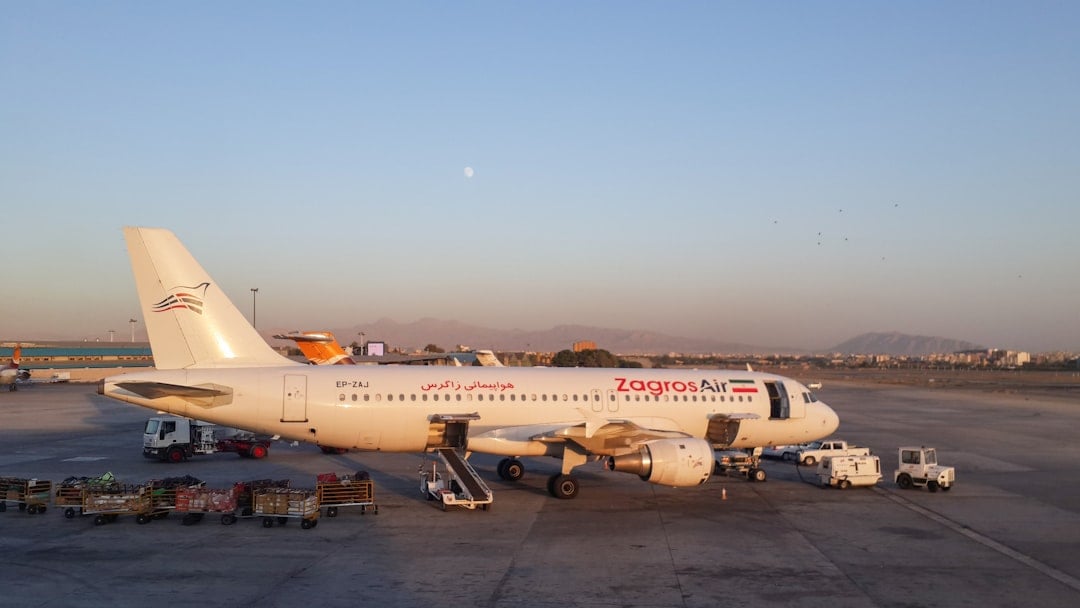
| Zagros Airlines |
Nine other targets were service providers and sales agents connected to aviation support and procurement. The department’s announcement grouped those entities with the carrier designations in a package aimed at Iran’s aviation supply chain.
The suspended permissions cover Iranian airspace and foreign aircraft
The three suspended authorizations affect more than Iranian airlines. They include permissions involving payments for overflights of Iranian airspace and authorizations that allowed non-U.S. airlines to operate U.S.-origin or U.S.-controlled aircraft into Iran.
A Treasury official said the government had been giving notice before moving against the operators.
“quite directly essentially cut those operators from the Western financial system”
The same official described the licensing action in broad terms:
“effectively today terminating all licenses related to aviation”
The decision covers “payments for overflights of Iranian airspace and authorizations that permitted non-US airlines to operate US export-controlled aircraft into Iran.” It therefore reaches foreign operators and companies whose aircraft or transactions depend on U.S.-controlled equipment.
Treasury said the move was designed to sever financial access for the designated network. Banks and other firms handling transactions for named parties face the sanctions consequences described in the package.
Foreign intermediaries face blocked property and secondary-sanctions risk
The aviation network extends beyond Iran. Treasury identified connected companies in Turkey, Malaysia, Kazakhstan, the United Arab Emirates, and the United Kingdom.
The broader action also named Ibrahim Ali Mohamed Mohamed Mahran, an Egyptian national based in the UAE. He was identified in connection with the aviation network described in the sanctions material.
Property and interests in property belonging to designated people or entities are blocked when they are in the United States or under U.S. control. The same restriction applies to entities owned 50 percent or more by blocked persons.
Foreign firms and financial institutions also face secondary-sanctions risk if they facilitate significant transactions for designated parties. That exposure extends the warning beyond the listed carriers to intermediaries involved in procurement, sales and financial transfers.
The measure can affect companies outside Iran even when they are not themselves Iranian airlines. Treasury said the package targeted foreign intermediaries and deceptive transshipment routes used to obtain U.S.-origin aircraft and sensitive technology.
The aviation action followed an August 24 pressure campaign
Treasury launched the wider campaign on August 24, 2026, calling the opening phase “Economic D-Day.” The initial effort produced roughly 60 designations.
Later descriptions put the broader campaign at 78 designations across individuals, entities and vessels. The September 8 action applied that pressure to aviation after Treasury identified the sector as a target at the campaign’s launch.
The department also focused on companies supporting Mahan Air. Treasury described that carrier as sanctioned over links to proliferation activity, terrorist-linked flight operations and illicit procurement of U.S.-origin aircraft.
The latest package was taken under the two executive orders cited by Treasury. It combines blocked-property rules, possible secondary sanctions and the withdrawal of aviation-related permissions.
Iranian Foreign Minister Abbas Araghchi dismissed the measures and accused Washington of using sanctions as a political weapon aligned with Israel. He said the sanctions were failing to achieve their aims.
The authorizations were suspended alongside the September 8 designations. Foreign operators, banks and aviation suppliers now face the department’s stated sanctions risk when transactions involve the named network.