- Avelo Airlines is suspending its nonstop route between Traverse City and New Haven for summer 2026.
- The airline plans to return in 2027 using smaller Embraer 195-E2 jets for better efficiency.
- Travelers should book one-stop legacy carrier flights or consider driving to larger hubs during the pause.
(TRAVERSE CITY, MICHIGAN) — If you were counting on Avelo Airlines’ easy nonstop between Cherry Capital Airport and Tweed-New Haven Airport, you’ll need a backup plan for summer 2026. The airline is pausing the TVC–HVN route for the season, and that changes everything from total travel time to how you earn miles.
For most travelers, the best move is to treat 2026 as a “connections year.” Book a one-stop on a legacy carrier when schedules open, and keep your plan flexible. If Avelo returns in 2027 with a smaller jet, the nonstop may make sense again for weekend trips.
TVC–HVN right now: your options at a glance
Here’s the practical comparison for summer 2026 travel between Northern Michigan and Southern Connecticut.
| Factor | Avelo nonstop (TVC–HVN) | One-stop on a major airline (via hubs) | Drive to a bigger airport for more flights |
|---|---|---|---|
| Availability for summer 2026 | Not operating (seasonal pause) | Available (subject to schedules) | Available |
| Total travel time | Fastest when it runs | Longer due to connection | Can be faster if it avoids a bad connection |
| Price behavior | ULCC-style pricing, bags add up | Often higher base fare, fewer add-on surprises | Parking and gas add cost, flights may be cheaper |
| Miles/points earning | No traditional airline miles program | Earn airline miles plus elite credit | Earn airline miles plus elite credit |
| Best for | Weekend leisure trips when offered | Status chasers, business travel, year-round planning | Families, groups, and anyone needing more schedule choices |
| Comfort and seat | Simple economy product | Varies, but more upgrade paths | Varies, but more frequency helps you pick better flights |
1) Suspension of Cherry Capital Airport service: what’s actually changing
Avelo is temporarily suspending its nonstop flights between Cherry Capital Airport (TVC) in Traverse City and Tweed-New Haven Airport (HVN) for the summer 2026 season. The airline has framed it as a pause, with intent to return.
That matters because this wasn’t a year-round route. It followed a very specific seasonal pattern, aimed at peak leisure demand.
In 2025, the flights ran twice weekly on Wednesdays and Saturdays, starting in early June and ending around Labor Day. That cadence is typical for “thin” seasonal routes. Airlines test demand without committing daily aircraft time.
This route also mattered to TVC’s mix of service. It was a true nonstop to the Northeast, and it did so from a smaller airport. Even so, the route carried just under 3,600 passengers in 2025, the lowest total among TVC’s seven carriers.
Low passenger volume on one route does not mean the airport is in trouble. It usually means the route’s economics were tight. Seasonal demand can be strong in July, then drop fast in June and late August.
2) Why Avelo pulled the route: fleet changes and market fit
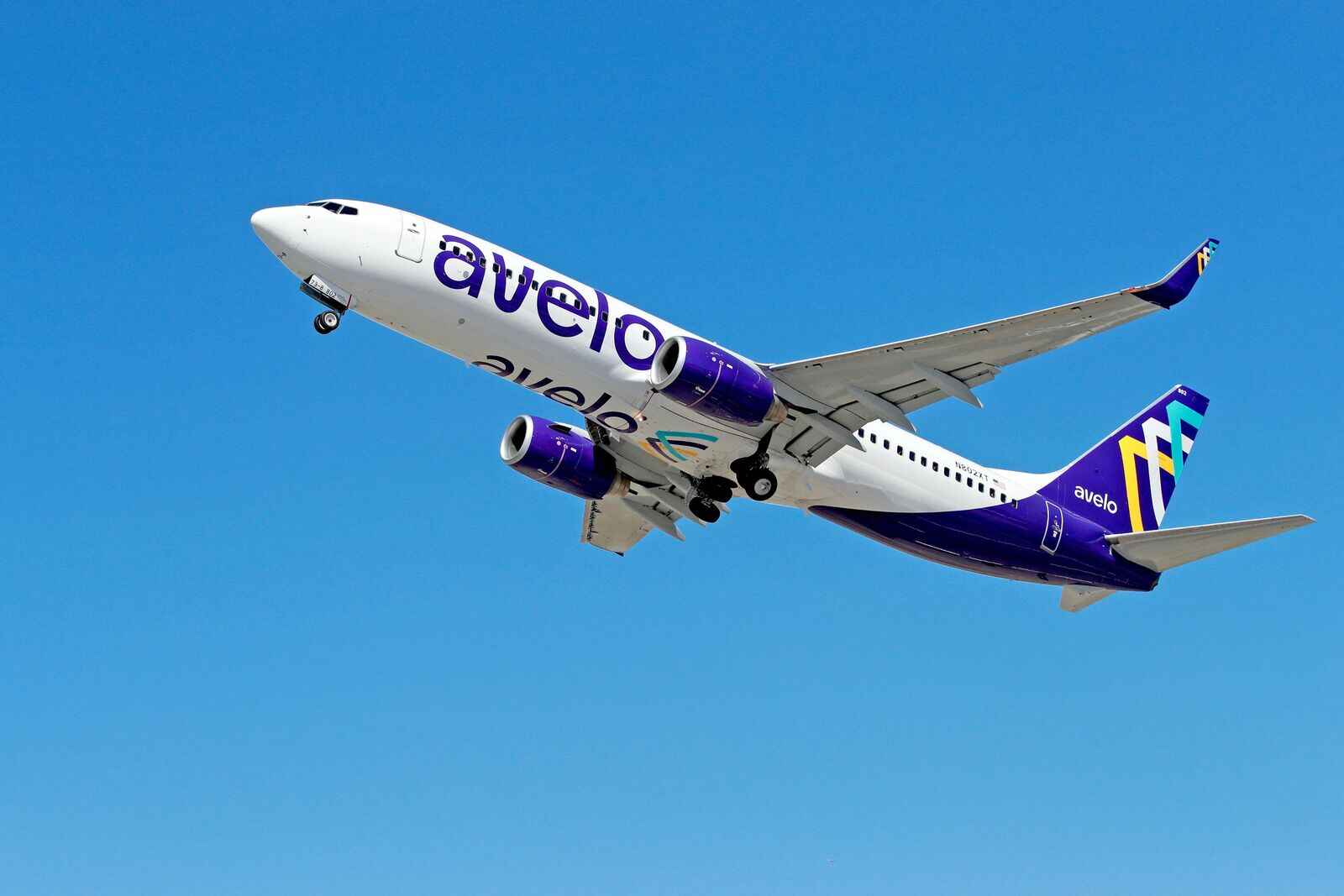
The cleanest explanation is aircraft size. Avelo has been shifting its fleet away from Boeing 737-700s (about 149 seats) toward larger Boeing 737-800s (about 189 seats). That 40-seat jump is massive in a seasonal market.
On a thin route, bigger aircraft can break the math quickly: you need many more passengers per flight to hit a workable load factor. If you discount too heavily to fill seats, your average fare drops. If you keep fares higher, the plane goes out emptier.
- You need many more passengers per flight to hit a workable load factor
- If you discount too heavily to fill seats, your average fare drops
- If you keep fares higher, the plane goes out emptier
Airlines can respond by adding frequency on smaller aircraft, which is often better for travelers. With larger aircraft, they often do the opposite: they cut frequency or exit the market.
This is part of a broader Avelo restructuring. The carrier has reduced flying at dozens of airports and closed some bases. That’s classic network rationalization. Aircraft and crews get redeployed to routes that fill reliably.
One important expectation-setter: aircraft assignments change fast at ultra-low-cost carriers. A route that “should” work on paper can disappear quickly. A route that disappears can also return quickly, if the fleet mix changes.
3) Incentives and local commitments at TVC: what they do, and what they don’t
Small and mid-size airports rarely win new service with runway lights and good vibes alone. Incentives are common, and they can be smart.
In TVC’s case, the airport offered Avelo a three-year waiver on landing fees, worth roughly $40,000 per year, plus $50,000 in marketing support. Traverse City Tourism helped fund marketing, which is also common in seasonal destinations.
Incentives aim to do two things:
- Reduce the airline’s start-up risk while it builds awareness
- Give the route time to mature beyond early adopters
A “three-year” arrangement is not a service guarantee. Airlines still adjust networks based on demand, aircraft, and overall financial performance. Incentives can make a route easier to launch. They cannot force a carrier to keep flying it.
For communities, the return on that spend depends on whether a route becomes self-sustaining. A temporary suspension is frustrating, but it can be part of the normal trial-and-adjust cycle.
4) The planned return in 2027: why a smaller jet could help
Avelo says it plans to resume TVC service in spring or summer 2027, using the Embraer 195-E2, with about 140 seats.
That right-sizing could help in several ways: fewer seats to fill makes shoulder-season flying less risky, the route may support more consistent service if demand holds, and the airline can avoid fire-sale pricing just to fill a bigger jet.
Still, nothing is guaranteed. New aircraft deliveries can slip. Entry-into-service timelines can move. Network planners can also reassign aircraft to higher-performing routes.
Think of 2027 as a “watch list” item, not a promise. If the E195-E2 arrives on schedule and Avelo assigns it to smaller markets, TVC becomes more logical again.
5) What officials are saying: positive tone, limited commitment
Cherry Capital Airport leadership has leaned into the long-term view. CEO Kevin C. Klein has said the larger 737-800 was simply too much capacity for this market. He also framed the E195-E2 as a better fit for local passengers.
Avelo’s network team has echoed that TVC remains part of its long-term strategy.
Those statements are useful as signals. They suggest the relationship is intact. They also suggest the airline sees value in the region.
But “long-term strategy” language is not the same as a published schedule. The only thing that matters for your trip is what you can book.
6) What the pause means for tourism and travelers
When the nonstop runs, it’s a rare thing: a simple hop connecting Northern Michigan leisure demand with Southern Connecticut, plus easy access toward New York City.
For travelers, the nonstop primarily saves connection risk, total travel time, and the stress of juggling separate airports and long drives.
For 2026, the pause means you should expect more one-stop itineraries. That affects weekend trips the most. A Saturday outbound with a late connection can eat half your first day.
Local businesses and tourism groups also feel the change, because nonstop access is a marketing tool. It’s easier to sell a long weekend when the flight is simple.
If Avelo returns with a right-sized jet in 2027, the route could come back in a form that’s more sustainable. That could mean similar frequency, or even more flights, if demand supports it.
7) The broader Avelo controversy: what happened, and what it means for stability
Avelo has also been dealing with reputational blowback tied to operating government deportation flights for U.S. Immigration and Customs Enforcement. The airline ended that activity after January 2026.
Cherry Capital Airport publicly clarified that Avelo’s operations at TVC were scheduled passenger flights, not deportation-related flying.
For travelers, the key takeaway is not politics. It’s stability and communication. Public pressure can intersect with network decisions, especially for smaller markets that already sit on the edge of profitability.
That does not mean the controversy “caused” the TVC–HVN pause. The fleet and economics story is strong on its own. Still, when an airline is in the headlines, uncertainty tends to rise.
8) Schedule extensions and low fares: helpful signals, not guarantees
Avelo has also extended its schedule into mid-August 2026, and it has advertised very low teaser pricing in the low-$40s one-way on some routes from bases like HVN.
Two important clarifications:
- A schedule extension mostly tells you the airline is selling farther out. It doesn’t promise any single route will stay.
- Introductory fares are designed to stimulate demand. They can disappear quickly as inventory sells.
For TVC–HVN specifically, the extended schedule elsewhere is a reminder that Avelo is still in growth-and-adjust mode. That’s normal for a smaller carrier. It’s also why you should plan with backups.
Pro Tip: If you must travel on fixed dates in summer 2026, prioritize tickets with reasonable change terms. A cheap fare is less helpful if you can’t adjust when schedules shift.
Miles and points: Avelo vs the majors
This is where the comparison gets practical.
Avelo does not run a traditional frequent flyer program like Delta SkyMiles or United MileagePlus. That means you won’t earn airline miles toward a free flight and you won’t earn elite-qualifying credits.
Your “points strategy” with Avelo is mostly about paying with bank points or using a card with travel protections.
With one-stop flights on major airlines, you can:
- Earn redeemable miles, often based on fare price
- Earn elite-qualifying dollars/segments, depending on the program
- Improve your upgrade odds over time, especially if you fly often
If you’re chasing status, a forced shift away from Avelo in 2026 is not all bad. Those paid tickets on a legacy carrier can help close a qualification gap.
Competitive context: what you’re really choosing in 2026
This suspension highlights the tradeoff between ULCC nonstops and legacy network depth.
Avelo’s model works best when it can run simple point-to-point routes, the aircraft size matches demand, and the airline can stimulate travel with low base fares.
Legacy carriers win when you need daily-ish schedule options, you value rebooking protection during irregular operations, and you care about miles, status, and connections.
In other words, the majors are often better when a market is seasonal and uncertain. Avelo is better when the nonstop exists and you can travel light.
Choose X if… scenarios for TVC–HVN travelers
Choose a one-stop on a major airline if:
- You’re traveling in summer 2026 and want the most reliable set of options
- You’re earning toward elite status
- You need a morning arrival or same-day flexibility
Choose “drive to a bigger airport” if:
- You’re traveling with a family and need multiple flight times
- You want to reduce misconnect risk by picking a simpler routing
- You don’t mind adding a drive to improve flight choices
Choose Avelo (when it returns) if:
- The nonstop is on sale and your dates match its operating days
- You can pack light and avoid add-on fees
- Your trip is a short weekend where a connection would waste time
Final verdict: what I’d do for 2026, and what to watch for in 2027
For summer 2026, I’d book a one-stop itinerary on a major carrier as soon as schedules and prices look reasonable. That’s the safest way to protect your time and your plans.
If Avelo brings back TVC service in 2027 with the Embraer 195-E2, the nonstop could return in a smarter form. A 140-seat jet is far more realistic for a seasonal Northern Michigan route.
If you’re planning a July or August 2026 trip between Cherry Capital Airport and the New Haven area, lock in your backup flights early and avoid “basic” fares you can’t change cheaply. Then keep an eye out in late 2026 for any early signs of a 2027 nonstop returning.
Live Government Data
State Dept • CBPBusiest Border Crossings
- Nogales 180 min
- Brownsville 120 min
- Nogales 120 min