Key Takeaways
• Alaska Airlines introduced VR training with VRpilot in July 2022, featuring a Boeing 737 virtual cockpit to enhance pilot preparedness.
• By March 2023, it procured two fixed-base and three full-motion simulators and invested $85.75M in a new Renton training campus.
• The Renton facility, set to open in 2025 with $100M renovations, will consolidate pilot, attendant, and customer service training.
Alaska Airlines is making significant strides in aviation training with its investment in cutting-edge technology, particularly virtual reality (VR) systems, designed to train pilots on the Boeing 737 aircraft. This bold initiative is paired with extensive upgrades to its physical training centers, solidifying its position as a leader in modern pilot education. Through advanced technology and infrastructure developments, the airline seeks to enhance safety, improve efficiency, and attract top-tier talent, while also setting a model for the aviation industry’s future.
The Journey from Traditional Training to Virtual Reality (VR)
For years, airline pilot training relied on traditional classroom teaching and manual simulators, which, while effective, had limitations. High costs, time-intensive sessions, and less immersive environments often meant trainees faced steep learning curves and challenges in adapting to real-world scenarios.
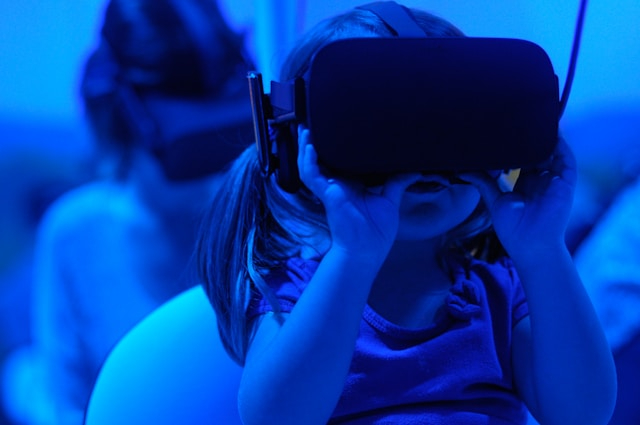
In recent years, VR has emerged as a transformative solution for pilot training. This technology allows trainees to virtually enter a realistic cockpit environment, simulating the actual controls, switches, and procedures they will encounter while flying. VR technology enables pilots to develop muscle memory through repeated practice without needing immediate access to physical aircraft or simulators. It is more engaging and reduces stress when transitioning to real-life operations.
Alaska Airlines has embraced VR’s potential wholeheartedly, recognizing virtual reality as more than a supplement—it has become a core part of its pilot training strategy.
Alaska Airlines and VRpilot: A Pioneering Collaboration
In July 2022, Alaska Airlines partnered with VRpilot, a Danish company specializing in aviation VR training solutions. With VRpilot’s technology, Alaska Airlines developed a virtual Boeing 737 cockpit that is as realistic and interactive as the actual flight deck. This tool transforms training into an immersive experience, helping new pilots and experienced ones transitioning to different fleets familiarize themselves with the intricate cockpit setup.
Unlike older training methods such as static images or video tutorials, the virtual cockpit provides a hands-on experience. Trainees interact with the controls, switches, and displays, building confidence and sharpening their skills before entering the more resource-heavy physical simulators.
To scale and improve training, Alaska Airlines expanded its VR training systems just a few months later in November 2022. The airline invested in additional VR headsets loaded with VRpilot’s Boeing 737 software, enabling widespread adoption of the technology. Trainees used these tools to repeatedly practice essential procedures, fostering a solid foundation before advancing to the next phase of training. This method proved especially valuable for new hires adjusting to the operational complexity of the Boeing 737, ensuring they approached their simulator and flight training with confidence and enhanced readiness.
Expanding Physical Infrastructure
While advancing its VR capabilities, Alaska Airlines also addressed the broader need for better training facilities. In March 2023, the company made its largest simulator purchase in history, adding two fixed-base and three full-motion simulators to its inventory. These simulators were progressively installed and became fully operational by late 2024. By expanding its fleet of simulators, Alaska Airlines ensured that pilots could access streamlined, continuous training aligned with global demand for pilots and ongoing fleet modernizations.
Aimed at fully synchronizing training efforts, Alaska Airlines made a groundbreaking investment in May 2024 when it purchased a 19-acre property in Renton, Washington. This site, formerly used by Boeing Commercial Airplanes, was acquired for $85.75 million and is being transformed into a state-of-the-art training campus. With an additional $100 million allocated for its renovation, the facility is expected to open in 2025 as a comprehensive training hub.
The upcoming Renton facility will feature classrooms, nine full-motion flight simulators, a mock aircraft for inflight practice, an auditorium, and even a studio to produce educational content. By centralizing flight attendant, pilot, and customer service training in one location, Alaska Airlines aims to streamline processes and uphold the highest standards of preparedness. The new space allows consistent training while consolidating the airline’s global and local training efforts, ensuring alignment with operational needs.
Benefits of the VR Training Program
- Boosted Preparedness: VR simulations allow pilots to familiarize themselves with the Boeing 737’s cockpit before entering physical simulators. The technology creates a no-pressure environment where pilots can practice scenarios multiple times, helping them master cockpit workflows and safety procedures.
-
Improved Efficiency: VR-based systems eliminate dependency on limited physical simulator slots. Alaska Airlines can dedicate resources to more advanced training skills in full-motion simulators while allowing pilots to practice basic procedures with their VR systems.
-
Cost-Effectiveness: Running a VR training session is significantly less expensive than operating a full simulator. By reducing simulator demand per trainee, Alaska Airlines achieves considerable cost savings while expanding training access.
-
Enhanced Talent Acquisition and Retention: Alaska Airlines has positioned itself as a forward-thinking employer that champions its workforce’s professional growth by offering innovative training methods. This approach helps attract top talent, fosters long-term loyalty, and has created an edge over competitors in terms of employee satisfaction.
-
Leadership Role in Industry Innovation: The airline’s implementation of cutting-edge VR-based training inspires global industry changes. As noted by VisaVerge.com, initiatives like Alaska Airlines’ VR system set precedence for other airlines, encouraging them to adopt similar measures while enhancing the aviation industry’s overall safety and readiness.
Alaska Airlines’ Broader Impact on Aviation Training
Alaska Airlines’ bold investments in VR systems and physical simulators don’t just provide immediate benefits for its own operations—they also have long-term implications for the global aviation industry. Training programs incorporating VR offer promising solutions to curtail challenges such as pilot shortages, aging infrastructure, and efficiency bottlenecks. As Alaska Airlines leads by example, other airlines may follow suit, ensuring that comprehensive, affordable, and interactive training becomes the industry standard.
The investments made by Alaska Airlines address the challenge of creating scalable and innovative training models—a necessity given the increasing demand for trained pilots and aviation professionals globally. Its efforts also contribute to aligning aviation safety and readiness, a top priority for passengers, regulators, and everyone who interacts with airlines worldwide.
The Road Ahead
What’s next for Alaska Airlines? With its Renton training center set to open by 2025, the airline has hinted at further expansions. A tenth VR cockpit simulator is already in discussion, underscoring the airline’s intent to continue growing its training capacity. Future initiatives will likely focus on synchronizing VR innovations with real-world flight operations, ensuring seamless integration between virtual training exercises and live tasks.
Additionally, Alaska Airlines is expected to explore advancements in VR technology, including artificial intelligence integration and adaptive learning, to tailor training content based on individual pilot performance. These forward-thinking moves could push operational efficiency and employee satisfaction to new heights.
Conclusion
Through a combination of technological innovation and infrastructure expansion, Alaska Airlines has set itself apart as an industry leader redefining how pilot training is approached. By teaming up with VRpilot to create and implement Boeing 737 VR cockpits, the airline fosters a culture of continual learning and preparedness. Combined with investments in state-of-the-art physical simulators and the upcoming Renton training facility, it provides a scalable, efficient, and transformative model for the aviation world.
Alaska Airlines’ commitment to embracing VR technology shows its readiness to adapt to modern challenges while setting benchmarks for an evolving global industry. As these initiatives inspire broader industry adoption, the possibilities are endless—not just for Alaska Airlines, but for aviation training at large. More details about Alaska Airlines’ training programs and its future developments can be accessed by visiting the Federal Aviation Administration (FAA) website www.faa.gov.
Learn Today
Virtual Reality (VR) → Immersive technology creating simulated environments for interactive training experiences, often used to mimic real-world scenarios.
Full-Motion Simulator → Advanced training device replicating aircraft movement and cockpit controls, enhancing pilot preparedness for real-life operations.
Cockpit Workflow → The sequence of tasks and procedures pilots follow within an aircraft cockpit to ensure safe and efficient operations.
Muscle Memory → The process of ingraining repetitive actions into memory, allowing individuals to perform tasks automatically without conscious effort.
Talent Acquisition → The process of attracting and hiring skilled individuals to meet an organization’s workforce needs and strengthen its competitive edge.
This Article in a Nutshell
Alaska Airlines revolutionizes pilot training with cutting-edge virtual reality (VR) systems, offering immersive Boeing 737 cockpit simulations. This innovation enhances safety, efficiency, and pilot confidence while reducing training costs. Paired with advanced physical simulators and a new $185 million state-of-the-art Renton campus, Alaska is setting industry benchmarks for modern aviation education and preparedness.
— By VisaVerge.com
Read more:
• Alaska Airlines’ Companion Fare now valid on Hawaiian Airlines flights
• Juneau’s Thomas LeBlanc Wins 1 Million Alaska Airlines Miles
• Alaska Airlines Plans First Flights to Europe by 2026, Says CEO
• Alaska Airlines Launches New Everett Flights to Las Vegas and Phoenix
• Alaska Airlines Flight Attendants Approve New Three-Year Contract
Live Government Data
State Dept • CBPBusiest Border Crossings
- San Ysidro 150 min
- Calexico 120 min
- San Luis 90 min