Spanish
Official VisaVerge Logo Official VisaVerge Logo
  • Home
  • Airlines
  • H1B
  • Immigration
    • Knowledge
    • Questions
    • Documentation
  • News
  • Visa
    • Canada
    • F1Visa
    • Passport
    • Green Card
    • H1B
    • OPT
    • PERM
    • Travel
    • Travel Requirements
    • Visa Requirements
  • USCIS
  • Questions
    • Australia Immigration
    • Green Card
    • H1B
    • Immigration
    • Passport
    • PERM
    • UK Immigration
    • USCIS
    • Legal
    • India
    • NRI
  • Guides
    • Taxes
    • Legal
  • Tools
    • H-1B Maxout Calculator Online
    • REAL ID Requirements Checker tool
    • ROTH IRA Calculator Online
    • TSA Acceptable ID Checker Online Tool
    • H-1B Registration Checklist
    • Schengen Short-Stay Visa Calculator
    • H-1B Cost Calculator Online
    • USA Merit Based Points Calculator – Proposed
    • Canada Express Entry Points Calculator
    • New Zealand’s Skilled Migrant Points Calculator
    • Resources Hub
    • Visa Photo Requirements Checker Online
    • I-94 Expiration Calculator Online
    • CSPA Age-Out Calculator Online
    • OPT Timeline Calculator Online
    • B1/B2 Tourist Visa Stay Calculator online
  • Schengen
VisaVergeVisaVerge
Search
Follow US
  • Home
  • Airlines
  • H1B
  • Immigration
  • News
  • Visa
  • USCIS
  • Questions
  • Guides
  • Tools
  • Schengen
© 2025 VisaVerge Network. All Rights Reserved.
Canada

Canada exempts graduate students at public DLIs from study permit caps

Starting January 1, 2026, international master’s and PhD students at public DLIs are exempt from Canada’s study permit cap and the PAL/TAL requirement, allowing direct IRCC filings. The overall cap stays at 155,000 for 2026 and 150,000 thereafter. Eligible PhD applications filed from abroad have a 14-day expedited processing target, including family applicants.

Last updated: November 10, 2025 10:52 am
SHARE
VisaVerge.com
📋
Key takeaways
Canada exempts international master’s and PhD students at public DLIs from the study permit cap starting January 1, 2026.
Removed requirement: provincial/territorial attestation letters (PAL/TAL) for qualifying public DLI graduate applicants nationwide.
PhD applicants filed from outside Canada get a 14-day expedited processing target; family members included in fast lane.

(CANADA) Canada will exempt international master’s and doctoral students at public DLIs from the national study permit cap starting January 1, 2026, removing a key barrier that has slowed admissions and delayed study plans over the past year.

Announced in November 2025, the change covers applicants enrolling at public universities and other public Designated Learning Institutions. It means they will no longer need a provincial or territorial attestation letter—often called a PAL or TAL—as part of their study permit file. The exemption applies nationwide and is aimed at advanced-degree students whose research and training Canada says it wants to protect during a period of tighter limits on overall study permits.
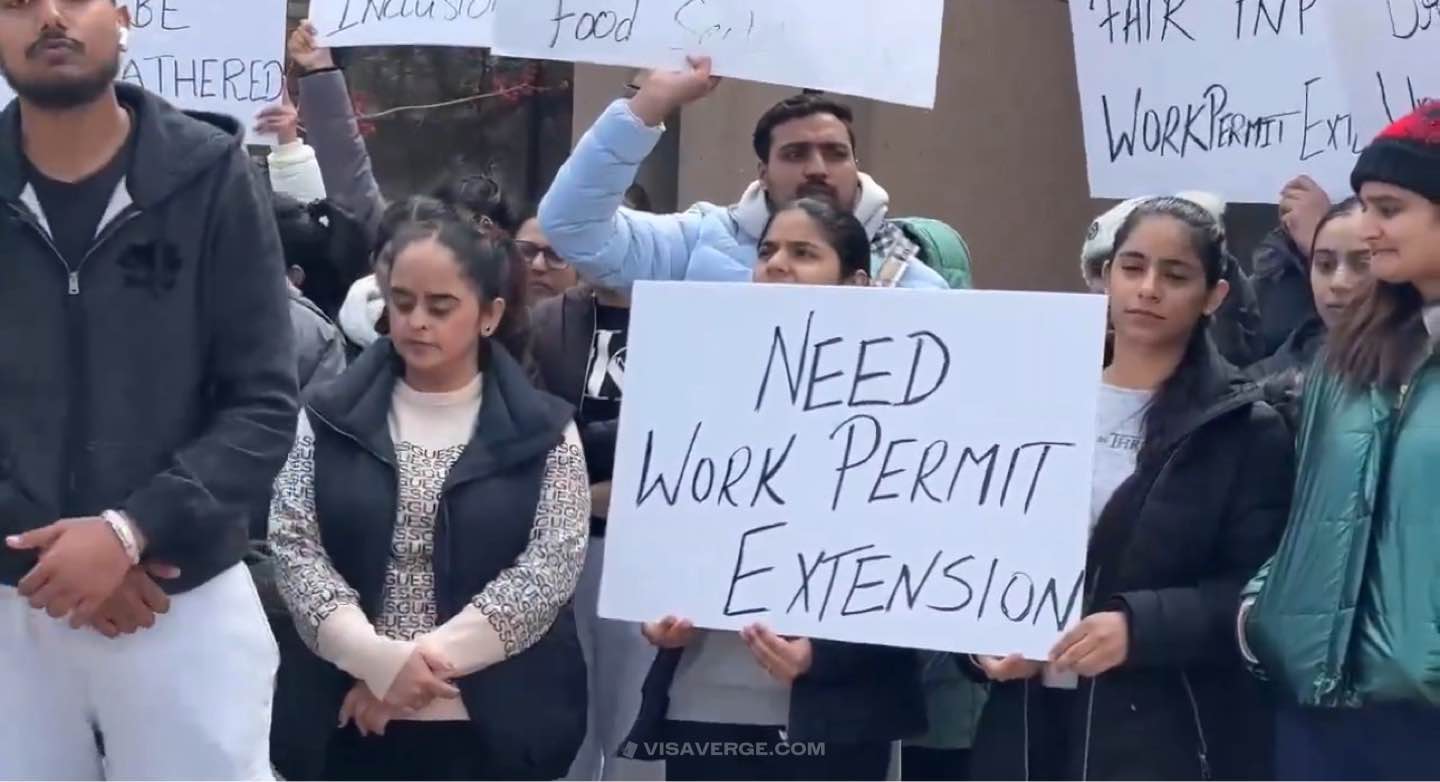
Canada exempts graduate students at public DLIs from study permit caps

What the change does and who it covers

  • Who is exempted: International master’s and doctoral students admitted to public DLIs (public universities and other public Designated Learning Institutions).
  • What is removed: The requirement for a provincial/territorial attestation letter (PAL/TAL) from the study permit file.
  • When it takes effect: January 1, 2026.
  • Scope: Nationwide for qualifying public DLI graduate programs; private institutions are not included.

Why the government made the change

The government says the exemption is intended to:

  • Protect research and advanced training during a period of tighter overall study permit limits.
  • Reduce administrative delays and costs tied to PAL/TAL processes that varied by province.
  • Help universities maintain research capacity and keep global talent flowing into labs and research teams.

By carving out an exemption for master’s and PhD candidates at public institutions, Ottawa aims to balance pressures on housing, healthcare, and campus capacity with the need to sustain research pipelines.

Study permit cap: targets and context

  • The overall cap remains in place.
  • Cap targets: 155,000 in 2026, and 150,000 in 2027 and 2028.
  • Rationale: Officials say this multi-year plan will stabilize growth and give provinces room to plan housing, healthcare, and campus capacity.
  • Effect: The exemption separates the graduate stream at public DLIs from the broader cap while leaving most other programs under tighter limits.

Administrative and student benefits

  • Qualifying graduate students will not face delays tied to quotas or attestation bottlenecks.
  • Removing the PAL/TAL step reduces both costs and processing time, which previously depended on local processes and program cycles.
  • Starting in 2026, master’s and PhD applicants to public DLIs can file study permits without attestation letters, lowering the risk that cap-related pauses could derail an offer of admission.
  • Officials say this will allow programs to set cohorts earlier and give students more certainty about visas, housing, and start dates.

Special processing for doctoral candidates

⚠️ Important
If you’re aiming for a private institution, don’t expect PAL/TAL exemptions—the cap and attestations still apply. Plan timelines accordingly to avoid delays.
  • PhD applicants filed from outside Canada will have an expedited processing target of 14 days if submitted online and if all eligibility conditions are met.
  • Family members applying to accompany the doctoral student are included in this faster lane.
  • Importance: Faster processing helps doctoral students meet grant timelines, lab orientations, and teaching assistant placements—reducing the risk that late arrivals push researchers to accept offers elsewhere.

“Speed matters for doctoral pipelines,” and the time-bound processing pledge is meant to keep Canada competitive for candidates who often juggle multiple offers.

Practical implications for admitted students (2026 intakes)

If you are admitted to a master’s or PhD at a public DLI for 2026:

  • You will not be counted against the study permit cap.
  • You will not need an attestation letter (PAL/TAL).
  • You can file your study permit directly with IRCC under the federal process.
  • PhD candidates should plan filings to align with the 14-day processing goal (where eligible).
  • Families of PhD students benefit from the expedited processing lane, reducing the likelihood of separated arrivals.

Impact on private institutions and equity considerations

  • Private institutions: Applicants remain subject to the study permit cap and the attestation letter process.
  • Consequences: Private-college applicants may face longer waits, reduced intakes, and dependence on provincial attestation allocations.
  • The split approach may prompt debate about fairness and quality, but Ottawa frames the policy as a targeted measure to protect graduate research while reining in overall numbers.

Timing and planning advantages

📝 Note
Starting Jan 1, 2026, eligible master’s/PhD applicants to public DLIs file directly under federal rules, skipping PAL/TAL. Prepare to adjust offer letters and visa timelines with this change in mind.
  • The January 1, 2026 effective date provides one full admissions cycle for institutions and students to adjust.
  • Institutions can:
    • Update offer letters.
    • Advise incoming students about the removal of PAL/TAL.
    • Coordinate departments that rely on graduate teaching and research support.
  • Students can:
    • Prepare documents knowing the cap won’t apply if entering a qualifying public DLI program.
    • Time their filings—especially PhD candidates—to benefit from expedited processing.

Where to get official guidance

Immigration, Refugees and Citizenship Canada has launched a dedicated webpage to guide graduate students on study and work options, with details on eligibility, documents, and timing. Applicants can consult the IRCC study permit page for updates on the exemption’s January 1, 2026 start date and for instructions about online filing and family applications tied to doctoral studies:

🔔 Reminder
PhD applicants outside Canada should target the 14-day processing window when eligible, and ensure family applications are aligned to stay on track for permits and arrivals.
  • https://www.canada.ca/en/immigration-refugees-citizenship/services/study-canada.html

IRCC says the goal is to make it easier and more affordable for top graduate students to come to Canada 🇨🇦 while maintaining the overall framework that will apply to most other learners.

Sector reactions and analysis

  • Universities have long warned that a broad study permit cap without carve-outs would undercut labs, research chairs, and start-up ecosystems built around graduate programs.
  • The government’s adjustment reflects those concerns by shielding public research programs from the bluntest effects of the cap.
  • Analysis by VisaVerge.com notes the change reduces administrative burden by removing PAL/TAL steps that varied by province and sometimes forced students to wait weeks before submitting visa applications.
  • With the Canada exemption in place, master’s and doctoral students at public DLIs avoid those delays and can move straight to the federal process.

Final framing: what the policy signals

  • The policy draws a clear line: protect the core of research and advanced training while setting firm limits elsewhere in the student system.
  • For public DLIs’ graduate streams, the exemption reduces friction and offers speed—two elements Canada hopes will keep its programs attractive in a crowded global field.
  • Attention going forward will focus on:
    • How provinces manage attestation letters for non-exempt programs.
    • How private institutions adapt recruitment under the remaining cap.
    • Whether the split approach prompts further debate about access and fairness.
VisaVerge.com
Learn Today
Designated Learning Institution (DLI) → A Canadian school approved to host international students; public DLIs include public universities and colleges.
Provincial/Territorial Attestation Letter (PAL/TAL) → A document from provinces/territories that previously verified capacity and was required for some study permit files.
IRCC → Immigration, Refugees and Citizenship Canada, the federal department that processes study permits and immigration applications.
Study Permit Cap → A government-set limit on new study permit approvals, set at 155,000 for 2026 and 150,000 for 2027–2028.

This Article in a Nutshell

Canada will exempt international master’s and doctoral students admitted to public DLIs from the national study permit cap effective January 1, 2026. The exemption removes PAL/TAL requirements, reduces administrative delays, and aims to protect research and advanced training. The overall cap remains—155,000 in 2026 and 150,000 in 2027–2028—but qualifying graduate applicants can file directly with IRCC. PhD applicants filed from outside Canada may receive a 14-day expedited processing target, including family members.

— VisaVerge.com
Share This Article
Facebook Pinterest Whatsapp Whatsapp Reddit Email Copy Link Print
What do you think?
Happy0
Sad0
Angry0
Embarrass0
Surprise0
Oliver Mercer
ByOliver Mercer
Chief Analyst
Follow:
As the Chief Editor at VisaVerge.com, Oliver Mercer is instrumental in steering the website's focus on immigration, visa, and travel news. His role encompasses curating and editing content, guiding a team of writers, and ensuring factual accuracy and relevance in every article. Under Oliver's leadership, VisaVerge.com has become a go-to source for clear, comprehensive, and up-to-date information, helping readers navigate the complexities of global immigration and travel with confidence and ease.
Subscribe
Login
Notify of
guest

guest

0 Comments
Inline Feedbacks
View all comments
H-1B Workforce Analysis Widget | VisaVerge
Data Analysis
U.S. Workforce Breakdown
0.44%
of U.S. jobs are H-1B

They're Taking Our Jobs?

Federal data reveals H-1B workers hold less than half a percent of American jobs. See the full breakdown.

164M Jobs 730K H-1B 91% Citizens
Read Analysis
H-1B Wage Reform: Weighted Selection Rules End Entry-Level Lottery
H1B

H-1B Wage Reform: Weighted Selection Rules End Entry-Level Lottery

2026 Child Tax Credit Rules: Eligibility, Amounts, and Claims
Taxes

2026 Child Tax Credit Rules: Eligibility, Amounts, and Claims

February 2026 Visa Bulletin Predictions: Complete Analysis and Forecast
Guides

February 2026 Visa Bulletin Predictions: Complete Analysis and Forecast

2026 HSA Contribution Limits: Self-Only ,400, Family ,750
Taxes

2026 HSA Contribution Limits: Self-Only $4,400, Family $8,750

No Evidence ICE Officer Was Hit or Hospitalized in Minneapolis Incident
News

No Evidence ICE Officer Was Hit or Hospitalized in Minneapolis Incident

Canada Expands Visa-Free Entry to 13 Countries with eTA Policy
Canada

Canada Expands Visa-Free Entry to 13 Countries with eTA Policy

California 2026 Income Tax Rates and Bracket Structure Explained
Taxes

California 2026 Income Tax Rates and Bracket Structure Explained

ICE Leads Minnesota’s ‘Largest Immigration Operation Ever’ in Minneapolis
Immigration

ICE Leads Minnesota’s ‘Largest Immigration Operation Ever’ in Minneapolis

Year-End Financial Planning Widgets | VisaVerge
Tax Strategy Tool
Backdoor Roth IRA Calculator

High Earner? Use the Backdoor Strategy

Income too high for direct Roth contributions? Calculate your backdoor Roth IRA conversion and maximize tax-free retirement growth.

Contribute before Dec 31 for 2025 tax year
Calculate Now
Retirement Planning
Roth IRA Calculator

Plan Your Tax-Free Retirement

See how your Roth IRA contributions can grow tax-free over time and estimate your retirement savings.

  • 2025 contribution limits: $7,000 ($8,000 if 50+)
  • Tax-free qualified withdrawals
  • No required minimum distributions
Estimate Growth
For Immigrants & Expats
Global 401(k) Calculator

Compare US & International Retirement Systems

Working in the US on a visa? Compare your 401(k) savings with retirement systems in your home country.

India UK Canada Australia Germany +More
Compare Systems

You Might Also Like

H1B Visa Tax Filing: Required Documentation and Requirements
H1B

H1B Visa Tax Filing: Required Documentation and Requirements

By Jim Grey
How to Live in the UAE Without a Job or Sponsor: Non-Working Visa Guide
Knowledge

How to Live in the UAE Without a Job or Sponsor: Non-Working Visa Guide

By Sai Sankar
Canada Tightens Visa Cancellation Rules for Workers, Students, Visitors
Canada

Canada Tightens Visa Cancellation Rules for Workers, Students, Visitors

By Oliver Mercer
Australia updates English test rules for visa applicants from Aug 7, 2025
Australia Immigration

Australia updates English test rules for visa applicants from Aug 7, 2025

By Visa Verge
Show More
Official VisaVerge Logo Official VisaVerge Logo
Facebook Twitter Youtube Rss Instagram Android

About US


At VisaVerge, we understand that the journey of immigration and travel is more than just a process; it’s a deeply personal experience that shapes futures and fulfills dreams. Our mission is to demystify the intricacies of immigration laws, visa procedures, and travel information, making them accessible and understandable for everyone.

Trending
  • Canada
  • F1Visa
  • Guides
  • Legal
  • NRI
  • Questions
  • Situations
  • USCIS
Useful Links
  • History
  • USA 2026 Federal Holidays
  • UK Bank Holidays 2026
  • LinkInBio
  • My Saves
  • Resources Hub
  • Contact USCIS
web-app-manifest-512x512 web-app-manifest-512x512

2026 © VisaVerge. All Rights Reserved.

2026 All Rights Reserved by Marne Media LLP
  • About US
  • Community Guidelines
  • Contact US
  • Cookie Policy
  • Disclaimer
  • Ethics Statement
  • Privacy Policy
  • Terms and Conditions
wpDiscuz
Welcome Back!

Sign in to your account

Username or Email Address
Password

Lost your password?