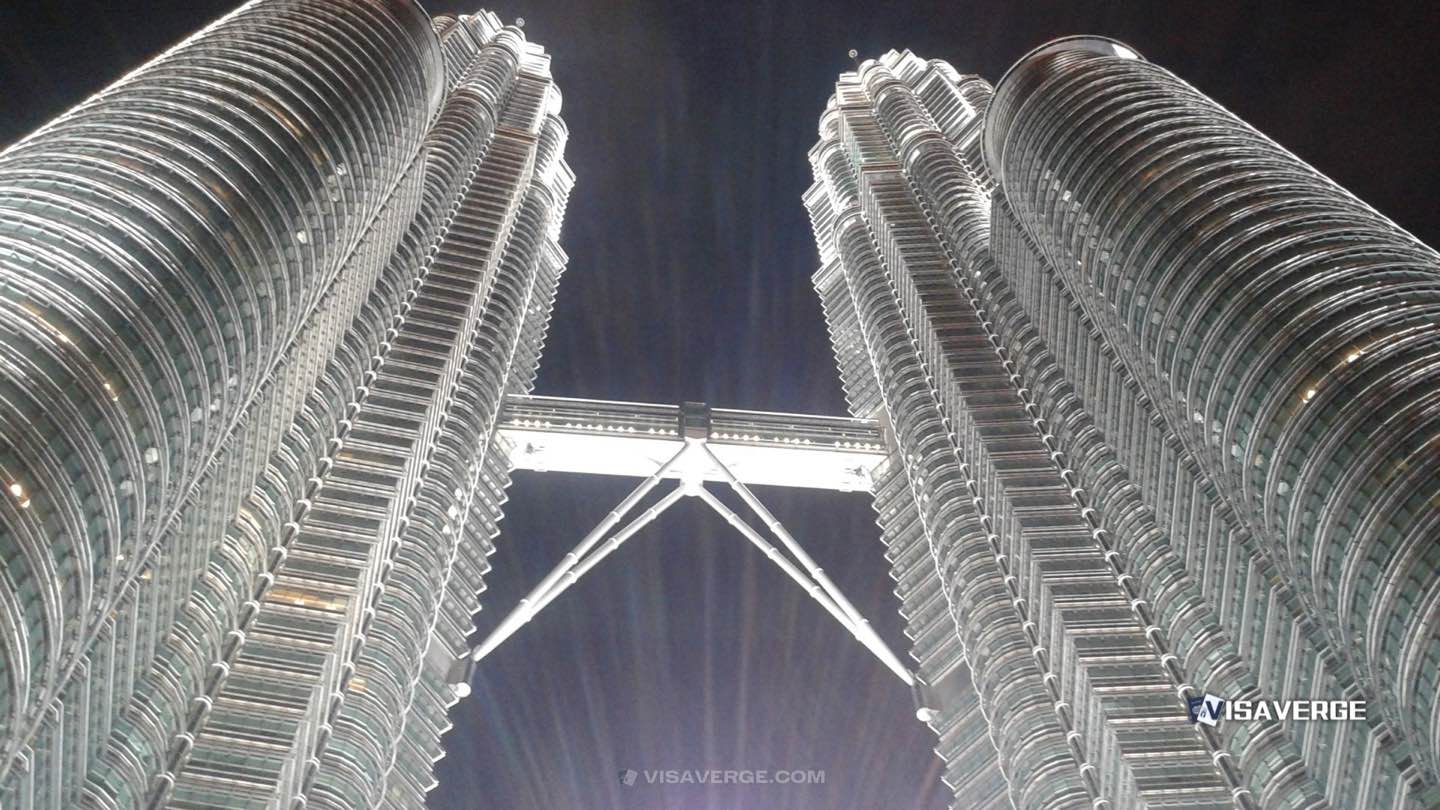
- Nationals of India and China can secure a seven-day visa when arriving from specific neighboring countries.
- Travelers must arrive directly from Indonesia, Singapore, or Thailand to qualify for this entry path.
- The mandatory Malaysia Digital Arrival Card must be submitted within 72 hours of arrival for all entrants.
(MALAYSIA) Malaysia’s Visa on Arrival remains a narrow option for Indian and Chinese travelers who arrive from Indonesia, Singapore, or Thailand. It gives a seven days stay, costs $100 or about MYR 430, and sits alongside the mandatory Malaysia Digital Arrival Card process that now applies to all entrants.
The rules are stable in April 2026, but they are strict. Travelers who miss one requirement are turned away at the counter. For tourists, business visitors, and frequent regional flyers, the difference between approval and refusal often comes down to documents, funds, and the exact point of entry.
The entry path Malaysia still allows
Malaysia keeps this Visa on Arrival as a tightly controlled bridge for short visits. It is designed for people who are already moving through Southeast Asia, not for long-planned trips from home. Only nationals of India and China qualify, and they must arrive directly from Indonesia, Singapore, or Thailand.
Free toolDS-160 Form Filling Online Helper ToolThat transit rule is not a formality. An Indian traveler landing from Mumbai in Kuala Lumpur does not qualify for VOA. A Chinese traveler flying straight from Beijing also does not qualify. Those travelers need another route, including visa-free entry where eligible, the eVisa, or eNTRI.
The stay is single-entry and fixed at seven days from the date of issuance. No extension is allowed. That makes timing essential. A missed flight, a delayed connection, or a longer side trip can turn a short holiday into an immigration problem.
Documents officers expect at the counter
Immigration officers check the same core items every time. Travelers need a passport with at least six months remaining, a valid visa or residence status for the country they are leaving, proof of onward or return travel, and proof of funds of at least $1,000 or about MYR 4,300.
Cash still matters most. Bank statements are accepted if recent, usually under 30 days old. Credit cards alone are not enough. Officers may ask travelers to open a bank app or show physical cash, especially when the trip looks casual or the itinerary is short.
The Malaysia Digital Arrival Card is also mandatory. It must be submitted online within 72 hours before arrival, and the completed QR code must be ready at entry. Travelers can file it through Malaysia’s official immigration MDAC portal. If the MDAC is missing or invalid, VOA processing stops there.
Families apply individually, including children. Minors may also need a parental consent letter. Travelers from yellow fever zones must carry a vaccination certificate when that rule applies to their itinerary.
Where the visa is issued
VOA processing is available at major airports and a small number of land crossings. The main airports are Kuala Lumpur International Airport, Penang, Langkawi, Kota Kinabalu, and Kuching. Land entry is limited to Johor Bahru, Padang Besar, and Rantau Panjang, with sea entries handled less often.
KLIA has also added automated support tied to MDAC pre-checks. That has helped reduce queues during busy travel periods. Wait times now average 15-45 minutes, though peak holiday periods can stretch much longer. Chinese New Year traffic has pushed some arrivals close to two hours.
The process is simple on paper. Travelers complete MDAC first, then follow the VOA lane on arrival, present documents, pay the fee, and wait for the passport stamp. Approval is usually fast. Recent reporting puts the average processing time at 5-30 minutes, with refusals still rare at under 2%.
What the fee covers and what it does not
The fee is fixed at $100 USD. Malaysia accepts payment in USD, MYR, SGD, or THB, and it does not give change for overpayment. The fee is non-refundable. Once the visa is issued, the visitor must enter and leave within the permitted window.
The biggest risk is overstaying. Malaysia uses biometric checks at the border, including expanded e-Gate systems, and enforcement has tightened. Overstayers face fines of MYR 30 per day, up to MYR 10,000, along with detention or future entry bans. The visa also forbids work, study, and journalism.
Why the rules stayed narrow in 2026
Malaysia has kept the VOA framework stable even while tourism targets rise. The country wants more arrivals from India and China, but it has not expanded VOA to other nationalities. Visa-free entry for Indian and Chinese travelers flying directly from those two countries has also been extended through December 31, 2026, which gives those travelers another route outside the VOA lane.
Digital checks are now doing more of the screening work. Authorities added faster validation and fraud detection to MDAC in 2026, which cut invalid submissions and reduced manual delays. According to analysis by VisaVerge.com, the result is a more predictable arrival process, but one that leaves little room for missing paperwork.
How ineligible travelers usually enter
For travelers who do not fit the VOA rules, Malaysia has several other entry paths. The eVisa is the most flexible. It is open to all nationalities, usually allows a 30-day stay, and is filed online before travel. The eNTRI route remains open to Indian and Chinese nationals for short direct trips, while standard tourist visas remain available for longer or more complex travel plans.
Many travelers use these routes because they reduce the risk of being turned away at the airport. They also fit better for direct flights from home, which is where many families and business travelers begin their journeys.
A closer look at how travelers use it
A common case is the Indian executive who lives in Singapore and flies to Kuala Lumpur for a meeting and a food trip. With a valid Singapore visa, onward travel, and funds ready to show, VOA can be issued in minutes. A Chinese tourist in Bali can also qualify if the Indonesian visa is valid and the return ticket leaves Malaysia within seven days.
The main mistakes are repeated ones. Travelers forget the MDAC, arrive without a qualifying visa for the departure country, or cannot show funds quickly enough. Those gaps are enough for refusal.
The practical lesson is simple. The Visa on Arrival works best for people who treat it like a controlled border process, not a casual stamp at the gate. The paperwork, the transit route, and the seven-day limit all matter at once, and Malaysian officers apply them that way.