- Ghana and Zambia signed a visa waiver agreement to boost regional travel and trade.
- The agreement covers most routine travel for diplomatic, official, and ordinary passport holders.
- Both nations also signed ten memoranda of understanding covering defense, healthcare, and air services.
Ghana and Zambia entered into a mutual visa waiver agreement on Wednesday, removing the requirement for an entry visa for covered travelers as the two countries seek to boost regional travel, trade and integration.
The agreement, in place as of February 11, 2026, was signed on February 5, 2026, at the Zambian State House in Lusaka during a three-day state visit by Ghanaian President John Dramani Mahama to Zambia from February 4–6, 2026.
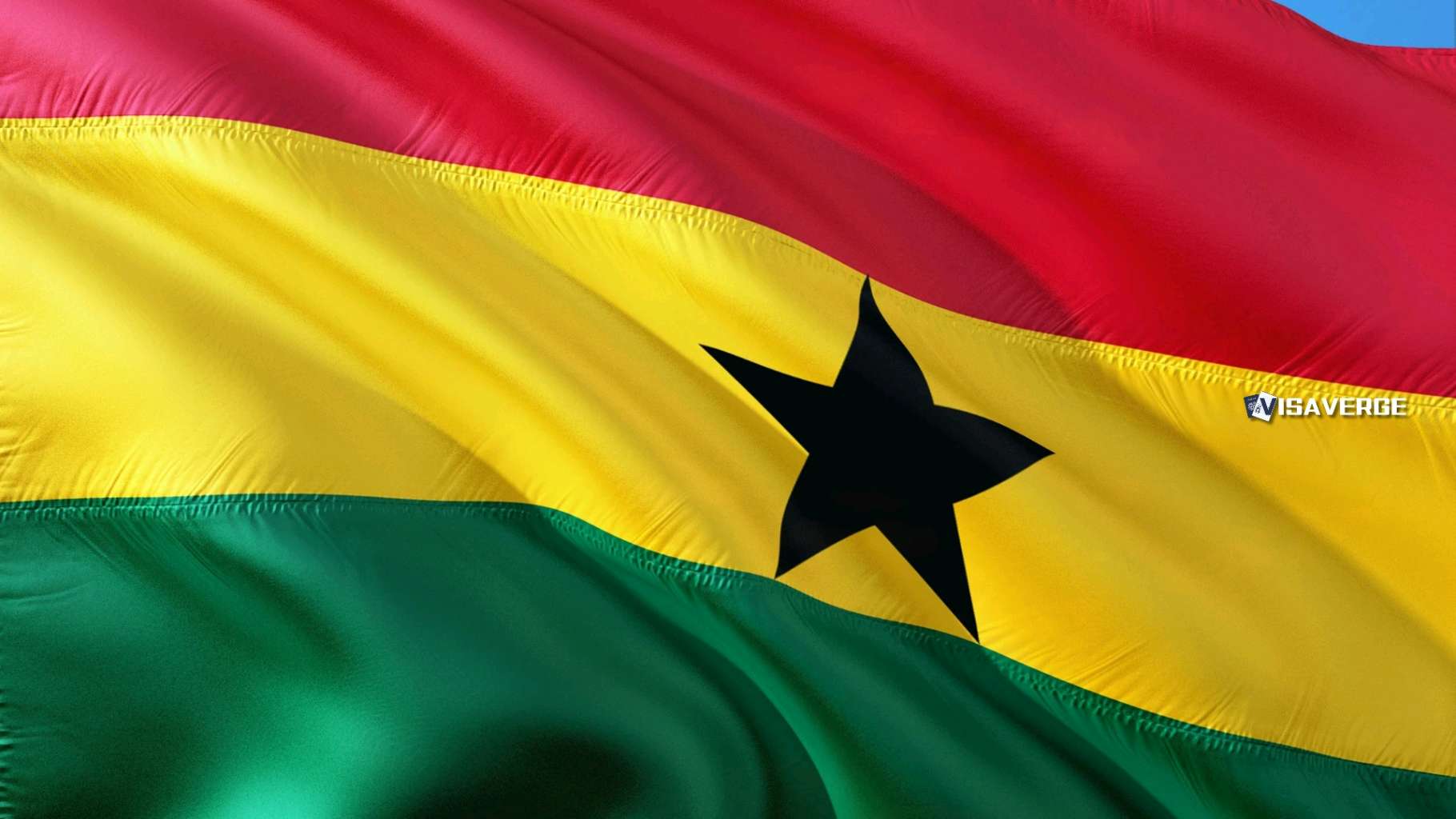
Officials cast the visa waiver as a practical step toward easier movement between West and Southern Africa, with governments linking it to wider goals of facilitating business travel, tourism and people-to-people ties between Ghana and Zambia.
The waiver applies to holders of Diplomatic, Official/Service, and Ordinary passports, expanding the scope beyond diplomatic travel to cover most routine travel between the two countries.
Ghana and Zambia presented the deal as part of a broader push for regional integration, and the signing formed one element of a larger set of agreements announced during Mahama’s visit.
Alongside the visa waiver, the two sides signed 10 Memoranda of Understanding (MOUs) during the trip, with other agreements covering diaspora cooperation, disaster risk management, military defense, air services, and healthcare regulation.
Government messaging around the agreement stressed that removing the entry-visa requirement aimed to cut paperwork and delays, with officials describing the change as ending what they called “long-standing bureaucratic hurdles.”
Hon. Samuel Okudzeto Ablakwa, Minister for Foreign Affairs, Ghana, linked the waiver directly to presidential instructions, saying: “For the first time in the history of Ghana–Zambia relations, we are going to have a free visa between our two countries so you no longer have to stress about visas. This visa waiver agreement was a clear instruction from President Mahama. He told me plainly that if this was not achieved, I should not even join the visit.”
Mahama, addressing the Zambian National Assembly on Feb 5, 2026, framed the deal within a continental ambition for freer movement and deeper economic ties.
“This is an important step towards the free movement of our people on the African continent. Ghana looks forward to deepening trade, investment, and financial cooperation with Zambia to reinforce resilience and shared prosperity,” he said.
Zambia’s tourism authorities also welcomed the move as a way to increase visitor flows and smooth short-term mobility for a range of travelers.
Nelly Banda, Principal Public Relations Officer, Zambia Ministry of Tourism, said on Feb 6, 2026: “The Ministry of Tourism welcomes and commends the historic decision. This arrangement will stimulate tourism growth and boost trade and investment. facilitating seamless movement for tourists, business communities, students, and professionals.”
The visa waiver, as described by the governments, removes the entry-visa requirement for eligible passport holders traveling between Ghana and Zambia, a step the two countries said would help trade and travel links operate more easily.
The agreement’s travel and trade emphasis also tied into Zambia’s position as a regional hub for conferences and cross-border business, and Ghana’s role as a West African commercial and transport node, with officials presenting the waiver as an administrative change intended to make bilateral movement simpler.
Beyond immediate bilateral travel, the deal fits into a wider regional context of African integration efforts, with the two governments linking the policy direction to broader frameworks for easing intra-African movement and commerce.
Officials described the agreement as aligning with the African Union’s Agenda 2063 and the African Continental Free Trade Area (AfCFTA), which promote closer economic integration and increased intra-African trade.
In that framing, Ghana and Zambia positioned the waiver as one enabling measure among others, aimed at supporting travel that accompanies trade, investment talks, technical exchanges and sector cooperation.
The governments also highlighted economic integration goals tied to what they described as shared economic profiles, “particularly in the mining and agricultural sectors,” with the objective of exchanging technical expertise and increasing intra-African trade.
They further pointed to educational and professional mobility, saying the waiver targets easing travel for students and tech professionals, in language that cast the agreement as supporting more fluid movement of talent between West and Southern Africa.
While Ghana and Zambia moved to ease travel between themselves, U.S. policy changes cited by the U.S. Department of State (DOS) and the Department of Homeland Security (DHS) introduced new limits affecting nationals of both countries in ways that do not interact with the Ghana–Zambia bilateral agreement but can matter for onward travel planning.
The U.S. Department of State, the source text said, indefinitely paused the issuance of immigrant visas for nationals of 75 countries, including both Ghana and Zambia, effective January 21, 2026.
The U.S. government cited concerns regarding “public charge” and the potential for new arrivals to rely on public benefits, the source text said.
Separately, a Presidential Proclamation partially restricted the entry of nationals from several countries, including Zambia, effective Dec 16, 2025, due to what DHS described as “deficient screening and vetting information.”
For some Zambian travelers seeking short-term U.S. visits, the source text also cited a DHS-mandated pilot program that requires certain B1/B2 visa applicants to post a bond of $5,000 to $15,000 as a guarantee against visa overstays, effective Aug 20, 2025.
In Ghana’s case, the source text said the U.S. lifted specific 2025 visa restrictions on Ghana after “constructive, high-level diplomatic engagement,” effective Sept 27, 2025, before the broader 2026 immigrant-visa pause.
Taken together, these U.S. measures sit apart from the Ghana–Zambia visa waiver, which governs entry-visa requirements only for travel between Ghana and Zambia, and not entry or visa eligibility for third countries.
For travelers and businesses, the split illustrates how regional facilitation steps can occur at the same time as tightened screening or visa limits elsewhere, depending on the country and visa category involved.
The source text did not describe any role for U.S. agencies such as USCIS in the Ghana–Zambia agreement, but it underscored that DHS and DOS measures can affect nationals of Ghana and Zambia in distinct ways, including through pauses, entry restrictions and bond requirements.
Ghana and Zambia’s announcement also came with references to implementation through government channels, with the source text listing official sites where travelers can look for updates and notices.
Ghana’s Ministry of Foreign Affairs appears at Ministry of Foreign Affairs, Republic of Ghana, while Zambia’s government information appears at the Republic of Zambia Official Portal.
For U.S. policy updates affecting African nationals, the source text cited the U.S. Department of State – Bureau of African Affairs and the U.S. Department of Homeland Security – Newsroom.
The Ghana–Zambia visa waiver, officials said, aims to make travel between the two countries easier for a wide set of passport holders, and it sits within a broader package of 10 Memoranda of Understanding (MOUs) signed during Mahama’s February visit that both sides presented as strengthening bilateral ties across multiple sectors.