- F-1 students must maintain valid visa status throughout the entire Diversity Visa application process.
- The absolute fiscal-year deadline of September 30, 2026 requires immediate action on all filings.
- New 2026 rules include expanded social media screening and tighter security reviews for winners.
(UNITED STATES) Winning the DV Lottery while holding F-1 visas gives you a path to a green card, but the clock is unforgiving. The fiscal-year deadline on September 30, 2026 controls the whole case, and new vetting rules make speed and accuracy matter more than ever.
For students, the first priority is simple: keep your F-1 status valid while you move through the Diversity Visa process. A single status lapse can shut the door on adjustment in the United States and force a risky choice between leaving the country and losing the chance altogether.
The 2026 DV Lottery landscape for students
The DV program still offers about 55,000 visas each year, but the government selects far more winners than visas available. That means selection is only the start. According to analysis by VisaVerge.com, 2026 is one of the most restrictive years in recent memory, with tighter security review, broader discretion for officers, and longer waits at every stage.
Free toolOPT Timeline Calculator OnlineThe Department of State says winners are checked only through the official E-DV portal at dvprogram.state.gov. No agency will email, call, or mail a winner notice. That rule matters because DV scams remain common, especially when students are trying to move quickly while balancing classes, work authorization, and immigration paperwork.
The 2026 environment also includes expanded online presence screening, which began on March 30, 2026, and broader country-based restrictions that took effect on January 21, 2026. Nationals of Afghanistan, Syria, Iran, Yemen, Eritrea, Haiti, and several other countries face the most serious barriers, and some cases are paused without a set end date.
Confirm selection and protect against scams
The first action is to confirm selection on the official site using your confirmation number. Save that number in several safe places. You will need it for the DS-260, future status checks, and any later contact with immigration officials.
Then move quickly. The government expects you to act before the fiscal-year deadline, not after it. If you wait too long, the case can expire even when you were selected.
For a student on F-1 visas, scam warnings matter just as much as deadlines. A fake request for a fee, a “faster processing” promise, or an email asking for personal data can cost time and money. The official government portal is the only reliable place to check status.
Keep F-1 status alive while the case is pending
Your student status remains the foundation of the case until the green card is approved. Stay enrolled, attend class, and follow all school rules. Maintain full-time study unless your school has formally approved a reduced course load.
Work only in employment that is allowed under F-1 rules, such as on-campus jobs or authorized CPT or OPT. Unauthorized work puts both your visa status and your DV case at risk. Criminal issues also create problems fast, even when they seem minor.
Keep your passport valid. Keep your I-20 current. Keep proof of funds and school records organized. Those documents often come up later, and a missing paper can slow the case or trigger extra questions.
File the main forms without delay
The DV process uses different forms depending on where you finish the case. The core online form is the DS-260 immigrant visa application. Complete it as soon as you confirm selection. Answer every question truthfully. Inaccurate answers can bar future immigration benefits.
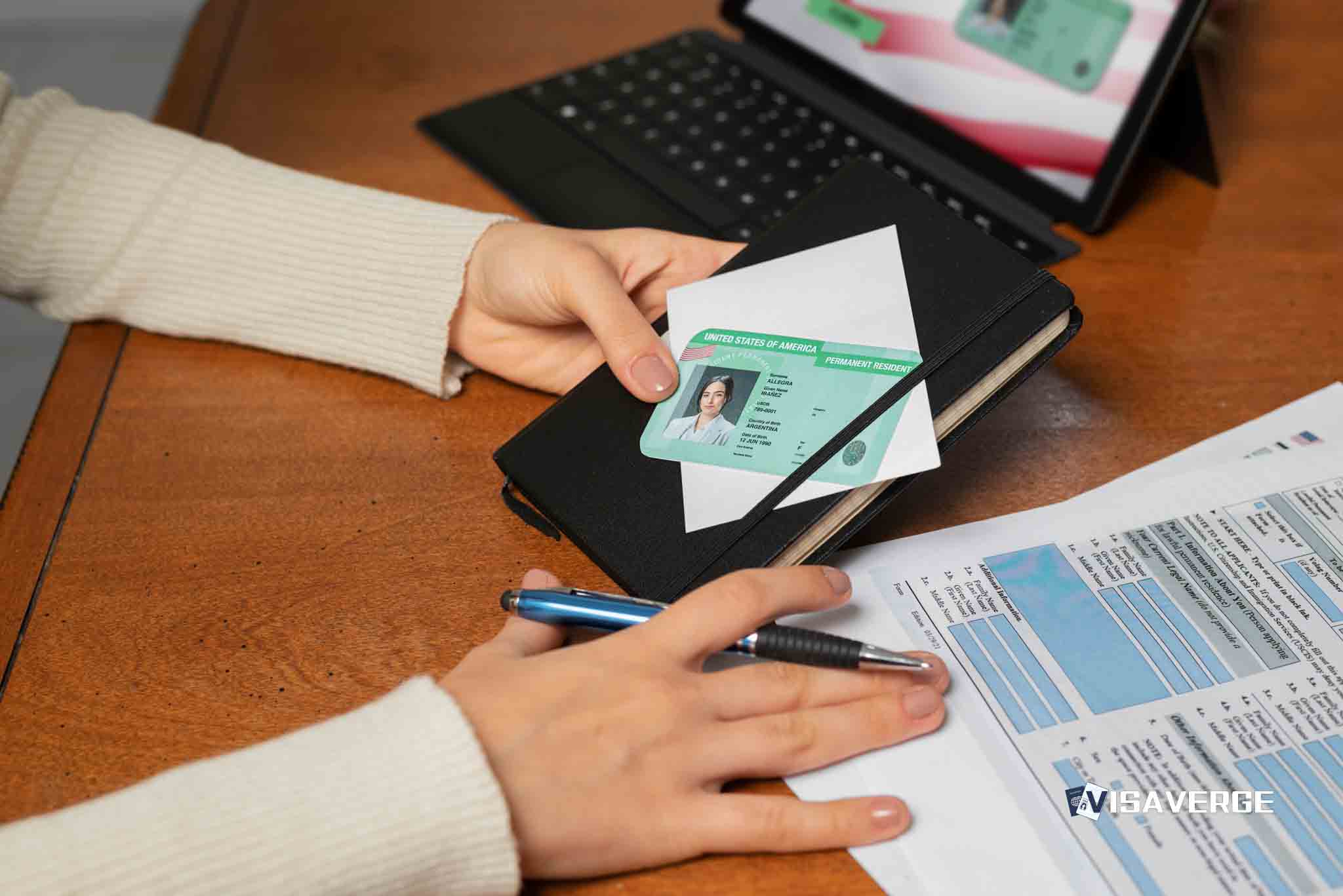
If you adjust status inside the United States, you also file Form I-485, the application to register permanent residence or adjust status. The U.S. Citizenship and Immigration Services page at uscis.gov remains the main federal reference point for case processing and official filing instructions.
A strong I-485 package usually includes a valid passport, birth certificate, police certificates, medical exam results on Form I-693, photographs, school records, and any marriage, divorce, or death records that apply. Keep copies of everything you send.
Sponsors can also matter. In 2026, the income threshold tied to the affidavit of support for a household of two is $27,050, with higher levels for larger households. That figure follows the 125% poverty guideline standard used in many family-based filings.
Choose between adjustment in the U.S. or consular processing
Most DV winners on F-1 visas choose between two routes.
Adjustment of Status in the United States lets you stay in class while USCIS processes the case. It avoids international travel and re-entry problems. If your number becomes current in the monthly Visa Bulletin, you can file and wait in the U.S. for the next step.
Consular processing means you finish the case at a U.S. embassy or consulate abroad. That route is often used when U.S. processing is too slow or when F-1 status is already in danger. But leaving the country ends your student status, and re-entry is never guaranteed.
The right choice depends on timing, your case number, and whether your nationality falls under current entry restrictions. Nationals from fully restricted countries face the hardest path, because both filing routes can stall.
Expect longer checks and more questions
Interview planning now includes much more than documents. Officers ask about education, jobs, family, finances, travel history, and why you want to live in the United States. They also review social media and online presence under the expanded screening rules.
At the interview, bring the same records you used in filing, plus any updated proof that your F-1 status remained valid. If you filed from inside the United States, USCIS may also ask for additional evidence or call you back for more review.
Requests for Evidence and Notices of Intent to Deny are more common in 2026. That means quick replies matter. Missing a deadline on one of those notices can end the case.
Watch the calendar every week
The September 30, 2026 deadline is absolute. Every DV visa for that fiscal year must be issued by then. If approval does not happen before midnight on that date, the chance is gone.
That deadline affects both processing paths. It also means the monthly Visa Bulletin matters from the first month your number becomes current. A delay of even a few weeks can push a case beyond the cutoff.
For many students, the hardest part is patience. They need to keep studying, keep status clean, and keep filing documents while immigration officers move through a heavier backlog. In practice, the winning case is the one that stays organized from the start and responds fast at every stage.