- A Southwest 737 aborted its takeoff at San Antonio after a private plane entered the runway.
- Air traffic control canceled takeoff clearance and ordered a nearby SkyWest flight to go around.
- The FAA is investigating a pilot’s wrong turn as a preliminary cause for the incursion.
(SAN ANTONIO, TEXAS) — A Southwest 737-800 departing SAT for Dallas Love Field aborted its takeoff after a private PC-12 turned onto the active runway, with ATC quickly canceling clearance and directing a nearby aircraft to go around; no injuries were reported and the investigation is ongoing.
Section 1: Incident Overview
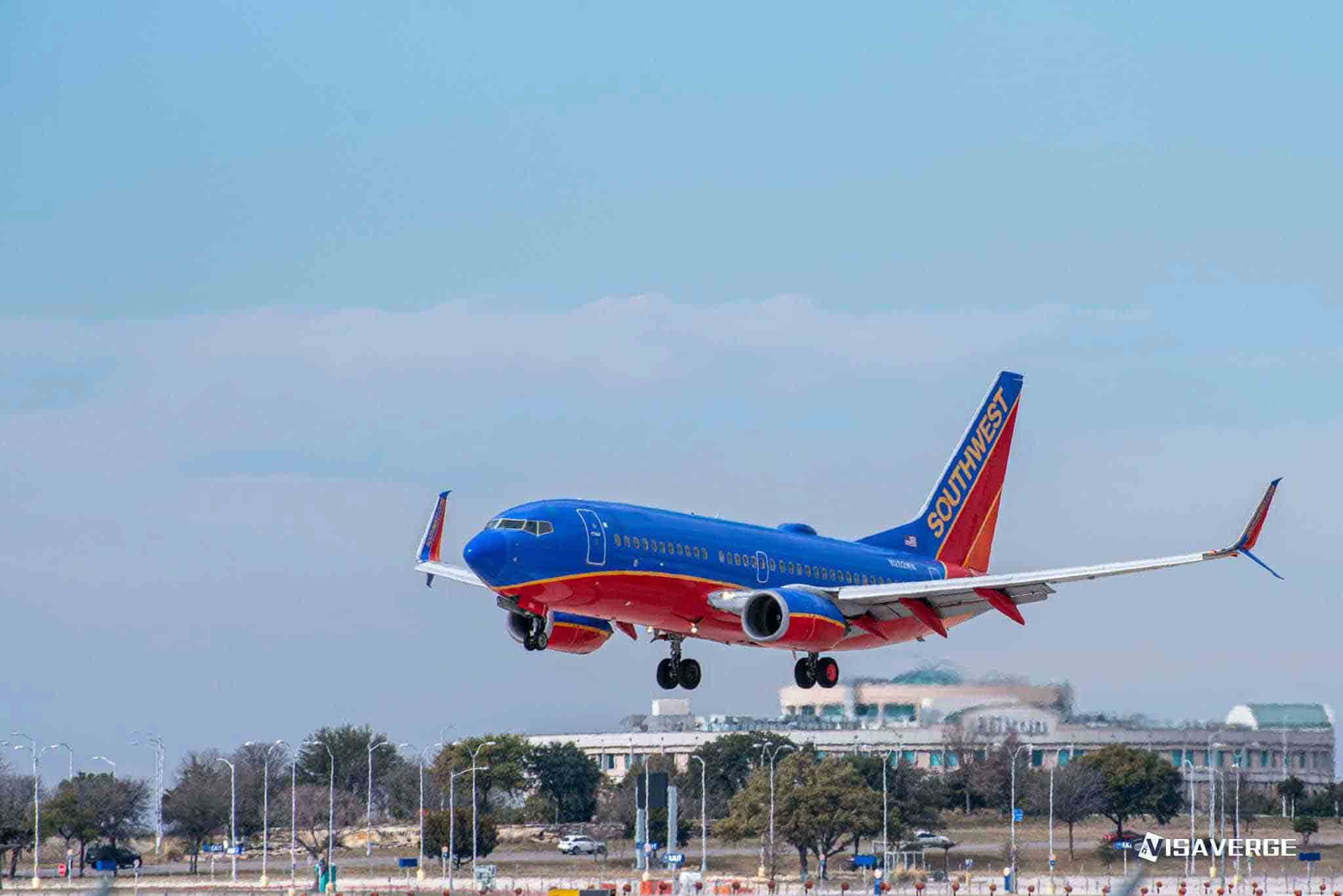
Southwest Airlines Flight 4996, a Boeing 737-800, was departing San Antonio International Airport on January 27, 2026, around 1:40 p.m. local time, when the crew rejected takeoff on Runway 22.
The flight had been cleared for takeoff and was accelerating when a Pilatus PC-12—described as a private plane—entered or turned onto the active runway.
Air traffic control recognized the conflict and issued an urgent cancellation of the takeoff clearance. ATC also instructed SkyWest Flight 6210, arriving from Los Angeles, to go around to keep arriving traffic separated from the developing situation on the runway.
No collision occurred. No injuries were reported among the Southwest Airlines Flight 4996 crew and passengers, the Pilatus PC-12 pilot, or the SkyWest Flight 6210 crew.
Safety note: ATC cleared, then canceled takeoff, and all actions prioritized a safe stop on the runway; no injuries were reported.
Section 2: Aircraft, Runways, and Performance Details
Southwest Airlines Flight 4996 involved a Boeing 737-800, a narrow-body passenger jet designed for high-frequency, short-to-medium routes. The other aircraft in the runway incursion was a Pilatus PC-12, a single-engine turboprop that often operates general aviation or private flights.
SkyWest Flight 6210 was an arriving commercial flight that was kept clear through a go-around. Runway layout and airport “flows” matter in events like this.
During the incident, Runway 22 was being used for departures at San Antonio International Airport. At the same time, Runway 13R/31L was closed, which can shift how aircraft taxi and how ground controllers sequence movements.
When one runway is unavailable, more aircraft may be routed to fewer departure and arrival paths, increasing the need for clear instructions and careful readbacks. An aborted (or rejected) takeoff is exactly what it sounds like: the crew starts the takeoff roll, then stops the airplane on the runway when continuing becomes unsafe.
Crew training and modern jet systems support a safe stop within performance limits. In this event, the Southwest jet was reported to have reached about 100–103 mph (about 87–90 knots) before the crew stopped. That speed range helps explain why stopping was achievable without a collision.
Crews execute a standard rejected-takeoff response and coordinate with ATC afterward rather than “guessing” in the moment.
| Item | Detail | Source / Status |
|---|---|---|
| Departure runway in use | Runway 22 used for departures during the incident | Reported operational context |
| Runway affecting traffic flow | Runway 13R/31L closure affecting traffic patterns and taxi flows | Reported operational context |
| Resulting operational effect | More traffic concentrated on remaining runway options and altered ground movement patterns | Under FAA review as part of operational factors |
Section 3: Meteorological and Operational Facts
Wind at the time was reported as 210 degrees at 9 knots. That is a routine operating condition for many aircraft, and wind alone does not establish why the incursion happened.
Weather is simply one piece of the operating picture. ATC communications followed a fast sequence: takeoff clearance was issued to Southwest Airlines Flight 4996, then abruptly canceled when the Pilatus PC-12 entered or turned onto Runway 22.
Controllers also kept inbound aircraft separated by directing SkyWest Flight 6210 to perform a go-around. A go-around is a normal safety maneuver for arriving flights: the aircraft climbs away and sets up for another approach when conditions are safe.
For passengers, a go-around can feel sudden. For crews and controllers, it is a standard tool to maintain separation.
Section 4: Investigation and Preliminary Causes
Federal Aviation Administration (FAA) investigators are reviewing the event. In aviation, “preliminary” means early information that can change as investigators confirm radio transmissions, aircraft movement data, airport diagrams, and controller and pilot statements.
FAA information has preliminarily attributed the incursion to the Pilatus PC-12 pilot making a wrong turn onto the Southwest flight’s runway. That phrasing describes what is being examined and does not decide legal responsibility.
Airport conditions can also shape risk without being the sole “cause.” The closure of Runway 13R/31L may have changed taxi routes and concentrated traffic on Runways 4/22, increasing workload for pilots and controllers.
Investigators may examine situational awareness tools in the tower, including any limits in surface surveillance capabilities. Such context is not an assignment of blame but part of a full operational review.
Readers should keep expectations realistic about timing: FAA reviews can produce follow-up statements, safety bulletins, or procedural adjustments. Potential changes might include signage, ground movement procedures, or phraseology emphasis based on confirmed findings.
For readers looking for legal implications: this is an aviation safety and operations story, not an immigration-law matter. Investigation steps described here relate to FAA process and safety review, and there is no immigration-related implication unless authorities explicitly connect one.
Section 5: Context and Related Incidents
Runway incursions draw attention because they compress reaction time. A runway is the one place where two aircraft paths can intersect at very close distances, very quickly.
No injuries were reported in the San Antonio event. That outcome reflects layered safety defenses: controller intervention, pilot decision-making, and aircraft stopping capability.
A recent comparison often raised in aviation safety discussions is the February 25, 2025 Midway incident involving a Flexjet aircraft and a Southwest flight. That near-miss highlighted how runway confusion can develop even in controlled environments.
Investigations of similar events have cited human-factor and environment issues such as runway misidentification, confusing markings, glare, and expectation bias (seeing what you think you should see). Those examples are not claims about what happened at SAT, but they help explain why investigators examine the full operating setup.
Section 6: Current Status and Next Steps
Southwest Airlines reported that the crew and flight attendants handled the situation professionally. After stopping safely on Runway 22, Southwest Airlines Flight 4996 later departed and completed an uneventful flight to Dallas Love Field.
Travelers should expect that FAA information may change as the investigation proceeds. Even when an incident ends without injuries, there can be short-term scheduling effects at an airport, such as minor delays from runway checks, traffic resequencing, or brief pauses while controllers reestablish flow.
Passengers who were affected—whether by delays, missed connections, or rebooking—can take a calm, methodical approach:
- Check Southwest Airlines rebooking and refund options first, since airline rules and fare types can differ.
- Document delay-related expenses carefully, since many reimbursement decisions depend on receipts and timestamps.
- Escalate only when needed: start with the airline’s customer relations process, then consider a DOT complaint if you believe required disclosures or handling were not provided. DOT resources are available at U.S. Department of Transportation.
✅ If you were on a flight affected by this incident, review airline rebooking/refund policies and keep expense receipts for claims.
This article summarizes a preliminary FAA investigation and official findings may change as the investigation progresses.
Information regarding airline operations or driver/pilot behavior should not be used to infer legal liability or regulatory conclusions. This content is not legal advice and does not establish legal rights; consult aviation authorities or legal counsel for formal guidance.
Live Government Data
State Dept • CBPBusiest Border Crossings
- Nogales 180 min
- Eagle Pass 150 min
- Brownsville 90 min