- A massive winter storm canceled over 20,000 flights across the United States between Friday and Monday.
- Sunday became the worst day for aviation since 2020 with a 29% nationwide cancellation rate.
- Major hubs like Reagan National and LaGuardia saw over 90% of flights scrapped during the peak.
(UNITED STATES) — Over 20,000 US flights were canceled between Friday and Monday as a massive winter storm paralyzed air travel from Texas to Maine, creating the worst disruption since COVID-19 grounded aviation in 2020.
If you’re stuck at an airport or have travel coming up, here’s what you need to know about rebooking, refunds, and when things will actually return to normal.
What Happened and Why This Matters for Your Travel
The storm hit during a critical weekend window, affecting 180 million Americans across half the country. Snow totals reached 1-2 feet from Washington to Boston, while ice crippled airports in the South and Plains.
Airlines canceled flights in waves: 1,200 on Friday, 4,600 on Saturday, over 11,000 on Sunday alone, and 2,500 on Monday. Sunday, January 25, 2026, became the single worst day for US aviation since pandemic shutdowns.
Nearly 29% of all departing flights were scrapped — the highest single-day cancellation rate since March 2020. Major hubs went dark for entire days. Reagan National canceled 97% of flights. LaGuardia hit 93%.
The practical impact: thousands of travelers stranded, hotel rooms sold out, rental cars gone, and rebooking queues stretching hours. Even if you’re flying days later from an unaffected city, you could face delays because aircraft and crews are stuck hundreds of miles away.
Recovery takes 3-5 days minimum after widespread cancellations. Your Tuesday flight from Phoenix might cancel because the plane is still sitting in Philadelphia.
Weather disruptions differ from mechanical delays in one critical way: you’re not entitled to compensation, but you have more flexibility with refunds. Airlines must offer full refunds for canceled flights, even on basic economy tickets.
They’ll push you toward rebooking, but if you don’t want a travel credit, you can demand cash back.
💡 Pro Tip: Don’t wait in the airport customer service line. Call the airline while simultaneously using the app to rebook. International phone numbers (like Delta’s Australia line) often have shorter waits.
Day-by-Day Disruption: Why Sunday Was the Nightmare Peak
Friday kicked off with 1,200 cancellations as the storm approached. Airlines pre-canceled flights in anticipation, trying to avoid stranding crews and passengers mid-trip.
Saturday jumped to 4,600 as the system intensified and moved northeast. But Sunday exploded to 11,000 canceled flights, making it the most destructive single day.
Why Sunday mattered most: weekend operations run on tight crew schedules. When you cancel Saturday night flights, crews time out for Sunday morning and aircraft sit in the wrong cities overnight.
Hub operations collapse because nothing feeds into connecting banks. Reagan National, the nation’s seventh-busiest airport, essentially shut down with 414 of 428 flights canceled.
The 29% cancellation rate tells you more than the raw number. On a typical day, airlines operate about 50,000 flights with a 1% cancellation rate — roughly 500 cancellations spread across the network.
When you jump to 29%, every alternate routing option is also canceled. There’s nowhere to rebook passengers because other flights are full or gone.
Monday brought 2,500 more cancellations despite improving weather. This is the recovery phase paradox: weather clears, but the network stays broken. Planes are scattered across the country and crews have hit duty time limits.
Ground equipment and catering trucks need repositioning. De-icing fluid runs low at airports that used three days’ worth in one morning.
Weekend peaks create longer recovery windows than midweek storms. Business routes empty out on weekends, so airlines run reduced schedules. When those reduced flights cancel, there’s even less capacity for rebooking.
Raw counts versus percentages reveal different problems. American canceled 1,500 flights Sunday — the highest total. But JetBlue’s 560 cancellations represented 70% of its schedule. If you’re on JetBlue, your odds of flying Sunday were only 3 in 10.
Airline-by-Airline Impact: Who Got Hit Hardest and What It Means for Rebooking
American Airlines led Sunday’s cancellations with 1,400–1,500 flights scrapped — about 49% of its schedule. American’s hub concentration in the storm’s path created a cascade.
Delta canceled 1,000–1,500 flights, representing roughly 36% of operations. Atlanta stayed partially operational, giving Delta an advantage for reroutes and connections.
Southwest canceled 1,000–1,300 flights at 26% of schedule — the lowest percentage among major carriers. Its point-to-point network offers both vulnerability and resilience.
United grounded 800+ flights, hitting a 33% cancellation rate. Its geographic spread across hubs limited overall damage despite heavy hits at Newark.
JetBlue suffered the worst percentage: 70% canceled despite only 560 total flights. JetBlue concentrates heavily in the Northeast corridor and lost its operational core when New York and Boston airports went dark.
Hub-and-spoke exposure amplifies cancellations because connecting passengers get stranded twice. Partner airlines rarely help during irregular operations — carriers protect their own passengers first, and interline help is limited during weather events.
Network flexibility matters more than fleet size during recovery. Delta’s Atlanta hub gave it options. Southwest’s distributed network required longer repositioning. United could reroute through western hubs. American and JetBlue faced longer recovery times due to concentration in the storm zone.
⚠️ Heads Up: Elite status won’t get you on a full flight, but it will move you up the rebooking priority queue. If you’re Gold or higher, you’ll get the next available seat before basic economy passengers.
Airport Choke Points: Why Small Disruptions Cascade Into Shutdowns
Reagan National’s 97% cancellation rate illustrates how airport constraints amplify weather disruptions. DCA operates under slot controls — the FAA limits how many flights can operate per hour.
Only 60 slots available per hour means just 15 gates active during snow operations. When de-icing takes 25 minutes per aircraft instead of the usual 5, the whole schedule collapses.
LaGuardia hit 93% canceled for similar reasons. Perimeter rules restrict long-haul flights, and tight runway configurations force single departure paths during low visibility, creating ground stops.
Dallas-Fort Worth’s 84% cancellation rate shocked many. Ice creates different problems than snow — de-icing takes longer and runways become skating rinks. American’s massive hub operation requires perfect choreography; when timing breaks, the system freezes.
Philadelphia, Newark, and JFK all exceeded 80% cancellations. The New York/Philadelphia corridor is the nation’s most congested. During storms, air traffic control spacing doubles or triples and runway capacity drops about 60%.
Charlotte’s 80% rate hurt connecting passengers most. CLT funnels traffic between the Northeast and Florida. When Charlotte closes, Fort Lauderdale, Miami, and Orlando also suffer due to missing aircraft.
Boston’s 71% cancellation rate reflected both snow and air traffic limits. Logan’s layout into the harbor and crosswinds force single-runway operations, cutting capacity drastically and prompting preventive cancellations.
Richmond’s 81% rate shows how secondary airports get overlooked. RIC lacks major de-icing infrastructure and crews aren’t trained for heavy snow operations, so heavy snowfall can effectively shut the airport.
Small disruptions escalate quickly at slot-controlled airports. At DCA, a 30-minute delay can cost your slot and lead to cancellations as crews time out, leaving passengers stuck overnight.
Connection risk multiplies during hub disruptions. When hubs run hours behind, inbound aircraft land late and outbound connections depart without you, creating rebooking bottlenecks and long hold times.
Misconnect rebooking bottlenecks overwhelm even large airports. Charlotte typically handles 500+ connections per hour. When 80% of flights cancel, thousands need new routes simultaneously and systems get swamped.
📅 Key Date: Recovery from Sunday’s disruptions won’t complete until Wednesday, January 28. Expect rolling delays and last-minute cancellations through Tuesday as crews and aircraft reposition.
Why Winter Storms Cascade: The Hidden Factors Slowing Recovery
The storm’s geographic scale explains why recovery takes days, not hours. It stretched from Dallas to Maine — about 1,500 miles — and covered 12 of the country’s 30 busiest airports simultaneously.
Crew legality creates the longest delays. Pilots and flight attendants have strict duty time limits. A crew scheduled for multiple legs can time out when one flight cancels, and replacement crews are often stuck elsewhere.
Aircraft routing amplifies problems exponentially. Airlines don’t keep spare planes at every airport. One aircraft stuck in a storm city can disrupt multiple subsequent flights across the network.
De-icing capacity becomes a bottleneck even after snow stops. Airports stock de-icing fluid based on seasonal averages; this storm used 3–4 days worth in one morning, leaving some airports low by Sunday afternoon.
Airport ground equipment shortages slow turns. When flights cancel, workers are sent home and Monday requires double staffing to handle delayed operations plus the regular schedule — but labor rules limit consecutive days worked.
The “latest day cited” numbers in disruption reports indicate ongoing instability. When cancellations extend into Tuesday or Wednesday, that signals systemic problems: aircraft out of position, crews unavailable, and disrupted maintenance cycles.
Weather improvements don’t equal operational improvements. Even with clear skies Monday morning, airports and hubs can be short dozens of aircraft and require many hours to reposition planes and crews.
Cascading delays shift geographically during recovery. Sunday’s East Coast and Texas cancellations can cause Monday spikes in Denver, Phoenix, and Los Angeles, then Tuesday problems in secondary markets as crew shortages ripple outward.
Multi-day events break the schedule rhythm. Airlines assume planes complete daily routes and return to hubs overnight. When that chain is broken, one canceled flight can create cancellations across several subsequent days.
Your Disruption Playbook: Refunds, Rebooking, and Next Steps
Deciding between rebooking and refunds depends on your timeline flexibility. If you need to reach your destination this week, take the next available flight — even if it’s 48 hours later.
If your trip is leisure and you have flexibility, request a full refund and rebook later when prices normalize. Weather cancellations entitle you to refunds for the unused portion of your ticket.
Airlines will offer rebooking or travel credits first. Politely decline and request a refund to the original payment method. The Department of Transportation requires refunds for canceled flights, regardless of fare type.
Credits expire, refunds don’t. Travel credits typically have 12 months to use and can include blackout dates and restrictions. Refunds give you flexibility to shop for better deals or use a different carrier.
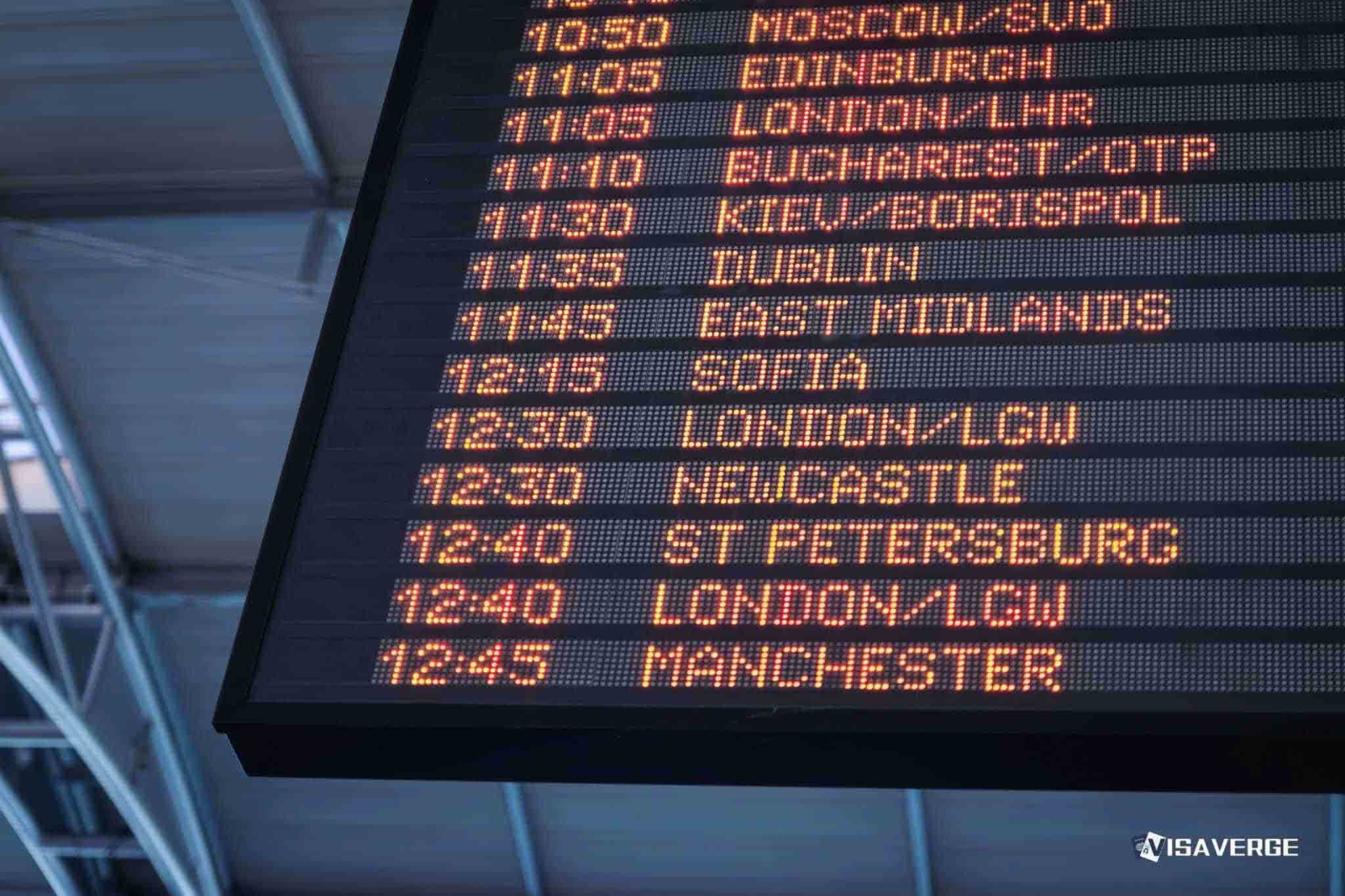
Document everything for expense reimbursement: save receipts for meals, hotels, ground transportation, and phone calls. Take photos of departure boards showing your canceled flight and screenshots of rebooking confirmations.
Know what airlines will and won’t cover. During weather disruptions, airlines aren’t required to pay for hotels or meals because cancellations are “events beyond their control,” though many provide vouchers or discounted hotel rates as gestures.
Travel insurance or credit card benefits may cover what airlines won’t. Cards like Chase Sapphire Reserve or American Express Platinum often include trip delay reimbursement and trip cancellation insurance — read policies for weather exclusions.
Checked bag retrieval during cancellations creates headaches. Your bag might fly on a later flight without you. If stranded overnight, request bag delivery to your home or hotel and pack essentials in carry-on luggage.
Missing connections requires immediate action. If your inbound will miss your connection, start rebooking before you land. Use the app to list alternatives and head to the transfer desk on arrival with options ready.
Rebooking strategies depend on status and fare class. Elite members get priority rebooking; basic economy passengers are last. Consider buying a refundable full-fare ticket on the next flight, then requesting a refund for your original ticket if needed.
Partner airline options exist but require persistence and gate agent approval. In some cases, oneworld or other partners may accommodate passengers when parent-carrier flights are unavailable, but don’t expect this for basic economy fares.
Airport sleeping often becomes inevitable during mass disruptions. Hotels sell out quickly. If stuck overnight, use an airline club lounge if you have access. Otherwise, find a quiet gate, bring chargers, earplugs, and patience.
Preventive rebooking helps. If your Sunday flight looks risky, proactively call on Saturday to move to Monday. Airlines typically waive change fees during irregular operations and you’ll often get better seat options by acting early.
Stay away from the airport if your flight’s already canceled. Rebook by phone or app from home — going to the airport wastes time standing in lines that won’t get shorter. Save the airport trip for when you have confirmed space.
The waiting game favors patience and persistence. Call back every few hours and keep checking apps. New seats open as passengers change plans, airlines swap aircraft to larger planes, or competitors add extra flights.
Sunday’s “nothing until Wednesday” can become Monday’s “seat available Tuesday morning” if you keep checking and act quickly when options appear.