Keep these details ready, because they speed everything up:
- Government ID
- Reservation code
- Ticket number
- Bag tag numbers
- Any time-sensitive documentation, if applicable
Also, keep expectations realistic. Safety-driven disruptions do not always trigger the same compensation outcomes as controllable delays. Your fare type can matter, too.
Miles and points angle: Rebooking can change your fare class and your earnings. If you’re rerouted on a partner, keep boarding passes until your AAdvantage credit posts. If you’re short on status thresholds, a reroute can change what qualifies.
Injuries, medical support, and when to seek care
Most reported injuries in terminal smoke events are usually tied to smoke inhalation and stress, not burns. That pattern held here.
If you were exposed and felt unwell, on-site medical triage generally focuses on basic evaluation. Responders may ask where you were, how long you were in smoke, and what symptoms you have.
Seek additional evaluation if symptoms persist, especially:
- Ongoing coughing
- Shortness of breath
- Chest pain
- Dizziness or confusion
For follow-up, keep a clean record:
- Incident date and rough time
- Location in the terminal
- Airline and flight number
- Any discharge paperwork, if treated
This is less about paperwork obsession. It’s about having facts if you need care later.
Investigation, safety checks, and which updates to trust
When the smoke clears, the next phase is investigation. In cases like this, fire investigation teams typically review whether a mechanical or electrical issue triggered the event.
For travelers, two practical points matter:
- A reopened terminal means key occupied areas passed safety checks. It does not mean every corridor returns to normal instantly.
- Trust operational updates from:
- Your airline’s flight status tools
- Airport advisories
- Gate screens
- Staff instructions in the terminal
Terminal 8 has seen smaller escalator issues before, including a prior incident in 2024. That history doesn’t predict your next trip. It does support a simple habit: treat escalators and chokepoints as fragile parts of the airport system.
Who should book this?
Book American’s A321T out of JFK Terminal 8 if:
- You want a true lie-flat on a domestic route, especially for work travel.
- You’re using a systemwide upgrade or premium cabin award and want strong value.
- You’re chasing AAdvantage elite status, and need the miles and credit from a premium fare.
Think twice, or pad your schedule, if:
- You have a tight same-day connection at JFK to Europe, including Schengen cities.
- You can’t risk an overnight due to meetings, cruises, or onward rail bookings.
- You’re traveling with limited mobility and need predictable terminal access.
For the next few weeks, I’d arrive earlier than usual at JFK Terminal 8 for morning departures. Give yourself extra time for security and gate changes. If your trip is time-critical, pick a flight with later backup options the same day.
On disrupted days, the best “amenities” become:
- Time (arrive earlier than you think you need).
- Battery (a charged phone and a backup bank).
- Receipts (food, hotels, ground transport).
- Flexibility (a Plan B flight, even on another airport).
This is also where loyalty status earns its keep. Higher-tier elites often have better rebooking support and priority lines. That can be the difference between “later today” and “tomorrow.”
How to handle a same-day delay or missed connection at Terminal 8
When Terminal 8 melts down, your first goal is to get yourself back into a confirmed seat, not to argue at the counter.
- Use the airline app and SMS tools first. They often rebook faster than any human line.
- If the app fails, try phone support while you stand in line. Two channels are better than one.
- At the counter, ask targeted questions. “Can you confirm me on the next flight with seats?” “Can you put me on standby for anything earlier?” “Do you have options on partner airlines from JFK?” “If this becomes overnight, how is my bag handled?”
Keep these details ready, because they speed everything up:
- Government ID
- Reservation code
- Ticket number
- Bag tag numbers
- Any time-sensitive documentation, if applicable
Also, keep expectations realistic. Safety-driven disruptions do not always trigger the same compensation outcomes as controllable delays. Your fare type can matter, too.
Miles and points angle: Rebooking can change your fare class and your earnings. If you’re rerouted on a partner, keep boarding passes until your AAdvantage credit posts. If you’re short on status thresholds, a reroute can change what qualifies.
Injuries, medical support, and when to seek care
Most reported injuries in terminal smoke events are usually tied to smoke inhalation and stress, not burns. That pattern held here.
If you were exposed and felt unwell, on-site medical triage generally focuses on basic evaluation. Responders may ask where you were, how long you were in smoke, and what symptoms you have.
Seek additional evaluation if symptoms persist, especially:
- Ongoing coughing
- Shortness of breath
- Chest pain
- Dizziness or confusion
For follow-up, keep a clean record:
- Incident date and rough time
- Location in the terminal
- Airline and flight number
- Any discharge paperwork, if treated
This is less about paperwork obsession. It’s about having facts if you need care later.
Investigation, safety checks, and which updates to trust
When the smoke clears, the next phase is investigation. In cases like this, fire investigation teams typically review whether a mechanical or electrical issue triggered the event.
For travelers, two practical points matter:
- A reopened terminal means key occupied areas passed safety checks. It does not mean every corridor returns to normal instantly.
- Trust operational updates from:
- Your airline’s flight status tools
- Airport advisories
- Gate screens
- Staff instructions in the terminal
Terminal 8 has seen smaller escalator issues before, including a prior incident in 2024. That history doesn’t predict your next trip. It does support a simple habit: treat escalators and chokepoints as fragile parts of the airport system.
Who should book this?
Book American’s A321T out of JFK Terminal 8 if:
- You want a true lie-flat on a domestic route, especially for work travel.
- You’re using a systemwide upgrade or premium cabin award and want strong value.
- You’re chasing AAdvantage elite status, and need the miles and credit from a premium fare.
Think twice, or pad your schedule, if:
- You have a tight same-day connection at JFK to Europe, including Schengen cities.
- You can’t risk an overnight due to meetings, cruises, or onward rail bookings.
- You’re traveling with limited mobility and need predictable terminal access.
For the next few weeks, I’d arrive earlier than usual at JFK Terminal 8 for morning departures. Give yourself extra time for security and gate changes. If your trip is time-critical, pick a flight with later backup options the same day.
Escalator Blaze Evacuates 960 at JFK Airport, Terminal 8, January 21, 2026
An escalator fire at JFK Terminal 8 on January 21, 2026, caused evacuations and travel chaos. This incident underscores the fragility of airport infrastructure. While American Airlines’ A321T aircraft offers a superior premium experience, the terminal’s layout can lead to significant bottlenecks during emergencies. Travelers are urged to utilize mobile apps for rebooking, maintain device charges, and arrive early to navigate potential security delays and gate changes.
- A fire in a Terminal 8 escalator caused significant morning disruptions and evacuations at JFK Airport.
- American Airlines’ A321T remains a premier transcontinental product despite the terminal’s operational vulnerabilities.
- Travelers should arrive early and prepare for potential security bottlenecks and gate reassignments during irregular operations.
(NEW YORK) — An escalator fire in JFK Airport’s Terminal 8 on January 21, 2026 turned a routine morning into a reminder of how quickly one pinch point can derail a trip. If you fly American or oneworld partners from JFK, this matters because Terminal 8 disruptions can force evacuations, re-screening, and rapid gate reshuffles.
I was at JFK Airport, Terminal 8 that morning, headed west on American’s premium transcon. Here’s my quick verdict: American’s A321T Flagship product still delivers a strong onboard experience, but Terminal 8 remains a “single-point-of-failure” terminal when something goes sideways.
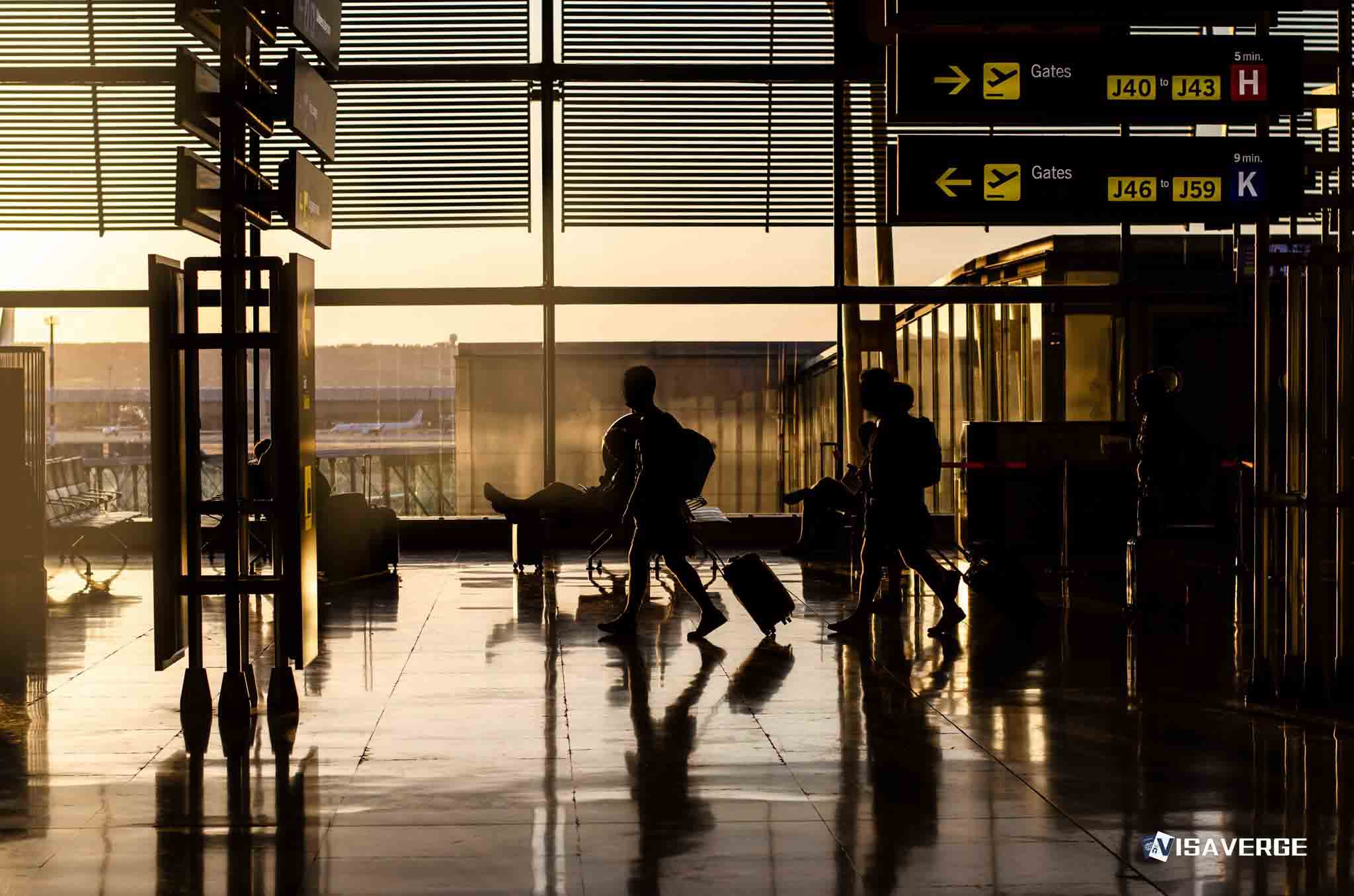
If you’re connecting to Europe (including Schengen destinations) or chasing status, you’ll want a plan for irregular operations.
The flight I flew (and what you’re really buying)
This review centers on American’s Airbus A321T “premium transcon” experience out of Terminal 8, with the Terminal 8 fire disruption as the backdrop.
| Detail | Information |
|---|---|
| Airport/Terminal | JFK Airport, Terminal 8 |
| Date observed | January 21, 2026 |
| Aircraft | Airbus A321T |
| Cabins on board | Flagship First, Flagship Business, Main Cabin Extra, Main Cabin |
| Best for | JFK–LAX/SFO premium flyers, upgrade hunters, status chasers |
Seat and comfort: Excellent up front, fine in back, and power matters most
If you’re paying for this aircraft, the seat is the point.
Flagship Business (A321T) is a true premium product for a domestic flight. The seat is lie-flat and designed for long-haul-style rest, not just lounging. You also get direct-aisle access only in the premium cabins, not throughout the plane.
| Cabin | Seat width (approx.) | Seat pitch (approx.) | Power |
|---|---|---|---|
| Flagship First | ~21 in | ~82 in | AC + USB |
| Flagship Business | ~20 in | ~58 in | AC + USB |
| Main Cabin Extra | ~18 in | ~33–35 in | USB on many seats |
| Main Cabin | ~18 in | ~31 in | USB on many seats |
On this flight, the biggest comfort win was reliable power. During a terminal disruption, outlets become currency. If your phone dies, your rebooking options shrink fast.
In economy, the A321T is competitive with other legacy carriers’ standard domestic seats, but it’s not a comfort miracle. If you’re tall, Main Cabin Extra is the sweet spot, especially when the terminal experience is already stressful.
Competitive context: Delta’s JFK experience often funnels premium flyers through Terminal 4, with a strong lounge footprint and smoother connections on Delta metal. United’s premium transcon play is mostly out of Newark, where irregular ops can look different because the airport footprint is larger. Terminal 8 is efficient on good days, but it can bottleneck quickly.
Incident Overview: What happened at JFK Terminal 8 (Concourse C)
The fire was reported in Concourse C of Terminal 8 in the early morning. Smoke spread rapidly through departure areas. That kind of smoke event triggers automatic safety responses in modern terminals.
Here’s why it mattered to regular travelers:
- Alarms and evacuations are designed to clear areas fast, even if the fire is contained.
- Access restrictions can separate you from your gate, your checked bag, or even your travel party.
- Terminal 8 is a concentrated operation. American and many oneworld departures run through the same complex.
- Once you’re pushed landside, security re-entry becomes the choke point.
The timeline moved quickly. The key thing for travelers is not the exact minute count. It’s that a “small” mechanical fire can create an outsized airport-wide ripple when smoke spreads.
Emergency response and operational impacts: Evacuation, reopening, and the real travel pain
In a terminal smoke or fire event, the response usually follows a familiar chain. First comes fire suppression, then ventilation, then safety checks. Only after that does the terminal reopen in a controlled way.
On January 21, that pattern held. FDNY responded quickly and the fire was extinguished. Then came the slower part: clearing smoke, checking systems, and confirming the affected areas were safe.
For travelers, the operational impacts tend to cluster into a few predictable buckets:
- Boarding delays because gate areas are inaccessible or understaffed.
- Gate changes as airlines reshuffle to whatever space reopens first.
- Temporary checkpoint crowding when everyone must re-clear security at once.
- Missed connections when a short JFK buffer turns into a zero-minute sprint.
- Baggage hiccups if ramp or belt operations pause during the response.
Also, reopenings are often phased, not instantaneous. A terminal can be “open” while certain corridors stay blocked. That matters at Terminal 8 because a closed connector can turn a 7-minute walk into a 20-minute detour.
If you were connecting at JFK to Europe, this is where the Schengen angle bites. Many itineraries rely on tight same-terminal flows to make a transatlantic departure. When those flows break, your “legal connection” can become a missed flight.
Food and service: Solid onboard, but plan for the terminal to be the weak link
Onboard, American’s premium transcon catering is generally a step above standard domestic first class. You’re getting more structure: a real multi-course rhythm up front, and a crew that’s used to business-heavy flyers.
In the air, the service felt built for travelers who want to work, eat, and sleep quickly. That matters when your morning starts with an evacuation and your schedule is already bent.
In the terminal, though, disruptions expose the weak points fast:
- Lines spike at the closest quick-service spots.
- Water and coffee become scarce near crowded gates.
- Seating fills up before you finish one phone call.
If you think you might be caught in a Terminal 8 delay, buy food earlier than you normally would. The terminal is fine when flows are normal. It struggles when everyone is forced into the same few areas.
Entertainment: Good screen experience, but your phone is still the MVP
American’s A321T premium cabins offer a strong personal-screen setup, with enough content to get through a long domestic leg without relying on your phone.
That said, during irregular operations, your personal device matters more than the seatback screen. It’s your rebooking tool, your boarding pass wallet, and your proof-of-expense tracker.
If you’re chasing miles or status, it’s also your record keeper. Screens don’t help you later when you’re trying to fix missing credit or document a reroute.
Amenities: The “premium” part is real, but disruptions change what matters
On normal days, the best amenities here are straightforward:
- Lie-flat seating up front for real rest.
- Power at the seat.
- A more businesslike service flow.
On disrupted days, the best “amenities” become:
- Time (arrive earlier than you think you need).
- Battery (a charged phone and a backup bank).
- Receipts (food, hotels, ground transport).
- Flexibility (a Plan B flight, even on another airport).
This is also where loyalty status earns its keep. Higher-tier elites often have better rebooking support and priority lines. That can be the difference between “later today” and “tomorrow.”
How to handle a same-day delay or missed connection at Terminal 8
When Terminal 8 melts down, your first goal is to get yourself back into a confirmed seat, not to argue at the counter.
- Use the airline app and SMS tools first. They often rebook faster than any human line.
- If the app fails, try phone support while you stand in line. Two channels are better than one.
- At the counter, ask targeted questions. “Can you confirm me on the next flight with seats?” “Can you put me on standby for anything earlier?” “Do you have options on partner airlines from JFK?” “If this becomes overnight, how is my bag handled?”
Keep these details ready, because they speed everything up:
- Government ID
- Reservation code
- Ticket number
- Bag tag numbers
- Any time-sensitive documentation, if applicable
Also, keep expectations realistic. Safety-driven disruptions do not always trigger the same compensation outcomes as controllable delays. Your fare type can matter, too.
Miles and points angle: Rebooking can change your fare class and your earnings. If you’re rerouted on a partner, keep boarding passes until your AAdvantage credit posts. If you’re short on status thresholds, a reroute can change what qualifies.
Injuries, medical support, and when to seek care
Most reported injuries in terminal smoke events are usually tied to smoke inhalation and stress, not burns. That pattern held here.
If you were exposed and felt unwell, on-site medical triage generally focuses on basic evaluation. Responders may ask where you were, how long you were in smoke, and what symptoms you have.
Seek additional evaluation if symptoms persist, especially:
- Ongoing coughing
- Shortness of breath
- Chest pain
- Dizziness or confusion
For follow-up, keep a clean record:
- Incident date and rough time
- Location in the terminal
- Airline and flight number
- Any discharge paperwork, if treated
This is less about paperwork obsession. It’s about having facts if you need care later.
Investigation, safety checks, and which updates to trust
When the smoke clears, the next phase is investigation. In cases like this, fire investigation teams typically review whether a mechanical or electrical issue triggered the event.
For travelers, two practical points matter:
- A reopened terminal means key occupied areas passed safety checks. It does not mean every corridor returns to normal instantly.
- Trust operational updates from:
- Your airline’s flight status tools
- Airport advisories
- Gate screens
- Staff instructions in the terminal
Terminal 8 has seen smaller escalator issues before, including a prior incident in 2024. That history doesn’t predict your next trip. It does support a simple habit: treat escalators and chokepoints as fragile parts of the airport system.
Who should book this?
Book American’s A321T out of JFK Terminal 8 if:
- You want a true lie-flat on a domestic route, especially for work travel.
- You’re using a systemwide upgrade or premium cabin award and want strong value.
- You’re chasing AAdvantage elite status, and need the miles and credit from a premium fare.
Think twice, or pad your schedule, if:
- You have a tight same-day connection at JFK to Europe, including Schengen cities.
- You can’t risk an overnight due to meetings, cruises, or onward rail bookings.
- You’re traveling with limited mobility and need predictable terminal access.
For the next few weeks, I’d arrive earlier than usual at JFK Terminal 8 for morning departures. Give yourself extra time for security and gate changes. If your trip is time-critical, pick a flight with later backup options the same day.
Escalator Blaze Evacuates 960 at JFK Airport, Terminal 8, January 21, 2026
An escalator fire at JFK Terminal 8 on January 21, 2026, caused evacuations and travel chaos. This incident underscores the fragility of airport infrastructure. While American Airlines’ A321T aircraft offers a superior premium experience, the terminal’s layout can lead to significant bottlenecks during emergencies. Travelers are urged to utilize mobile apps for rebooking, maintain device charges, and arrive early to navigate potential security delays and gate changes.