(UNITED STATES) — The first key deadline for self-employed immigrants and other taxpayers with non-withheld income is the 2027 estimated-tax payment due April 15, 2027, for tax year 2026. Miss it, and you may owe underpayment penalties and interest, even if you pay your full balance later.
For many immigrants building income through gig work, consulting, or a small business, the U.S. system treats you as both “employee” and “employer” for Social Security and Medicare. That is where Self-Employment Tax comes in. The rules apply based on U.S. tax residency, not citizenship. IRS guidance is in Publication 519 (U.S. Tax Guide for Aliens) and the self-employment instructions for Schedule SE (Form 1040). See irs.gov/forms-pubs and irs.gov/pub/irs-pdf/p519.pdf. Information is current as of January 7, 2026.
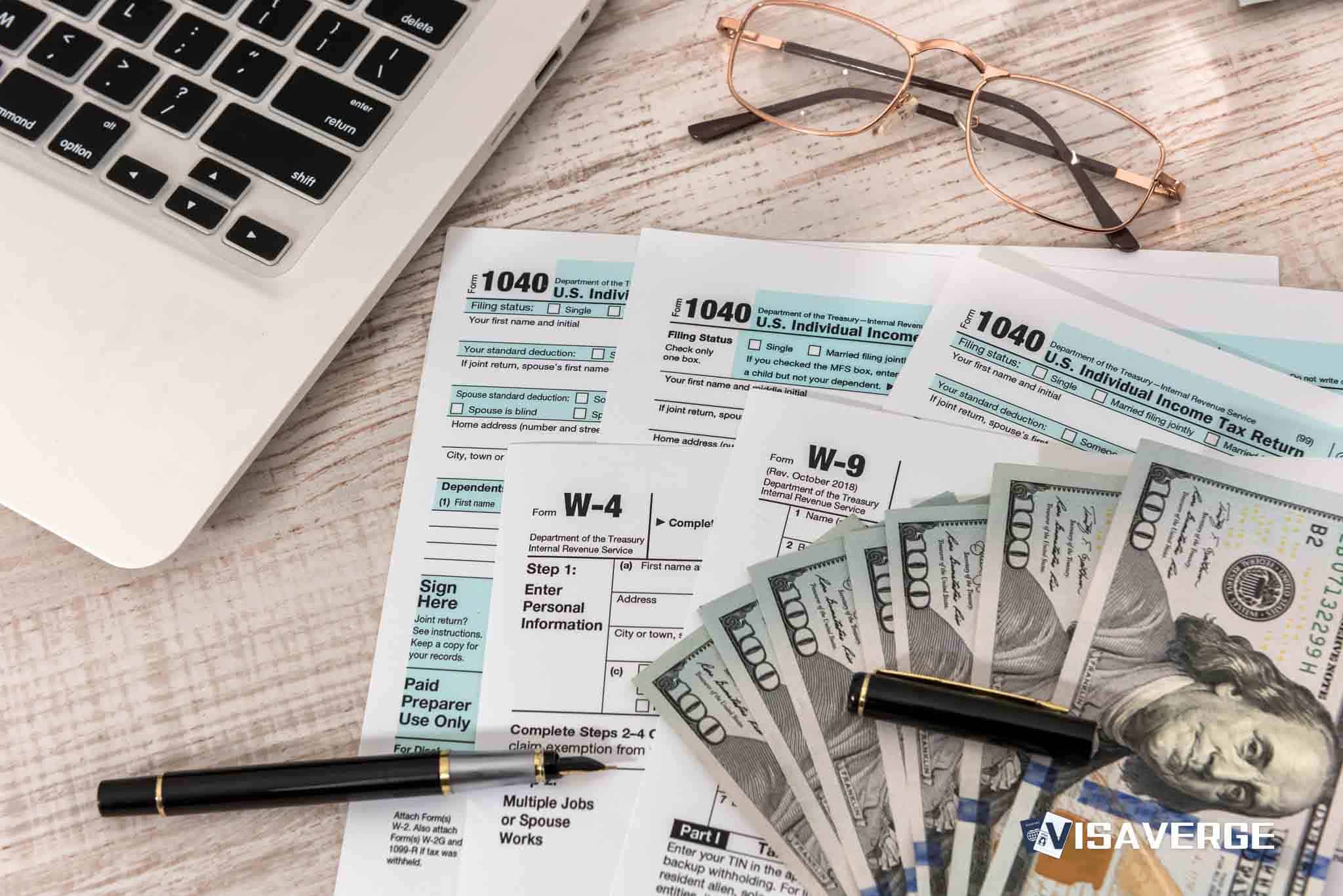
📅 Deadline Alert: For tax year 2026 (filed in 2027), estimated tax payments are generally due April 15, June 15, September 15, 2027, and January 15, 2028. Missing a payment can trigger penalties.
Who is most affected by the deadline
This deadline most often hits:
- New immigrants who start freelancing or a side business after arriving in the United States.
- Visa holders doing permitted independent work, such as certain entrepreneurs or contractors.
- Green card holders and tax residents reporting worldwide income, including foreign self-employment income.
If you expect to owe $1,000 or more in tax for 2026 after withholding and credits, the IRS generally expects estimated payments. Use Form 1040-ES (Individual Estimated Tax). IRS instructions are available at irs.gov/forms-pubs.
Deadline summary table (tax year 2026, filed in 2027)
| Tax event | Deadline | Extension available |
|---|---|---|
| 2026 individual return (Form 1040 / 1040-NR as applicable) due | April 15, 2027 | File extension to October 15, 2027 using Form 4868 |
| 2026 estimated tax payment #1 | April 15, 2027 | No “extension” for estimated tax deadlines |
| 2026 estimated tax payment #2 | June 15, 2027 | No |
| 2026 estimated tax payment #3 | September 15, 2027 | No |
| 2026 estimated tax payment #4 | January 15, 2028 | No |
An extension to file is not an extension to pay. The IRS states this clearly in the Form 4868 instructions.
What Self-Employment Tax is, and when it starts
You generally must file Schedule SE (Form 1040) and pay self-employment tax if:
- Your net earnings from self-employment are $400 or more, or
- Your church employee income is $108.28 or more.
For tax year 2026, the Self-Employment Tax rate is 15.3%, composed of:
- 12.4% Social Security on net earnings up to $184,500, and
- 2.9% Medicare on all net earnings.
You can usually deduct the “employer-equivalent” share, 7.65%, as an adjustment to income on Form 1040. This deduction reduces income tax, not self-employment tax.
Additional Medicare Tax still applies
A separate 0.9% Additional Medicare Tax can apply if your combined wages and self-employment income exceed:
- $250,000 (married filing jointly)
- $125,000 (married filing separately)
- $200,000 (single, head of household, or qualifying surviving spouse)
IRS details appear in the instructions for Form 8959 and Medicare tax guidance on irs.gov.
⚠️ Warning: Misclassifying workers can trigger IRS payroll audits. It can also create immigration exposure for employers, including I‑9 problems and wage compliance questions.
Immigrant and visa-holder compliance issues to watch
- Tax residency controls your filing. Many immigrants move from nonresident alien to resident alien under the Substantial Presence Test. Publication 519 explains how this works, plus dual-status returns and treaty rules.
- H-1B and L-1 workers are often U.S. tax residents and must report worldwide income once resident. They are also generally subject to FICA (Social Security and Medicare) withholding as employees. That is separate from self-employment tax.
- F-1 and J-1 students may be exempt from the substantial presence test for a limited period. Many are also exempt from FICA on authorized on-campus jobs. That does not automatically exempt permitted self-employment income from U.S. tax.
Employer deadlines and immigration-linked payroll compliance
If you run a business and hire workers, payroll compliance has immigration consequences. You must properly complete:
Employment taxes are reported on Form 941 (quarterly) or Form 944 (annual, if eligible). Deposits generally must be made through EFTPS. The IRS can assess penalties for deposit failures, including penalties that can reach 10% of the unpaid amount. IRS employment tax rules and EFTPS links are on irs.gov/individuals/international-taxpayers and irs.gov.
A severe enforcement tool is the Trust Fund Recovery Penalty. It can make “responsible persons” personally liable for unpaid withholding and payroll taxes.
Disaster relief and special circumstances
The IRS sometimes postpones deadlines for federally declared disasters. Relief can cover filing and payment deadlines, including estimated taxes. Check the IRS disaster tax relief page on irs.gov/newsroom for current announcements before you assume a deadline moved.
What to do now (prep tips for 2026 income)
- Track income and expenses monthly for Schedule C and Schedule SE.
- Make estimated payments using 1040-ES or EFTPS if self-employed.
- Keep copies of immigration and payroll records, including I-9 and paystubs.
- If your status changed during 2026, confirm whether you file Form 1040, Form 1040-NR, or a dual-status return under Publication 519.
- If you cannot pay in full by April 15, 2027, still file on time or extend with Form 4868, then explore IRS payment options on irs.gov.
Note: Filing an extension does not delay tax owed. For 2026, the deadline is April 15, 2027; extensions to file do not postpone the payment due date unless you still arrange payments separately.
⚠️ Disclaimer: This article is for informational purposes only and does not constitute tax, legal, or financial advice. Tax situations vary based on individual circumstances. Consult a qualified tax professional or CPA for guidance specific to your situation.
This guide outlines the 2027 tax deadlines for self-employed immigrants for the 2026 tax year. It emphasizes the importance of quarterly estimated tax payments starting April 15, 2027. Key topics include the 15.3% self-employment tax rate, thresholds for reporting income, and how tax residency impacts filing requirements for visa holders. It also warns of penalties for misclassification and the personal liability associated with payroll tax compliance.