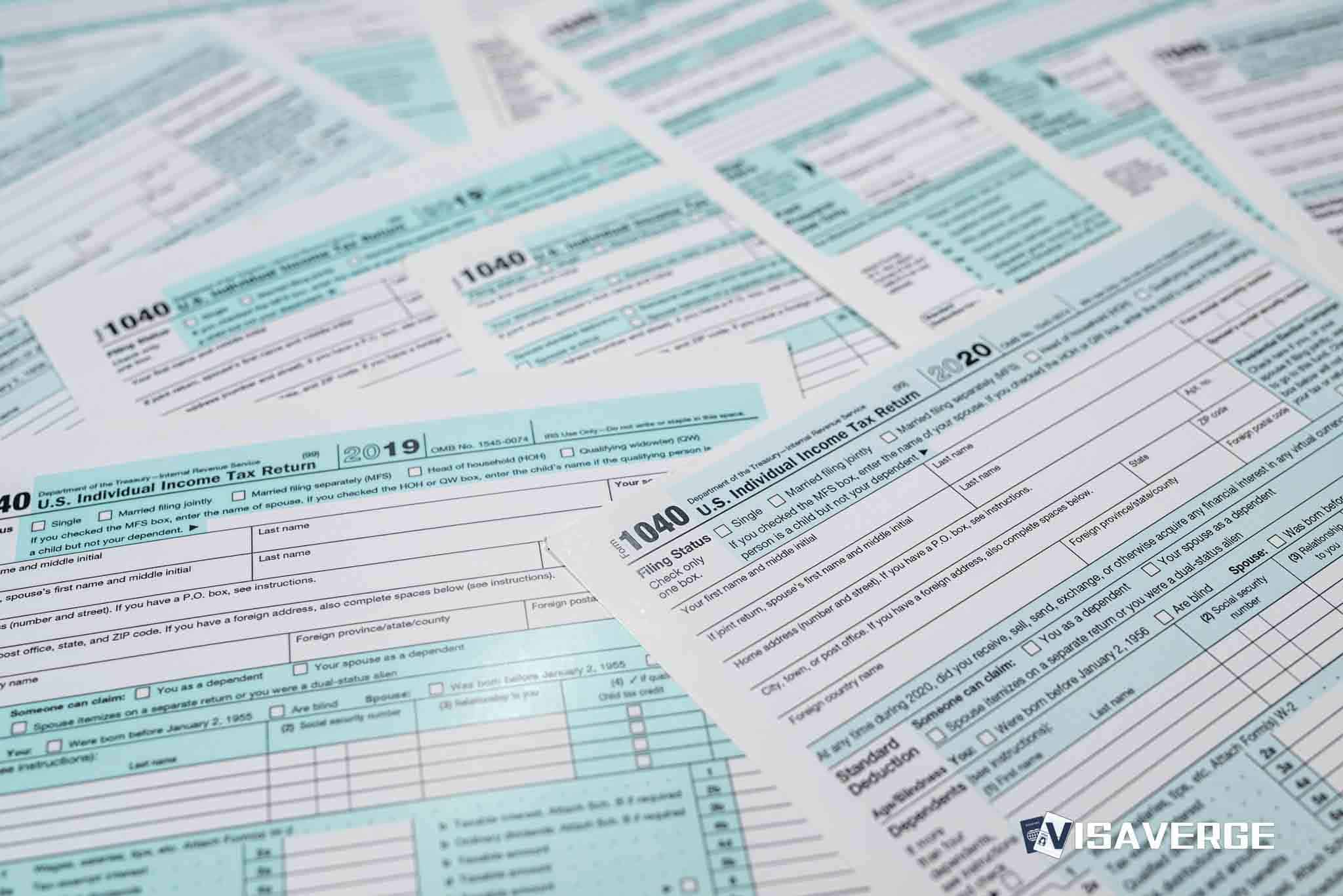
- The standard tax deadline for the 2026 tax year falls on April 15, 2027.
- A federal shutdown may slow services but core refund processing usually continues for e-filers.
- The OBBB Act could increase refunds through retroactive tax relief and deductions.
Deadline Alert: For tax year 2026 (returns filed in 2027), most individuals must file and pay by April 15, 2027. Missing the deadline can trigger failure-to-file and failure-to-pay penalties, plus interest.
A possible Federal government shutdown often raises one urgent question: will it delay tax refunds? History suggests refunds can still move, even when other IRS functions slow. At the same time, the One Big Beautiful Bill Act (OBBB) is expected to change refund outcomes for many households, including immigrants and visa holders.

Information is current as of January 29, 2026.
Free toolSubstantial Presence Test Calculator1) How a federal government shutdown can affect tax refunds
During a shutdown, federal agencies operate under contingency plans. For the IRS, that usually means core refund processing may continue, but taxpayer services can slow.
Here is the practical split:
- Refund processing and e-filing: The IRS has historically kept critical functions operating, especially where systems run continuously and staff are deemed essential. Refunds can still be issued, particularly for e-filed returns with direct deposit.
- Taxpayer services: This is where delays often show up. Phone lines, paper correspondence, identity verification follow-ups, and some compliance work can slow due to staffing limits.
- Audits and mail: Examinations, responses to IRS letters, and paper return processing may face longer queues.
Shutdown headlines also fuel “odds” talk. Some prediction markets have put shutdown chances at 80%. That number is not operational guidance. It is not an IRS schedule.
For refund timing, rely on IRS updates at irs.gov and official notices, not market probabilities.
Immigrants should also expect that any return flagged for verification can take longer in any year. That includes returns with new SSNs, ITIN applications, or mismatched Forms W-2/1042-S.
2) Tax year 2026 filing season outlook and the OBBB effect
“Tax year 2026 filing season” means the period in early 2027 when you file a return reporting 2026 income. The IRS typically opens e-filing in late January and runs through the April 15 deadline for most filers.
OBBB is described as producing larger refunds for many filers because it provides retroactive tax relief. Retroactive relief can change your outcome in two common ways:
- Your total 2026 tax drops, which can increase a refund or reduce a balance due.
- Withholding may adjust after employers update payroll tables. That can raise take-home pay, which can reduce the refund later.
If you depend on a refund for rent, tuition, or immigration fees, treat it as uncertain cash timing. The IRS can also delay refunds when it needs extra review.
Use IRS guidance and forms from the official hub: Forms and instructions.
Deadline summary (explanatory — interactive tool will show the visual timeline): For tax year 2026 (filed in 2027), most filers must file Form 1040 / 1040-NR and pay tax due by April 15, 2027. You may file Form 4868 to extend filing to October 15, 2027, but that extension applies to time to file, not time to pay.
Automatic extra time applies if you live abroad: many filers get until June 15, 2027 to file before default late-filing rules apply, with additional extension to October 15, 2027 available for filing only. FBAR (FinCEN Form 114) deadlines remain the April 15 timing with an automatic extension to October 15 for the year after the calendar year.
An extension (Form 4868) extends the filing deadline, not the payment deadline. Interest generally runs from April 15, 2027 if you owe.
3) Why refunds may rise under OBBB (and why your result can differ)
Three mechanics matter most.
Higher standard deduction. A larger standard deduction reduces taxable income. That can increase a refund if your withholding stays the same, or simply reduce what you owe.
Under the OBBB discussion, the standard deduction change was estimated to cut taxes by about $75–$278 for single filers and $150–$555 for married filers, depending on bracket.
Child Tax Credit (CTC). A higher CTC can increase refunds, but outcomes depend on the child’s eligibility rules, your income, and whether any portion is refundable.
Withholding and income changes. A bigger refund is not guaranteed. If your employer withheld less during 2026 due to updated tables, you might get a smaller refund even if your total tax dropped.
Other factors such as promotions, stock compensation, side gigs, or treaty positions can also change your math.
For immigrant and visa holders, filing status and residency are central. The rules in Publication 519 explain the Green Card Test, Substantial Presence Test, and dual-status filing.
4) Official commentary vs. market expectations
Public officials may describe “substantial refunds,” and that can be true for many households. It is still not universal.
Two statements can both be true: some people get larger refunds because total tax fell more than withholding, while others get smaller refunds because withholding dropped during the year, shifting money into paychecks.
What to watch:
- IRS implementation updates on International taxpayers if you have cross-border items.
- Payroll withholding table updates and your employer’s payroll timing.
- Any IRS notices on shutdown operations, if a shutdown occurs.
5) Fiscal context: what it does (and doesn’t) mean for your refund
OBBB has been described as delivering $91 billion in retroactive tax relief, including $60 billion tied to refunds. It has also been discussed as contributing nearly $500 billion to a projected $2 trillion FY2026 deficit.
Those deficit figures do not determine whether you “qualify” for a refund. Your refund depends on your return and withholding. Timing depends on processing and verification.
Practical steps to reduce refund delays:
- File electronically and use direct deposit.
- Make sure names and SSNs match Social Security records.
- If you need an ITIN, file Form W-7 early, since paper processing can be slower.
- Avoid refund-advance products that charge high fees and add risk.
- If you have foreign accounts, remember FBAR rules.
Quick reference (explanatory — interactive tool will present thresholds visually): For FBAR (FinCEN Form 114) the common threshold is an aggregate of $10,000 in foreign accounts at any time during the year for most U.S. persons.
For Form 8938 reporting, the end-of-year and any-time thresholds vary by filing status and residence. For example, single filers living in the U.S. generally face higher Form 8938 thresholds (for end-of-year reporting $50,000 and for any-time reporting $75,000), while married filing jointly thresholds are higher (for end-of-year reporting $100,000 and for any-time reporting $150,000).
Before you file, confirm residency status, collect Forms W-2/1099/1042-S, and reconcile foreign interest and dividends. If you changed visa status in 2026, ask a qualified preparer whether you have a dual-status year and whether a treaty position applies.
This article is for informational purposes only and does not constitute tax, legal, or financial advice. Tax situations vary based on individual circumstances. Consult a qualified tax professional or CPA for guidance specific to your situation.