(UNITED STATES) A worsening shortage of aviation mechanics is testing the U.S. air travel system as the busy summer of 2025 closes. Industry and government data point to a sizable gap between demand and the number of trained technicians entering the field.
The Federal Aviation Administration (FAA) and industry sources project a shortfall of 25,000 aircraft technicians by 2028, while Boeing’s 2025 Technician Outlook estimates 123,000 new aviation maintenance technicians will be needed in North America between 2024 and 2042. Schools, airlines, and repair stations are racing to expand training and recruit younger workers, but the wave of retirements and rising passenger volumes continue to outpace the pipeline.

At the same time, wages are climbing. The Bureau of Labor Statistics reports the median annual wage for aircraft mechanics and service technicians reached $78,680 in May 2024; avionics technicians earned $81,390. Employers say pay and benefits are rising because more aircraft need service and fewer certified workers are available. According to analysis by VisaVerge.com, the squeeze is visible across commercial, cargo, and business aviation, pushing companies to offer faster hiring, relocation support, and clear paths to promotion.
The age profile inside maintenance hangars shows why pressure is building. The average age of a certified aircraft technician has reached 54, with 40% over age 60, according to program leaders and industry reports. ATEC’s 2024 Pipeline Report forecasts a 20% shortfall by 2028. While the Bureau of Labor Statistics projects 5% job growth from 2023 to 2033 and about 13,400 openings each year from retirements and exits, the number of new entrants remains too small to keep up.
Leaders in training say the gap is both urgent and fixable if more students choose the field.
“While everyone who travels can feel there’s a pilot shortage, the need for aircraft mechanics is even greater,” said Eric Himler, executive director of aviation programs at Aims Community College.
“This program is an opportunity for Aims to be part of the solution in creating aircraft mechanics that will help ease that shortage locally, statewide and nationally.”
Michael Sasso, director of Aims’ Aircraft Maintenance Program: “This is a long and lucrative career path and now is the time to train the next generation of skilled technicians.”
Shortage Deepens as Training Pipelines Struggle
Despite high completion rates at some technical institutes—some report graduation rates near 88%—the intake of new students is still not enough. Schools and employers say awareness is a major hurdle. Many teens and parents don’t know that the fastest path to a stable, well-paid job in aviation may be through an FAA-approved program rather than a four-year degree.
To address that, schools are:
- Bringing outreach into middle schools and high schools
- Opening hangars for family events and public tours
- Holding informational events that explain salaries, schedules, and advancement
The industry is also modernizing how students learn. Programs now include:
- Virtual and augmented reality for troubleshooting
- Updated avionics labs
- Live aircraft for hands-on practice
To lower costs and barriers, some schools cover tools, uniforms, books, and testing fees. Partnerships with airlines, maintenance, repair and overhaul shops (MROs), and aerospace firms are growing to create direct pipelines from classroom to hangar. These steps aim to speed graduates into entry-level roles while keeping training aligned with current fleet technology.
ATEC and other analysts warn the gap is “accelerating annually and starting to compound.” If trends hold, the shortfall in North America could peak around 2027, with some projections citing a possible deficit of more than 48,000 mechanics. Globally, long-term forecasts suggest the need for more than 700,000 new technicians over the next 30 years. Boeing’s 2025 Technician Outlook underscores the scale of that demand and the long runway of opportunity for new workers.
Wages Rise and Schools Respond
Higher pay is the most visible change. Employers are offering:
- Better starting wages
- Overtime premiums
- Quicker promotion paths to senior roles
- Relocation support and signing bonuses in some cases
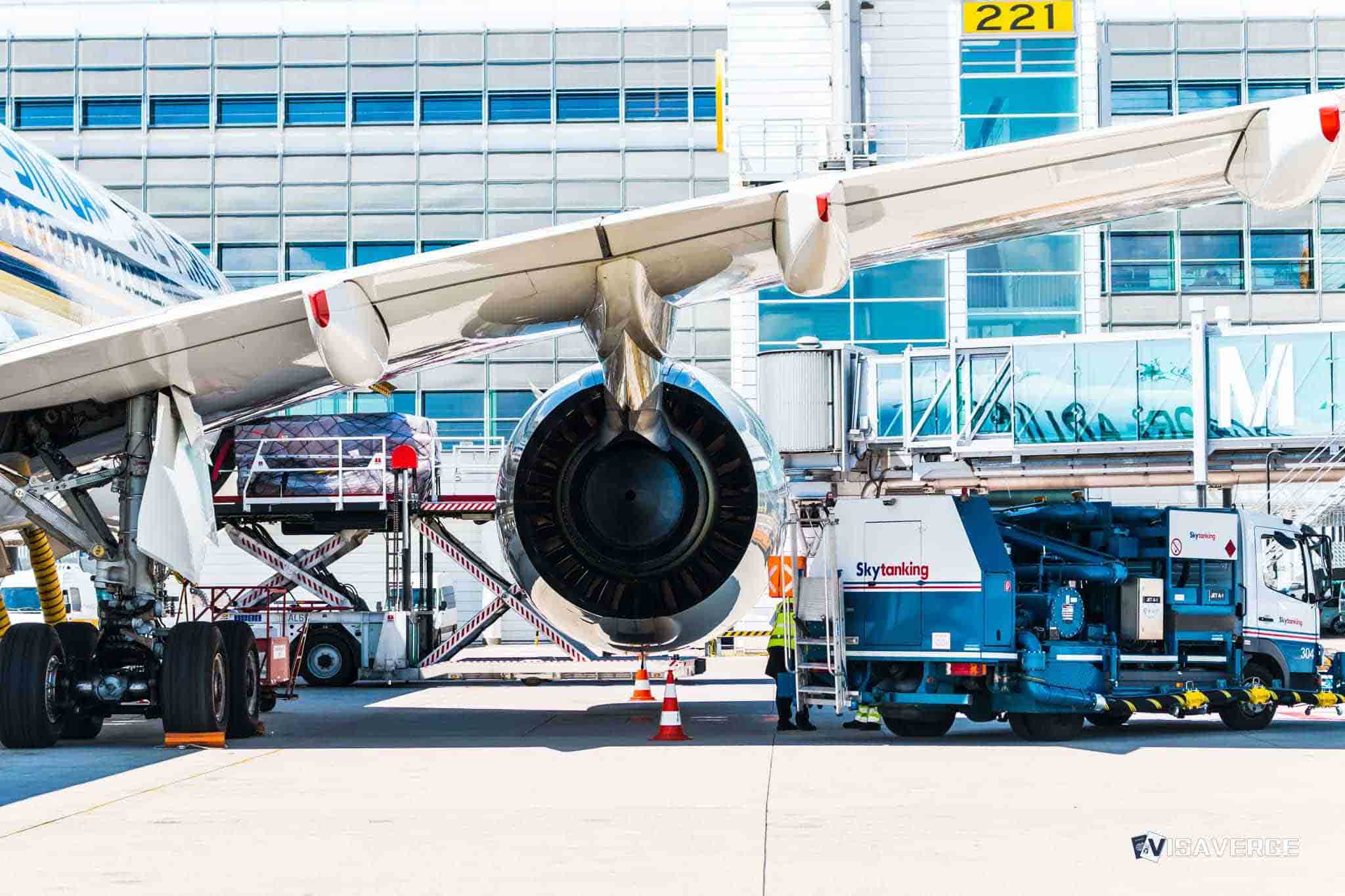
Graduates report strong placement rates and steady schedules, though the work is demanding—often on tight timelines and in all weather. The upside is job security and geographic flexibility; technicians can move between commercial airlines, cargo, business aviation, defense, and growing sectors like drones.
Community colleges and private institutes are expanding to meet demand. Examples:
- Aims Community College launched a new Aircraft Maintenance Technician program in July 2025, with classes set to begin in January 2026.
- The Pittsburgh Institute of Aviation and others are holding public events to draw students and explain real-world expectations.
Airlines warn that if the shortage continues, passengers could feel more delays and cancellations. Maintenance staffing affects how quickly aircraft return to service after routine checks or unexpected repairs. While safety remains the core priority, fewer technicians mean less margin when storms hit or parts are delayed. Policy analysts say rising labor and training costs could also increase operating costs for carriers through the decade.
Key numbers shaping the market
- 25,000 projected U.S. shortfall by 2028
- 123,000 new maintenance technicians needed in North America (2024–2042) — Boeing’s 2025 Technician Outlook
- Median pay: $78,680 for mechanics; $81,390 for avionics (May 2024)
- 5% projected job growth (2023–2033); about 13,400 openings yearly
Pathway to the A&P License
For students and career changers, the steps to enter the field are clear and often faster than expected.
- Education
- Complete a postsecondary program at an FAA-approved Aviation Maintenance Technician School, or earn equivalent training through the military.
- A nationwide list is available on the FAA’s official site: https://www.faa.gov/mechanics/become/amt.
- Certification
- Pass FAA written, oral, and practical exams to become an Airframe and Powerplant (A&P) mechanic.
- The A&P authorizes work on aircraft structures and powerplants. Many schools now integrate test prep into their programs.
- Employment
- Use school partnerships, internships, and placement programs to move into a hangar job at an airline, MRO, or aerospace manufacturer.
- With the shortage, many new A&Ps receive quick offers and relocation assistance.
- Continuing education
- Keep skills current as aircraft systems evolve: advanced avionics, composite repairs, and digital troubleshooting.
- Update credentials as new models and regulations arrive.
Educators say the field suits hands-on learners who enjoy solving problems and working in teams. Employers emphasize:
- Attention to detail
- Strong safety habits
- Clear communication
- A steady approach under time pressure
Well-maintained aircraft touch millions of lives every day: when aircraft are fixed well and on time, flights remain safe and schedules stay stable.
Looking Ahead
Training capacity is expected to expand further in 2026 and 2027 as more programs open and partnerships deepen. Some maintenance tasks may see increased automation, but the complexity of modern fleets—and the layered safety checks required—means demand for certified technicians will remain high.
The immediate challenge is speed: enrolling more students now and helping them graduate with skills that match the needs on the ramp. Industry leaders stress early outreach and hands-on exposure as the best tools. Families who tour a school hangar often leave with a different view of the trade—seeing labs, equipment, and a clear path to a paycheck.
With air travel growing and a large share of the workforce nearing retirement, aviation mechanics stand at the center of one of the strongest job markets in the country.
This Article in a Nutshell
A growing mechanic shortage threatens U.S. air travel as 2025 ends. Training, outreach, and pay increases aim to close a projected 25,000 shortfall by 2028, while Boeing sees 123,000 North American needs through 2042. Schools expand FAA-approved programs, internships, and modern labs to accelerate qualified technician pipelines nationwide.