- JetBlue canceled over 70% of Sunday flights during Winter Storm Fern’s peak.
- The airline’s heavy concentration in NYC and Boston slowed operational recovery significantly.
- Travelers should rebook online by January 31 to avoid lengthy phone queues and delays.
(NEW YORK CITY) — JetBlue’s operation melted down fastest in Winter Storm Fern, with the airline canceling about 70% of its Sunday flights, so your smartest move today is simple: don’t go to the airport until your flight shows as operating, and rebook early if you can.
This storm is also a good reality check on airline choice. When weather hits the Northeast, carriers with more diversified hubs and more partner options often recover faster.
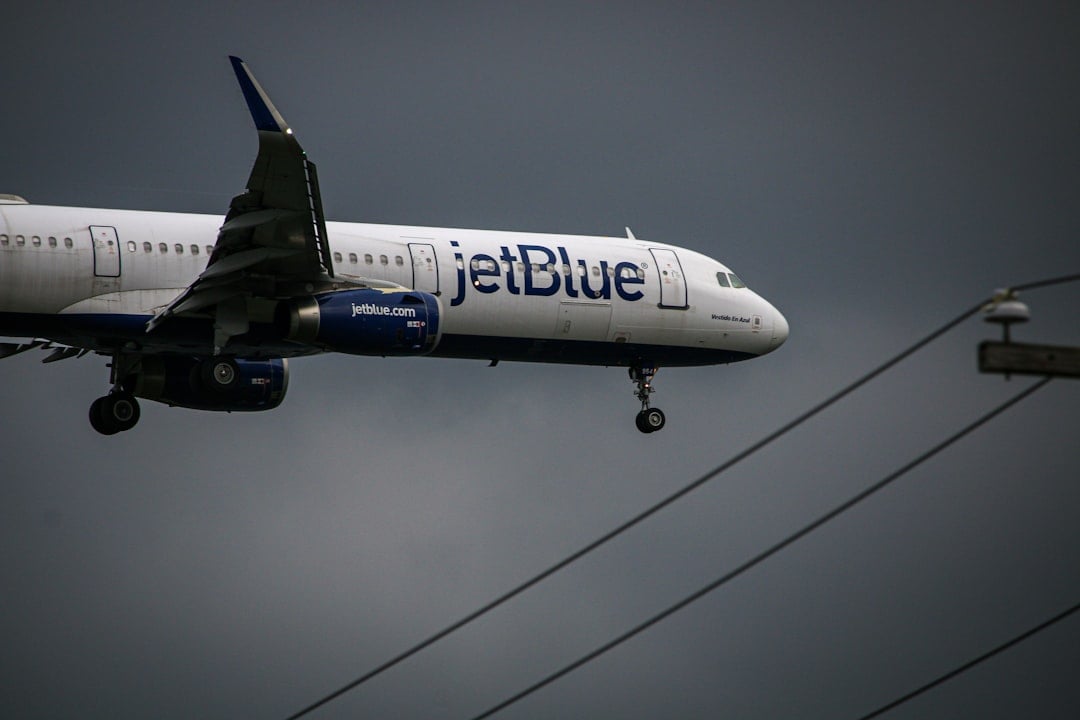
JetBlue’s network is heavily concentrated in the New York City–Boston corridor. That can mean great nonstop options in normal times. In a storm, it can mean fewer places to “hide” airplanes and crews.
Below is how JetBlue stacks up against the other big U.S. airlines during Fern, and what that means for your booking strategy for the rest of this week.
JetBlue vs. the “Big 3” in Winter Storm Fern: the quick comparison
Summary comparison (prose): JetBlue’s cancellation rate was substantially higher than several major competitors, producing higher odds of disrupted travel and fewer immediate rebooking options.
Key reported outcomes and what they mean for travelers:
- Cancellation rates: JetBlue reported roughly ~71% cancelled for the peak day, compared with roughly ~45% for American and ~30% for Delta; United also reported a large impact with 860+ cancellations in the same window.
- Practical impact: JetBlue’s higher percentage translates to fewer same-day alternatives and slower re-accommodation. American typically offers more same-day paths, Delta tends to recover steadier due to broader ops resources, and United can reroute passengers through multiple hubs.
- Network exposure: JetBlue is very concentrated around JFK and BOS, while other carriers have hub diversity (e.g., American with PHL/DCA links, Delta with DTW/ATL, United with ORD/IAD).
- Storm-time advantage vs. downside: JetBlue’s advantage is a strong nonstop map in normal operations; its downside in this storm is limited re-accommodation when core hubs are disrupted.
- Loyalty angle: Post-storm redemptions can appear on JetBlue, while other carriers may offer more partner award paths or reroute options via alliance partners.
JetBlue’s cancellation percentage is the headline. The traveler impact is the second-order effect: when an airline cancels that much at once, the real problem becomes where you get rebooked, and how many days your trip slips.
1) What triggered the disruption, and why it got ugly fast
Winter Storm Fern hit the Northeast with the ingredients airlines hate most: heavy snowfall, near-whiteout conditions around New York City, and a long duration that stretched into Sunday night. That combination turns “a bad day” into a multi-day reset.
JetBlue canceled roughly 568 to 570 flights on Sunday, January 25, 2026. That equated to over 70% of its schedule for the day. Many other airlines also canceled heavily across the U.S., with thousands of flights wiped out since Saturday.
The important part for travelers is what comes next. Even if Fern weakens, recovery can be slower than you’d expect.
Here’s why storm disruptions cascade:
- Aircraft end up out of position. A plane that sleeps in JFK can’t fly tomorrow’s first bank if it never arrived tonight.
- Crews time out. Pilots and flight attendants hit duty limits, then need legal rest.
- Airport ground stops and flow control stack up. Departures can’t leave if arrivals can’t land.
- Deicing becomes a choke point. Even when runways reopen, deicing pads and fluid supply limit throughput.
- Gate holds create a domino effect. One late inbound can block the next outbound for hours.
JetBlue warned of limited rebooking options, which is exactly what you see when an airline’s hubs are at the center of the storm footprint.
Meanwhile, cancellations weren’t limited to Sunday. Early indicators for Monday already looked rough, with a large share of JetBlue’s schedule proactively canceled and frigid conditions persisting.
⚠️ Heads Up: In storms like Fern, Monday often becomes “day two” of disruption, not a clean restart. If your trip is optional, shifting to midweek can save you hours.
2) JetBlue’s weak spot in this storm: JFK and Boston, plus international ripple effects
JetBlue is uniquely exposed when New York City and Boston go down at the same time. JFK and Boston Logan (BOS) are JetBlue’s anchors. When either hub is constrained, the pain spreads quickly. When both are constrained, the network can seize up.
What that means for connections
JetBlue sells plenty of point-to-point flying, but it also carries many connecting passengers through JFK and BOS. During Fern, a cancellation into JFK can trigger missed onward connections to Florida and the Caribbean and rolling cancellations over multiple days, because planes and crews never reposition.
Rebooking may push you onto a different airport or a much later date.
The international knock-on effect is real
International routes add two extra headaches in winter recovery. First, you may have fewer frequencies, so the “next flight” can be tomorrow or even later. Second, you may be dealing with passport and entry rules that don’t care about your storm delay.
JetBlue’s disruptions rippled internationally, including a cluster of cancellations affecting Kingston, Jamaica (Norman Manley International Airport, KIN) and JFK across multiple days. If you’re traveling on an island itinerary or a cruise connection, a one-day delay can snowball into a full trip miss.
- Keep your passport accessible, not buried in a checked bag.
- If you get rebooked via a different country, confirm transit document rules before you accept the routing.
- If you were using onward tickets on separate reservations, protect those confirmations early.
JetBlue’s performance also looked worse than several competitors on raw cancellation rate. American, Delta, Southwest, and United all canceled heavily, but JetBlue’s percentage was higher.
That doesn’t make your situation feel better at the gate. It does help set expectations for rebooking speed.
(You’ll see real-time flight status snapshots in the embedded flight-status element in this section.)
3) What to do right now: a decision tree that actually works
JetBlue’s travel alert lets you rebook online through January 31, 2026 using the “Manage Trips” flow on jetblue.com. Earlier action matters, because the best recovery inventory goes first.
Step 1: Treat “not canceled yet” as “not safe yet”
If your flight is today or tomorrow in the Northeast corridor, assume it’s at risk until it departs. Confirm status in the JetBlue app and on jetblue.com.
Also check the inbound aircraft, because that’s a strong clue about whether your flight can operate.
Step 2: If your flight is canceled, rebook before you call
In mass disruptions, self-service usually beats phone queues. Rebook options to consider:
- Move earlier in the day when airports are recovering. Later flights tend to inherit delays.
- Pick nonstop over a connection, even if it costs more. Each extra leg is another failure point.
- Consider alternate airports if you’re in the NYC area. JFK, LGA, EWR, and even ISP can behave very differently in storms.
- Shift to midweek if your travel is flexible. Wednesday and Thursday are often cleaner after a weekend storm.
Step 3: If your flight is delayed, decide how much delay you can afford
A long delay can still operate. A cancellation forces a full re-accommodation. Ask yourself:
- If I wait three hours and it cancels, will I lose the last rebooking seats?
- If I rebook now, am I locking in a worse itinerary than necessary?
Step 4: Document everything that costs you cash
Save screenshots of the cancellation notice, your rebooking screen, and receipts for essentials you had to buy because of the disruption. This is especially important if you later pursue reimbursement under the airline’s policies or via trip insurance benefits tied to your credit card.
(You’ll see a storm-recovery planning tip embedded in this section.)
Points and miles angle: don’t let the storm cost you elite progress
Weather cancellations can wreck status plans. If you were counting on this trip for qualification, save proof your flight was canceled and check earnings if you fly on another carrier.
If you’re chasing status, rebooking into a higher fare might improve earnings, but only if you can actually fly and the fare rules deliver the expected credit.
4) Don’t confuse storm cancellations with JetBlue’s separate route endings after March 11
JetBlue’s Winter Storm Fern cancellations are one story. JetBlue’s planned route endings are a different story, with different rules. For the route-ending announcements, this section leads into the interactive tool that summarizes those permanent changes, so no table is shown here.
JetBlue has also announced permanent route endings after March 11, 2026, including BOS–DFW, LGA–TPA, and JFK–TQO (Tulum). This is not a weather waiver situation. It’s a schedule change; the traveler playbook is different.
If you’re booked on one of these routes after March 11, you generally have two realistic options: rebook onto a new routing JetBlue offers, or request a refund if you’re eligible under JetBlue’s schedule-change policies.
In practice, that might mean shifting from JFK to another departure airport, or routing through a more reliable connecting point for leisure routes, such as Florida, depending on availability.
JetBlue described the rationale as a network move, not storm-related. An older operational disruption earlier in January is separate as well. Keep those timelines distinct when you speak to an agent.
(A compensation and refund rules explainer is embedded in this section. It summarizes eligibility and what to expect.)
5) Key dates to track, what “recovery” looks like, and how often to check
During a week like this, refreshing one cancellation screenshot can make you panic. Watch a few indicators that actually predict whether you’ll get out.
| Date | Why it matters |
|---|---|
| Jan 25, 2026 | Peak disruption day for JetBlue during Winter Storm Fern |
| Jan 31, 2026 | JetBlue’s online rebooking window tied to the travel alert |
| Mar 11, 2026 | Route endings take effect for BOS–DFW, LGA–TPA, JFK–TQO |
Metrics that signal recovery:
- Morning departure banks: If the first wave moves, the rest of the day has a chance.
- Inbound aircraft movement: Your flight is only as real as the plane assigned to it.
- Rolling cancellations: If the airline keeps canceling in chunks, staffing and equipment are still misplaced.
- Re-accommodation time: If the next available seat is days away, recovery is still constrained.
Where to monitor without getting bad information: JetBlue app and jetblue.com for official status and your rebooking options; airport operations alerts for ground stops and runway constraints; independent flight tracking sites for inbound aircraft visibility.
A good cadence is every few hours, then more frequently in the final six to eight hours pre-departure. Checking every five minutes won’t create seats.
(You’ll see a monitoring tip embedded in this section.)
Choose JetBlue vs. another airline this week: the practical scenarios
If you’re booking last-minute travel during the Fern recovery window, here’s the honest framing to pick which carrier to trust for your trip.
Choose JetBlue if…
- You can fly nonstop on a route JetBlue dominates, and you see the flight operating.
- You have flexibility to slide to midweek.
- Your trip is leisure, and a one-day shift won’t break your plans.
- You have points and see a rare redemption that’s still available after the storm.
Choose American if…
- You need more same-day routing choices, especially via multiple hubs.
- You’re positioned near an American-heavy airport and can take earlier flights.
- You have Oneworld status and want more rebooking pathways.
Choose Delta if…
- You prioritize operational consistency and you’re willing to pay more.
- You can route via Delta hubs that may be less constrained than NYC.
- You want a better chance at re-accommodation without a multi-day slip.
Choose United if…
- You can avoid Newark pinch points by routing via another hub.
- You need Star Alliance options for international repositioning.
- You’re comfortable with connections, because nonstops may be scarce.
No airline “wins” in a storm like this. The right choice is the one that gives you the best escape routes.
JetBlue can be a fantastic airline when the Northeast is calm, but Winter Storm Fern exposed the downside of a network that leans hard on JFK and Boston.
If you’re holding a JetBlue ticket this week, rebook through January 31, 2026, choose nonstop when you can, and aim for the earliest workable departure bank once your inbound aircraft is actually moving.