(GULF) — Wizz Air, flydubai, Air Arabia and Norwegian Air suspended or sharply disrupted Gulf routes on February 28, 2026, after US-Israel strikes on Iran triggered fast-moving airspace closures across parts of the region.
Passengers across Dubai and Abu Dhabi faced same-day cancellations, rolling delays and diversions as airlines adjusted to what they described as sudden airspace constraints tied to the escalating security situation.
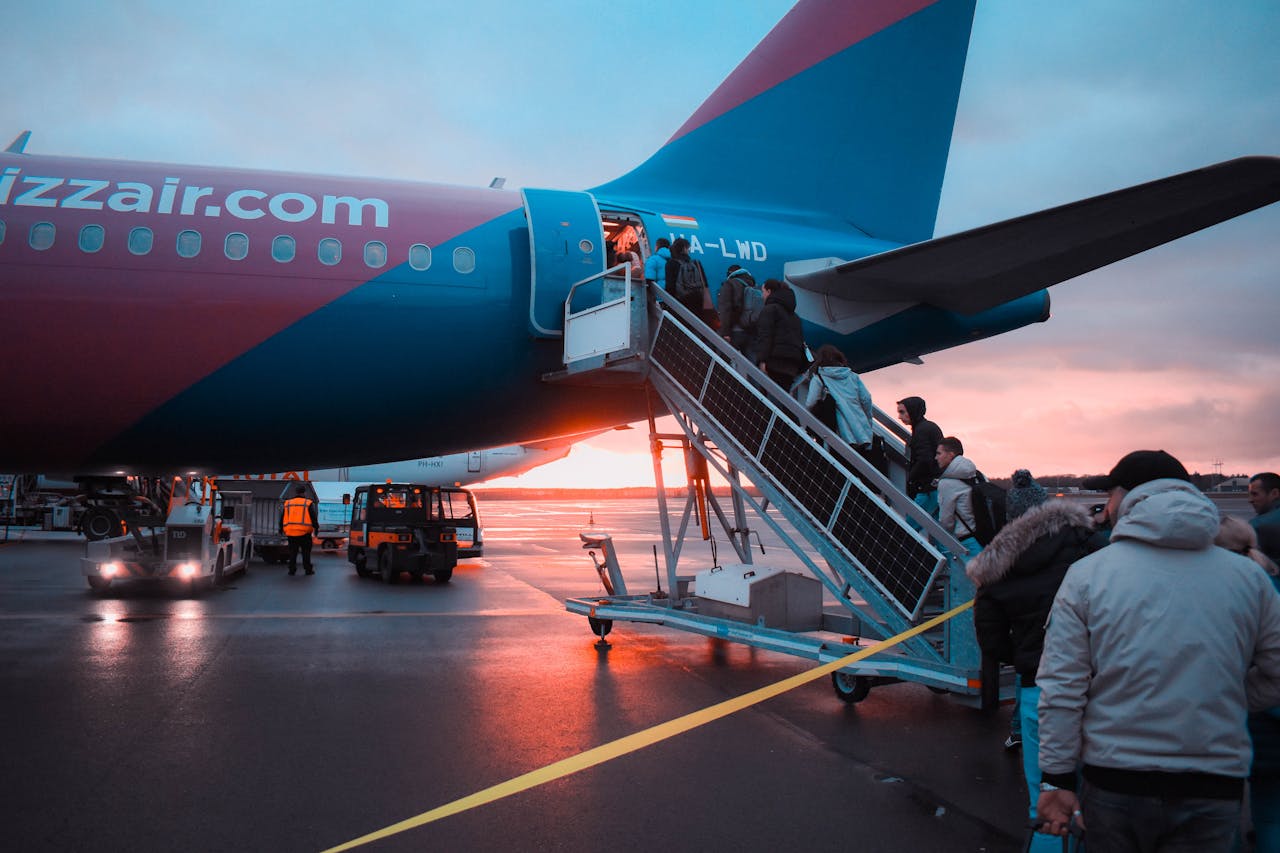
Wizz Air halted flights touching Israel, the United Arab Emirates and Jordan, while flydubai cancelled departures from Dubai and Air Arabia warned of network-wide disruption. Norwegian Air paused Dubai flying as carriers outside the region also recalculated schedules.
Those moves hit busy Gulf-Levant corridors that many travellers use to reach Israel and Jordan, or to connect onward via Dubai. The immediate effect included missed connections, longer routings and uneven rebooking options as seats filled.
Wizz Air suspended all flights to and from Israel, Dubai, Abu Dhabi, and Amman with immediate effect until March 7, 2026. The Hungarian low-cost carrier said it cited ongoing monitoring of developments with local and international authorities.
The suspension covered multiple city pairs that feed leisure and visiting-friends-and-relatives travel, and it left passengers reliant on re-accommodation options that depend on available seats and viable routings. Wizz Air’s time-bounded halt also signalled uncertainty, since carriers have extended similar pauses when conditions deteriorate.
flydubai cancelled all departures from Dubai and reported services affected on February 28 due to temporary closures of regional airspaces, including those over Iran and Iraq. The airline also listed additional cancellations to Iran, Iraq, Kuwait, Tel Aviv, and Damascus.
Dubai’s role as a connection point amplified the impact beyond travellers ending trips in the emirate. Same-day changes can strand passengers between flights, and day-by-day schedule shifts can cascade when airspace availability changes by the hour.
Air Arabia reported significant delays and cancellations across all routes amid UAE airspace restrictions and wider regional disruptions. The carrier’s network-wide warning reflected how a partial restriction can ripple into aircraft rotations and crew schedules even when a specific flight avoids closed airspace.
Diversions and extended flight times can compound disruption across a day’s flying, leaving aircraft and crews out of position for later departures. Airlines also face crew duty limits, which can force further cancellations after lengthy reroutes.
Norwegian Air suspended Dubai services until March 4, 2026, as part of broader adjustments to Middle East operations. The pause showed how carriers outside the region can still feel operational strain when routings and aircraft rotations shift across multiple sectors.
Travellers booked on suspended services often face re-accommodation onto later flights, alternative airports, or delayed restarts when aircraft and crews become available again. The pace of recovery can vary sharply by airline and by day, depending on whether airspace constraints loosen or expand.
Airlines linked the sudden schedule changes to airspace closures and partial restrictions that forced reroutes and reduced capacity on surviving corridors. The disruptions followed UAE’s partial and temporary airspace closure, alongside full shutdowns in Iran, Iraq, Kuwait, Bahrain, Qatar, and Israel.
With key segments unavailable, airlines diverted flights over Saudi Arabia and halted traffic patterns that normally cross Iran and Iraq. Flightradar24 showed the shift in traffic patterns from around 6 AM GMT on February 28, underscoring how quickly dispatchers had to rewrite flight plans.
Those reroutes can add flight time, tighten aircraft utilization and complicate turnarounds at airports already coping with irregular operations. A longer sector also raises the risk that a flight lands late enough to knock it out of its next scheduled departure slot.
Carriers said they expect disruption for at least 24-48 hours minimum, with some extensions as the situation evolves. Limited capacity on remaining routings can mean multi-day waits for alternatives, even when airlines offer rebooking, alternative routes, or refunds.
The scale of cuts extended beyond budget operators. Qatar Airways suspended most Iran flights until June 30, 2026, while Lufthansa suspended Dubai flights February 28-29 and suspended Tel Aviv, Beirut, Oman until March 7.
Even when a carrier operates some flights, the practical travel experience can still involve uneven recovery across the network. Rebooking queues build when multiple airlines seek the same remaining seats, and the knock-on effects can persist after the first cancellations end.
For passengers, the immediate choices typically narrow to waiting for re-accommodation, accepting rerouted itineraries that take longer, or pursuing refunds where offered. Airlines continued to frame decisions around safety-driven operational requirements tied to airspace accessibility.
Resumption depended on de-escalation and airspace reopening decisions, with airlines watching for changes that could allow direct routings to resume. If tensions persist, carriers have warned of longer reroutings, higher fuel burn, and broader impacts on Europe–Asia connectivity as global traffic shifts around closed corridors.
The abrupt suspensions by Wizz Air, flydubai, Air Arabia and Norwegian added to a wider scramble by airlines to keep aircraft moving while avoiding restricted skies. As long as closures and partial restrictions remain in place, travellers can expect rapid schedule revisions and uneven availability across the region’s air links.
Wizz Air, Flydubai, Air Arabia, Norwegian Suspend Gulf Routes Amid Pressure
Airlines including Wizz Air and flydubai suspended Gulf operations on February 28, 2026, due to sudden airspace closures following regional strikes. The disruptions have grounded flights across the UAE, Israel, and Jordan, forcing massive reroutes and cancellations. With key corridors over Iran and Iraq closed, carriers are experiencing cascading delays, impacting global connectivity and leaving passengers facing significant rebooking challenges through early March.