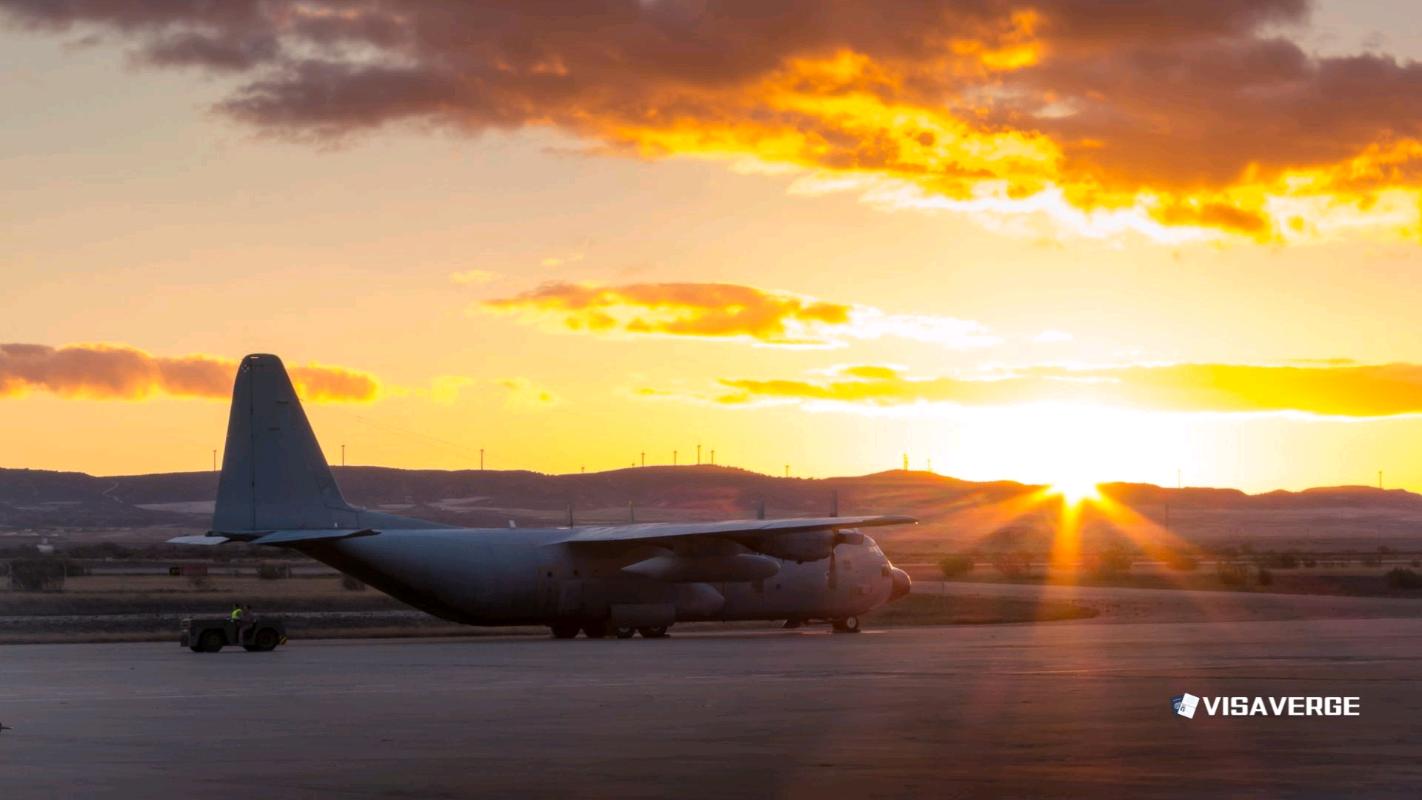
(CARACAS, VENEZUELA) Venezuela is continuing to accept U.S. deportation flights even as tensions spike over control of Venezuelan airspace and stepped-up American military operations in the region, creating a sharp contrast between hostile public statements and quiet cooperation on migration. After negotiations between the two governments, more than 13,000 Venezuelans have been returned this year on dozens of chartered flights from the United States 🇺🇸 to Venezuela 🇻🇪, with the latest plane landing late Friday in Caracas, according to flight-tracking data cited in recent reports.
The flights are arriving roughly twice a month, forming a steady pattern of deportation even as relations between Washington and Caracas grow more strained. For Venezuelans on board, the flights mark the end of often long and dangerous journeys north and the start of a new period of uncertainty back home. For both governments, the continued operation of these chartered planes has become a rare area of ongoing contact maintained in the middle of widening political and military disputes.
The sharpest new point of conflict came at the end of November. On November 29, 2025, President Trump warned airlines and pilots to treat all Venezuelan airspace as fully closed. The next day, on November 30, 2025, he went further, posting that the airspace “above and surrounding” Venezuela should be considered “closed in its entirety.” His language signaled that, from the U.S. side, any civilian or commercial use of the skies in and around the country should be viewed as unsafe or off-limits, at least as far as American carriers and crews are concerned.
Trump’s statements are closely tied to Operation Southern Spear, an intensified U.S. counterdrug operation that has expanded since early September 2025. Under this operation, U.S. forces have carried out strikes that, according to official reporting, have destroyed more than 20 small boats and caused the deaths of over 83 individuals linked to maritime drug movements. The push has focused on routes in the wider region used by traffickers, but the hardening tone toward Venezuelan airspace has made the country a central point of friction.
In Caracas, the government has answered with fierce public rejection. Venezuelan officials have described Trump’s claim that the country’s skies are effectively closed by U.S. order as a direct attack on national control. The government called the declaration a “colonial threat” aimed at undermining Venezuela’s “territorial integrity, aeronautical security and full sovereignty.” In a formal statement, the Foreign Ministry went further, describing the U.S. position on Venezuelan airspace as “hostile, unilateral and arbitrary acts.” Those words underline how seriously Venezuelan authorities say they view any suggestion that outside powers can decide who flies over their territory.
Yet while the rhetoric grows hotter, the landing of deportation flights in Caracas shows that, in practice, at least one channel between the two countries remains open. Despite denouncing the U.S. stance on airspace and military activity, the Venezuelan government continues to receive the biweekly deportation flights arranged after earlier talks. That suggests both sides see a shared interest in keeping this specific cooperation going, even as they trade accusations over security operations and sovereignty. According to analysis by VisaVerge.com, such mixed signals are common when migration control and broader geopolitical tensions collide, because both governments face domestic pressure over border management.
For Venezuelans being returned on these planes, the politics playing out above them can feel very distant from the immediate reality of arrival. Many have spent months on the move through several countries before reaching the United States, where they then ended up in immigration detention and finally on a chartered flight home. Their deportation may be framed as part of a U.S. enforcement strategy and a Venezuelan diplomatic balancing act, but for the people on board, it means stepping off the aircraft into a country still facing deep economic and social strain.
U.S. officials have presented the continuation of these flights as proof that enforcement tools remain in place, even as broader disputes with Caracas deepen. The message to would-be migrants is that, despite political drama over airspace and military operations, removal remains a real risk for those who reach the United States without permission. General information on U.S. removal and return procedures is available from the U.S. Department of Homeland Security, which oversees immigration enforcement. By highlighting the number of deportations so far this year, U.S. authorities aim to show that cooperation with Venezuela still allows chartered planes to land and take off as scheduled.
Venezuelan officials, for their part, have tried to walk a careful line between standing up to Washington in public and managing the practical consequences of mass migration in private. Accepting thousands of returned citizens helps show that the government is not completely cut off from the United States, even while it condemns what it calls foreign interference in Venezuelan airspace and territory. The description of Trump’s comments as a “colonial threat” is meant not only for foreign diplomats, but also for a domestic audience that has lived through years of confrontation with the United States and may expect a strong reply.
The result is an unusual picture: airspace that one side says is “closed in its entirety,” a government on the other side that calls such talk hostile and colonial, and yet a steady flow of deportation flights continuing to land in the capital. Diplomats and analysts say this kind of split is not rare when two countries clash over security and sovereignty while also sharing responsibility for large cross-border movements of people. In this case, the same skies that are at the center of verbal battles remain the route for planes carrying Venezuelan nationals back home, twice a month, under an agreement neither side seems ready to abandon, even as their words grow sharper.
Venezuela has kept accepting biweekly chartered deportation flights from the United States despite escalating disputes over airspace and intensified U.S. counterdrug operations. More than 13,000 Venezuelans have been returned this year, showing practical cooperation amid hostile rhetoric after U.S. warnings to treat Venezuelan airspace as closed. Caracas publicly condemns the U.S. stance as an affront to sovereignty, while both governments maintain the repatriation channel to manage migration and reduce humanitarian limbo for returnees.
Live Government Data
State Dept • CBPBusiest Border Crossings
- Brownsville 180 min
- San Ysidro 165 min
- Calexico 160 min