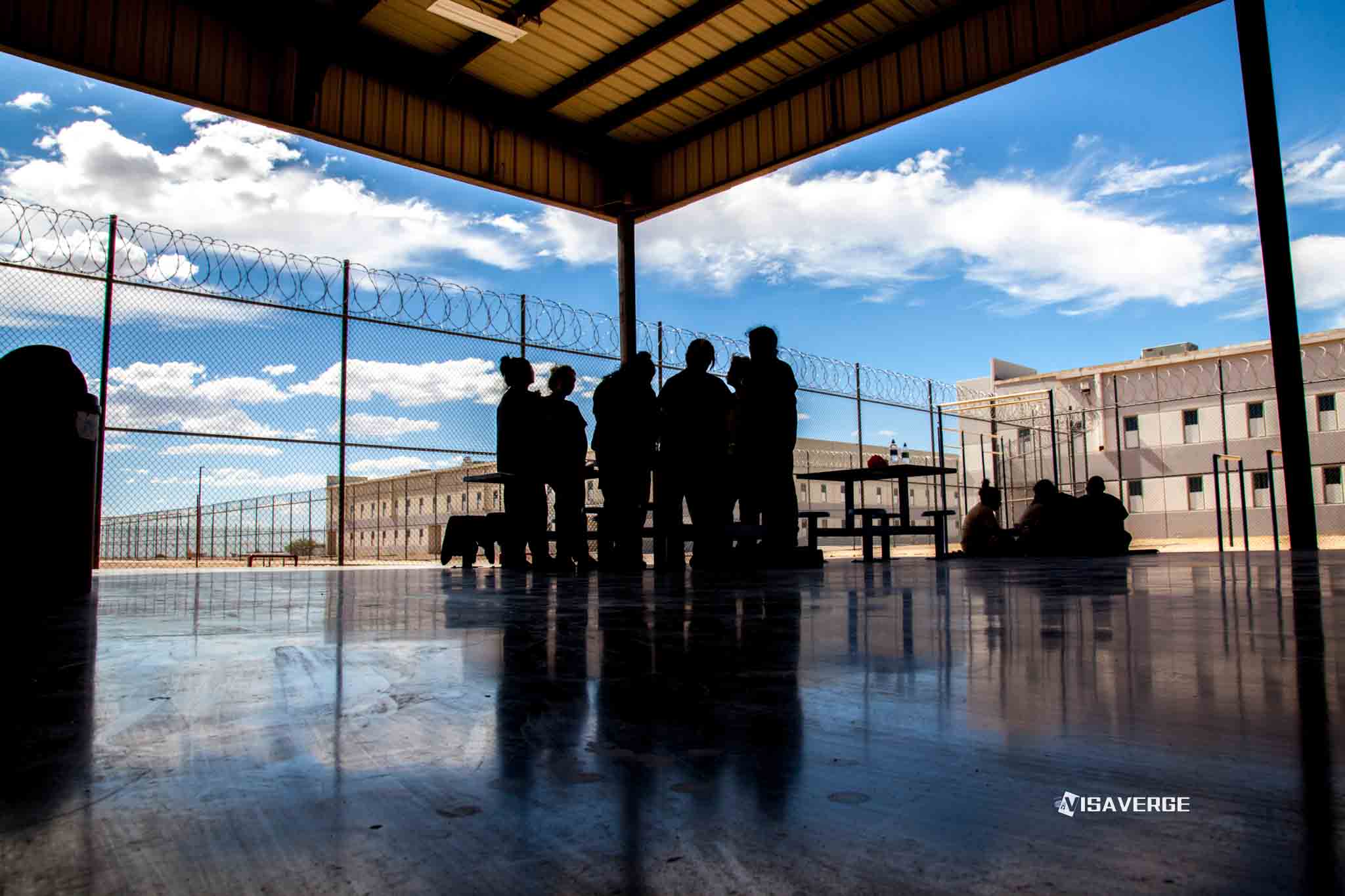
- The U.S. government is overhauling the H-2A program to address agricultural labor shortages and rising costs.
- New policies aim to save farmers billions by changing wage calculations and allowing housing deductions.
- Federal agencies are digitizing the application process to streamline worker entry amid record immigration enforcement.
(UNITED STATES) — The U.S. Department of Agriculture moved on Monday to expand and overhaul the H-2A temporary agricultural worker program with the Department of Homeland Security and the Department of Labor, as farmers grapple with labor shortages alongside an immigration crackdown.
USDA Secretary Brooke Rollins framed the shift as a cost-cutting push to help growers keep fields staffed while agencies tighten enforcement against undocumented workers.

“The Trump Administration will continue to stand with America’s farmers as the farm economy recovers from years of neglect. [These H-2A changes] will save our farmers over $2 billion in labor costs alone every single year. We’re shortening the time to make it more efficient, hopefully making it much less expensive to all of you and your costs,” Rollins said on January 13, 2026.
Agency officials have presented the policy package as a modernization effort that changes how wages are calculated, opens the door to new paycheck deductions for housing in some cases, and shifts core processing toward electronic systems.
The government has tied the timing to workforce disruption after stepped-up enforcement reduced the pool of unauthorized labor that farms and food processors have long relied on, while arguing that the food supply chain cannot absorb prolonged shortages.
A Department of Labor regulatory filing described the enforcement effects in stark terms, citing a “near total cessation of the inflow of illegal aliens,” and warning it threatened “the stability of domestic food production and prices for US consumers.”
USDA, DHS and DOL each control different parts of the system, and officials have described the rollout as coordinated even as the levers remain split across agencies.
DOL sets labor certification rules and key wage requirements that employers must meet before petitions move forward, while DHS—through USCIS—processes petitions and manages the entry pipeline for approved workers.
Labor Secretary Lori Chavez-DeRemer, who announced a new Office of Immigration Policy in June 2025, described a push to centralize processing in one digital channel.
“We’re going to see that change come across fairly rapidly, because that’s the problem, and they want a solution, and they wanted it yesterday. We’re going to do one [portal] and it’s going to be the Department of Labor,” Chavez-DeRemer said.
DHS has paired the labor-program changes with public messaging that credits enforcement with large departures of undocumented immigrants and savings for the agency, presenting the moves as part of a broader reorientation of immigration operations.
“Over the last 13 months, nearly 3 million illegal aliens have left the U.S. because of the Trump Administration’s crackdown on illegal immigration. Meanwhile, we have saved taxpayers more than $13.2 billion here at DHS,” DHS Secretary Kristi Noem said on February 24, 2026.
Noem was removed from her post on March 5, 2026, and Senator Markwayne Mullin has been nominated as her replacement.
One major shift affects the wage-setting methodology that underpins required pay offers under H-2A, a change that can ripple through what employers must offer for specific jobs and what workers take home.
DOL replaced the Farm Labor Survey with the Occupational Employment and Wage Statistics to calculate the Adverse Effect Wage Rate, a move the government says better fits its goals for the program while lowering employer labor costs in many places.
Another change allows H-2A employers, for the first time in the program’s history, to deduct housing costs from worker paychecks, as long as the deductions do not push pay below the state minimum wage.
Supporters of the overhaul have pointed to a need to stabilize staffing for time-sensitive planting and harvest work, while critics have argued that lowering required wages and allowing deductions shifts financial risk onto workers.
United Farm Workers, a labor union, filed a lawsuit on November 21, 2025, arguing the “expansion” rests on the exploitation of foreign workers and the lowering of American labor standards.
Alongside wage and deduction policy, the administration has promoted a digital modernization plan that changes how employers submit and track cases across agencies.
USCIS and DOL launched a “one-stop shop” portal and introduced `Form I-129H2A` for electronic filing, allowing DHS to begin processing petitions even before DOL finalizes labor certifications.
Officials have also pointed to changes outside agriculture when describing the labor-market pressures, including additional H-2B visas aimed at non-agricultural industries such as meatpacking and seafood processing.
DHS and DOL jointly announced extra H-2B visas for FY 2026 on January 30, 2026, describing the action as part of a broader effort to respond to labor shortages.
The administration has used executive action and H.R. 1, the “One Big Beautiful Bill Act,” signed July 4, 2025, to reshape enforcement and labor-market conditions in ways that have increased reliance on formal visa channels.
Policy advocates and industry groups have argued that tighter enforcement changes the workforce available to growers, increasing pressure to recruit through H-2A even as employers adjust to new wage calculations and the possibility of deductions.
DOL has projected that lower labor costs could encourage employers to hire more H-2A workers as a replacement for undocumented workers who leave or avoid farm jobs amid enforcement operations such as “Operation Return to Sender.”
For farmers, the government has emphasized lower payroll costs and shorter, more predictable processing timelines, arguing that reducing uncertainty can help avoid crop losses and supply interruptions.
For H-2A workers, the changes raise questions about take-home pay because wage methodology shifts and new housing deductions can reduce earnings depending on the state minimum wage, the contract terms, and employer compliance.
For undocumented workers, the administration has pushed an enforcement-first message backed by expanded resources, while promoting H-2A as the lawful channel employers should use to fill jobs that remain.
Readers can track updates on filing and process changes on the USCIS H-2A page, while USDA announcements and program framing appear in USDA press releases.
The wage-rule language and effective dates appear in the Federal Register entry for the H-2A AEWR rule, and DHS posts enforcement and policy announcements through its newsroom.
“We’re shortening the time to make it more efficient, hopefully making it much less expensive to all of you and your costs,” Rollins said.