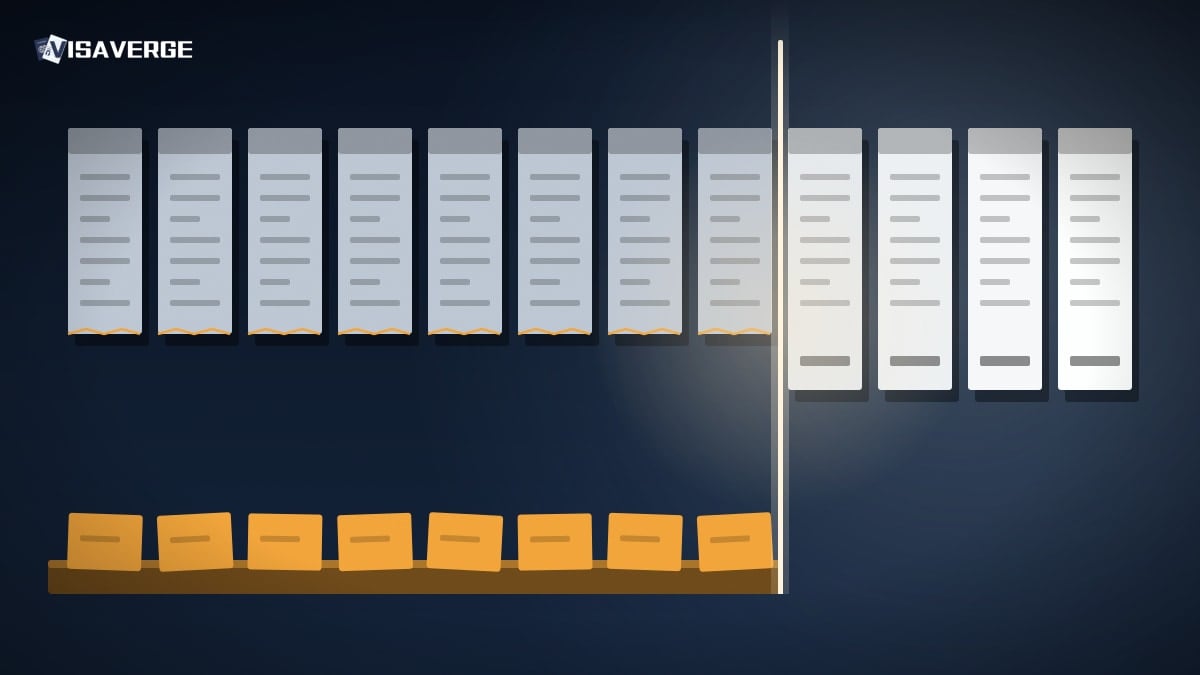
(INDIA) U.S. President Donald Trump’s decision to impose a new $100,000 H-1B fee on fresh petitions filed after September 21, 2025 is pushing American companies to rethink how and where they build teams. The steep one-time charge—far above the historic $2,000–$5,000 range—applies only to new H-1B filings, not renewals or amendments. As firms recalculate costs, many are speeding up plans to expand work at Global Capability Centres (GCCs) in India, shifting research, product engineering, and AI programs to Bengaluru, Hyderabad, Pune, and a growing list of Tier‑2 and Tier‑3 cities.
The move is already reshaping global talent flow, with companies weighing whether to scale up locally in India rather than bring talent to the United States ?? under the new price tag.

Why companies are pivoting to India
Corporate leaders say the calculus is straightforward: the extra $100,000 per new H-1B multiplies quickly across teams, tipping budgets from U.S. hiring toward “build in India” strategies.
- According to analysis by VisaVerge.com, multinationals that once treated India-based work as secondary now see GCCs as the primary platform for high-skill delivery.
- India hosts roughly 1,700 GCCs—more than half the global total—covering R&D, analytics, AI, cybersecurity, and product design.
- Executives in financial services, medtech, and enterprise software say they can add headcount and invest in advanced labs in India for less than the cost of securing a handful of new visas in the U.S.
Companies with heavy U.S. federal contracting exposure, or those needing niche skills (semiconductor design, bioinformatics), are weighing more drastic steps: consolidating entire functions in India rather than distributing tasks across borders.
Corporate responses and workforce models
Employers describe a range of strategic responses becoming board-level priorities:
- Accelerate India expansion
- Build larger, multi-disciplinary GCCs that handle end-to-end product ownership (not just support).
- Adopt remote-first models
- Keep key engineers in India, with cross-border teams collaborating through secure systems and overlapping work hours.
- Redirect talent flows
- Encourage candidates to consider Canada ?? or Europe, where immigration policy may be more predictable and costs lower.
- Narrow U.S. hiring
- Reserve U.S. headcount for on-site or client-facing roles while placing core technical teams in India.
Some firms are moving program leadership and intellectual property management to India to reduce visa risk. Others map hybrid plans blending India-based delivery with limited U.S. roles for client interaction. Either way, the H-1B fee is forcing a reset of workforce models and project timelines across multiple quarters.
Winners and losers
- Startups and mid-sized U.S. firms appear most at risk: a handful of H-1B hires once filled scarce roles; now the new cost floor can eclipse early-stage budgets.
- Founders report pausing U.S. hiring or redirecting work to partners and GCCs in India.
- Large multinationals are ramping up internal centres to manage security, compliance, and quality in-house.
- Several are scouting beyond usual metros, citing lower real estate costs, strong local engineering programs, and favorable state policies.
There are potential gains for domestic professionals—especially mid-level and senior workers—who could see more openings as firms shift roles away from new visa hires. But firms warn that gaps in specialized skills could delay product launches or expansion into new markets.
Policy specifics and timeline
- The White House clarified the fee applies only to new petitions filed after 12:01 a.m. ET on September 21, 2025.
- Existing H-1B workers, extensions, and amendments are not affected.
- Officials indicated the fee will run for 12 months unless extended.
- Commerce Secretary Howard Lutnick has hinted at further changes before early 2026, possibly affecting the H-1B lottery and eligibility standards.
- Senators on Capitol Hill have revived proposals to tighten H-1B and L-1 rules; critics say the fee will suppress hiring and speed offshoring of intellectual capital.
For official guidance on program rules and filing procedures, employers and counsel should refer to:
- USCIS: H‑1B Specialty Occupations
- USCIS Form I‑129 (current edition and instructions)
- Department of Labor’s ETA‑9035 Labor Condition Application
These steps (certified LCA, Form I-129) remain the core process, though the new fee dramatically shifts cost planning.
Impact on applicants and career paths
The fee shock is pushing firms to re-evaluate location strategies for R&D, product operations, and data-heavy functions. Senior managers describe four main shifts:
- Accelerate India expansion to own critical product and platform work.
- Adopt remote-first or distributed models anchored in India.
- Redirect talent flows to Canada and Europe.
- Narrow U.S. hiring to client-facing or on-site roles.
New graduates and mid-level foreign professionals face the hardest choices. Those planning to file H-1B in 2026 must now budget for far higher employer costs, which may reduce the number of offers extended by U.S. firms.
Recruiters say candidates still prize U.S. market experience, but are recalculating whether returns justify the uncertainties. Many are:
- Taking India-based roles with global scope at GCCs,
- Exploring pathways in Canada and Germany with clearer timelines and lower fees,
- Considering cross-border roles that start in India with potential rotations later.
India’s gain: deeper mandates and more senior roles
GCC leaders in India report stronger mandates to own critical workstreams: platform roadmaps, AI model training, data governance, and zero-trust security. The result:
- More senior roles created in India.
- Deeper collaboration across time zones.
- Tier‑2 and Tier‑3 cities (Coimbatore, Indore, Bhubaneswar) competing with metros for investment.
State incentives and university partnerships are becoming key tie‑breakers as companies select new sites.
Compliance, finance, and HR adjustments
While filing steps remain the same—secure an LCA, prepare Form I‑129, and assemble supporting documents—the pricing change forces new internal reviews.
- Finance wants strict headcount controls tied to cross-border hiring.
- Talent teams are building parallel pipelines for India, Canada, and Europe.
- Some companies plan “just-in-case” filings with lower numbers, then backfill roles in India when H-1B availability drops or the fee proves too steep.
Employers are stress-testing two scenarios:
- Fee expires as scheduled after 12 months.
- Fee continues or increases beyond the initial period.
In both scenarios, India remains central to delivery strategies.
Advice for applicants and employers
Important: Rely on official postings and ensure petitions use the correct Form I‑129 edition and a certified ETA‑9035 LCA.
Career advisers suggest applicants:
- Seek India-based roles with global mandates at GCCs to maintain momentum if U.S. petitions are delayed.
- Consider cross-border teams that start in India with potential rotations later.
- Track official updates for any changes to lottery order or wage rules affecting 2026 eligibility.
Immigration lawyers advise employers and workers to consult official resources, including USCIS: H‑1B Specialty Occupations, and to verify the correct ETA‑9035 Labor Condition Application when filing.
Key takeaways
- The new $100,000 H-1B fee is a one-time charge for new petitions filed after September 21, 2025 and excludes renewals and amendments.
- The fee is catalyzing a strategic shift toward India-based GCCs for high-value engineering, AI, and R&D work.
- Startups and mid-sized firms are most vulnerable; large multinationals are expanding India centres and scouting beyond traditional metros.
- The U.S. could see gains for domestic mid- and senior-level professionals, but risks losing early-stage foreign talent and onshore R&D activity.
- Employers should prepare dual contingency plans and monitor policy changes closely.
Business groups will press for clarity on duration, exemptions, and transitions. For now, the fee has already sped up a strategic pivot: more high-value projects starting in India, more senior roles based in Indian cities, and a tighter U.S. hiring funnel that may leave early-career foreign professionals waiting for another policy window.
This Article in a Nutshell
The Biden administration’s policy (effective 12:01 a.m. ET, September 21, 2025) imposes a one-time $100,000 fee on new H-1B petitions, excluding renewals and amendments. The steep charge is prompting companies to shift hiring and strategic work to India’s Global Capability Centres (GCCs) in Bengaluru, Hyderabad, Pune and an expanding set of Tier‑2 and Tier‑3 cities. Startups and mid-sized firms face acute budget pressure, while large multinationals expand local R&D, AI, and product teams. Officials say the fee runs for 12 months unless extended; additional reforms before 2026 could affect the lottery and eligibility. Employers should follow USCIS guidance, secure certified LCAs and use Form I-129 correctly while preparing contingency plans that include India, Canada, and Europe.