Key Takeaways
• President Trump aimed to deport 1 million annually, but only about 71,000 deportations occurred by July 2025.
• Approval for Trump’s immigration policies dropped from 54% to 38% amid family separations and labor shortages.
• Legal challenges target executive orders on asylum, birthright citizenship, and expanded ICE raids in sanctuary cities.
A sharp drop in immigration approval for President Trump has followed his push for mass deportation in the United States ??, according to new data and expert analysis from July 2025. The administration’s aggressive enforcement, sweeping executive orders, and high-profile raids have sparked legal battles, economic disruption, and growing public backlash, reshaping the national debate over immigration.
Trump’s Mass deportation plan and Its Execution
Free toolUSCIS Receipt Number Decoder
In early 2025, President Trump set an ambitious goal: deport 1 million people per year. This target, confirmed by Department of Homeland Security (DHS) and Immigration and Customs Enforcement (ICE) budget requests, marked the most aggressive removal plan in modern U.S. history. The House Judiciary Committee’s 2025 budget bill specifically set aside funds for these removals, signaling a clear policy shift.
Despite these plans, the actual number of deportations has fallen far short. As of July 2025, ICE data and independent reviews estimate that about 71,000 people have been deported in fiscal 2025, with roughly 67,000 held in detention. Projections suggest the total may reach 300,000 deportations by year’s end—well below the administration’s 1 million target and less than half the 685,000 deportations recorded in fiscal 2024 under President Biden.
Some administration officials have claimed higher numbers, up to 140,000 by April 2025, but outside experts and watchdog groups say these figures lack transparency and do not match available data. According to analysis by VisaVerge.com, the administration’s own numbers are disputed and may overstate the true scale of removals.
Deportation Numbers Under Trump vs Biden
VisaVerge.com
1,000,000 per year
71,000
300,000
685,000
Public Opinion Turns Against Trump’s Immigration Approach
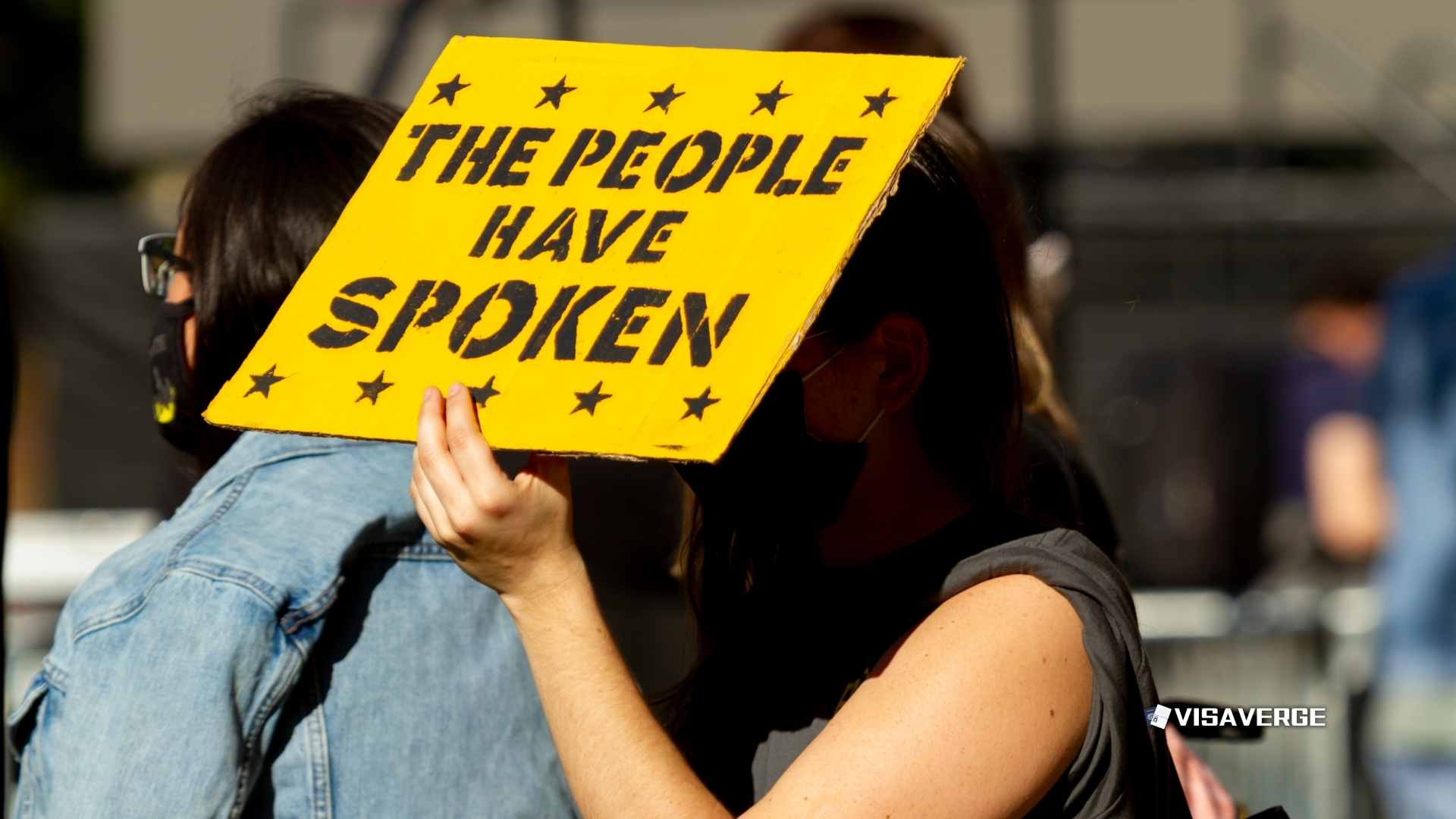
When President Trump announced his mass deportation plan in January 2025, many Americans supported stricter enforcement. But as the year has progressed, public approval for Trump’s immigration policies has plummeted. Multiple polls now show that most Americans believe the deportations have gone “too far.”
This shift in opinion is tied to several high-profile events:
- Family separations have increased, with many U.S.-citizen children losing parents or relatives to removal.
- Raids in sensitive locations—including schools, hospitals, and places of worship—have sparked outrage and fear in immigrant communities.
- Labor shortages in key industries, such as agriculture, construction, and healthcare, have led to higher prices and service disruptions.
One recent poll found that only 38% of Americans now approve of Trump’s immigration enforcement, down from 54% in January. “The public is seeing the real-life impact of these policies, and many are uncomfortable with the scale and methods being used,” said a spokesperson for the Migration Policy Institute.
Key Policy Changes and How They Affect Immigrants
President Trump’s approach has relied on a series of executive orders and administrative changes, many of which have faced immediate legal and political challenges.
Major Actions Include:
Key Events in Trump’s 2025 Immigration Policy
VisaVerge.com
Trump signs orders ending family reunification efforts and sets new enforcement priorities
Trump announces mass deportation goal of 1 million per year
Administration claims up to 140,000 deportations (disputed)
Estimated 71,000 deportations; projections suggest 300,000 by year-end
- Rescinding Biden-era protections: On January 20, 2025, Trump signed orders that ended family reunification efforts and set new priorities for enforcement.
- Border closure: The administration issued a proclamation to “repel” undocumented migrants at the southern border, barring those who enter without inspection from seeking any immigration benefits, including asylum. Asylum seekers are now being returned to Mexico, raising concerns about possible violations of international law.
- Expanded ICE raids: ICE has been authorized to conduct raids in sanctuary cities and sensitive locations, reversing previous restrictions. Hundreds have been detained since January.
- Use of military and old laws: The administration has invoked wartime statutes and deployed military resources to enforce immigration laws at a scale not seen before.
Legal Immigration and Humanitarian Pathways:
- Refugee admissions suspended: The U.S. Refugee Admissions Program is paused, and executive orders aimed at rebuilding refugee resettlement have been revoked.
- Work visas and green cards restricted: The administration is refusing to renew many temporary work visas, increasing scrutiny of green card holders and international students, and proposing to restrict birthright citizenship.
- “Gold Card” proposal: Trump has suggested a new permanent residency option for wealthy investors (requiring $5 million or more), but this has not been formally introduced in Congress.
Economic and Social Impacts
The effects of these policies are being felt across the country:
- Labor shortages: Fear of raids and deportations has led many farm workers and other immigrants to stay home, causing disruptions in agriculture, construction, and healthcare. Nursing homes, in particular, report difficulty finding enough staff.
- Negative net migration: For the first time in decades, the United States ?? is expected to see more people leaving than entering, due to both deportations and voluntary departures.
- Impact on families: Many mixed-status families—where some members are U.S. citizens and others are not—are being torn apart. Children are losing parents, and entire households face uncertainty and hardship.
Legal and Political Pushback
Trump’s immigration approval has also dropped because of strong legal and political resistance. Several executive orders, including those restricting asylum and revoking birthright citizenship, are being challenged in federal courts. Some have been temporarily blocked or put on hold.
Key groups leading the opposition include:
- Democratic-led states: Many states are suing the federal government to stop or limit enforcement actions.
- Advocacy organizations: Groups like the ACLU, National Immigration Law Center, and local bar associations are providing legal aid and challenging policies in court.
- Legal scholars: Experts warn that the administration’s actions may violate constitutional protections and international agreements.
A spokesperson for the ACLU stated, “We are seeing due process protections eroded, and many people are being deported without a fair hearing. This is not what the law requires.”
Step-by-Step Process for Those Affected
For individuals caught up in these enforcement actions, the process can be swift and confusing:
- Detention and Removal
- ICE conducts raids and detains people suspected of being in the country without permission.
- Detainees are processed for removal, often with little or no access to legal help, especially under new fast-track procedures.
- Some are deported directly; others are held in detention centers. There have even been attempts to use facilities like Guantanamo Bay, though these have faced legal and practical problems.
- Legal Challenges
- People may try to fight removal in immigration court, but access is increasingly limited, and many forms of relief have been cut back or eliminated.
- Asylum seekers who entered after January 20, 2025, are mostly barred from applying.
- Family Separation
- The end of the family reunification task force means many separated families may not be brought back together under current policy.
Expert Perspectives and Broader Implications
Economic experts predict that the labor shortages caused by mass deportation will lead to job losses and a shrinking economy, affecting both immigrants and U.S.-born workers. “We’re already seeing crops go unpicked and construction projects delayed,” said an economist at the Brookings Institution.
Legal experts warn of a possible constitutional crisis. “When the executive branch ignores court orders or limits due process, it threatens the rule of law,” said a law professor at Yale.
Advocacy groups highlight the human cost. “We’re seeing more mental health problems, more children in foster care, and a loss of trust in government,” said a spokesperson for the National Immigration Law Center.
Official Statements and Stakeholder Responses
President Trump continues to defend his approach, saying, “We are restoring law and order and protecting American jobs.” DHS and ICE leaders have replaced key officials to speed up enforcement, with new directives focused on removals and detentions.
Secretary of Agriculture Brooke Rollins has suggested possible reforms to allow some farmworkers to stay, but no formal proposals have been made.
Legal and Advocacy Resources
For those affected or seeking more information, several resources are available:
- U.S. Citizenship and Immigration Services (USCIS): For updates on policy changes and individual case status, visit the official USCIS website.
- U.S. Immigration and Customs Enforcement (ICE): For enforcement actions and detainee information, see the official ICE website.
- Legal Aid Organizations:
- American Civil Liberties Union (ACLU)
- National Immigration Law Center (NILC)
- Local bar associations and immigrant advocacy groups
What Comes Next?
The future of Trump’s mass deportation plan remains uncertain. Many executive actions are under court review, and further injunctions or reversals are possible in the coming months. While the administration has hinted at possible legal status for some farmworkers, no concrete proposals have been advanced as of July 2025.
Experts expect continued declines in net migration, with long-term consequences for the U.S. economy and population trends. The debate over immigration approval and mass deportation is likely to remain a central issue in American politics.
Practical Guidance for Immigrants and Families
If you or someone you know may be affected by these policies:
- Stay informed: Check the USCIS website regularly for updates on policy changes.
- Seek legal help: Contact trusted legal aid organizations, such as the ACLU or NILC, for advice and representation.
- Know your rights: Even under new enforcement rules, everyone has certain rights. Learn about your rights during an ICE encounter and keep important documents in a safe place.
- Prepare a family plan: Mixed-status families should have a plan in case of detention or deportation, including emergency contacts and care arrangements for children.
Conclusion
President Trump’s mass deportation efforts have led to a dramatic drop in immigration approval, widespread legal and political resistance, and significant economic and humanitarian consequences. The administration’s aggressive enforcement is changing U.S. immigration policy, but is falling short of its stated deportation targets and is likely to face more legal and political challenges in the months ahead.
As reported by VisaVerge.com, the situation remains fluid, and those affected should stay informed, seek legal help, and prepare for possible changes. The debate over immigration approval and mass deportation will continue to shape the lives of millions in the United States ??.
Learn Today
Deportation → The formal removal of a non-citizen from the United States for violating immigration laws.
Executive Order → A directive issued by the President to manage operations of the federal government or enforce policies.
ICE → Immigration and Customs Enforcement, the U.S. agency responsible for immigration enforcement and deportations.
Asylum → Protection granted to a person fleeing persecution or danger in their home country.
Sanctuary City → A city that limits cooperation with federal immigration enforcement to protect undocumented immigrants.
This Article in a Nutshell
President Trump’s deportation plan targets 1 million removals yearly, but only 71,000 occurred by mid-2025. Public approval fell amid family separations, raids, and labor shortages. Courts challenge many policies, creating uncertainty. The administration’s aggressive immigration enforcement deeply impacts communities and shapes the national immigration debate.
— By VisaVerge.com