- President Trump is considering National Guard deployment to major U.S. airports to address critical staffing shortages.
- Approximately 50,000 TSA officers worked without pay for over a month, leading to high absenteeism and resignations.
- Federal authorities already deployed ICE agents to 14 major aviation hubs to support airport security operations.
(MEMPHIS, TENNESSEE) — President Trump said he may deploy the National Guard to U.S. airports, widening the federal response to a staffing crisis that has already pushed ICE agents into security operations at major hubs nationwide.
Trump first raised the prospect on Monday during a roundtable in Memphis, saying:
“We would also bring out if we don’t have enough, we will bring out the National Guard where we need it to help out at the airports.”
He repeated the idea on Wednesday in a Truth Social post, writing “I may call up the National Guard for more help.”
The comments put a broader federal security presence into view at a moment when airport operations are already under strain. Trump did not spell out how any National Guard deployment would work, which airports might receive troops or what duties they would perform.
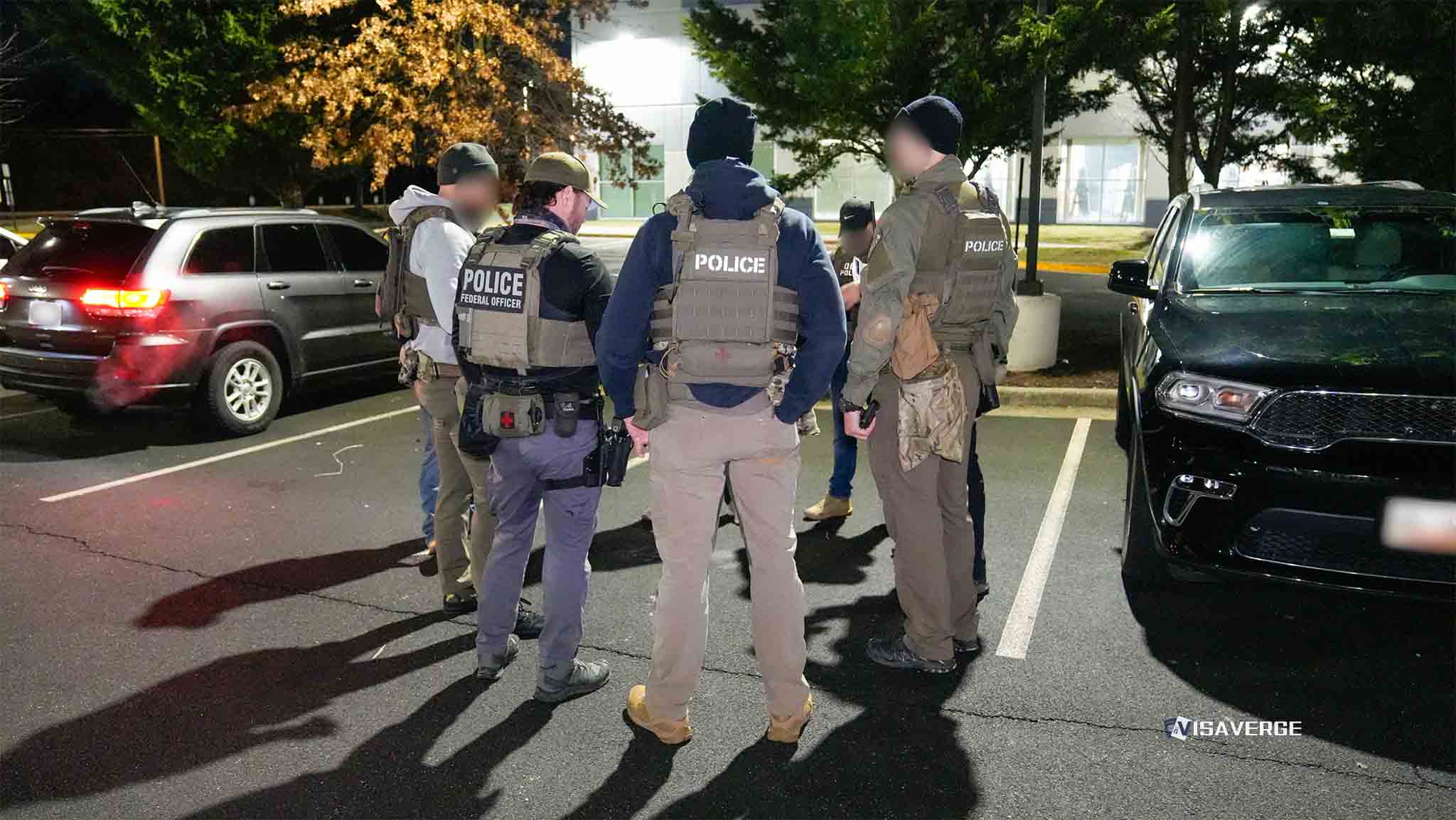
That lack of detail stood out because federal agencies had already begun shifting personnel. ICE agents started deploying on Monday to about 14 major airports to support the Transportation Security Administration as staffing shortages deepened.
The deployment reached some of the country’s busiest aviation hubs. Those airports included John F. Kennedy International Airport, Newark Liberty International Airport, Chicago O’Hare, Hartsfield-Jackson Atlanta, Houston’s Hobby and Bush Intercontinental, LaGuardia, Louis Armstrong in New Orleans, Luis Muñoz Marín in San Juan, Philadelphia, Pittsburgh, Phoenix Sky Harbor, and Southwest Florida International in Fort Myers.
Officials tied the ICE move to staffing pressure inside TSA rather than a newly announced airport-wide security overhaul. The support began before any National Guard plan was detailed publicly.
Trump praised that initial response while speaking at Palm Beach International Airport. “I want to thank ICE because they stepped in so strongly. They’ll do great. And if that’s not enough, we’ll bring in the National Guard,” he told reporters.
His remarks linked the airport staffing squeeze to a possible next step, but they left central questions unanswered. No public outline has described whether Guard personnel would assist with checkpoint operations, crowd management, transportation security support or other duties.
Those questions matter because the airport response grew out of a widening staffing crunch at TSA, not from a publicly announced change in the security posture at airports. The pressure followed a Department of Homeland Security funding disruption that left approximately 50,000 TSA officers working without pay for over a month.
The unpaid period fed staffing problems that then spread into daily operations. Absentee rates climbed sharply, reaching nearly 12% earlier this week, equal to more than 3,400 officers at peak levels.
At the same time, more than 480 officers have quit according to federal data. Those departures added to an already strained workforce and increased pressure on checkpoint operations at airports across the country.
Taken together, the figures explain why officials turned first to ICE support and why Trump began speaking publicly about the National Guard. The administration has presented the airport response as a manpower issue tied to federal staffing strain.
Even so, the public record remains narrow. Trump’s Monday remarks in Memphis and his Wednesday Truth Social post signaled that a National Guard option is under consideration, but neither statement offered an operational framework.
That leaves airports, workers and travelers without answers on several immediate points. Officials have not said which airports would receive National Guard personnel if Trump moves ahead.
They also have not said when such a deployment might begin. No public detail has described command arrangements, how Guard members would be integrated with existing federal personnel or how any mission would differ from the ICE support already underway.
The distinction could prove important because the current effort centers on supplementing TSA during a staffing emergency. ICE agents were sent to help address shortages that built up as officers worked without pay and absenteeism rose.
For now, that response is the concrete action on the ground. The National Guard remains a possibility Trump has raised repeatedly but not defined.
His wording has stressed contingency. In Memphis, he said the administration would act “if we don’t have enough,” tying any Guard deployment to whether current measures can stabilize airport operations.
The Truth Social message on Wednesday pointed in the same direction. By writing “I may call up the National Guard for more help,” Trump framed the option as an expansion of support rather than a separate policy announcement with a published rollout plan.
That sequence matters because it shows how the administration’s airport posture has evolved over several days. ICE support began Monday, Trump floated the Guard idea the same day in Memphis, and he renewed the warning publicly on Wednesday.
The airports already drawing federal reinforcement show the breadth of the strain. The list spans the Northeast, South, Midwest, Gulf Coast, Caribbean and Southwest, touching international gateways and domestic hubs alike.
John F. Kennedy, Newark and LaGuardia serve one of the country’s busiest air travel corridors. O’Hare and Hartsfield-Jackson handle immense passenger volumes, while Houston’s Hobby and Bush Intercontinental anchor another major aviation market.
Philadelphia, Phoenix Sky Harbor, Pittsburgh and Fort Myers extend the footprint farther. San Juan and New Orleans show that the staffing response reached airports beyond the mainland’s largest financial and political centers.
Still, the administration has not said whether any future National Guard deployment would mirror that geography. Officials have not identified a single airport where Guard personnel would be stationed.
They also have not said whether Guard members would support TSA directly or operate in another lane of airport activity. That silence leaves open the basic question of what “help out at the airports” would mean in practice.
The current strain on TSA offers the clearest explanation for why the conversation moved in this direction. More than a month without pay placed pressure on a workforce responsible for screening operations, and the resulting absenteeism and departures weakened staffing levels further.
Once those conditions worsened, the government started drawing on another federal workforce. ICE agents then became the first visible reinforcement at airports.
Trump’s comments suggest he is willing to go farther if those measures fall short. His public statements have tied that next step to airport needs, not to a broader announcement about changing security standards nationwide.
That narrow framing has not answered whether National Guard personnel would carry out temporary support functions or take on a more visible role inside airport operations. It also has not addressed how long any deployment might last.
For travelers, the immediate picture is clearer than the longer-term one. ICE agents are already at about 14 major airports, and the administration has described that move as a response to severe TSA staffing shortages.
Beyond that, the details thin out quickly. Trump has warned that the National Guard could follow, but the structure, timing and scope of any call-up remain unsettled in public.
What is established is the chain of events that brought the issue to this point: a Department of Homeland Security funding disruption, approximately 50,000 TSA officers working without pay for over a month, absentee rates reaching nearly 12%, more than 3,400 officers absent at peak levels, and more than 480 officers leaving the job.
Those numbers pushed federal officials toward emergency staffing measures at airports. Trump has now signaled that if ICE support is not enough, the National Guard could become the next layer in that response.
Until officials provide more, the administration’s airport plan stands as two overlapping tracks: ICE agents already deployed at major hubs, and a National Guard option that Trump has raised in Memphis, repeated on Truth Social and not yet defined.