- President Trump signed an order to immediately pay TSA workers during the ongoing government shutdown.
- Homeland Security Secretary Mullin stated that paychecks could arrive by March 30 for screening staff.
- The move follows high resignation rates and massive security delays at airports nationwide.
President Donald J. Trump signed an executive order on Friday directing the Department of Homeland Security to “immediately” pay Transportation Security Administration employees during the ongoing DHS shutdown, as Congress remained deadlocked on a broader funding fix.
DHS said it had begun implementation steps, and Homeland Security Secretary Markwayne Mullin said TSA officers could start receiving paychecks as early as Monday, March 30, 2026. The full text of the order was not yet publicly available on Saturday, leaving open questions about the funding authority, backpay treatment and which workers are covered.
The move followed the collapse of a deal to reopen DHS through Congress. The Senate had previously advanced a DHS funding approach, but House Speaker Mike Johnson declined to bring that package to the floor, and the House instead passed a short-term DHS funding bill early on March 28.
Because the two chambers took different paths, no final agreement emerged and the shutdown continued into its second month. That left the administration trying to relieve pressure on one of the most visible parts of the department: airport security screening.
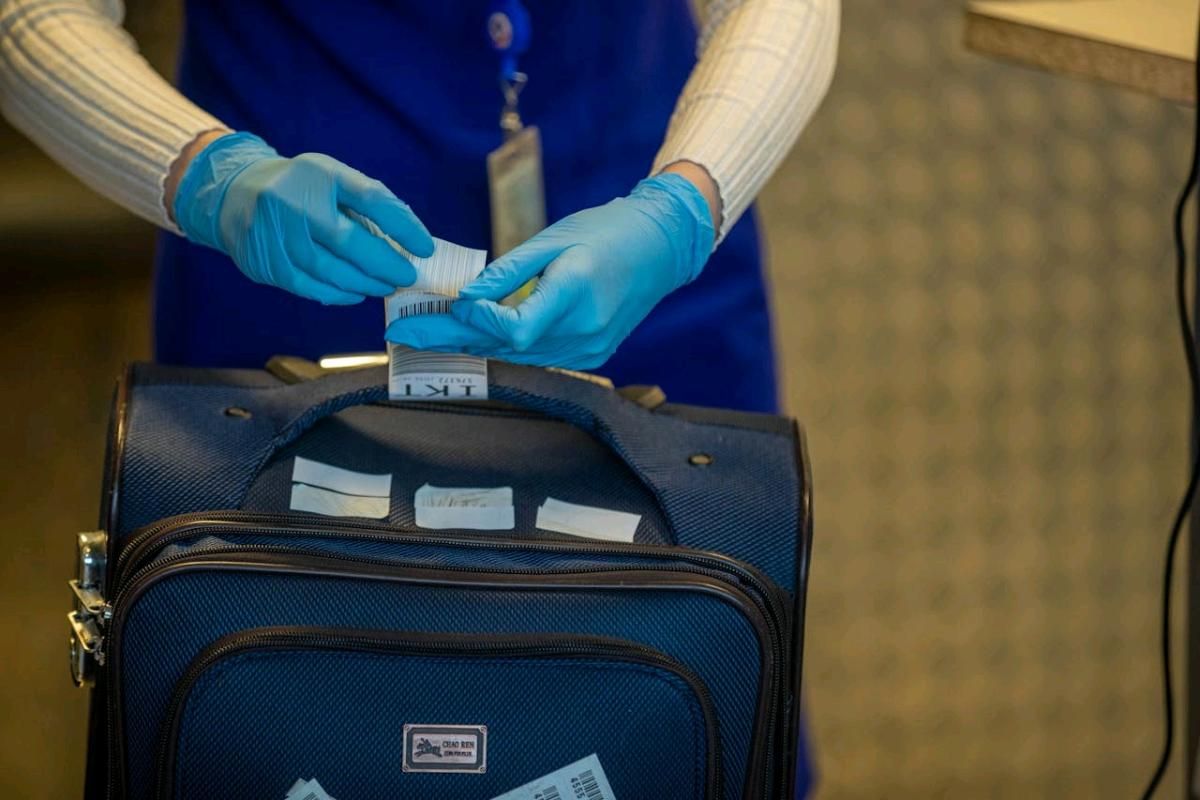
The Transportation Security Administration’s frontline workforce makes payroll disruption an immediate operational issue. TSA’s screeners are “excepted” employees, meaning they must continue reporting to work during a lapse in appropriations even when pay stops.
That pressure has shown up at airports across the country. Multiple updates during the shutdown cited elevated callout rates at some locations, hours-long checkpoint lines and rising departures from the workforce.
DHS has warned that disruptions could worsen without restored pay. Several airports experienced more than 40% unscheduled absences at times during the shutdown, and nearly 500 Transportation Security Officers had resigned to date, according to the most recent figures cited.
Other counts have varied over the course of the standoff. A White House update in mid-March cited “over 300” agents quitting in three weeks, while separate reports on March 17 put cumulative TSO quits at 366 since the shutdown began, reflecting different reporting windows and agency descriptions during a fast-moving staffing crisis.
Mullin, who was confirmed by the Senate on Monday, March 23, 2026, after reports indicated a 54–45 vote, took over the department after President Trump fired Kristi Noem on March 5, 2026. Oklahoma Governor Kevin Stitt appointed Alan Armstrong to fill Mullin’s Senate seat through year-end.
Friday’s pay order appeared aimed at stopping the strain from deepening further. DHS said it had started “the process of paying the Transportation Security Administration workforce”, and officials told reporters officers could see their first full paychecks in more than six weeks as early as Monday, March 30, 2026.
Even so, the order’s practical reach remained limited by what had been made public. The clearest confirmed point is that TSA employees are the stated target of immediate pay action.
No official indication has yet shown that the executive order extends beyond TSA to other DHS components that have also missed paychecks during the shutdown, including Customs and Border Protection, Immigration and Customs Enforcement, FEMA or Coast Guard civilian staff. Everett Kelley, president of the American Federation of Government Employees, said Coast Guard civilians and FEMA employees were also at risk of missing a third paycheck.
Coverage for contractors, overtime and differentials also remained unresolved on Saturday, pending publication of the order or formal DHS guidance. So did the question of whether missed wages would be paid retroactively and on what schedule.
That uncertainty matters because the legal and budget mechanics are unusual. In a funding lapse, agencies generally cannot obligate or disburse money without appropriations except under narrow exceptions, and the mechanism DHS uses to execute the order will draw scrutiny once the administration releases the text and any related implementation memos.
The shutdown began on or about February 14, 2026, after congressional negotiations over DHS appropriations collapsed amid disputes linked to immigration enforcement and fallout from high-profile CBP use-of-force incidents. DHS’s lapse plan keeps roughly 91% of staff working without pay.
The first missed TSA paycheck hit in early March. By mid-March, resignations and sick-outs were rising, and the payroll crisis had spread into a wider operational problem for travelers and airport systems.
DHS’s handling of traveler-facing programs also showed how broadly the shutdown was affecting the department. On February 21–22, 2026, DHS said it would suspend TSA PreCheck during the shutdown, then reversed course hours later and confirmed “TSA PreCheck remains operational.”
Global Entry followed a more prolonged disruption. DHS paused the program for several weeks, then restarted Global Entry by March 11 in an effort to ease travel disruptions as the shutdown dragged on.
Labor tensions had already been running high before the lapse. On March 7, 2025, DHS ended collective bargaining for TSA’s Transportation Security Officers pursuant to a March 27, 2025 executive order excluding certain national-security agencies from federal labor-management relations.
Unions said that move stripped rights from roughly 47,000 TSOs. Those 2025 and 2026 changes formed the backdrop to the current workforce stress, with employees working through a shutdown after a year of already strained relations with management.
Kelley pressed Congress again on March 27, urging lawmakers to “please end the longest partial government shutdown.” His statement highlighted the toll on DHS employees who had missed multiple paychecks as the shutdown entered week seven.
Congress’s split response this week underscored how the confrontation reached the point of executive intervention. The Senate cleared a DHS funding plan on Friday, March 27, before adjourning.
Johnson rejected taking up that Senate package in the House. House Republican leaders moved instead toward a short-term DHS continuing resolution, and the House passed that short-term funding bill in the early hours of March 28.
That divergence left no immediate resolution to the larger DHS shutdown, even as pressure intensified from airport operators, airlines, labor groups and the administration. Major U.S. airline CEOs publicly urged Congress on March 17 to end the shutdown and pay federal security workers, warning of mounting stress on operations during spring break.
Airport groups also launched a “Pay Federal Aviation Workers” campaign to press for guaranteed on-time pay for TSA and FAA personnel during shutdowns. Congress has repeatedly seen bills aimed at guaranteeing pay for aviation workers during lapses, but those efforts have routinely stalled once shutdowns ended.
For workers on the ground, the administration’s order may offer relief faster than Congress has managed. If payroll systems run as DHS indicated, TSA employees working without pay could receive money on or after Monday, March 30.
But restored pay does not mean an instant return to normal airport operations. Screening lines may not shrink immediately because staffing normalization and scheduling changes take time after employees return to regular pay status.
“Those effects could linger into next week or longer.”
That means travelers may continue seeing delays even if TSA workers begin receiving pay by the start of the week.
The wider DHS workforce also remains in limbo. Public statements about the order have centered on the Transportation Security Administration, and no broader DHS workforce relief has yet been confirmed.
That leaves open whether the administration will pursue similar measures for other excepted employees still working without pay, or whether those workers will have to wait for Congress to pass an appropriations measure or another form of relief. The same uncertainty applies to missed wages already accumulated during the lapse.
The department’s size raises the stakes. DHS’s most recent lapse plan keeps roughly 91% of staff on the job without pay, a structure meant to preserve core public-safety and border functions while lawmakers negotiate funding.
At airports, though, the consequences are especially visible. Security checkpoints translate staffing gaps into missed flights, longer lines and wider disruption for airlines and airport systems, which is why the administration targeted TSA first.
The coming days now center on execution. Workers and travelers are waiting for payroll to land, for staffing levels to stabilize and for the administration to publish the executive order text and follow-up guidance that could answer the largest unresolved questions.
Those questions are straightforward but central: how DHS is funding the payments, whether missed wages will be paid retroactively, whether overtime and differentials are included, and whether any part of the order reaches beyond TSA. Until that guidance appears, the administration’s action has created immediate movement without fully settling the mechanics.
Even if pay starts quickly, the damage from nearly seven weeks of the DHS shutdown may take longer to unwind. Airport lines, absenteeism and departures from the workforce may ease only gradually, leaving the Transportation Security Administration to rebuild schedules and morale while Congress still struggles to reopen the department.
For now, Trump’s executive order has changed the immediate outlook for TSA screeners but not ended the shutdown that put them in this position. The next test comes Monday, when workers will see whether the promised pay arrives and whether that is enough to begin pulling airport operations back from the strain of the past six weeks.