- The Supreme Court blocked Trump’s emergency tariff powers in a 6-3 decision involving the IEEPA statute.
- Donald Trump responded by announcing a new 10% tariff and criticizing his own judicial appointees.
- Republicans are split between supporting executive trade authority and praising the court’s separation-of-powers check.
(GEORGIA) — President Donald Trump announced a new 10% global tariff on Friday after the Supreme Court blocked his bid to use emergency powers to impose sweeping tariffs, calling the ruling “deeply disappointing” as he lashed out at two justices he appointed.
The Supreme Court issued a 6-3 decision ruling that the president’s IEEPA powers to “regulate… importation” do not include the authority to impose tariffs, blocking Trump’s broad emergency-based tariff measures.
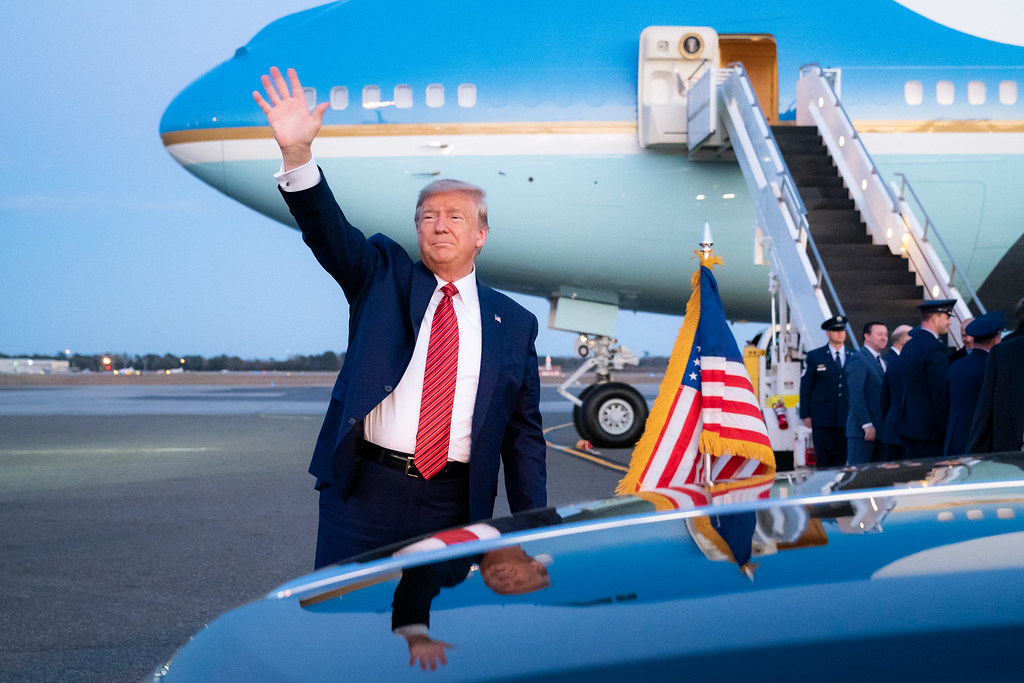
Trump framed tariffs as central to domestic production during remarks at a steel factory in Georgia on Thursday and later during a White House news conference on Friday, where he responded directly to the court’s decision and argued the policy protected U.S. industry. “Without tariffs, this country would be in such trouble right now,” he said.
The ruling narrowed presidential authority under the International Emergency Economic Powers Act, which Trump had used as the legal backbone for a broad tariff program tied to an emergency declaration. The practical effect was immediate: Trump’s emergency-based tariff approach, as announced, could not stand under IEEPA as the court read it.
At the core of the court’s reasoning was a distinction between regulating importation and imposing tariffs, which function as a tax-like power. The justices held that IEEPA’s language about the power to “regulate… importation” did not authorize levying tariffs, cutting off Trump’s ability to rely on that statute for the sweeping measures.
The decision also shifts attention back toward Congress as the place where tariff-setting authority sits, even as presidents of both parties have sought ways to act quickly through delegated powers. Trump’s tariff push had been branded “Liberation Day” from international trade deals, described in the account of the measures as the largest protectionist action since the Great Depression.
Trump’s response mixed policy messaging with personal attacks on members of the court. He attacked Justices Amy Coney Barrett and Neil Gorsuch—both his appointees—calling their votes “an embarrassment to their families” and labeling the ruling a “disgrace.”
A Fox News source described a moment earlier in the day when Trump learned of the decision. The source reported Trump received a note about the ruling during a closed-door White House breakfast with governors, reacting by calling it a “disgrace” before continuing his remarks.
By Friday afternoon, Trump also leaned on the new tariff announcement as a political counterpunch to the court setback. He “reportedly imposed an additional 10% global tariff,” as described alongside his news conference response to the ruling.
The immediate question raised by the clash is what remains of Trump’s planned tariff program when IEEPA no longer provides the authority the administration asserted. The Supreme Court ruling blocks the emergency-based legal theory for broad tariffs, forcing the debate into other channels for action.
Republicans on Capitol Hill split over the meaning of the decision and how to respond to the court’s limits on emergency-based tariff power. Some framed the ruling as an unwelcome judicial intrusion into executive authority, while others praised it as a separation-of-powers check on a president’s ability to use emergencies to impose something akin to taxes.
Rep. Buddy Carter, a Republican from Georgia, criticized the ruling as “judicial overreach” that undercuts Trump’s defense of American workers. His response aligned with Trump’s argument that tariffs protect jobs and production.
Sen. Rand Paul, a Republican from Kentucky, took the opposite view, praising the ruling for preventing future presidents from using emergency powers for taxes or socialism. His comments cast the court’s limitation as a safeguard against expansive uses of executive authority.
Rep. Don Bacon, a Republican from Nebraska, also supported the decision. Bacon “hailed the decision,” reflecting the wing of the party that views emergency-based tariff powers as too broad.
House Speaker Mike Johnson, a Republican from Louisiana, emphasized the role tariffs have played as both leverage and revenue. Johnson noted tariffs brought in billions and created leverage, saying Congress and the administration will chart the “best path forward.”
That divide inside the party echoed the legal line the Supreme Court drew: emergency authority can regulate importation in certain ways, but it does not extend to imposing tariffs under the statute at issue. In the near term, that reading leaves political leaders to argue over how, and through what legal route, tariffs could proceed.
The court’s decision may redirect tariff action toward congressional authorization or alternative statutory pathways, though Friday’s immediate change was clear: IEEPA no longer supports the broad tariff structure Trump sought under the emergency declaration. For lawmakers, the ruling revives a central question that has lurked beneath years of trade fights—how much unilateral tariff authority Congress wants presidents to have.
For industries, the outcome adds fresh uncertainty while political leaders debate next steps. U.S. manufacturers, importers, and employers have treated tariff announcements as cost and planning signals, and the legal disruption complicates expectations about how quickly large tariff shifts can be made and sustained.
Trump, however, used the moment to reinforce the message that tariffs remain at the center of his economic agenda. He credited existing tariffs with boosting domestic production and portrayed the court setback as a barrier to a strategy he argues protects U.S. industry.
Cable and business outlets carried the back-and-forth in real time. Live coverage aired on Yahoo Finance, Fox News, FOX 29 Philadelphia, and CNBC Television, focusing on Trump’s emergency news conference about the Supreme Court ruling and his response.
The story remained developing as Trump and his allies absorbed the implications of the decision and as opponents pointed to the court’s interpretation of IEEPA as a hard limit on presidential tariff power. With tariffs still a centerpiece of Trump’s agenda, attention now turns to concrete signals of what comes next: official administrative guidance, legislative steps in Congress, and any follow-on legal challenges triggered by efforts to pursue tariffs through a different route.
For Trump, the ruling and his reaction also placed the Supreme Court itself into the political fight in unusually direct terms. By the end of the day, he had paired the court loss with a new 10% global tariff push—and a parting blast at the decision as a “disgrace.”