- President Trump signed an executive action to pay TSA employees despite the ongoing DHS shutdown.
- Workers may receive their first full paychecks as early as Monday, March 30, 2026.
- The move addresses high resignation rates and staffing shortages causing major airport delays and cancellations.
President Donald J. Trump signed an executive action on Friday directing the Department of Homeland Security to pay Transportation Security Administration employees despite the ongoing DHS shutdown, and the administration said workers could start seeing paychecks as early as Monday, March 30, 2026.
DHS said TSA employees “should begin seeing paychecks as early as Monday”, March 30, 2026. Homeland Security Secretary Markwayne Mullin is overseeing implementation after initiating the pay process immediately after the order.
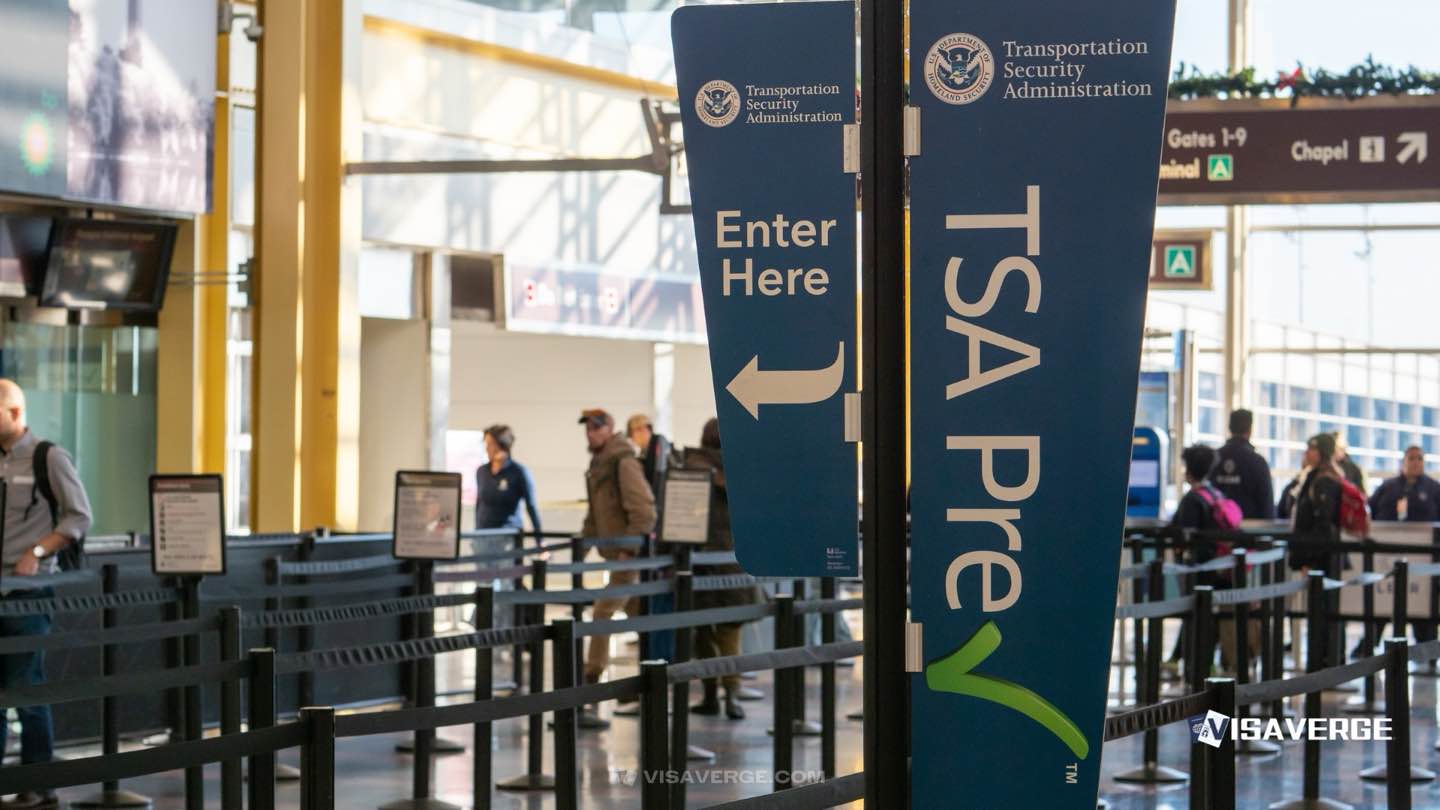
The move matters because TSA officers have continued reporting to airports during the funding lapse without timely pay. For many workers, Monday could bring the first full paycheck in more than six weeks.
Until Friday’s order, the shutdown had followed the usual pattern for excepted federal workers. That meant TSA officers kept screening passengers while waiting for Congress to restore appropriations before salaries could go out.
The current lapse began on Friday, February 14, 2026, as a DHS-only shutdown. Other departments remained funded, but airport security continued because TSA officers are classified as excepted employees.
Those conditions have fed growing strain inside the workforce. Public briefings this week cited 450–480 TSA officer resignations since mid-February, while committee testimony on March 25 referenced “more than 480” TSOs having quit.
Earlier in the month, TSA reported 305 separations between Feb. 14 and Mar. 9. Unscheduled absences averaged ~6% nationwide, about triple normal, with much higher spikes at individual airports.
That pressure has spilled into airport operations. Longer security lines and delays have become part of the daily experience for travelers, and LaGuardia saw several hundred flight cancellations on March 24 as staffing strain rippled through screening operations.
DHS framed Friday’s announcement as immediate relief for workers who have continued securing airports without pay. The department said TSA officers should begin seeing paychecks as early as Monday, tying the action directly to Trump’s order.
The White House has spent much of March pressing Congress to pass DHS funding and criticizing Democrats over unpaid airport screeners. Its public message has centered on “TSA agents unpaid” while they “secure our skies”.
Labor leaders welcomed the prospect of resumed pay while arguing that executive action does not end the underlying problem. Everett Kelley, National President of the American Federation of Government Employees, has called on Congress to end the shutdown and warned about resignations and rising call-outs.
Johnny Jones, secretary-treasurer of AFGE Council 100, which represents TSA officers, said pay starting Monday would be welcome but stressed that a legislative fix to reopen DHS is still needed. That position leaves the union and the administration agreeing on the hardship facing workers while differing on what counts as a durable solution.
For employees watching their bank accounts, the administration’s message is narrow but immediate. DHS says deposits could appear as early as Monday, raising the prospect of a first full paycheck in more than six weeks even though DHS appropriations remain lapsed.
That does not settle the wider pay issue created by the shutdown. By law, once Congress enacts DHS appropriations to end the lapse, both excepted and furloughed federal employees are entitled to retroactive pay “as soon as possible” under the Government Employee Fair Treatment Act of 2019.
In other words, Monday’s possible deposit and shutdown back pay are not the same thing. The near-term payroll action concerns money that could start flowing while the lapse continues, while retroactive pay under GEFTA still depends on enacted appropriations ending the shutdown.
For TSA workers, that distinction affects how they read Monday’s deposit. A resumed paycheck could ease immediate cash-flow pressure, but the broader accounting for the shutdown period remains tied to what Congress does next.
DHS has not publicly detailed the exact pay period or funding source for Friday’s action. The administration has said workers could receive a regular paycheck on Monday, but it has not released the legal or accounting explanation for how that would happen mid-lapse.
That is why the move has drawn attention well beyond airport checkpoints. The Antideficiency Act generally bars agencies from paying salaries during a lapse in appropriations unless Congress has provided authority to do so.
Under the normal rule, excepted employees must keep working but wait for pay until appropriations resume. GEFTA changed part of that picture by guaranteeing retroactive pay after a shutdown ends, but it does not clearly authorize agencies to issue salary payments during the lapse itself.
OMB’s public shutdown guidance also points to back pay after appropriations return, not during the funding gap. Friday’s action therefore raises unresolved questions about the funding source and legal pathway for paying TSA employees before Congress restores DHS funding.
Those questions matter because they speak to how durable the announced payroll action will be. If employees are expecting paychecks on Monday, the legal and budget mechanics behind the transfer will shape whether the process proceeds smoothly and whether it can continue if the shutdown drags on.
The uncertainty lands after weeks of pressure on a workforce that has kept airport screening running. With resignations rising and call-outs above normal, the payroll decision is not only about household finances but also about whether enough officers stay on the job to keep screening lines moving.
A short chronology shows how quickly the shutdown escalated. On Feb 14, 2026, the DHS-only shutdown began and TSA officers continued reporting as excepted employees.
On Mar 6, 2026, House members introduced the Homeland Security Continuity and Accountability Act to pay essential DHS employees during a DHS shutdown. The bill came from Reps. Scott Peters and Steven Horsford as lawmakers searched for a targeted response to the lapse.
By Mar 10, 2026, TSA reported 305 separations since Feb 14, while national call-outs averaged ~6% against a ~2% baseline. Conditions worsened by mid-to-late March, when press coverage and congressional testimony cited 450–480+ TSA quit figures and LaGuardia faced several hundred cancellations amid delays and long lines.
The latest turn came on Mar 27, 2026 (Fri): President signs executive action; DHS says TSA workers could see pay “as early as Monday,” March 30, 2026. That set up the next milestone on Mar 30, 2026 (Mon): Earliest day TSA employees may see direct-deposit pay per DHS. Monitor agency communications and your payroll account.
For workers, the practical question now is whether money actually lands in their accounts on Monday. A successful deposit would provide short-term relief after more than six weeks without regular paychecks, and that could affect morale as well as retention.
The first step is routine but important. Employees need to make sure time and attendance records are certified, direct-deposit information is correct, and agency messages are checked closely over the next several days.
Those back-office steps may sound mundane, but they often determine whether payroll runs reach the right accounts on time. In a shutdown environment, even small administrative delays can quickly become larger problems for workers already missing pay.
Travelers also have a stake in what happens next. If officers receive deposits and some immediate financial pressure eases, the change could help steady staffing in the near term at airport checkpoints where absences and departures have strained operations.
That does not mean the broader risks have disappeared. If the DHS shutdown continues, staffing pressure could remain part of the travel picture even with a Monday payroll run, because officers are still working under shutdown conditions and the department still lacks enacted appropriations.
For now, the administration’s order offers a narrow promise rather than a full resolution. It signals that TSA officers may start receiving paychecks again before the shutdown ends, while leaving Congress with the larger task of restoring DHS funding and triggering the retroactive pay protections that federal law guarantees once the lapse is over.
Whether Monday brings the first deposits or fresh questions, the next 72 hours will carry weight far beyond payroll systems. They will test whether the White House and DHS can turn Friday’s order into money in TSA workers’ accounts while airport screeners keep showing up to secure the nation’s checkpoints.