President Trump’s support for a bill proposing tariffs of up to 500 percent on countries that buy Russian oil, and the 🇺🇸 United States’ confirmed exit from the International Solar Alliance, have added fresh strain to U.S.–India relations with knock-on effects for trade, jobs, and cross-border mobility.
India’s exporters, multinational employers, and Indian nationals in the 🇺🇸 United States aren’t facing new visa rules today. But the policy direction matters because it changes business risk, hiring plans, and compliance checks that often sit behind visa sponsorship, student research funding, and corporate transfers.
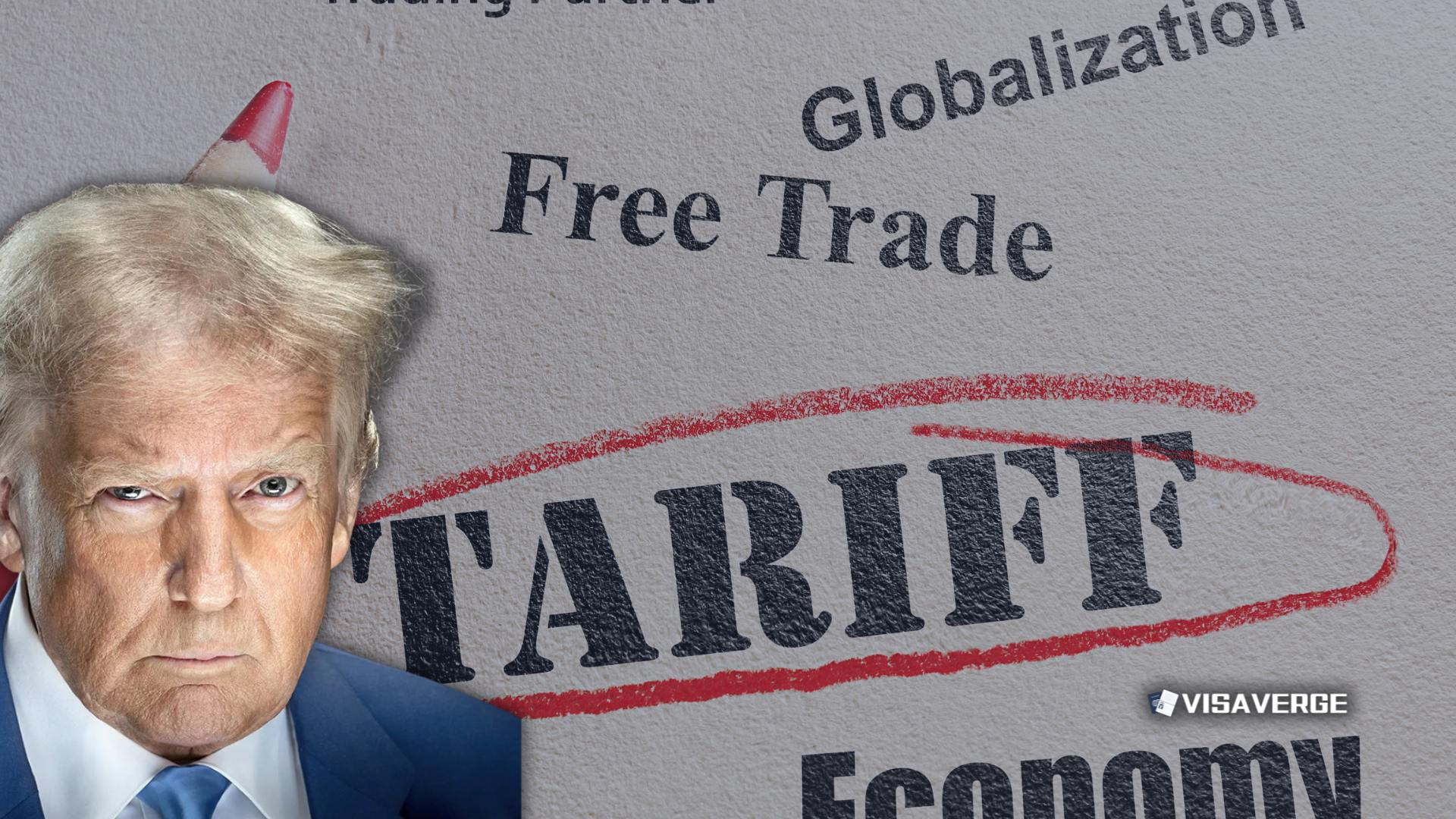
Sanctions bill with a 500% tariff threat: political development and implications
President Trump has backed a bipartisan Russia sanctions proposal that would sharply raise economic pressure on third countries that continue buying Russian crude. The proposal is tied to the Sanctioning Russia Act 2025, which has advanced in Congress but is not yet fully enacted.
The bill’s text states that “the President must increase the rate of duty on all goods and services imported into the United States from countries that knowingly engage in the exchange of Russian-origin uranium and petroleum products to at least 500 per cent relative to the value of such goods and services.” If enacted and applied broadly, that language could place India’s exports at risk while India remains a major buyer of discounted Russian crude.
Senator Lindsey Graham (Republican, South Carolina), a lead sponsor, said he had a “very productive meeting” with President Trump at the White House and that Trump “greenlit” the bipartisan Russia sanctions bill. Graham has argued the measure gives Trump “tremendous leverage” against countries including India to stop buying cheap Russian crude that funds Russia’s war.
Key political takeaway: the bill would create a direct, legally empowered linkage between energy sourcing and broad trade penalties, raising the stakes for countries that continue to import Russian oil.
What is already in force: prior U.S. tariff and sanctions actions in 2025
The 500% tariff is not in effect today. Still, India’s exposure is not theoretical because the 🇺🇸 United States has already layered Russia-related pressure into the trade relationship during 2025.
Key steps already reported include:
– In 2025, the 🇺🇸 United States doubled tariffs on many Indian exports to around 50%, including a 25% “reciprocal” component linked to India’s Russian energy purchases.
– On August 27, 2025, the 🇺🇸 United States imposed a 25% duty on India’s Russian oil purchases on top of reciprocal tariffs.
– On October 22, 2025, sanctions were announced on Russian firms Rosneft and Lukoil and subsidiaries, effective November 21, 2025, tightening pressure across crude supply chains.
For Indian businesses shipping goods to the 🇺🇸 United States, the lesson is immediate: even before Congress finishes work on the new bill, tariff risk linked to Russian oil has already entered day-to-day pricing, contracts, and customs planning.
Why India’s oil exposure quickly raises trade risk
India’s energy strategy since the Ukraine war has included large volumes of discounted Russian crude. Recent analysis places Russia’s share at around 35–40% of India’s crude oil.
That creates a direct political link between energy sourcing and tariffs. A major tariff jump—especially at the “all goods and services” scale described in the bill text—would not just hit one sector. It could touch everything from industrial goods to consumer products and would also raise costs for 🇺🇸 companies that buy from Indian suppliers.
Early behavioural impacts are visible:
– India’s imports of Russian crude, after rising for nearly three years, declined sharply in November 2025, following the August 27 tariff and the November 21 sanctions effective date.
A Carnegie analysis cited in the material connects sanctions pressure to market and cost shifts:
– 8% increase in Brent crude prices globally
– Projected USD 6–7 billion annual increase in India’s oil import bill
– About 2% increase in operational costs for Indian refineries as they reduce reliance on discounted Russian crude
Those figures matter for immigration-linked planning because energy costs and refinery margins feed into investment decisions, expansion plans, and job creation in sectors that sponsor skilled workers.
U.S. withdrawal from the International Solar Alliance: actions and context
In parallel with the Russian oil tariff push, the 🇺🇸 United States has formally withdrawn from the International Solar Alliance (ISA), an India-led initiative aimed at scaling solar energy adoption and cooperation.
The move followed a presidential memorandum signed on January 7, 2026, titled “Withdrawing the United States from International Organizations, Conventions, and Treaties that Are Contrary to the Interests of the United States.” The memorandum was issued under Executive Order 14199 dated February 4, 2025.
The January 7 memorandum orders withdrawal from 66 international organizations, conventions, and treaties, including the International Solar Alliance, after a review conducted by Secretary of State Marco Rubio and the U.S. Representative to the United Nations. Environmental reporting also listed ISA among other climate and energy bodies the 🇺🇸 United States is exiting.
Indian officials, including sources linked to the Ministry of New and Renewable Energy, have said the ISA will continue. Facts about ISA:
– Headquarters: Gurugram
– Co-founders: India and France
– Membership: 125 member and signatory countries
– Program reach: active in over 95 countries
– Investment target: aims to mobilise USD 1 trillion in solar investments by 2030
– Focus: Least Developed Countries and Small Island Developing States
– U.S. involvement: the 🇺🇸 United States joined ISA in November 2021, announced by then climate envoy John Kerry at COP26
Diplomatic timing: a new U.S. ambassador arrives amid rising tensions
These decisions land as a new 🇺🇸 U.S. ambassador is set to arrive in New Delhi, putting early meetings under pressure from two directions: the threatened escalation over Russian oil purchases and a visible recalibration of climate diplomacy after the ISA withdrawal.
Expected agenda items include:
– Trade and tariff risk
– Energy security and sanctions compliance
– Technology and defence cooperation
– Immigration and workforce mobility
Diplomatic management matters because high-friction trade conditions often spill into corporate confidence, procurement cycles, and hiring.
Immigration rules haven’t changed, but mobility risk increases
Neither the sanctions bill nor the ISA exit changes 🇺🇸 immigration law on its face. There has been no announced rewrite of H-1B rules, no new limits on F-1 student visas, and no stated change to employment-based green card quotas in the material.
The risk sits one layer below the visa rulebook. If tariffs rise sharply, U.S.-facing business lines can contract, and that affects whether employers file new petitions, extend projects, or move staff between offices.
Channels where impacts may appear:
– Hiring and sponsorship in trade-exposed sectors
– Exporters and manufacturers that rely on the 🇺🇸 market may freeze headcount when margins compress.
– This can reduce new H-1B filings, slow green card starts, or shift work to different jurisdictions.
– Compliance-driven friction
– Expanding sanctions authority can bring more screening for Russia-linked transactions, counterparties, shipping, and payment flows.
– Employers may tighten onboarding checks and internal approvals for cross-border transfers.
– Research and climate workforce impacts
– The ISA exit does not cancel visas, but it can reshape joint solar and climate projects that support visiting researchers, internships, and early-career roles in renewables.
For official visa guidance, consult the U.S. government’s visa information portal at the U.S. Department of State: U.S. visas.
What Indian nationals and employers should watch next
For Indian professionals and students, the immediate question is often: “Will my visa appointment or petition be affected?” The more realistic near-term issue is whether your employer’s business forecast changes because tariffs tied to Russian oil become more aggressive.
Key signposts to monitor:
1. Congressional movement on the Sanctioning Russia Act 2025
– If the bill becomes law, attention will turn to how “knowingly” is interpreted and whether any waivers, carve-outs, or phased enforcement appear.
2. Enforcement choices by the administration
– Even with authority on paper, tariff policy can be applied narrowly or broadly. Market reaction often begins well before a final rate is imposed.
3. Sector-specific exposure
– Goods exporters and firms in energy-linked supply chains feel tariff shifts first.
– Pure services firms may face less direct tariff pain, but they still react to geopolitical risk in client budgets.
According to analysis by VisaVerge.com, the bigger immigration story in moments like this is rarely a single rule change. It is the way trade and sanctions decisions quietly reshape recruitment, transfers, and long-term project pipelines that sustain cross-border careers.
For NRIs and cross-border businesses, expect:
– More contract language on sanctions risk
– Tighter KYC and AML checks
– Increased internal reviews for projects touching energy, shipping, or Russia-linked counterparties
Important warning: even absent immediate visa rule changes, evolving trade and sanctions policy can quickly alter employer behaviour, hiring pipelines, and project funding that underpin cross-border mobility.
The U.S. is signaling a significant shift in relations with India through a proposed 500% tariff on Russian oil buyers and withdrawal from the International Solar Alliance. While visa regulations for H-1B and F-1 holders are currently stable, the resulting economic pressure and increased operational costs for Indian firms may lead to tighter hiring budgets and reduced cross-border mobility for skilled workers in affected sectors.