January 3, 2026
- Updated that U.S. tariffs remain at 50% into January 2026 despite Nov. 10, 2025 pledge
- Added timeline entries with specific tariff dates: 25% on Aug 7, 2025 and 50% on Aug 27, 2025
- Included new trade data: Russian crude imports fell from 1.84 million bpd (Nov 2025) to 1.1 million bpd (Dec 2025 expected)
- Added export and trade-flow figures: $6 billion surge Apr–Aug 2025 and monthly shipments falling from $8.1B to $5.9B
- Added January 5, 2026 countervailing-duty investigation on chromium trioxide from India
(UNITED STATES) — President Donald Trump has kept U.S. tariffs on Indian goods at 50% in place into early January 2026, despite his Nov. 10, 2025, pledge that duties could fall as India reduced its purchases of Russian oil.
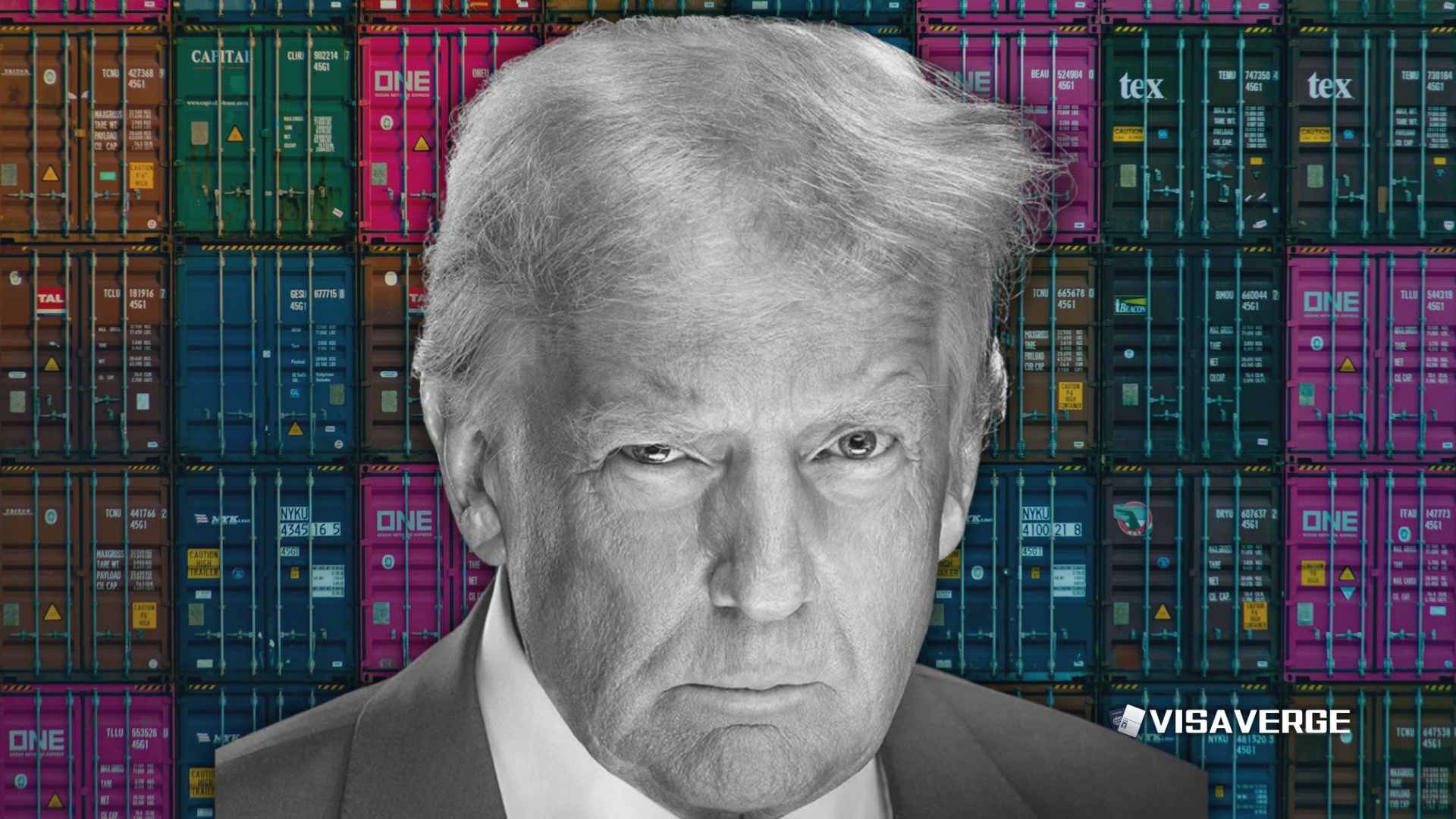
Trump raised expectations of a “fair trade deal” during the Oval Office swearing-in of Ambassador Sergio Gor on Nov. 10, 2025, but negotiations remain unfinished and no tariff cuts have been announced.
Administration position and link to energy sourcing
The administration has continued to link the penalties to India’s energy sourcing, even as Indian refiners have sharply reduced Russian crude imports and began providing weekly data intended to support New Delhi’s case in talks with Washington.
Key tension: India points to measurable declines in Russian crude imports and verified reporting; the U.S. has nonetheless left tariffs at 50% and kept the fair trade deal unfinished.
Timeline of tariffs and related events
- Apr 2, 2025: Initial tariff signals prompted Indian exporters to accelerate shipments under older, lower rates.
- Aug 7, 2025: Tariffs imposed at 25%.
- Aug 27, 2025: Tariffs doubled to 50% as punishment for India’s role as a major buyer of discounted Russian oil.
- Oct 2025: Sergio Gor confirmed by the Senate as ambassador and assigned an expanded role.
- Nov 10, 2025: Gor sworn in; Trump praised India’s energy shift and said talks were “close” to a balanced agreement.
- Jan 5, 2026: International Trade Administration initiated a countervailing duty investigation on chromium trioxide from India.
India’s response and verified data efforts
India has tried to show measurable progress on Russian crude imports by:
- Collecting weekly data from refiners on Russian and U.S. crude purchases.
- Presenting verified figures to U.S. negotiators so Washington does not rely on secondary sources.
An Indian official told Reuters:
“We want timely and accurate data, so that, when the U.S. asks for information, we can provide verified figures instead of them relying on secondary sources.”
Changes in crude import volumes
- Russian crude imports fell from 1.84 million bpd in November 2025 to an expected 1.1 million bpd in December 2025, the lowest in over three years.
- Projections cited put Russian crude imports below 1 million bpd in early 2026, reinforcing India’s argument that it has responded to Washington’s pressure.
Trade flows, adaptation and diversification
Despite tariff pressure, trade flows showed both resilience and strain:
- Indian exports to the U.S. rose initially, helped by electronics, smartphones, and tech investments tied to firms including Apple.
- Export behavior:
- Indian exporters accelerated shipments after Apr 2, 2025 signals to take advantage of older rates.
- This push contributed to a $6 billion export surge in Apr–Aug 2025.
- Average monthly shipments later moderated from $8.1 billion (Apr–Aug 2025) to $5.9 billion (Sep–Oct 2025), indicating the 50% rate reshaped trade patterns.
- Diversification:
- Exports to non-U.S. markets rose to $89.9 billion in Sep–Nov 2025, up from $86.2 billion, as companies adjusted supply chains and logistics.
Diplomatic context and broader strategic issues
- Vice President JD Vance and Secretary of State Marco Rubio attended Gor’s swearing-in, signaling a “whole-of-government” push tied to trade, security, and energy.
- Gor, after a Nov 2025 visit to New Delhi, reportedly fostered rapport with Prime Minister Narendra Modi, but no breakthroughs were reported; the stalemate continued into Jan 2026.
- Wider relationship strains:
- U.S. outreach to Pakistan reportedly raised New Delhi’s concerns.
- A Trump national security strategy gave India only superficial mention.
- U.S. policy shifts described as a softer China stance reduced India’s strategic leverage.
New trade friction: chromium trioxide investigation
- The International Trade Administration began a countervailing duty investigation on chromium trioxide from India on January 5, 2026.
- The probe examines subsidies that could lead to additional duties.
- Impact:
- Adds uncertainty for businesses reliant on Indian chemical inputs.
- Compounds effects of the broader tariff dispute that has raised costs for U.S. importers and pushed Indian exporters to seek other markets.
Wider economic and people-to-people implications
The report framed the dispute as extending beyond goods trade and warned of potential spillovers:
- Sectors at risk: tech, manufacturing, energy.
- Potential effects on people flows: H-1B visas, student flows, diaspora investment.
- Despite tensions, defense and energy cooperation has continued:
- Cited $25–30 billion in defense sales, fighter jet engines, and critical minerals.
- Noted a multi-billion-dollar energy deal and a 10-year defense framework announced in late 2025.
Political framing
The report described Trump’s approach as reflecting a worldview focused on curbing offshoring and punishing “rising countries” like India. That stance, the report said, has kept the threatened tariff thaw from becoming a policy shift.
Summary table: key figures and dates
| Item | Figure / Date |
|---|---|
| Current tariff rate | 50% (into Jan 2026) |
| Initial tariff step | 25% on Aug 7, 2025 |
| Tariff doubled | 50% on Aug 27, 2025 |
| Trump pledge | Nov 10, 2025 |
| Russian crude imports (Nov 2025) | 1.84 million bpd |
| Russian crude imports (Dec 2025, expected) | 1.1 million bpd |
| Projected early 2026 | <1 million bpd |
| Non-U.S. exports (Sep–Nov 2025) | $89.9 billion |
| Countervailing investigation | Jan 5, 2026 (chromium trioxide) |
| Defense sales cited | $25–30 billion |
As January begins, the central tension remains: India is pointing to reduced Russian crude imports and detailed reporting from refiners, while the United States has left tariffs at 50% and the promised fair trade deal unfinished.
President Trump has extended 50% tariffs on Indian imports into 2026, stalling a promised trade deal despite India’s efforts to reduce Russian oil purchases. While India provided verified data showing a drop in Russian crude imports to record lows, U.S. pressure remains high. The situation is further strained by a new federal investigation into Indian chemical subsidies and broader concerns regarding H-1B visas and strategic leverage.