- Texas has restricted access to licenses including driver’s, commercial, and occupational permits for undocumented immigrants and DACA recipients.
- Over 6,400 individuals have lost commercial driving credentials, impacting industries like construction, medicine, and cosmetology across the state.
- State leaders aim to limit taxpayer-funded benefits while ongoing litigation continues to threaten work authorization for nearly 88,000 DACA recipients.
(TEXAS) — Texas implemented regulatory changes since 2025 that restrict undocumented immigrants and DACA recipients from accessing driver’s licenses, vehicle registration, occupational licenses, in-state tuition, and commercial driver’s licenses, tightening rules that affect work, education and daily life across the state.
The changes reach into fields including construction, medicine, cosmetology and air conditioning. Texas has an estimated undocumented population of 1.7 million, and the new limits also affect DACA recipients, who number 87,890 in the state, the second-highest total nationally.
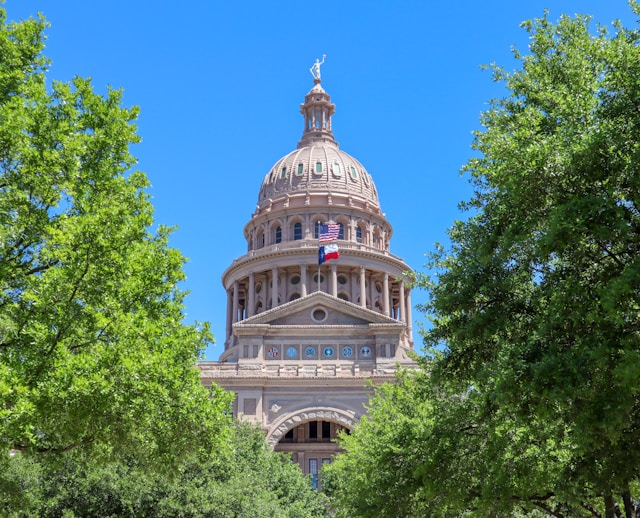
More than 6,400 refugees and DACA recipients have already lost commercial driver’s licenses. More people are expected to lose work eligibility in licensed industries as the restrictions take hold.
Texas Republicans enacted the changes over the past year as part of a wider push to limit noncitizens’ access to state benefits and services. State leaders have said the measures aim to “combat illegal immigration and keep Texas a law-and-order state.”
One set of changes tightened rules for driver’s licenses and vehicles. Texas imposed stricter photo ID requirements for car registration and purchases after state Rep. Brian Harrison, R-Midlothian, urged the Department of Motor Vehicles to enhance oversight in November 2025.
Another set of restrictions hit occupational licenses. The state limited access to licenses tied to work in construction, medicine, air conditioning, cosmetology and other regulated trades, closing off jobs that depend on state approval to practice.
Education also came under the new restrictions. Texas moved to limit in-state tuition at colleges and universities, while also curtailing commercial driver’s licenses.
The restrictions arrive as Texas presses a broader immigration agenda. Officials, spurred by White House adviser Stephen Miller, are also targeting Plyler v. Doe, the 1982 Supreme Court ruling mandating public K-12 education for undocumented students.
Gov. Greg Abbott’s spokesperson Andrew Mahaleris framed the policy in fiscal and legal terms. “Benefits, licenses, and taxpayer-funded services should not be used to incentivize unlawful presence at the expense of hardworking Texans,” Mahaleris said.
A legislative proposal would extend that fight into public schools. House Bill 371 by state Rep. Benjamin Bumgardner proposes barring “unlawfully present” children from free public schools and pre-K unless the federal government reimburses costs, and it would require all students to prove U.S. citizenship or lawful presence.
For DACA recipients in Texas, the licensing limits land on top of an already unsettled legal position. DACA provides deportation protection and work authorization, renewable every two years, but litigation centered in Texas has kept that work authorization under threat.
The legal timeline has shifted in steps. On January 17, 2025, the Fifth Circuit Court of Appeals ruled DACA unlawful but allowed renewals to continue nationwide, including Texas, narrowed the injunction to Texas, and severed work authorization.
That ruling took effect on March 11, 2025. No new USCIS or DHS guidance followed at that point.
The case continued to move through the courts. On July 22, 2025, U.S. District Judge Andrew Hanen of the Southern District of Texas ordered new legal arguments on implementation.
Another update came on February 6, 2026. The Fifth Circuit confirmed the status quo for renewals.
As of April 2026, current DACA recipients in Texas can renew deportation protection and work permits, which USCIS accepts and processes. Initial applications are not processed nationwide.
That leaves many Texas DACA recipients in a narrow category. They can keep renewing for now, but the state litigation continues to cast doubt over how long work authorization will remain attached to DACA in Texas.
The litigation carries direct consequences because Texas ties many jobs to occupational licenses. A person who can renew DACA but loses the ability to hold a work permit could still face barriers in licensed sectors even before any other immigration consequence takes effect.
Commercial driving shows how the overlap works. More than 6,400 refugees and DACA recipients have already lost commercial driver’s licenses, cutting off access to a field that depends on state-issued credentials and often offers one of the more direct paths to steady work.
The uncertainty also reaches people whose jobs do not involve trucks. Construction crews, medical workers, cosmetologists and air conditioning technicians all work in sectors named in the state’s licensing restrictions, meaning the effect spreads far beyond one occupation.
For families, the limits touch routine parts of life as well as employment. Access to driver’s licenses, vehicle registration and car purchases affects commuting, child care, school drop-offs and the ability to reach job sites in a state where long drives are common.
Texas also holds one of the largest DACA populations in the country. With 87,890 recipients, the state ranks second nationally, so any change in court orders or state implementation can affect a large group at once.
The next round of possible change could come from the federal government’s position in court. The Department of Justice has proposed processing initial DACA applications nationwide except Texas, with deportation protection only.
That proposal would leave Texas apart again. It also raises the prospect that Texas recipients could lose work authorization by a set date and begin accruing unlawful presence afterward.
Another possibility has added to the uncertainty. Moving out of Texas may allow work permit renewal, while Texas residency could trigger work permit cancellation.
That scenario has fed warnings of a “mass exodus.” It also reflects how closely state residency and federal immigration relief have become intertwined in the Texas case.
For now, the practical advice to recipients remains unchanged. DACA recipients should renew 120-150 days before expiration.
United We Dream has also circulated an update line. Recipients can text DACA INFO to 787-57 for updates.
The Texas restrictions extend beyond DACA recipients and undocumented immigrants seeking work. They also signal a wider state effort to redraw who can access public benefits, state credentials and educational discounts.
That effort has moved on several fronts at once. Licensing restrictions, vehicle ID checks, tuition limits and school-related proposals all point in the same direction, with access to state-recognized identification and lawful presence checks becoming more central.
Texas has also pursued a separate high-profile measure on immigration enforcement. SB4, the state’s “Deportation Law,” passed but the Fifth Circuit blocked it on March 25, leaving it enjoined.
Had it taken effect, SB4 would criminalize unauthorized entry and reentry and enable state deportations. Instead, it remains tied up in court while the licensing and education restrictions move ahead on other tracks.
The timing reflects a broader political arc. These policies follow Biden-era surges and Trump crackdowns, placing Texas at the center of competing federal and state approaches to immigration control.
Even within that wider fight, the Texas measures stand out because they reach into ordinary state systems. A driver’s license, a vehicle registration, an occupational credential or in-state tuition status can determine whether someone can work legally, study affordably or move through daily life without interruption.
For DACA recipients, the problem is not limited to whether renewals remain available. The harder question is whether the relief still carries the practical ability to work in Texas when state occupational licenses and commercial driving credentials are harder to keep or obtain.
That gap between formal status and usable rights now shapes life for many recipients. A two-year renewal matters, but so does whether a person can still hold the state credential that lets them build houses, cut hair, treat patients, repair air conditioning systems or drive for a living.
Texas has placed those questions at the center of its immigration policy since 2025. As the court fight over DACA continues and new state restrictions spread across licenses, schools and vehicles, the immediate reality for many immigrants is measured in the documents they can no longer renew, the jobs they can no longer hold, and the plans they can no longer make with confidence.